
Korean cultural exports like BTS and Blackpink have ignited a passion for all things Korean. If the music doesn't draw you in, you may be equally ensnared by tightly-scripted, flawlessly performed Korean television shows and movies.
This Hallyu Wave - this enthusiasm for Korean language and culture, drives the spike in Korean lessons around the world. We might cite statistics and quote numbers to prove this point. However, we've not yet learned Korean numbers.
Back to our topic, now. As you read this, you might already attend Korean lessons. Or maybe you're still searching for a Korean tutor. Some Korean enthusiasts prefer to study this language and culture on their own.
Superprof offers a series of Korean learning articles for anyone interested in studying this language. In this article, we cover numbers in Korean, as well as the Korean counting system.
Like so much else about this fascinating tongue, counting in Korean is a bit more elaborate than our Arabic numbering systems. We now look at Korean numbers' twin systems, when to apply each one and how to master numbers in Korean. Hana, dul, set - here we go!


The Korean Counting System
The numerals we use in our calculations are very old. Records show they made their way into Europe around the 10th Century of the Current Era (CE). They evolved through centuries to arrive at the forms we use today.
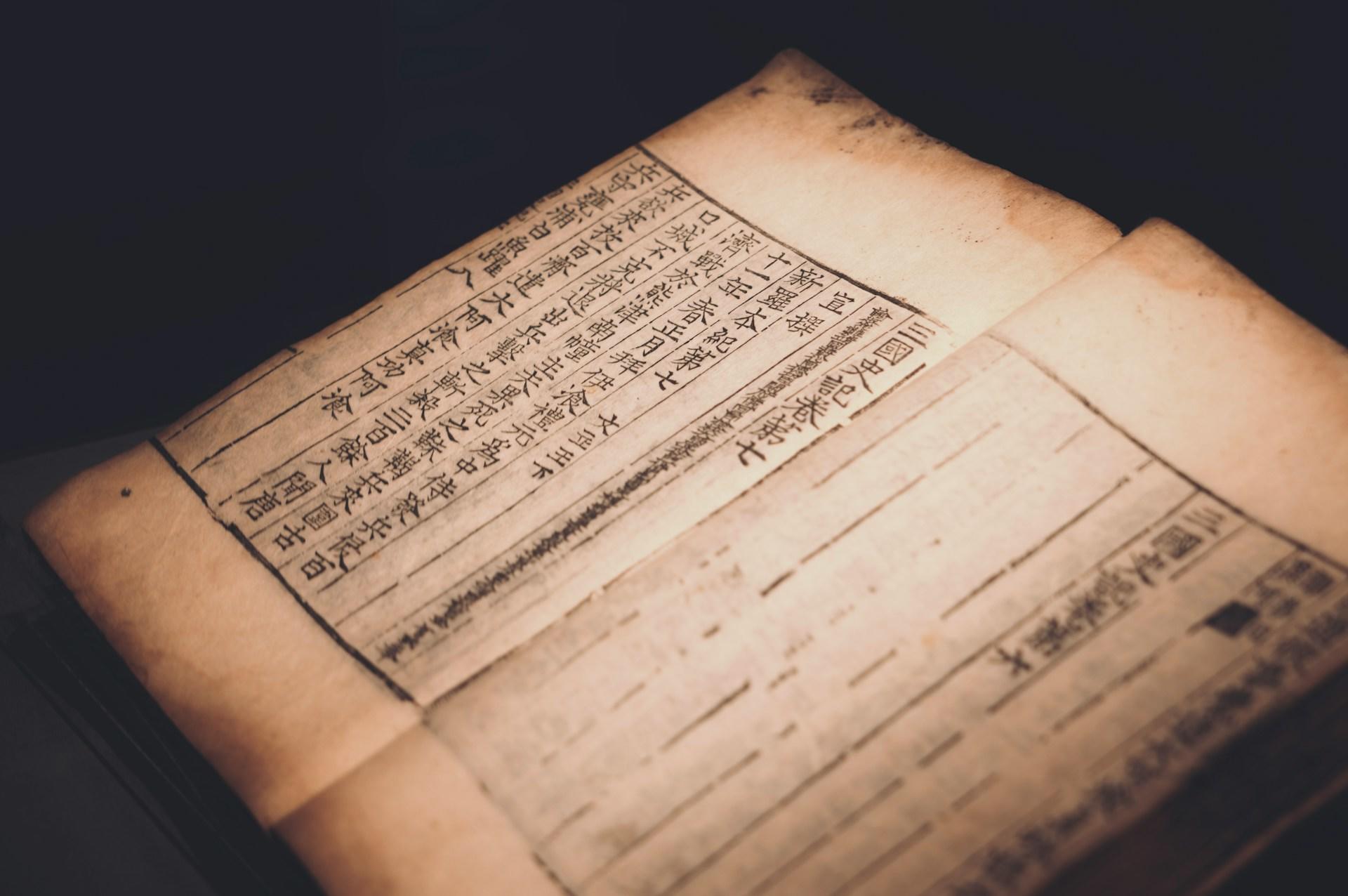
Korean number evolution is no less dramatic. Far back in Korea's history, China had a major influence on the Korean culture, particularly the written language. To this day, Korean writing includes Hanja. Those are Chinese characters spoken with Korean pronunciation.
It should then be no surprise that Chinese influences linger over the Korean counting system. Indeed, Korean numbers include two sets: Sino-Korean and Native Korean. Each serves specific functions.
Sino-Korean Numbers
- for dates
- for days, months, and years
- discussions of money
- phone numbers
Native Korean Numbers
- used before measure words
- used to count 'things'
- to talk about time
- for general counting
The characters look different but their differences don't lie solely in writing these numbers. Their pronunciation is also different, as we'll see in the next segment.
You'll note that Sino-Korean numbers have a formal flair to them. As China dominated Korean society for so long, record-keeping and official proceedings relied on these numbers. Besides, Hangul, the Korean writing system, was established much later, in the 15th Century. By that time, Chinese characters had been Korea's alphabet for hundreds of years.
To master the Sino-Korean numbers, you only need to remember 18 of them. If you can master 1 through 10, and then memorise one hundred, one thousand, and one million, you'll reach Sino-Korean number fluency.
Native Korean numbers span 1-99. However, if you learn 1-10, you'll have the entire system figured out. In fact, you won't use numbers greater than 10 much, except maybe to describe a person or thing's age. Still, you should learn the 'tens', at least. Once you know them, it will be easy to build the number you need.
Both sets of numbers include a zero; each system has a specific use for it. The Sino-Korean zero is 공 (gong) and the Native Korean one is 영 (yeong). You'll use 'gong' when you give out your phone number, for instance. Students use yeong when they do maths, and broadcasters do so when reporting sports scores.
Ready to start learning? Find a Korean course Melbourne here on Superprof!
Numbers in Korean
With these parameters set, we now dive into Korea's family of numbers. You'll need to know their Hangul as well as their romanised names and spelling, so you can master their pronunciation. We'll start with the Sino-Korean numbers.
| Number | Hangul | Romanised |
| 1 | 일 | il |
| 2 | 이 | i |
| 3 | 삼 | sam |
| 4 | 사 | sa |
| 5 | 오 | o |
| 6 | 육 | yuk |
| 7 | 칠 | chil |
| 8 | 팔 | pal |
| 9 | 구 | gu |
| 10 | 십 | sip |
| 20, 30 | 이십, 삼십 | isip, samsip |
| 100 | 백 | baek |
| 200, 300 | 이백, 삼백 | ibaek, sambaek |
| 1000 | 천 | cheon |
| 1,0000 | 만 | man |
| 10,0000 | 십만 | simman |
| 100,0000 | 백만 | baengman |
| 1000,0000 | 천만 | cheonman |
If you're familiar with Chinese numbers, you might note similarities between Mandarin and Sino-Korean numbers. That likeness is more obvious when you hear these numbers; 'sip' sounds a lot like the Chinese 'shi', for example.
The greater similarity lies in these numbers' groupings. Western cultures typically group numbers by hundreds, meaning we place a marker every three places. Chinese and Korean counting systems group by thousands - markers after every four places.
You may have noticed that 'man' - ten-thousand, begins a new grouping. Every number after 1,0000 includes 'man'. One hundred thousand equals 'ten ten thousands' and one million is 'one thousand ten thousands'.
You won't need these distinctions using Native Korean numbers. As noted above, they only reach to 99. Let's discover what they look and sound like.
| Number | Hangul | Romanised |
| 1 | 하나 | hana |
| 2 | 둘 | dul |
| 3 | 셋 | set |
| 4 | 넷 | net |
| 5 | 다섯 | daseot |
| 6 | 여섯 | yeoseot |
| 7 | 일곱 | ilgob |
| 8 | 여덟 | yeodeol |
| 9 | 아홉 | ahop |
| 10 | 열 | yeol |
| 20 | 스물 | seumul |
| 30 | 서른 | seoreun |
| 40 | 마흔 | maheun |
| 50 | 쉰 | swin |
| 60 | 예순 | yesun |
| 70 | 일흔 | ilheun |
| 80 | 여든 | yeodeun |
| 90 | 아흔 | aheun |
As you can see, the logic is far less clear with Native Korean numbers. The Sino-Korean system presents single-digit numbers as single syllables and stays consistent throughout. Also, these numbers show no obvious pattern. Still, we find many similarities when we begin counting in Korean.

Counting in Korean
It's far easier to count in Korean using the Sino-Korean system because it's more consistent. For instance, the number 25 is '2 ten five' (이십오). This pattern doesn't change, no matter how large the number. You'll always use a multiple of the unit - 10, 100, 1000, 1,000, plus the single-digit value, if any.
Using the Native Korean system is a bit more complex. One to ten is straightforward; 11 and 12 entail combining 10+1 and 10 + 2, respectively - 열하나 (yeolhana) and 열둘 (yeoldul). This pattern continues through the teens and, indeed, through the rest of the numbers. However, as our table shows, these numbers are less consistent in their pronunciation.
Koreans use Sino-Korean numbers to count money, describe official dates and their age, unless the setting is informal. Then, they state their age using Native Korean numbers. This matters because when you greet someone in Korean for the first time, establishing the age hierarchy is vital to social interaction.

Using Korean Numbers
You may have noticed that this article only explains natural numbers in Korean; explaining ordinal numbers would demand a separate article. Besides, we still have to learn how to use all the numbers we've learned.
If someone asks you what time it is, use Native Korean numbers to tell them: 세 시 - se si (three o'clock). Conversely, if your dinner needs another 20 minutes to cook, you must use the Sino-Korean system: 이십 분 - isip bun (20 minutes) to say so.
To cite a date before the 20th Century, use Native Korean numbers; for today's date, use Sino-Korean numbers. For anything you buy, you must use a measure word with either numbering system. However, because Sino-Korean number usage is often used in 'official' contexts, they call fewer such words.
Words to specify amounts for uncountable nouns: a 'cup' of tea, a 'sheet' of paper, a 'gust' of wind, a 'roll' of film and so on.
In this article's first segment, we introduced measure words and emphasised their use with Native Korean numbers. The English language includes measure words too but not as much is needed when speaking Korean.
You needn't worry about learning every single measure word right away. The general number classifier 개 (gae) will serve if you don't know the right word. You may even find that this measure word is the one you need. For instance: 모자 3개 샀다 (moja set gae sassda) - I bought three hats.
Once you land in Korea (or maybe even before), you won't have to wait long to give out your phone number. To do so, you only need to rattle off the numbers in sequence. Let's say your eight-digit number is 5978-3482, which becomes: 오구칠팔-삼사팔이. Recall that you must use Sino-Korean numbers to share these digits.
Of course, you will write your phone number in Arabic numerals when you fill out forms. Likewise, you'll see numbers you're used to on price tags, highway signs and metro numbers, too. Saying these numbers in Korean is the crucial aspect. That's when you need to remember which numbering system to use.
Counting in Korean is not as hard as it seems, despite needing to learn two numbering systems and their uses. Once you master the Korean alphabet, you'll have to trouble distinguishing Sino-Korean numbers from their Native counterparts.
The more exposure you have to Korean culture, the more you'll recognise the proper use of Korean numbering systems. You can prime yourself for your first actual encounter with Korean numbers by counting in Korean as you work out, or simply while walking around.
Find the perfect Korean language course here on Superprof.
Summarise with AI:
Enjoyed this article? Leave a rating!


 Loading...