

Behind the success of K-pop and idols is a highly unique, precise, and demanding cultural system. Unlike in other countries, where people can carve their own path into the music industry, there is really only one way for K-pop stars to earn their fame: through the trainee system. It’s a lot of hard – some would say “gruelling” – work. Learn about the lengthy process behind the fine-tuned K-pop trainee system that creates incredibly successful popstars.


The Journey to K-Pop Idol
It takes a lot of time, money, and hard work to make it through the trainee course and become a successful idol. This timeline gives a brief overview of all the steps for how to become a K-pop trainee. Every Kpop star has gone through this process, which has changed minimally since its inception in the 1990s.
Age 11 or 12 (on average)
Audition with an entertainment company
Hopeful auditioners usually undergo extensive preparations before auditioning. Typically, the cut-off age for auditions is 17-18.
Train for 1-10 years (average: 2-4 years)
Attend trainee program to learn all the required skills
Trainees attend both the K-pop training program (singing, dancing, rapping) and academic school. Their academics focus on core concepts as well as industry-specific ones like business, foreign language, and media training. Continuously perform well for evaluations to be selected for a group project.
In training: become part of a debut group
Fit the company's carefully-crafted vision
If your skills and "look" fit, you can train with a group to hopefully debut together and become an official K-pop group. Many groups-in-training compete on music survival shows. Groups create at least one song and music video. Groups sign their long-term idol contracts with their management companies.
Debut!
Release the song and music video
Immediately start promoting the group with tours, live performances at events and on TV, appearances, and social media campaigns.
Maintain popularity
Work hard every day
Idols and groups need to maintain relevance as well as a sparkling reputation. The music-making process, public relations, and maintaining health are full-time jobs.
The K-Pop Trainee System
The K-pop trainee system is run by Korean entertainment companies. It’s a structured training model that is more or less standardised across all the major companies. These companies recruit young talent, typically through auditions, and invest in them by paying for their trainee course upfront. The goal is to produce idols who are skilled performers, media-ready, and able to work as part of a group. In short, they are prepared to debut with a group and try to become the next K-pop superstars.
Unlike many other pop music industries, K-pop does not use artists who self-develop and then try to sign a deal. Instead, the entertainment company shapes idols from early stages. K-pop idols are not found; they are created through rigorous training.
Many people are becoming inspired by K-pop, as seen in media like the Netflix movie "KPop Demon Hunters."
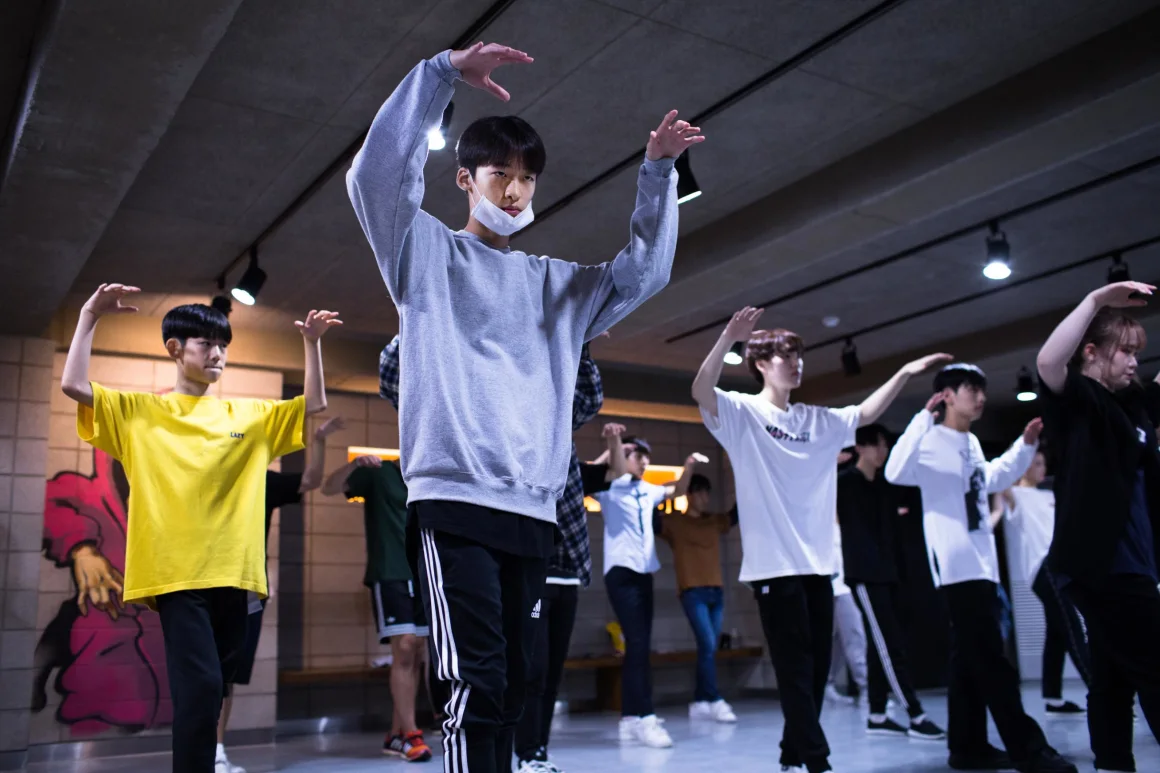
In the end, not every trainee will debut. In fact, most will not. The system is so competitive that only the best of the best ever make their way to the main stage.
The four major companies rule over most of K-pop trainee classes, groups, and idols (and their reach typically spans across continents). These are the powerhouses of the Kpop industry, along with some of the most famous groups they manage or managed:
SM
- TVXQ
- Super Junior
- Girls’ Generation
- SHINee
- EXO
- Red Velvet
YG
- Winner
- BLACKPINK
- Babymonster
- Seven
- BigBang
- Psy
- 2NE1
- iKON
JYP
- TWICE
- g.o.d
- Wonder Girls
- JJ Project
- 2PM
- Itzy
- Stray Kids
Hybe
- BTS
- SEVENTEEN
- Tomorrow X Together
- BoyNextDoor
- NewJeans

How to Become a Trainee
Entertainment companies typically hold auditions year-round. They can be open auditions, private auditions, or online video submissions. These days, they even offer auditions abroad, showing how much their influence is expanding.
Auditions usually evaluate singing, dancing, and rapping skills. Some applicants may be able to focus on putting forward one skill, depending on the company’s current trainee strategy. Other times, the company may prefer applicants with potential in multiple areas. Auditionees must also meet the company’s requirements for visual appeal and stage presence (read: looks and vibe).
Those who pass the audition are offered a trainee contract. However, the trainee must remember that there is no guarantee they will debut.
Trainees may join major companies or smaller agencies; however, being part of a large company offers a better chance of success.
Most hopefuls spend months training for auditions and may have to audition dozens of times before they are selected, if at all.
Before you begin the audition process, be sure to learn useful K-pop audition tips and practice with a coach, trainer, or classes!
No. Many K-pop idols these days come from places like Japan, China, Thailand, New Zealand, Australia, the United States, and Canada. However, trainees are expected to become fluent in Korean and possibly other East Asian languages like Japanese and Chinese. They must also be culturally aware, since they will be conducting interviews under heavy scrutiny.
The reality also stands that the K-pop industry typically only accepts performers who look East Asian; the region is not very open to foreign-looking idols at this time.
Life As a Trainee
Living as a trainee, your schedule is very structured. Most trainees attend special schools with classes designed to accommodate training schedules. The curriculum typically includes classes in subjects that trainees need to know, like foreign languages (usually Chinese, Japanese, and English), business, and media training.
Trainees usually live in dorms where privacy is limited. Strict rules about curfews, behaviours, and phone use must be followed. Students are typically discouraged or banned from dating. They may also be required to adhere to a certain diet to maintain their energy while also developing a thin, toned figure.
It’s a high-stress, highly-controlled environment, and many trainees drop out of the course due to the strenuous demands.
The “ideal” age to join the program is 11-13 years old. However, many companies accept applicants in their late teens. Many criticise this system, stating that putting such young kids into a highly stressful environment is bad for their mental health.
Duration and Intensity of Training
Trainees must master the skills required to be a successful K-pop idol who represents the management company well. They need to learn:
- Dance and performance
- Vocal technique
- Rapping
- Media navigation
- Language
Days are long and repetitive, with idol training typically running late into the night. Trainees may attend school and idol training for 10-12 hours per day, 6 days per week.
There is no fixed duration for training. Some are ready to debut after one year, others train for five to seven years, and may even age out of the training program without making a debut at all.
The duration depends on the individual’s skill level, company plans, and market trends.
Training is intense, with each skill taking up hours of practice per day. Physical fitness and appearance are often monitored with strict weigh-ins and evaluations.
Many trainees burn out from the pressures.
One thing is certain: this training system produces excellent K-pop music.
There are many manwha and manga about trainee and idol culture. While they obviously give a simplified, fit-for-a-story look at the K-pop industry, they are great for beginners to get a foundational understanding of the concepts. Manwha like "True Beauty," "Imitation," "The Yakuza's Bias," and "Debut or Die" are a few options to try.
Evaluations and Progress Assessments
Trainees are constantly compared to one another and evaluated for progress. These evaluations may happen monthly or quarterly. Trainees demonstrate their skills in front of staff and trainers, who score them and discuss whether their progress is satisfactory.
Trainees must not only progress, but also maintain their physical fitness and appearance throughout the course. Failure to do so may cause dismissal from the program.
Evaluations determine who stays and leaves. It’s used as a way to create groups that might become a coherent act and debut together. Finishing the trainee course depends a lot on luck: if a trainee is average in some skills, but they fit a specific concept well, they may get to stay. Meanwhile, a talented performer who doesn’t have “the look” might be dismissed.
This uncertainty is just another layer of hardship for trainees to handle.
Debut and Beyond
Trainees who are deemed ready for debut are grouped together, with synergy, dynamic, chemistry, skill, and concept in mind. It’s the first big breakthrough for a trainee, but it’s not a guarantee. Many trainees make it to this step and are then cut from the team. They might either be cut entirely from the program or reassigned to a different group to debut at a later date.
The Debut Process
Trainees are grouped together in a way that creates a good group balance and achieves the concept the management company is developing. Roles are assigned, such as leader, main vocalist, rapper, dancer, etc. Sub-groups may be planned. The group concept is defined, including the musical style and visual theme.
Trainees then sign an idol contract, which outlines terms about revenue sharing, schedules, and obligations, among other things. Often, training costs are included as a debt to the company that the trainee agrees to pay off with their idol earnings. They may sign individual contracts or a group contract, depending on the company and situation.
The debut itself takes months of preparation. The group records music, films videos, hones their style, and perfects their choreography. They must promote themselves with media appearances and participation in music survival shows, where the audience votes on which group gets to debut.
Trainees are hand-picked by management to be placed in a group together. They are carefully planned to achieve the desired group dynamic and image, and to achieve a specific concept. Once finalised, the group signs with the company. Individual freedom is limited. Each idol’s public image is carefully managed, and they are expected to adhere to a strict code of conduct. Decisions about music, appearance, and publicity are typically made mostly by management.

Life After Debut
Once a group finally debuts and puts out their first song, they enter phase two of being new idols. They have to promote themselves exhaustively, including putting on daily performances, frequent interviews, and extensive travel, often with limited sleep.
Success at this point is also not guaranteed. Many groups disband after their debut or within a few years due to low sales or other issues, like wanting to back out of a restrictive contract or being unable to handle the stress.
Discover some of the best K-pop groups of all time.
In K-pop, a debut is when a group officially releases their first song and music video as official artists. The reception dictates whether the management company decides to continue promoting the group or not.
Even successful idols face constant judgment from fans, media, and management, especially based on popularity and profits.
High income is also not guaranteed. Some idols earn very little despite all the hard work, especially if they are paying back the management company for their training. Others find more financial security through endorsements and tours.
Challenges and Considerations
K-pop idols do not live easy lives. Their cool, confident personas are carefully crafted through years of training. Behind the scenes, their lives are very stressful. The system offers opportunity, but at a cost.
If you’re thinking of pursuing idol training, you need to understand the implications. It’s also important for fans and the media to remember that idols are people who are under a lot of stress!
Contractual Obligations
Idol contracts are typically very long-term. Usually, the first contract is 7 years, which is the maximum allowed under Korean law. This means that the group or individual signed with the entertainment company must abide by their direction for at least 7 years.
Before 2010, idol contracts were even longer; typically 10-13 years. In 2010, South Korea’s Fair Trade Commission (KFTC) ruled that contracts must be no longer than 7 years in a case where three members of TVXQ took SM Entertainment to court over their 13-year “slave contract” terms.
This is also where the term "7 Years Curse" comes from, with the belief that if a group successfully completes their 7-year contract with their original lineup, they'll continue on as a successful group for many more years.
Contracts may limit personal activities, such as dating, social media use, and outside work. However, many idols pursue side projects along with their main group activities as a way to earn more money and garner more fame and lasting relevance. They need to; contracts often favour the company, especially in the early years. Often, entertainment companies include in the contract that the idol must pay back the trainee fees before they can start keeping a substantial portion of their earnings.
Trainee fees can be between $100,000 and $500,000 USD on average (and remember, they earn mostly in Korean won ₩, and 1 won = about 0.0007 USD).
How much an idol earns varies wildly: some earn only about $5,000 USD per year, while others may earn millions. It depends on how many years they’ve been in the business, how popular the group is, and how many side projects they can work on (modelling, acting, endorsements, other musical groups, etc.). Lower-earning idols are indebted to their companies for a long time, and may not take home very much of their earnings for many years.
Prospective trainees and their families should review all contracts extremely carefully with guidance from a lawyer.
K-Pop Idol Culture
Idols are held to extremely high standards of appearance and behaviour. They are expected to always be thin, glowing, polished, and emotionally controlled (usually aligned with their stage persona, so bubbly, happy, calm, cool, etc.). Mistakes, even small ones, can be harshly judged by the public, who may share mean takes online.
Dating restrictions are common, and if an idol is found to be in a relationship, they might get backlash from fans and their management company.
There is a real problem with parasocial relationships and over-scrutinisation in the Kpop fanbase. These expectations shape how idols live and present themselves in public and private. For some, the pressure is manageable, but for others, it’s overwhelming.
Learn more about K-pop's origins and culture.
To get a better idea of idol culture, you can look up videos about idols on YouTube and see the fan edits, comments, “scandals,” and other content revolving around hyper-analysing the performers. There are both effusive praises and harsh criticisms. Idols need to learn to tune out negativity while also keeping it in mind and adjusting their public image; it’s a delicate balance that tests their resilience.
Mental and Physical Health
The state of idols’ mental health is a huge concern in the industry. Long hours, multiple jobs, public criticism, maintaining a perfect image at all times, and lackof control over their own life contribute to immense stress, anxiety, and depression. Many idols develop nervous or depressive disorders. They may develop maladaptive coping mechanisms, and there have been many suicides.
Physical injuries are also common, especially related to dance, choreography, and stage accidents. Some idols also become critically fatigued due to lack of rest, stress, and/or an insufficient diet in efforts to stay thin. Some companies provide health counselling and support, but access varies.
Though awareness is increasing, there have not been adequate measures taken. The stigma is still high, and many idols hesitate to speak openly about their health issues for fear of how it will impact their careers.

Mandatory Military Service
Men in South Korea must complete 18-21 months of military service, to be served between the ages of 18 and 28. This directly affects boy K-pop groups, which are typically made up of members who are all exactly those ages. Most groups plan around this obligation even before their debut. They may enlist at different times to prevent the group from entering “haitus” status. Some groups plan to go on hiatus while the majority or entirety of the group serves at once.
The break in activities can slow momentum, but since it’s a normal part of South Korean life and boy Kpop groups’ activities, fans typically remain supportive while an idol is away.
The path to becoming a K-pop idol is specific and structured, highly demanding, and very uncertain. It’s not for the faint of heart. It requires immense discipline, talent, and resilience, and a lot of luck. The trainee system creates polished performers, but doesn’t allow more individualistic, unique performers to break through.
With all the negatives, there are also unmatched positives. K-pop idols are some of the most highly-revered celebrities in the world, with feverishly committed fan bases. Popular groups always have something to do: a tour, an album, modelling, appearances, music videos, etc. They certainly live and breathe music and dance while they’re an active part of a group. It’s a highly-respected position in South Korean culture, with an entire school-to-career pipeline carved out for trainees and idols to chase their dreams as best as they can.
Summarise with AI:
Did you like this article? Leave a rating!

 Loading...