
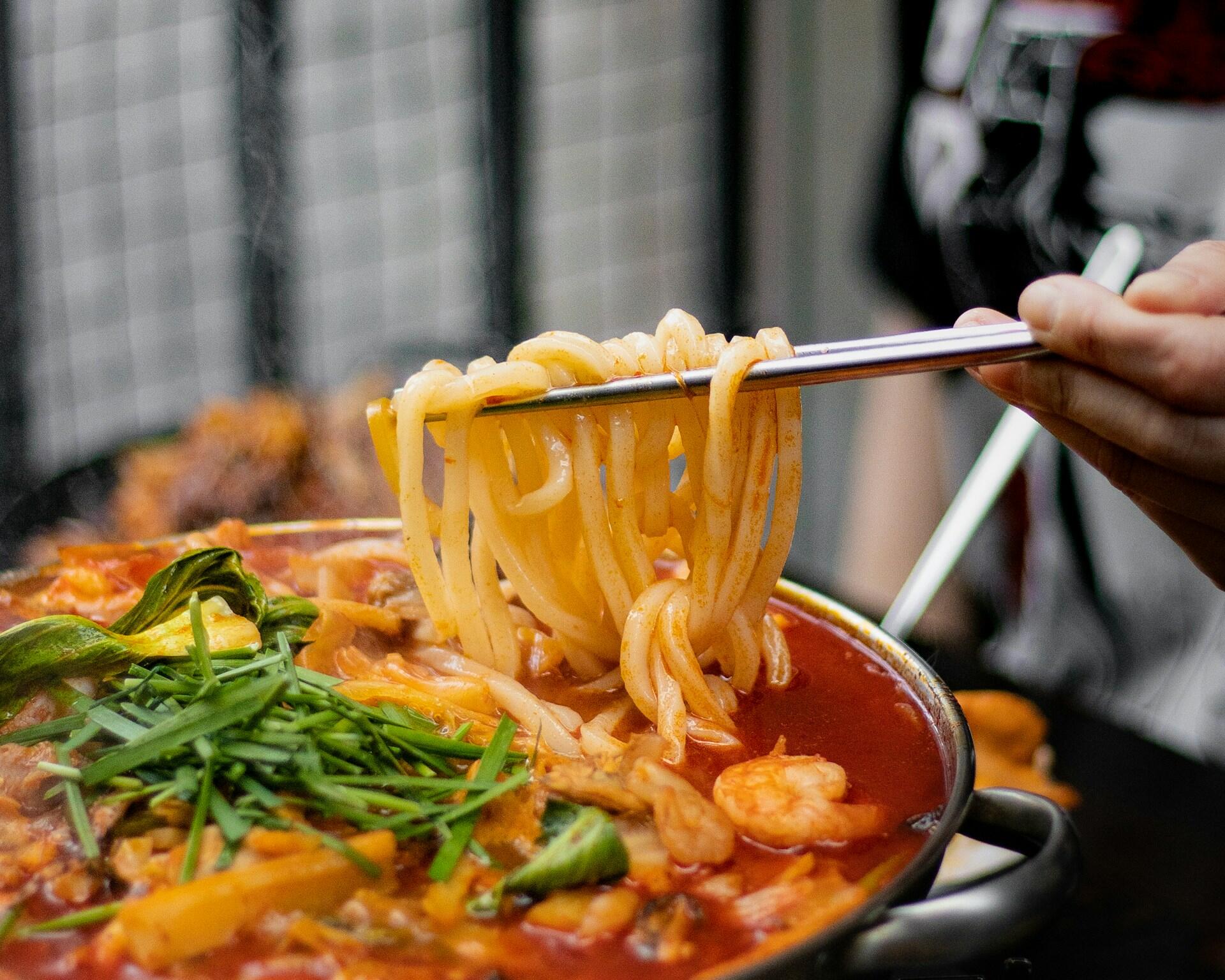

Every culture has its special foods, and each of those foods has a special meaning. For instance, Australians' New Year's barbecue serves as a prelude to the much-anticipated Pavlova, our native dessert. Meanwhile, Brits favour a nice roast with veg, which was a sign of abundance during the postwar years. Koreans also have their special foods - and it's a long list, but these always make the cut.
| 🍜Korean food name | 📖Romanised | 🔊What it sounds like | 🙋♀️What it is |
|---|---|---|---|
| 만둣국 | manduguk | Korean dumpling soup | |
| 삼색 나물 | samsaek namul | A side dish (banchan) made of spinach | |
| 잡채 | japchae | Korean glass noodle stir fry | |
| 갈비찜 | galbi jjim | Korean braised short ribs | |
| 떡갈비 | tteokgalbi | Korean beef patties | |
| 전 | jeon | A floured, egg-washed, fried food. Many types exist. | |
| 약식 | yaksik | A sweet rice 'cake' with dried fruit and nuts |


The Importance of Korean New Year Foods
As mentioned in our introduction, every culture attaches meaning to specific foods. In Korea, the dishes served as Korean New Year foods bring wishes for health, longevity, happiness, prosperity, and harmony. But which foods exhibit which qualities?
Beyond these, banchan, served with every meal, take on special significance when paired with Seollal food. They reflect the yang-yin principle of balance, as well as the five elements of the Korean zodiac.
Recipes for Must-Have Seollal Food
Korean families set their tables with an astounding variety of Seollal food, organised around these five dishes.
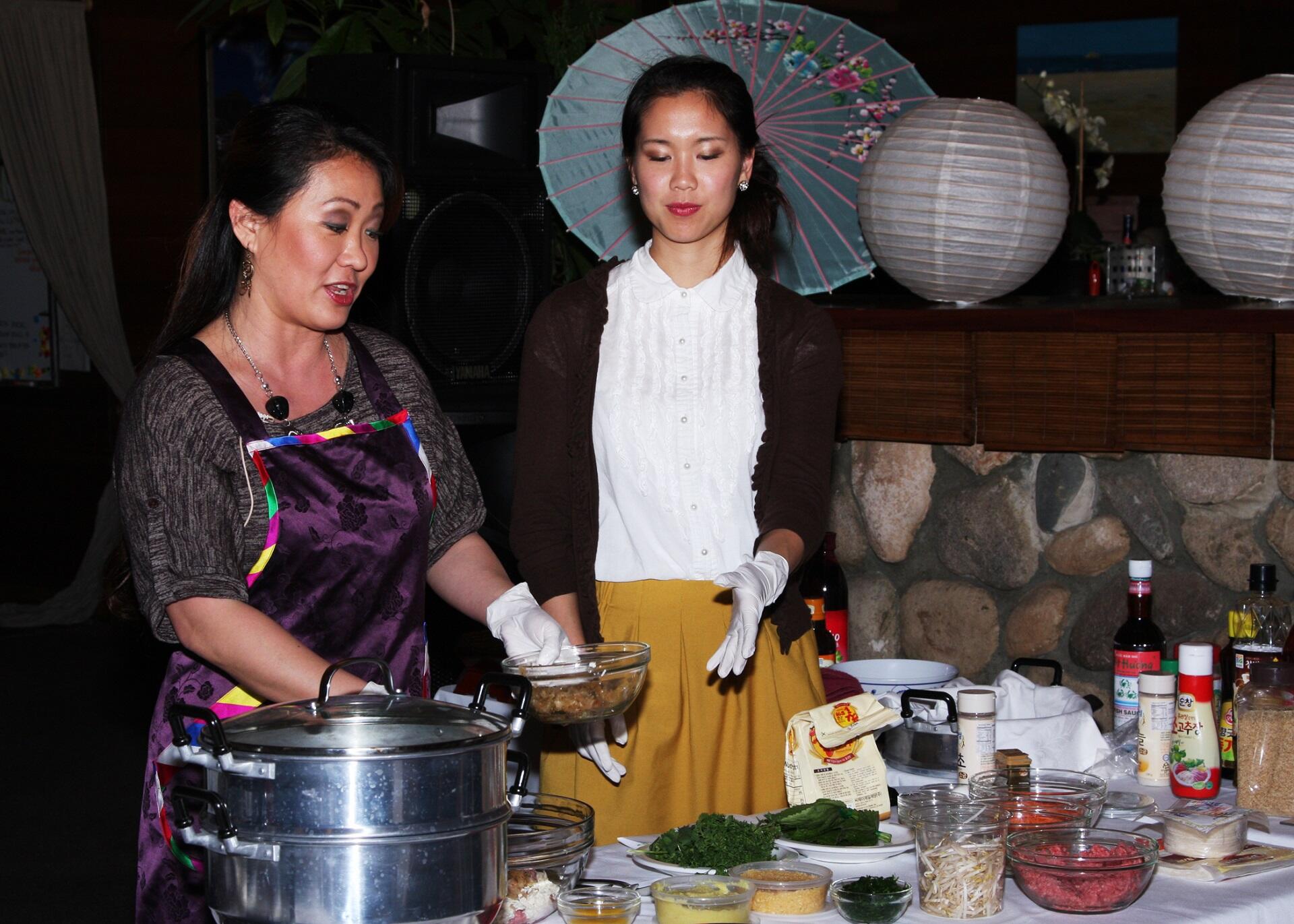
Tteokguk
To make this 'mandatory' Korean New Year soup, this is what you need:
Beef stock
- 500g beef brisket (skinless, low fat)
- 10 cups of water
- 1 large onion
- 10 whole peppercorns
- 2 green onion stalks
Soup ingredients
- 400gr Korean rice cakes (for soup, not snacking)
- 1 tsp Korean soy sauce
- 1/2 tsp minced garlic
- fine sea salt and sesame oil to taste
Those are the soup foundations. Enhance the dish's flavour and presentation with these toppings:
- 2 eggs, beaten and drizzled into the soup)
- 2-3 sheets of dried, roasted Korean seaweed cut into thin strips.
- Shredded cooked beef brisket
- The green onion' green parts.
Now, we start cooking.
You're now ready to put your soup together! Transfer the broth/rice cake concoction to a large serving bowl, topping it with the shredded beef, green onion, and seaweed. Enjoy!
Beware of overcooking the rice cakes! Simmering them too long will make them mushy.
Jeon
Who doesn't like to eat fritters?
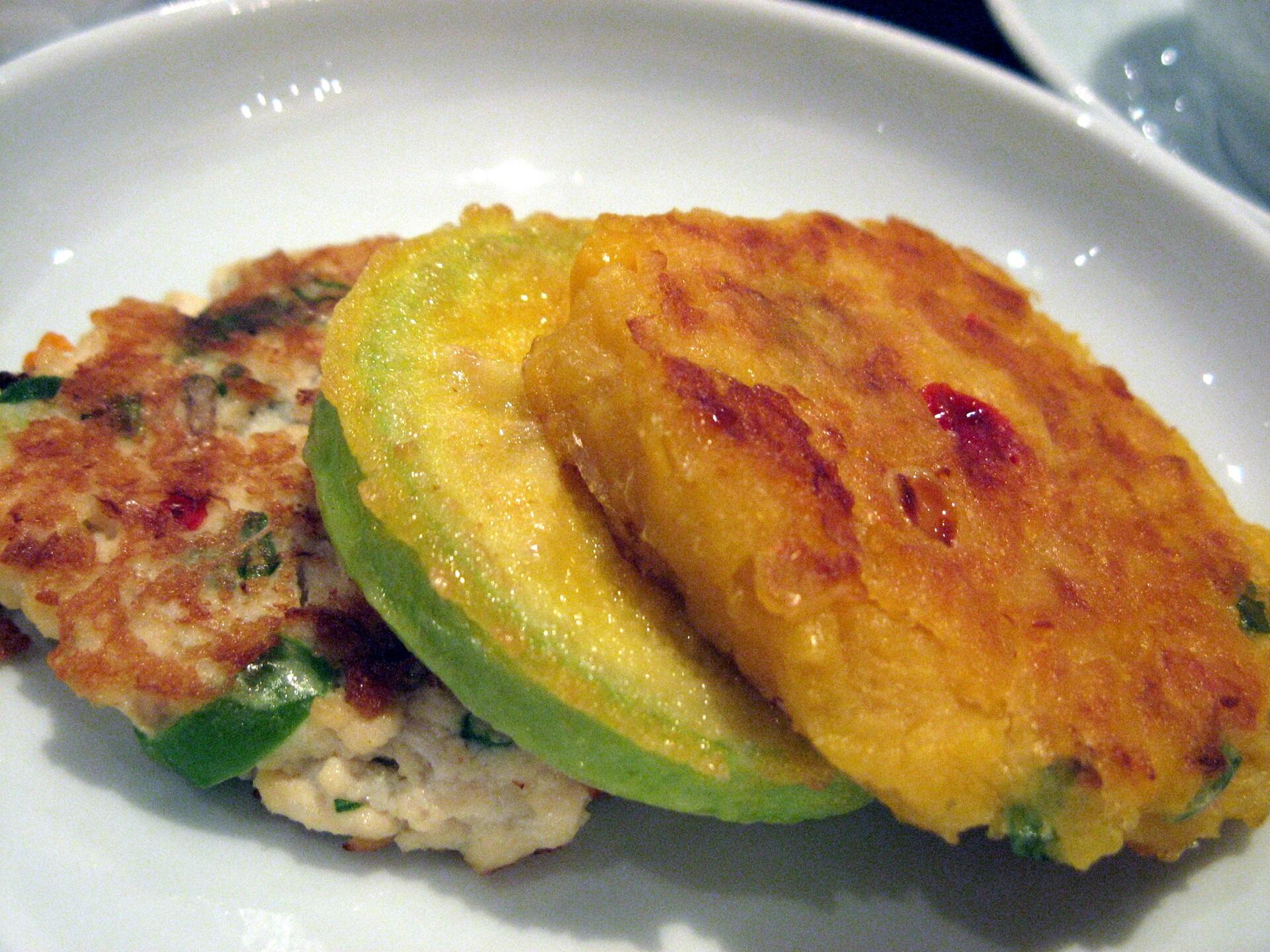
Crispy, crunchy, savoury, and satisfying, pretty much anything you can coat with flour and bathe in an egg wash before frying counts as a fritter - er, jeon. Including flowers, incidentally.
Korean cuisine boasts an impressive list of jeon (more than 80!).
The main types include:
- flower jeon (hwa-jeon - 화전)
- vegetable jeon (chaeso-jeon - 채소전)
- fish jeon (saengseon-jeon - 생선전)
- meat jeon (yukjeon - 육전)
Recipe variations are staggering, far too many to list here. It's best you start with the type you prefer to eat and experiment with the seasonings until they hit your palate just right. If you don't yet know what you prefer, perhaps a page dedicated to Korean jeon4 can help you find your way.
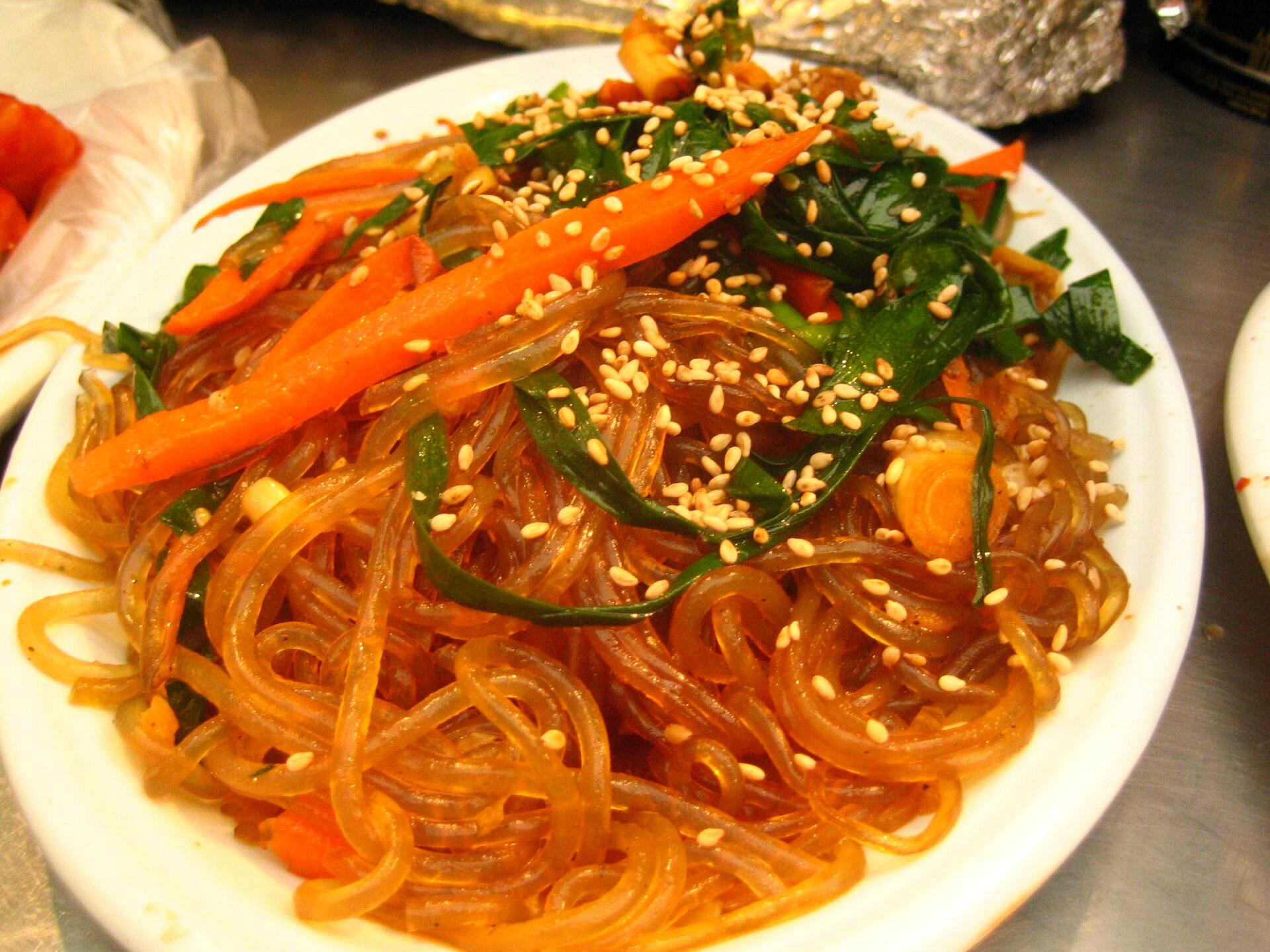
Japchae
Food is as much about texture as it is about appearance and taste. This lovely Seollal food hits all those high notes and more. Here's what you need to make this dish.
| 🧂Ingredients | 📏Measure | 📝Notes |
|---|---|---|
| Main ingredients | ||
| short grain glutinous rice | 3 cups (540ml) | |
| pine nuts | 2 tablespoons (tbsp) | |
| chestnuts | 15 each | roughly 120g peel and cut them into 3 or 4 irregular pieces |
| raisins sultanas | 1/4 cup | |
| cranberries | 1/4 cup | dried |
| jujube (red dates) | 10 each | rinsed and halved |
| water | 2 cups (360ml) | |
| Seasoning sauce | ||
| dark brown sugar | 1/3 cup | |
| soy sauce | 1 tbsp | |
| sesame oil | 2 tbsp | |
| honey | 2 tbsp | |
| sea salt | 1/8 teaspoon (tsp) | |
| cinnamon powder | 1/2 tsp | |
| Optional decorations | ||
| pine nuts | 1 tbsp | |
| jujube | 2 to 3 | dried, pitted cut them in half lengthwise, and then into strips. curl the strips so they resemble a snail's shell. |
With such a long list of ingredients, you may (rightly!) guess how intensive and time-consuming the preparation must be. Once you get all that done, start by:
After each stir-fry, transfer each ingredient into a large serving bowl. Once you've stir-fried everything, toss the bowl's contents (using your hands works best) until everything is well coated. Don't forget to drizzle in sesame oil and garnish with roasted sesame seeds!
'japchae' translates to 'mixed vegetables'.
Records for this dish go back to the 1600s. In those days, noodles weren't a part of the recipe!
Galbi Jjim
For those who eat meat, nothing hits quite like melt-in-your-mouth, savoury beef. If you're such a one, gather these ingredients and get ready to drool!
| 🧂Ingredients | 📏Measurement | 📝Notes |
|---|---|---|
| Main ingredients | ||
| beef short ribs | 1.5 kg - 1.8 kg | bone-in variety is best! |
| water | 1 1/2 cups (250ml) | |
| carrots | 2 each, around 275g | cut into medium size chunks |
| Sauce | ||
| red apple or Asian pear | 170g | cored & chopped |
| onion | 60g | peeled & chopped |
| soy sauce | 6 tablespoons (tbsp) 1 tbsp = 15ml | the ordinary variety |
| brown sugar | 2 tbsp | |
| honey | 2 tbsp | |
| rice wine | 2 tbsp | |
| minced garlic | 1 tbsp | |
| sesame oil | 1 teaspoon (tsp) 1 tsp = 5ml | |
| black pepper | 5 peppercorns | |
| Optional ingredients | ||
| dried jujube | 8 each | |
| ginko nuts | 10 | peeled |
| chestnuts | 10 | peeled |
Once you have everything ready, start by soaking your beef in cold water (be sure to change the water 2 or 3 times!). As it soaks, place all the sauce ingredients in a blender or mixer. Set the gently blended mix aside. And then:
You won't be too busy preparing this dish, so you'll have time to practise all the Seollal greetings you learnt in class. What a great way to get in the mood for your dinner!
Yaksik
Some people really only eat dinner so they can have dessert (this writer: guilty as charged!). If you're not such a one, you might change your mind once you get a taste of these sweet after-dinner treats. To make them, first gather up these ingredients.
| 🧂Ingredient | 📏Measure | 📝Notes |
|---|---|---|
| Main ingredients | ||
| Korean sweet potato starch noodles | 250g | |
| rib eye fillet | 100g | cut into thin strips |
| carrot | 1 each, around 120g | rinsed, peeled, julienned |
| baby spinach | 110g | rinse well! |
| bell pepper | 50g; about 1/4 of a pepper | sliced julienne style |
| yellow onion | 1/2 of a good-sized onion; about 105g | peeled, rinsed, and thinly sliced |
| fresh shiitake mushroom | 100g | remove stems and slice thinly. |
| Spinach seasoning | ||
| fine sea salt | 1/4 teaspoon (tsp) 1 tsp = 5ml | |
| toasted sesame oil | 1 tsp | |
| minced garlic | 1/2 tsp | |
| Beef marinade | ||
| soy sauce | 1 tablespoon (tbsp) 1 tbsp = 15ml | |
| rice wine | 1 tsp | |
| minced garlic | 1/2 tsp | |
| ground black pepper | 1/4 tsp | |
| toasted sesame oil | 1 tsp | |
| Noodles and mushroom marinade | ||
| soy sauce | 4 tbsp | |
| honey | 1 tbsp | |
| brown sugar | 1 tbsp | |
| toasted sesame oil | 1 tbsp | |
| ground black pepper | 1/8 tsp |
With everything measured out and prepped (chopping the chestnuts, et al), it's time to get to work.
*When cooked the traditional way, in a steamer pot, yaksik takes up to 10 hours to prepare. Should you have a rice cooker handy, you'll cut your cooking time down to around 35 minutes. You won't sacrifice any taste if you take that shortcut.
If you use a rice cooker, set it to 'multi-steam' and allow it to cook for 35 minutes.
As the cooker does its work, prepare a form to mould your concoction in (a clingfilm or parchment paper liner works a treat). Once the cooking cycle is complete, tip the mix into the form and press it in.
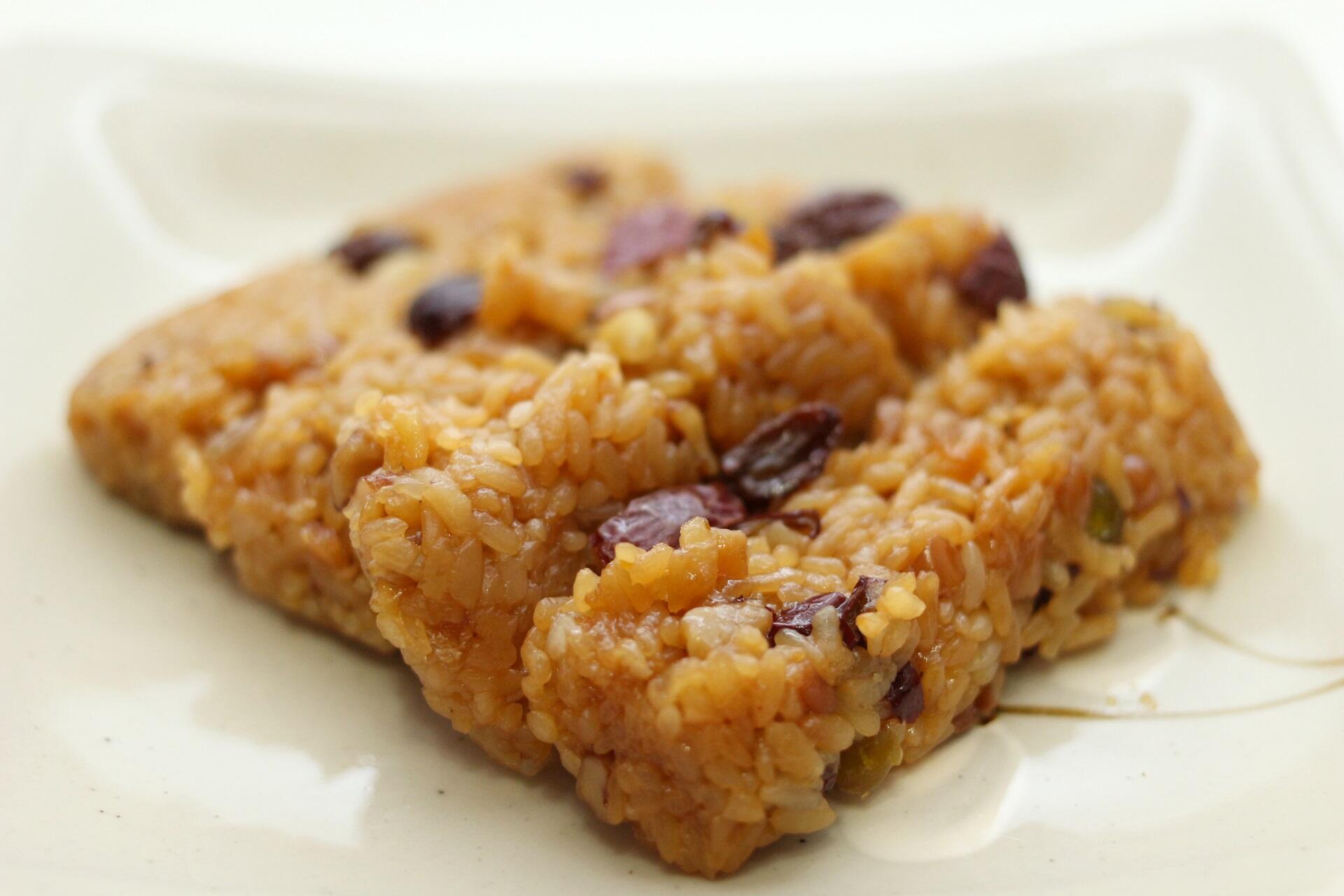
Allow it to cool for about 30 minutes before cutting it into squares or rectangles. If you've opted for decorations, apply them after cutting. And then, prepare to fend off all the hungry mouths!
Setting the Table With Korean New Year Foods
One popular misconception is that Korean New Year foods are the same across the country. In fact, these recipes vary across regions. For instance, Jeju Island natives often substitute fish for land animal meats in their dishes. And even that's not universal; various coastal areas have their own preferred seafood, based on what's available to them.
In Gangwon province, people have dumplings in their tteokguk, either with or instead of the rice cakes.
This province, which lies in the country's northeast, is vast and sparsely populated. As everywhere else in the world, Gangwon's terrain, mainly mountains and basins, dictates food availability. The people in this region favour buckwheat and potato recipes, as the conditions aren't suitable for rice cultivation.
Family tradition also plays a role in the preparation of Korean New Year dishes. If Grandma or some other ancestor made kimchi in this particular way, that recipe is followed. This is yet another way families honour their ancestors during this high holiday.
Seollal Food Presentation
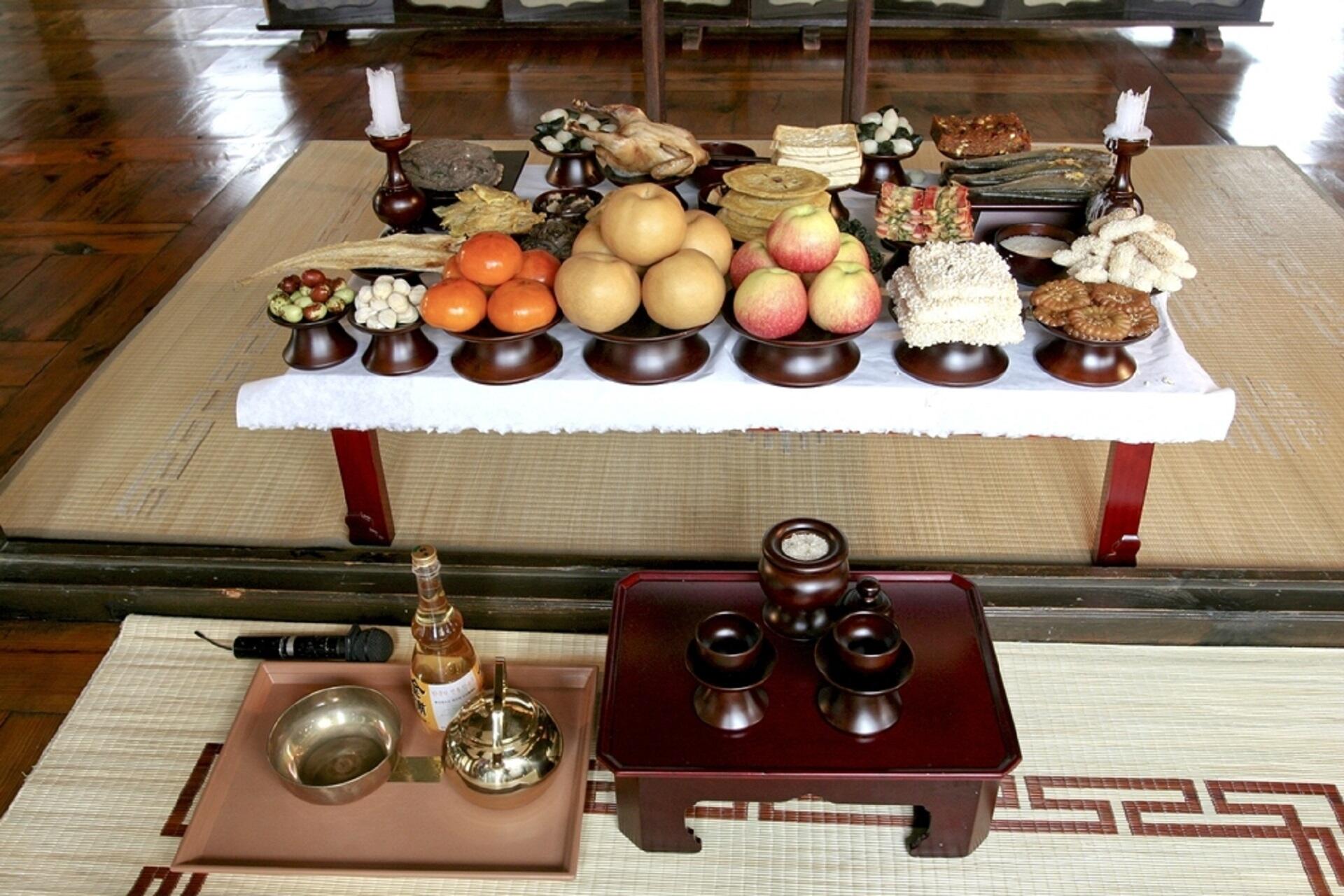
Across cultures, how people set their tables reflects cultural norms; Korean food presentation is no different. That is to say, Korean culture dictates food presentation specific to their standards. During Korean New Year celebrations, two aspects dominate. One is an everyday standard, the other is specifically for this holiday.
Charye
- the New Year veneration ritual
- chicken, fish and meat on one plate
- tteokguk replaces rice and soup
- seasonal fruit and yaksik placed at the table's southern edge
Banchan
- served with every meal
- small portions of sides
- typically radish, kimchi, bean sprouts and other dishes
Charye is an ancestor worship rite specific to Korean New Year. Food offerings include a blend of seasonal dishes and standard fare. If the household has a shrine, the table will be set up in front of it. The table setting must follow a specific layout1 and the bowing ritual will take place before the family sits down to their meal.
Again, these practices generally apply across Korea, but regional differences exist. Furthermore, family circumstances dictate how the charye ritual unfolds. For instance, if they have no shrine, they may centre their ritual in their home's main room2. However, the food layout remains the same.
As the New Year celebration draws ever closer, people across Korea and (around the world) look forward to all the delicious Korean New Year foods they'll soon enjoy. The children anticipate all the fun Korean New Year games they'll play while the matriarchs get busy planning their Seollal food shopping. Are you?
References
- AChuseok. “Chuseok - Charye Table Setting.” Chuseok.info, 2025, www.chuseok.info/table. Accessed 21 Dec. 2025.
- National, Folk Museum. “National Folk Museum of Korea - 영어 > Collection > Folk Story > Traditional Rites and Rituals > What Is Charye?”, www.nfm.go.kr/english/subIndex/1046.do. Accessed 21 Dec. 2025.
- Sue. “11 Korean New Year Food You Should Try.” My Korean Kitchen, 28 Dec. 2018, mykoreankitchen.com/korean-new-years-day-food/. Accessed 21 Dec. 2025.
- MasterClass. “Jeon Recipe: How to Make Savory Korean Pancakes - 2024 - MasterClass.” MasterClass, 2020, www.masterclass.com/articles/jeon-recipe. Accessed 21 Dec. 2025.
Summarise with AI:
Enjoyed this article? Leave a rating!

 Loading...
