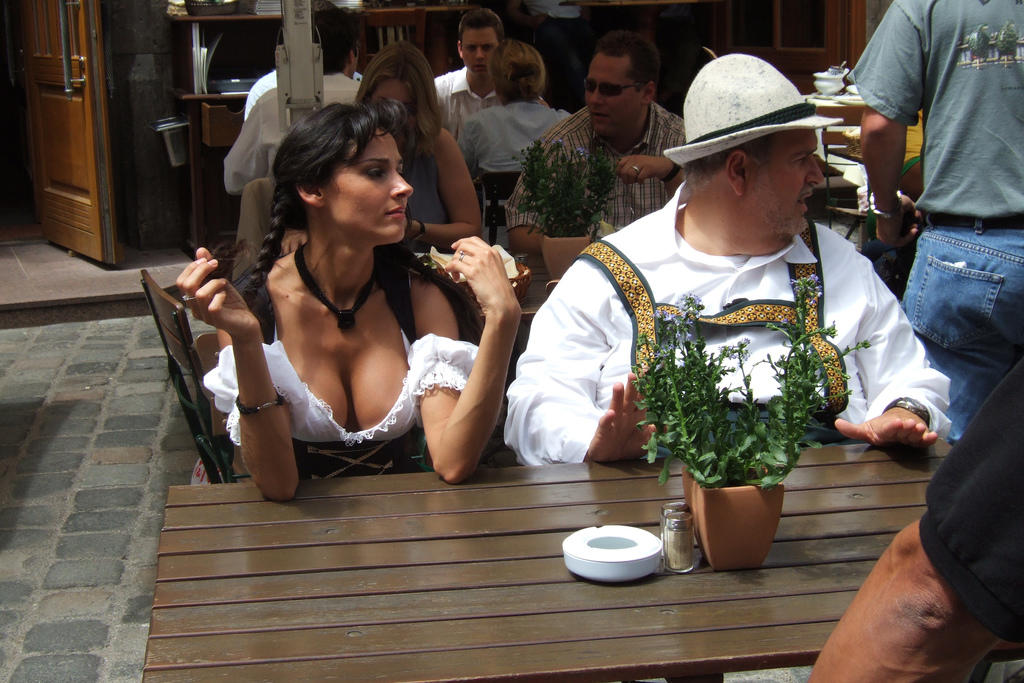

“Ich bin ein Berliner,” President John F. Kennedy assured the population of Berlin on June 26th, 1963 on the anniversary of the beginning of the air bridge to West Berlin, and it is said that everyone laughed. Or not. “Ich bin Berliner,” would have been correct. This is true. But you can also say “Ich bin ein Berliner” without insinuating you are a jelly donut. In fact, in Berlin no-one would have thought he was a jelly-filled donut anyway. While most of northern Germany calls them “Berliners”, Berliners don’t. They call them “Pfannkuchen.” Which, in the rest of Germany, means pancake. The Bavarians snub their noses at both appelations. They would hardly name a yummy delicacy after a “Saupreuß” (Prussian) and they like their pancakes flat like everybody else. So they call them “Krapfen”. Here are the best German classes Melbourne. 


Learning Regional Names for German Food
Simply going to the baker’s can be a challenge, even if you avoid jelly donuts. There you are, one Sunday morning, eager for that perennial German breakfast of rolls with cold cuts and cheese and a boiled egg. You get to the baker’s and, depending on where you’re living, you will have to ask for: "Wecken", "Semmeln","Schrippen", "Laabla", "Weggli" or if you’re very, very lucky, "Brötchen" (little bread). 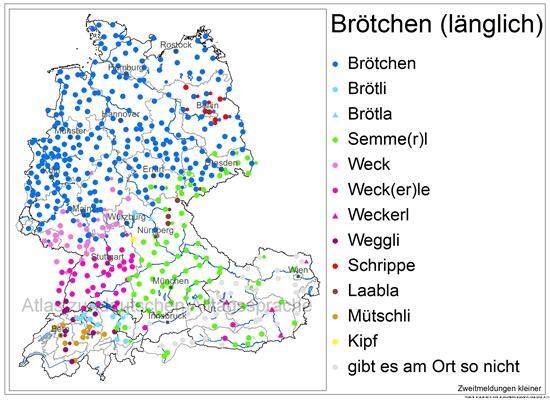
Telling the Time in German
I’m getting hungry. Why not invite me (or another friend) to share that delectable meal with you? When setting a time, you might be confronted with such confusing suggestions as “viertel neun” or “halb zehn.” 
Greetrings in the Different Parts of Germany
Hopefully your friends arrive at the appointed time. As a polite host, you will of course be greeting them. “Guten Tag” is acceptable anywhere, but as the suave germanophone that you are, you want to show that you speak the speak. Learn how to spell in German here. 
Moin
In Hamburg and northern Schleswig-Holstein and Luxemburg, “Moin” is the general greeting, sometimes doubled ("Moin-Moin") or in its more modern form "Moinsen" (often used by the younger generation). People from other parts of the German-speaking world are often confused as to why they are being wished a good morning at 4 o’clock in the afternoon, assuming - erroneously as we shall see - that “moin” is a contraction of “Morgen” spoken with a North German accent. In fact, like many greetings, it is probably the short version of “moin dag”, or good day, in Plattdeutsch, a local language. In Hamburg, you often answer a “Moin!” with a “moin moin”, effectively wishing someone a good good. This is basically what “Guude” in Norther Rheinland-Pfalz, Hessen und Rheinhessen is - the local dialekt form of “Gute(n Tag)”. In other parts of western Germany, this is shortened instead to “Tach” (Tag).
Servus
From Saarland down to Austria, you might be greeted (or left) with a “Servus!” This comes from Latin and basically means at your service. German comedian Michael Bully Herwig popularized it by using it to comic effect in his western parody “Der Shuh des Manitu”.
Grüß (dich) Gott
All the Northern Germans I know react the same way when coming to Bavaria and being greeted for the first time with a “Grüß Gott” (literally, “greet God”): instinctively, all respond: “Wenn ich ihn sehe.” (When I’ll see him.) However, Bavarians aren’t asking you to go up to God and say hello, rather, they are using an abbreviated form of “grüße dich Gott”, a wish that God should greet - or rather, in this sense, bless you. In Switzerland it is reduced to Gruezi (grüß dich) or Gruessech (grüß euch, plural).
French greetings
The far West of Germany has been much contaminated (or embellished, depending on your point of view) by the French. “Salli” is a Baden and Saarland greeting (from the French “salut”) also used in Switzerland, whereas in Luxemburg and Alsace they don’t even pretend and just say “Bonjour”. This site has many words in regional variations, including greetings, baked goods and words for "village in the middle of nowhere." Learn German colloquialisms and slang to help you integrate to life in Germany here.
Saying Good-bye in German Lessons
Good-byes are sad in any language, but in German at least you have some choice. “Auf Widersehen!” is universal and means until we see each other again. If on the telephone, you will sometimes hear “Auf widerhören”, until we hear each other again! and the Swiss German version is “uf widerluege”. Originally more a thing of the North, nowadays you can part ways with a cheerful “Tschüß!” most anywhere. Take time to learn its different inflections: Tschü-üß for that more cheerful ring, Tschööö in the Rheinland, Tschüssi in East Germany (or what used to be East Germany and is now eastern Germany), and Tschüssle in Swabia. Its origins probably go back to "adieu (à dieu)" or some variation thereof (such as "adios") in one of the Romance languages, meaning (go) with God, which became "adjüüs" and then "Tschüß". Careful, "adé" (adieu) is used in German, but nowadays only in the southwest and Switzerland (also "adele"); in the rest of Germany, it is only used when saying farewell to an object or idea: “Ihr kriegt ein Kind?
- Sagt adé zu Kinoabende und Ausschlafen!” (You’re having a baby? Say good-bye to a night at the cinema and sleeping in.)
- “Ich habe endlich abgenommen. Adé, ihr Hosen in Größe 46!” (I’ve finally lost weight. Good-bye, size 46 pants!)
Bavarian and Austria again team up to mystify the rest of German with "Pfiaddi" (familiar, singular), "Pfiatenk" or "Pfiateich" (plural), "Pfiat Eana" (singular, slightly more formal.) Another formal variation is "Pfiat God". The full sentence is "Behüte dich/euch/Einer Gott", God protect you. And then, there is “ba-ba”. “Ba-ba” is often used in Austria and is, quite simply, bye bye. 
Summarise with AI:
Did you like this article? Leave a rating!

 Loading...