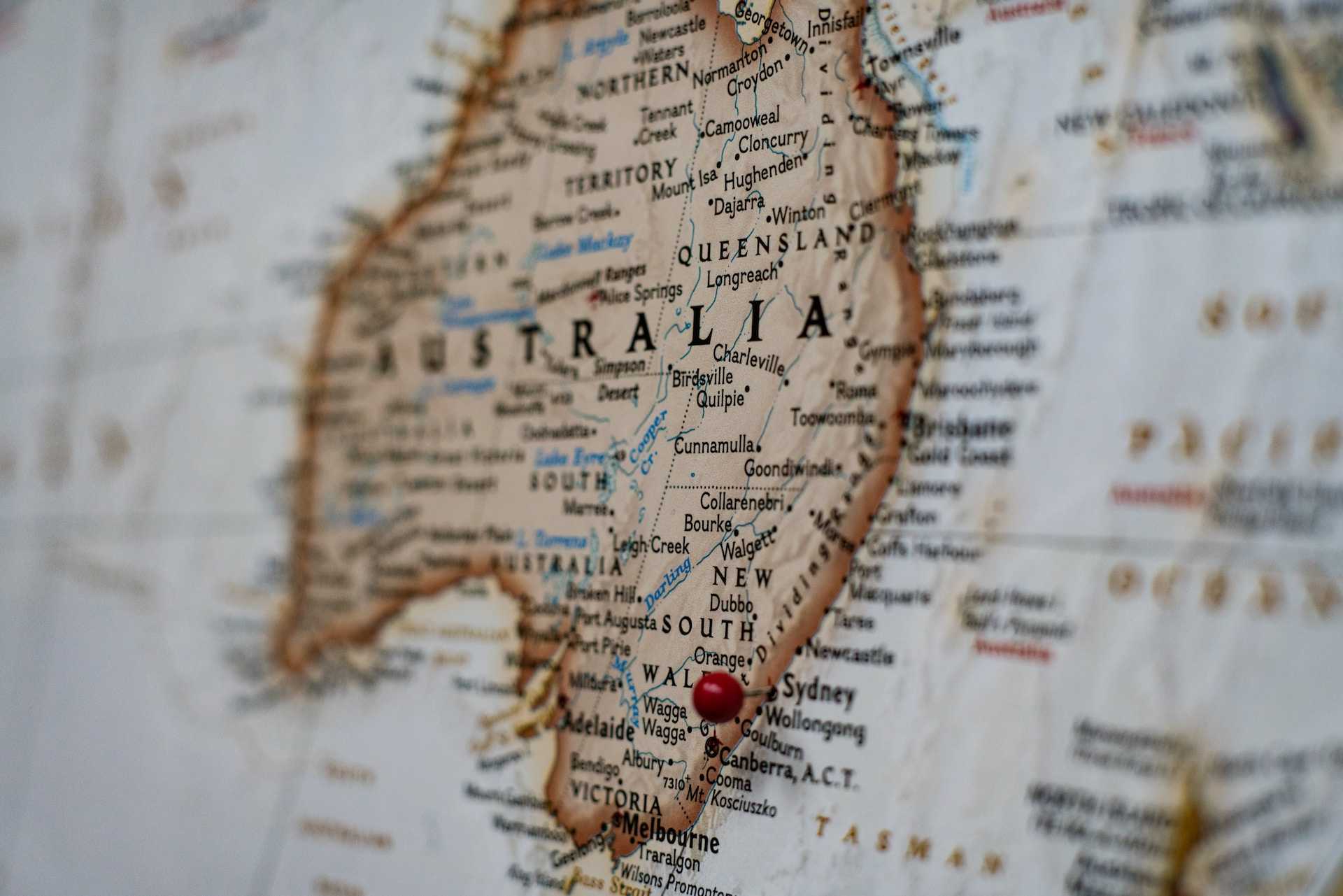

Typically, international publications release an annual guide to studying medicine in Australia. These web pages help international students find the right medical degree plan for their career aspirations (and their parents' budgets). In Australia, each territory or state might publish a handbook detailing university study programs and how to gain entry to them. Few Australian outlets release a composite article about medical programs across Australia.
The Good Universities Guide has a general information page but they don't talk about individual Schools of Medicine. GradReady makes a list of undergraduate and graduate medical studies list available, with links to each university's web page.
You have to research the schools on your own, as you would if you didn't have such a list. This article, by contrast, presents a state-by-state comparison of what Australia's universities offer future doctors.
Overall, entry requirements and outcomes are similar. That's thanks to Australia's 2014 Health Workforce Initiative. This program intends to eliminate the hodge-podge curricula and state-by-state requirements to practise medicine.
It aims to standardise what doctor trainees learn and how they learn it, and make medical credentials nationwide - instead of valid state by state.
So you'll see a lot of similarities in entry requirements. You'll find Australian Tertiary Admission Rank (ATAR) references, as well as University Clinical Aptitude Test - Australia and New Zealand (UCAT ANZ). GAMSAT will feature a lot, too; it stands for Graduate Medical School Admissions Test. Many universities only offer graduate-level medical programs so students have to take this test to apply for those programs.
In Australia, the medical workforce is considered a national resource. To the rest of the world, the Australian healthcare system is as remarkable as it is enviable. Good on you for wanting to be a part of the Australian medical community. Now, let's find out where you'll be happiest to study.


Study Medicine in Sydney
Sydney's schools of higher learning are among the oldest in the country. By contrast, Western Sydney University's School of Medicine was founded in 2007. This faculty offered Bachelor of Medicine, Bachelor of Surgery (MBBS) degrees from the outset. That degree plan is now discontinued but domestic students with a 95.5 ATAR may consider applying for the five-year Doctor of Medicine program.
International students with a 7 on their International English Language Testing System (IELTS) exam may also apply to the Western Sydney School of Medicine. Or they might choose the University of Sydney. This school only offers graduate-level medical studies so every applicant domestic and international, must sit the GAMSAT.
Their program is similar to Macquarie University's graduate entry medical studies program. But if you wanted the best undergraduate medical courses, the University of New South Wales should be your top pick. Application criteria make this program the most competitive of all the medical programs in Sydney. The 99.95 ATAR was the least of the demanding markers we found.

Melbourne: One of the Best Medical Schools in Australia
The University of Melbourne hardly needs an introduction; it is world-renowned for its educational and research facilities. It ranks in the Top 50 worldwide and consistently holds the top spot in Australian rankings. It should come as no surprise that applicants from around the globe want to learn from this Faculty of Medicine.
But we shouldn't overlook Deakin or Monash Universities. Deakin only offers graduate-entry medicine courses through their catalogue boasts an array of medicine-related specialities. Even more intriguing: Deakin's programs let you study medicine online.
Monash insists on in-person classes for their medical studies, and for good reason. This school has a reputation for building its medical training around patient advocacy. Students must attend class in person to learn these skills. So important are they that Monash - and every other university medical program in Melbourne lists them as inherent requirements.
Study Medicine Online in Queensland
Bond University has a remarkable medical studies program; it is of the shortest duration in the country. Thanks to this university's accelerated timetable, domestic students may earn their medical degree in just four years and eight months. But this school does not yet welcome international students other than those from New Zealand. So we'll turn our focus on schools that welcome students from wherever they may hail from.
Indeed, we want to focus on a distinctive aspect of medical learning: online courses in medicine. It sounds strange that any medical student could learn how to practise medicine online. But the University of Queensland teaches some of the program's courses remotely. Naturally, you'll have to get hands-on at some point.
The University of Queensland isn't the only place to study medicine in that state. Students from all over the world flock to Brisbane and the Gold Coast for medical studies.
Quality education is only one reason why. Discover what a Queensland medical education can do for your future by reviewing all of this state's offerings.

Study Medicine in Adelaide
Australia is a land of contrasts; that philosophy extends to medical course offerings in Adelaide. In contrast to remote Perth, this vibrant city only has two possibilities for medical studies. Future doctors may apply to Flinders University or to the University of Adelaide.
Flinders presents a graduate entry program while the University of Adelaide welcomes medical school candidates straight out of high school. As you might suspect, domestic students should strive to present the highest possible ATAR; the schools' websites show the median rate is 95. International students may present a stellar International Baccalaureate score, along with an IELTS score of no less than 7.
The University of Adelaide offers a broad range of undergraduate and graduate-entry medical programs. For a Bachelor of Medicine, students must commit to three years of study, after which they may transfer to their 'reserved' Doctor of Medicine course. This program demands another three years of study, after which students may choose to specialise. The Adelaide School of Medicine offers specialisation in mental health, paediatric and other discrete fields.
While the University of Adelaide abandoned its double-degree medical course, Flinders has kept theirs. It requires a six-year commitment to full-time study and blends academic and clinical work.
Before submitting their applications, candidates must sit the UCAT ANZ exam. If you'd like to know more about what Flinders and the Adelaide School of Medicine have to offer, you should learn what we discovered about them.
Medical Schools in Australia: Perth
Western Australia's capital city is also home to 80% of that state's population. Perth is also where all the state's universities are; four public and one private institution. All but one, Murdoch University, offers some sort of medicine-related training.
Curtain University's course catalogue boasts a Bachelor of Medicine, Bachelor of Surgery (MBBS) program. It strives to prepare students for an array of medical careers after only five years of full-time study. Domestic students' ATAR requirements are much higher for this course; a 95 is the minimum acceptable rating. However, this program also welcomes Technical and Further Education (TAFE) candidates, as well as Vocational Education Training (VET) candidates.
Naturally, Curtain welcomes indigenous and international students, as does the University of Western Australia (UWA). These applicants must submit proof of English language capability; an IELTS rating of 7 is required at both institutions. UWA no longer offers an undergraduate pathway into medical studies; school leavers and other candidates may instead apply for conditional placement.
Perth's lone private university, Notre Dame, doesn't have Bachelor's degree in medicine in its catalogue, either. However, their graduate program is highly sought-after.
This school is far more selective in their choice of candidates; to wit, only a handful of international students are accepted. You can read more about their application and acceptance criteria in our companion article.

Study Medicine in Canberra
In our capital city, the Australian National University (ANU) is the place to pursue medical studies. ANU's College of Health and Medicine offers a four-year Doctor of Medicine and Surgery (MChD) to domestic, international and indigenous students. This is a graduate-level program so every applicant must include a GAMSAT result in their application package. A Medical College Admission Test (MCAT) is also acceptable.
Students are selected for interviews based partly on their GAMSAT performance and on their undergraduate academic performance. If your grade point average (GPA) is 6.5 or higher and you score at least 65 on GAMSAT, you are guaranteed an interview online. Likewise, should your MCAT exceed 515 with a minimum score of 215 in each section, count yourself a priority candidate. Always provided you meet all of the school's other eligibility requirements, of course.
Australian universities provide so many pathways into medicine, it's no wonder that domestic and international students alike apply. Tuition costs might be a bit on the expensive side but these faculties of medicine are generous with scholarships and bursaries. Australia sees their medical personnel as vital to the health and welfare of our nation.
Thus, it's no surprise that universities, particularly in our capital, would ensure everyone who wants to study medicine can.
Summarise with AI:
Did you like this article? Leave a rating!


 Loading...