

Key concepts, in general, are the main ideas that teachers go to great lengths to emphasise. They represent fundamental aspects of the subject in question. As this article discusses physics topics, this text lays out some of those ground rules and ideas that you can build your future studies on.
| 💡Physics concept | 🔭What it means | 👩🔬Practical application(s) |
|---|---|---|
| Core physics branches | ||
| Thermodynamics | The study of relationships between work, energy, heat, and temperature. | Refrigerators, air conditioners, chemical reactions, and human metabolism. |
| Electromagnetism | Enables interactions between electric and magnetic fields. | Power generation and distribution; information technology; and many medical applications. |
| Mechanics | Studies forces, motion, and objects' behaviour under specific conditions. | Transportation; engineering and construction; biomechanics; aerospace engineering, and much more. |
| Quantum Mechanics | A theory that describes how matter and energy behave at the subatomic levels | Computing and electronics; light and energy; medical imaging and technology; quantum computing. |
| Fundamental forces | ||
| Gravitational Force | The attractive force that acts on every object with mass. | Geophysics and resource exploration; oceanography and tide predictions; space exploration; satellite and planetary orbit studies. |
| Electromagnetic Forces | Governs interactions between charged particles. | Power distribution; medical technology; communications and information technology. |
| Strong nuclear forces | Holds protons and neutrons together within the atom, despite their mutually repelling charges. | Generating nuclear power; medical imaging and cancer treatment. |
| Weak nuclear forces | It provokes some nuclear reactions and radioactive decay. | Nuclear energy; medical imaging. |
| Essential Physics Concepts | ||
| Relativity | A two-part foundational concept of physics. | Special relativity explains physical properties of objects moving at constant speeds. General relativity extends the concept to include gravity. |
| Energy and work | Energy: the capacity to do work. Work: the transfer of energy via force application across distances. | When you apply your physical energy to an inanimate object kicking a ball, pushing a shopping trolley, and so on. |
| Momentum and impulse | Momentum: the quantity of motion of an object. Impulse: the average net force applied to an object times the duration of its act. | Seatbelts and airbags; hydraulics and engineering; rocket propulsion and more. |
| Waves and oscillations | Oscillations: back and forth movement around a central position. Waves transfer energy without transferring matter. | Earth sciences; mechanical systems; medical imaging; quantum physics study. |


Basic Physics Concepts: The Core Branches
Like all academic fields, and particularly the scientific disciplines, the breadth of study is so great that they demand subdivisions. Physics study alone stretches from the cosmos to the subatomic level. All the fields are related and use the same glossary of physics terms, but break into these four main areas.
Thermodynamics
This branch of physics studies the relationships between work, energy, heat, and temperature. Specifically, it studies how energy transfers and transforms within systems, particularly across larger scales. Fundamentally, this study examines how such processes may affect systems' ability to perform work.
The Zeroth Law makes possible the notion of temperature.
The First Law illustrates a system’s dynamics of internal energy, added heat, work.
The Second Law outlines the natural flow of heat in a closed system.
The Third Law: any created thermodynamic process will naturally suffer heat loss, thus never achieving perfect efficiency.
These laws originated in the mid-1600s and hold still today2. That's quite a testament to human curiosity and the brilliant minds that conceived them.
Electromagnetism
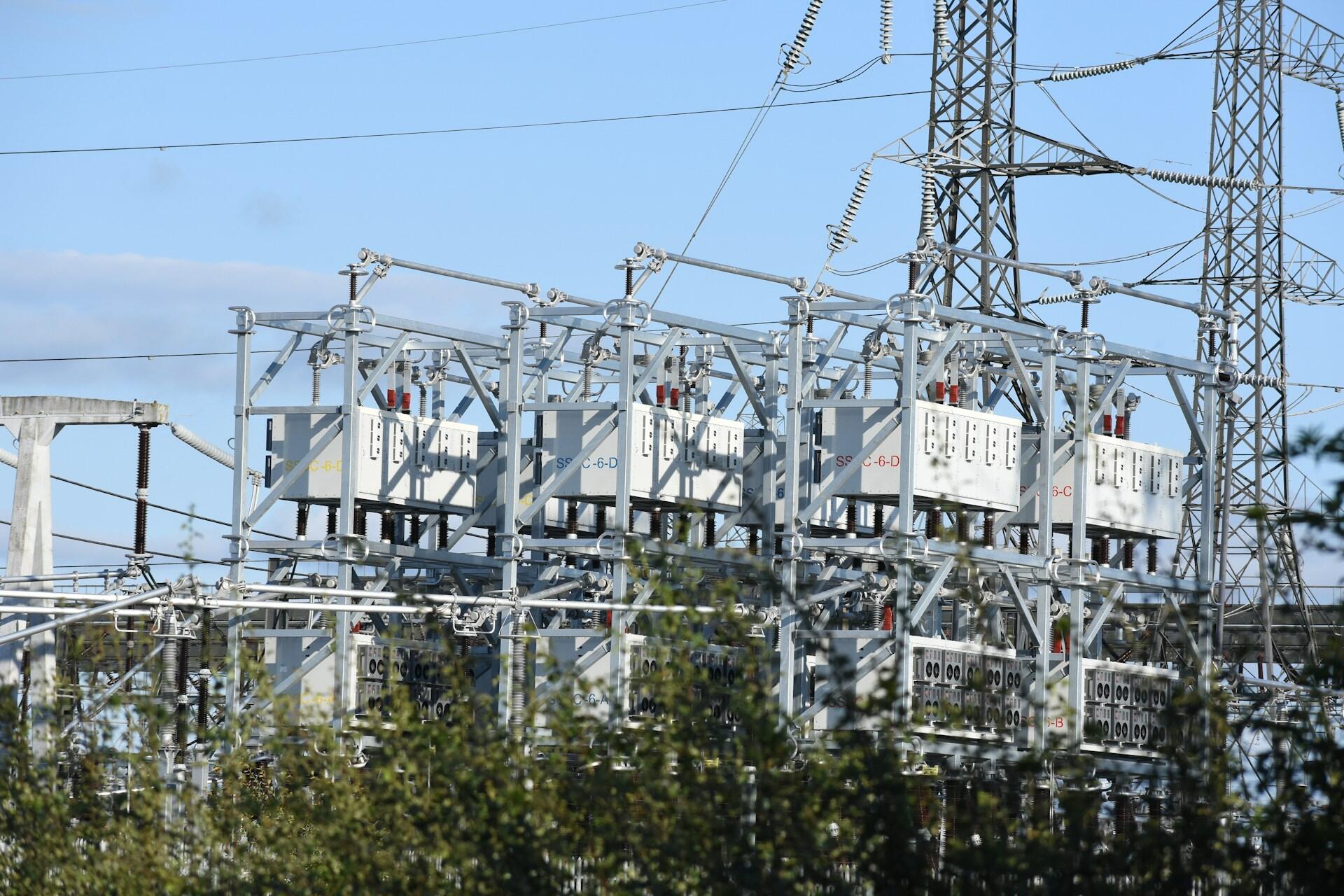
Electromagnetism is the most prevalent force in our world. We can note its effects without any testing equipment. Electrostatic forces work on particles at rest, meaning they are not moving. Both magnetism and electricity work on moving particles.
Scottish physicist James Clerk Maxwell coined the term 'electromagnetism' in the mid-1800s, when he proved (mathematically) that light, electricity and magnetism all exist in the same medium.
He further established that electromagnetic waves travel at the speed of light. With these discoveries,Jame Maxwell affirmed his place among groundbreaking physicists and their discoveries!
Mechanics and Quantum Mechanics
Our world has been overwhelmingly mechanical since the First Industrial Revolution. That doesn't mean that mechanics had no function before the mid-18th century, only that keen minds had precious few observable mechanical functions to study.
Aristotle stated that heavier objects fall faster.
Archimedes made the first forays into physical mechanics studies.
The Islamic Golden Age gave the world theories of motion, the concept of impetus and more. Galileo pioneered experimentation to study motion.
Isaac Newton established classical mechanics as a unified science.
The ancient greats theorised about natural phenomena3. Their ideas found fields rich with observable events starting in the Industrial Revolution. And the field of physical mechanics has only grown since then.
Now, with ever more powerful equipment at their disposal, physicists can explore the mechanics of the subatomic level. Quantum mechanics is a relatively new field of physics discovery, which Paul Dirac wrote the book for (in 1930). My Physics tutor Sydney relies on it, as do most other physics teachers.

Physics' Fundamental Forces
All the top physics tutors will tell you that four fundamental forces govern every single physical interaction, be it on the atomic or subatomic level.
Weak and Strong Nuclear Forces
As you might guess by their similar names, these two forces represent two sides of the same coin. They both relate to nuclear particles, not nuclear activity itself.
Strong interaction
- keeps protons and neutrons bound together despite their natural repulsion.
- it is the strongest of the natural forces.
Weak Interaction
- describes the tendency to create beta decay.
- Beta decay is when a proton is transformed into a neutron or vice versa.
Gaining or losing an electrical charge is vital because it allows the atom to gravitate toward the optimal ratio of protons and neutrons. This allows the atom to become and remain stable – provided the reaction is controlled. The weak and strong forces play crucial roles in maintaining that stability.
Electricity, magnetism and the weak force have been merged into the electroweak force. Incorporating gravity into the force is proving to be a bit of a challenge.
We call the proposed gravity quantum gravity, for its place at the subatomic level. So far, none of the theories that might address quantum gravity has panned out.
Electromagnetic Forces
Electromagnetism is the most prevalent force in our world. It governs interactions between charged particles. Studies in electromagnetism1 encompass electric forces and magnetic forces, hence the portmanteau name.
Electromagnetism is far stronger than gravity and has an infinite range. However, its strength decreases the further apart the charges are. How electromagnetism behaves is one of the more amazing physics facts that shape our world.
Gravitational Force
This is the force we are most familiar with. Of the four forces, gravity is the most prevalent but weakest in magnitude. The force of gravity acts on all bodies with mass; its impact is dependent on whether the mass is large or small.
Our planet’s orbit around the sun and the moon’s orbit around the Earth are gravity-driven. Everything in our experience, from water flowing downhill to our feet's contact with the ground, is gravity-bound. The rules and properties of this force are described in Einstein’s Theory of Relativity.
Essential Physics Concepts
That's just the way it is.
Bruce Hornsby and the Range
The laws of the universe have governed physical forces since the Big Bang and probably before. That's just the way it is, but physicists aren't satisfied with shrugging and letting things be. They seek to define, understand and vocalise those laws. Their work presents us with these essential physics concepts.
Relativity
We rightfully credit Albert Einstein for the Theory of Relativity, often overlooking that it’s actually two postulates.
Special Relativity
- formulated in 1905
- describes how objects move at constant speeds
- especially considers objects moving at the speed of light
General Relativity
- formulated in 1915
- expands on Special Relativity to include gravity
- redefines gravity as the curvature of spacetime
The Theory of Special Relativity did away with notions of an absolute space and time, defining it as a unified framework called spacetime. The Theory of General Relativity emphasised that mass and energy cause the curvature, not gravity itself.
Relativity forever changed humans’ understanding of the universe, time, space, and gravity.
It is a cornerstone of modern physics.
Energy and Work
These two concepts are intrinsically linked. You cannot perform work with no energy. Energy, with no work to apply itself to, becomes unstable and explosive.
Energy comes in various forms: kinetic, thermal, electrical, chemical, and potential, among others. All of these can be transformed or transferred from one form to another.
Work is what happens when an energetic force causes an object (matter) to move. For example, when you kick a football, you are applying kinetic energy to the ball, which then travels in the direction of the applied force.
It states that the net work done on an object equals the change in its kinetic energy.
Essentially, the work-energy connection boils down to work being done on an object, changing its energy4. Usually, that energy change is as a result of changing its motion. This is one of the first essential concepts you study when you learn all about physics.
Momentum and Impulse
The acceleration of an object is directly proportional to the net force acting on it...
Newton’s Second Law of Motion
Momentum represents a moving object’s quantity of motion. Momentum represents a vector quantity; we define it as the product of an object’s mass and its velocity.
Impulse is the average net force applied to an object times the extent of time over which it acts. It gives, in numbers, the effect of a force over time. Impulse is responsible for changing the momentum of an object.
Establishes the fundamental relationship between impulse and momentum.
It states the impulse applied to an object is equal to the change in its momentum.
The longer the force has to act, the less force is needed to change momentum. Put another way: when an instantaneous change of momentum is needed, the force must be greater.
In everyday terms, this principle applies to safety features in cars. As an example, your car’s crumple zones increase stopping time at the point of impact which, in turn, reduces the force of the impact.
Waves and Oscillations
Have you ever heard of sound waves? What about seismic waves? Physics tutors Melbourne are keen to talk about waves, be they the kind you can surf or the kind that delivers music to your ears.

These and other waves have a direct, measurable effect. Sound waves can be heard, seismic waves travel through the ground causing earthquakes; even light travels in waves.
A more visible example is the waves you can see at the beach. The crests we see and surf on mask the activity they create beneath the water's surface. Waves pound the ocean floor, reducing matter to fine sand.
Gravitational waves are particularly exciting. These ripples in spacetime are caused by the most explosive, energetic processes in our cosmos. Einstein predicted these over 100 years ago, with his General Relativity theory.
You’ve witnessed oscillations, too. A pendulum’s swing, such as that in a grandfather’s clock, is the most obvious example of such. In physics, oscillation refers to the to-and-fro movements around a central point.
This movement occurs when a system experiences a restoring force that works to bring it back into equilibrium. Those movements provoke constant energy conversion between kinetic and potential forms.
In the clip below, we see Foucault’s Pendulum perpetually attempting to reconcile Earth’s movement. In the process, it proves that Earth is not only round, but that it’s moving. Oscillations also shape how we understand sound, light, waves, and quantum systems.
Further Reading on Concepts of Physics
- iantresman. “Electromagnetic Force | Plasma-Universe.com.” Plasma-Universe.com, 2019, www.plasma-universe.com/electromagnetic-force/. Accessed 25 Feb. 2026.
- Drake, Gordon W.F. “Thermodynamics.” Encyclopædia Britannica, 27 July 2018, www.britannica.com/science/thermodynamics. Accessed 25 Feb. 2026.
- Connes, Alain. “Timeline of Classical Mechanics.” Scientificlib.com, 2026, www.scientificlib.com/en/Physics/LX/TLClassicalMechanics.html. Accessed 25 Feb. 2026.
- The Albert Team. “Work-Energy Theorem: Explanation and Review.” Albert Resources, 16 Feb. 2023, www.albert.io/blog/the-work-energy-theorem/. Accessed 25 Feb. 2026.
Summarise with AI:
Did you like this article? Leave a rating!

 Loading...
