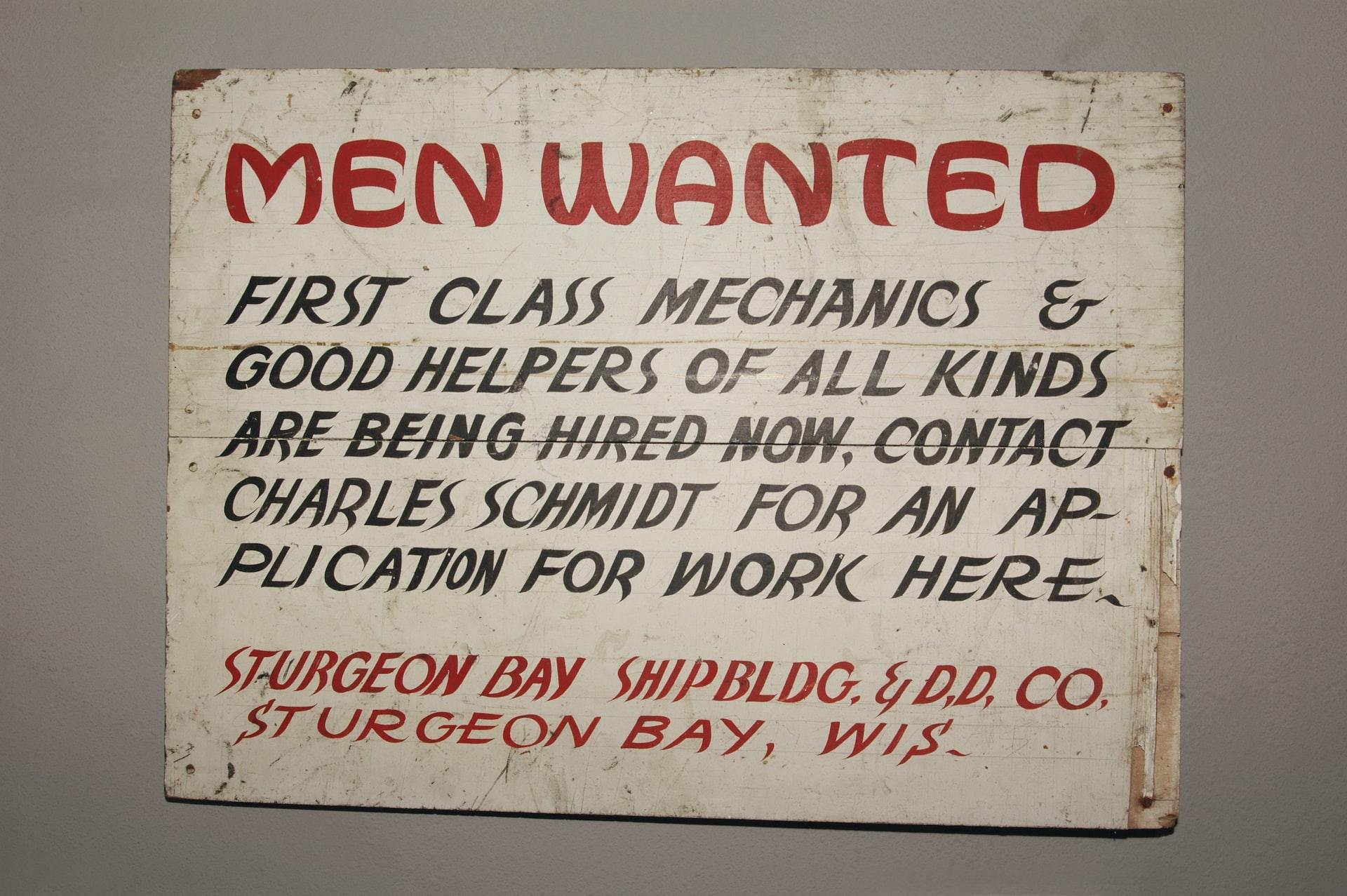

If you've ever worked, been on a job interview or read a job advert, you've experienced the work of an organisational psychologist. If you've ever filled out a job satisfaction survey, submitted to a performance review or had your wage rise decided by your work performance... Yep, an organisational psychologist had a hand in those, too. Or, as is more likely, a whole team of them.
If you think that all sounds rather malign, you're not alone. It's no secret that job applicants hate interviewing. Indeed, the sentiment is so prevalent that professional websites like LinkedIn have published articles addressing this topic. To say nothing of all the Reddit threads where people let loose their distaste for interview requirements.
Why do organisations persist in using systems that discourage applicants from interviewing? Or, at least, from doing well in their interviews. First, we need to understand the full scope of work these professionals undertake. Once you see how beneficial their studies are to the workplace environment, you might change your major to take courses in organisational psychology. If that's your view of things, we'll be happy to help you find the best courses in Australia.


Understanding Organisational Psychology
We can trace all the types of psychological study to 1879. That's when German physiologist and philosopher Wilhelm Wundt distinguished himself as the world's first psychologist. He had to first invent the term to accord it to himself but little else of this science is imaginary. And he was quite right to posit that psychology must be a natural outgrowth of philosophy. After all, philosophers have been pondering the workings of the human mind for millennia. Dr Wundt just made a formal discipline of it.
One might posit that he intended psychology mainly to steer workplace practices. Even before he accorded himself his newfangled title, Dr Wundt trained two American psychologists. Naturally, he trained plenty more but these two would exert major influence in establishing organisational psychology and applying it to the work environment.
James McKeen Cattell never believed that poor job performance was due to human error. His view was that people weren't making mistakes deliberately, they were just individuals. And every human has their own capabilities and levels of endurance. Employers thus needed a way to hire the best people for the jobs, give them proper training and see to their continued development.
Hugo Münsterberg's world was set alight upon hearing a lecture Dr Wundt gave. Still in his teens, he resolved to study psychology with Wilhelm Wundt as his mentor. Initially, their working relationship was productive but soon, the men differed in their opinions.
Dr Münsterberg championed applied psychology as the best use for this field of study. His mentor believed it should remain purely theoretical. They parted ways and Dr Münsterberg made a name for himself applying psychological techniques to workplace environments.
His prime motivation was finding the right personalities with the right mental qualities to perform specific types of work. He helped to devise a system wherein only the most qualified people would be hired for specific positions. They would then be trained to take on new responsibilities, with their performance assessed at every stage.
Drs Cattell and Münsterberg laid the groundwork for all of the organisational practices still in place today. Their lines of enquiry led to an expansive application of psychological principles across industries. Many of the workplace benefits and amenities we enjoy today come directly from the workplace studies organisational psychologists conducted. Those include work and meal breaks, limited work hours and even occupational health and safety practices. Note that social psychology also plays a role in employee program development.

What an Organisational Psychologist Does
Early on, organisational psychologists determined that a (reasonably) happy workforce was more productive. An employee who didn't constantly worry about losing their job was less prone to making mistakes. And the worker convinced that management cared about their well-being also believed their boss was worth doing a good job for. Convincing management to make such changes, and the workers' responses to better conditions are the very essence of applied psychology.
Today, judging by all the labour strikes and grumbling about workplace conditions, you might think that organisational psychologists must be doing a terrible job. That assumption misses the point. Organisational psychologists work for management, not employees. Their job is to maximise efficiency in the workplace. They apply psychological theories to various work situations to determine the best management outcomes. Whether management abides by their conclusions is a different matter.
Let's focus on workplace stress as an example. Workers who feel stressed are less productive. They may do shoddy work and even call out sick. To prevent such occurrences, the employer might invest in resources to help relieve employee stress. They may make a meditation coach available or put snacks in the breakroom. They might schedule training sessions so employees can learn new skills. Management may even negotiate pay rises, something organisational (and cognitive) psychologists also have a hand in deciding.

Organisational Psychology Courses
As you now have an idea of how far-reaching organisational psychology is, you may have an interest in making it your life's work. You will undergo extensive education and training, two years of it supervised. During that time, you will work full-time with licensed psychologists in your field. All of this will culminate in Australian Psychological Society (APS) accreditation.
Several fine universities around Australia offer qualifications in organised psychology. The University of Queensland is a sterling example of such. Their two-year, full-time graduate program helps you build critical analysis and problem-solving skills. You'll learn ways to enhance employee performance and how to choose the best job applicants based solely on how they composed their CVs. You'll also learn how to develop effective training programs and even help with management development.
The University of Adelaide graduate program offers a blend of course study, research and placement in a work environment. This study program is also full-time and lasts two years. By the course's end, you'll have developed the skills needed to foster productive work units and engaged employees. You'll also have the qualifications needed to certify your skills with the APS.
Macquarie University offers both graduate and doctorate occupational psychology study programs. The graduate program follows roughly the same pathway as the other two universities: two years of full-time study. Their doctorate program awards its degree based on the research you will conduct. You will have at least two supervisors overseeing your work, of which you will write your thesis. You may find yourself incorporating elements of developmental psychology in your research.
Organisational Psychology in Australia
In Australia, the Australian Health Practitioner Regulation Agency (AHPRA) oversees organisational psychologists' work. These professionals must be accredited by the APS, which sets the criteria for licensing. At the minimum, candidates for licensing must have a three-year undergraduate degree in psychology and two years of full-time supervised practice. They must also undergo 80 hours of professional development. Only after all that can a psychologist specialise in organisational psychology.

Organisational Psychology Salary
How much you stand to earn as an organisational psychologist depends on many factors. That's true with any type of work whether in a psychology field or not. Those factors include how much experience you have in your field, your geographical location and the industry you work in. Obviously, your APS accreditation will count for something, as will all that time you spent in school. Earning your doctorate in organisational psychology will bring you more money than a graduate degree would.
Payscale reports that the median organisational psychology salary ranges a little higher than $82,000 per year. All other factors being equal, psychologists with four years of experience in their field would earn at least that much. The top-end organisational psychology salary may be as high as $119,000 plus bonuses and benefits.
Not a bad chunk of money and higher than a forensic psychologist might top out at.
In all, organisational psychology has not strayed too far from its century-old origins. The emphasis is still on improving workplace efficiency and worker productivity. On screening applicants to find the right people for the job and ensuring they stay that way. However, as new technologies have emerged, ideas on how to keep employees productive have changed.
Today, the focus is more on employee and management development, workplace safety and reducing stress and violence.
You might think of your future as an organisational psychologist in terms of where to go from here. Where and how could you make your mark on this science? In our introduction, we pointed out how hateful the interview process is. Perhaps you'll study job recruitment processes and make them less distasteful. Or maybe you could focus on employee support programs in the workplace.
What about studying technologies related to remote working? How can workers stay productive if they don't have a manager to supervise them? Surely, you've read news articles showing how employees feel about monitoring software. Might you design an incentive program that eliminates the need for such intrusion?
Summarise with AI:
Did you like this article? Leave a rating!

 Loading...