


Depending on where you are in the world, the word "rugby" may have slightly different meanings. This is because there are two major types of "codes" of rugby: rugby league and rugby union. Both are played in Australia and are great sports worth watching. If you're new to either or both, here's what you need to know about the differences between rugby's two main codes.
| Aspect | Rugby League | Rugby Union |
|---|---|---|
| History | Split from rugby union in 1895 over professionalism | Remained amateur until 1995, then turned professional |
| Players per Team | 13 players (6 forwards, 7 backs) | 15 players (8 forwards, 7 backs) |
| Tackle Rules | Six-tackle limit before possession changes | No tackle limit; phases continue while possession is retained |
| Breakdown After Tackle | Play-the-ball restart, no contest | Rucks and mauls allow contest for possession |
| Scrums | 6 players; mostly a restart of play | 8 players; major contest for possession |
| Lineouts | No lineouts used | Lineouts restart play when ball goes out of bounds |
| Scoring System | Try 4, Conversion 2, Penalty 2, Drop goal 1 | Try 5, Conversion 2, Penalty 3, Drop goal 3 |
| Style of Gameplay | Faster pace with structured sets | More tactical with frequent contests and set pieces |
| Field Position Strategy | Kicking usually on last tackle | Kicking can happen at any time |
| Player Roles | Simpler roles, more running and general play | Highly specialised positions, especially among forwards |
| Major Competitions | NRL, Super League, State of Origin | Super Rugby, Premiership Rugby, Top 14, Rugby World Cup |
| Global Popularity | Strongest in Australia and northern England | Played widely worldwide |



History of the Two Rugby Codes
Rugby league and rugby union obviously share similar origins. The reason they're different is that one is separated from the other. Rugby league split in England in the late 19th century over professionalism and player payments. This set both codes on different paths, with the history of the Australian game following a similar history to the English game. From that point on, the two codes evolved with different rules, competitions, and playing styles.¹
The split between rugby union and rugby league happened in 1895 in northern England. Many players were working-class and lost wages when travelling to matches. Rugby union authorities refused to allow payments, so several clubs broke away to form the Northern Rugby Football Union, which later became rugby league.
Rugby League
- Created in 1895 after a split from rugby union
- Northern English clubs wanted to pay players for lost wages
- Developed as a faster professional game
Rugby Union
- Originally amateur for more than a century
- Historically linked to universities and elite schools
- Became fully professional in 1995
Number of Players
The key difference viewers will first notice between the two codes is how many players take the field. Since both are played on the same pitches, rugby league, with fewer players, affords more space. This makes rugby league more open, while rugby union is more congested around the ball.²
Rugby League
- 13 players on the field
- 6 forwards and 7 backs
- Fewer players means more open space
Rugby Union
- 15 players on the field
- 8 forwards and 7 backs
- More players create a more crowded field
players, whereas in rugby union, there are 15.
Tackle Rules
While tackling is a key part of both rugby codes, the rules around tackles differ. Rugby league has a structured tackle count system. Rugby league teams are limited to how long they can keep possession. In rugby union, there's no limit, which can lead to long attacking phases.⁴
Rugby League
- Teams have six tackles to score
- After the sixth tackle, possession changes
- Tackled player restarts play with a play the ball
Rugby Union
- No tackle limit
- Teams can keep possession through multiple phases
- Players must release the ball after being tackled
Breakdown After a Tackle
In addition to the number of tackles allowed in the two codes, the rules differ after a tackle. Rugby union allows players to compete to win possession of the ball. Rugby league removes the contest, allowing play to restart quickly, making it more flowing.⁶
Rugby League
- No contest for possession after most tackles
- The tackled player stands up and rolls the ball backwards
- The defensive line retreats 10 metres
Rugby Union
- Possession is contested through rucks and mauls
- Players compete for the ball after a tackle
- Turnovers are common
Rugby league often appears faster to new viewers because of its structured tackle system and fewer set pieces. Without rucks, mauls, or lineouts interrupting play, the ball is put back into action quickly after tackles. This creates longer continuous attacking sequences and a more predictable flow to the game.
Scrums
Both rugby league and rugby union feature scrums. However, scrums are more important in union, where they're major contests between the forwards. In rugby league, scrums restart play, rarely determining who keeps the ball.⁵
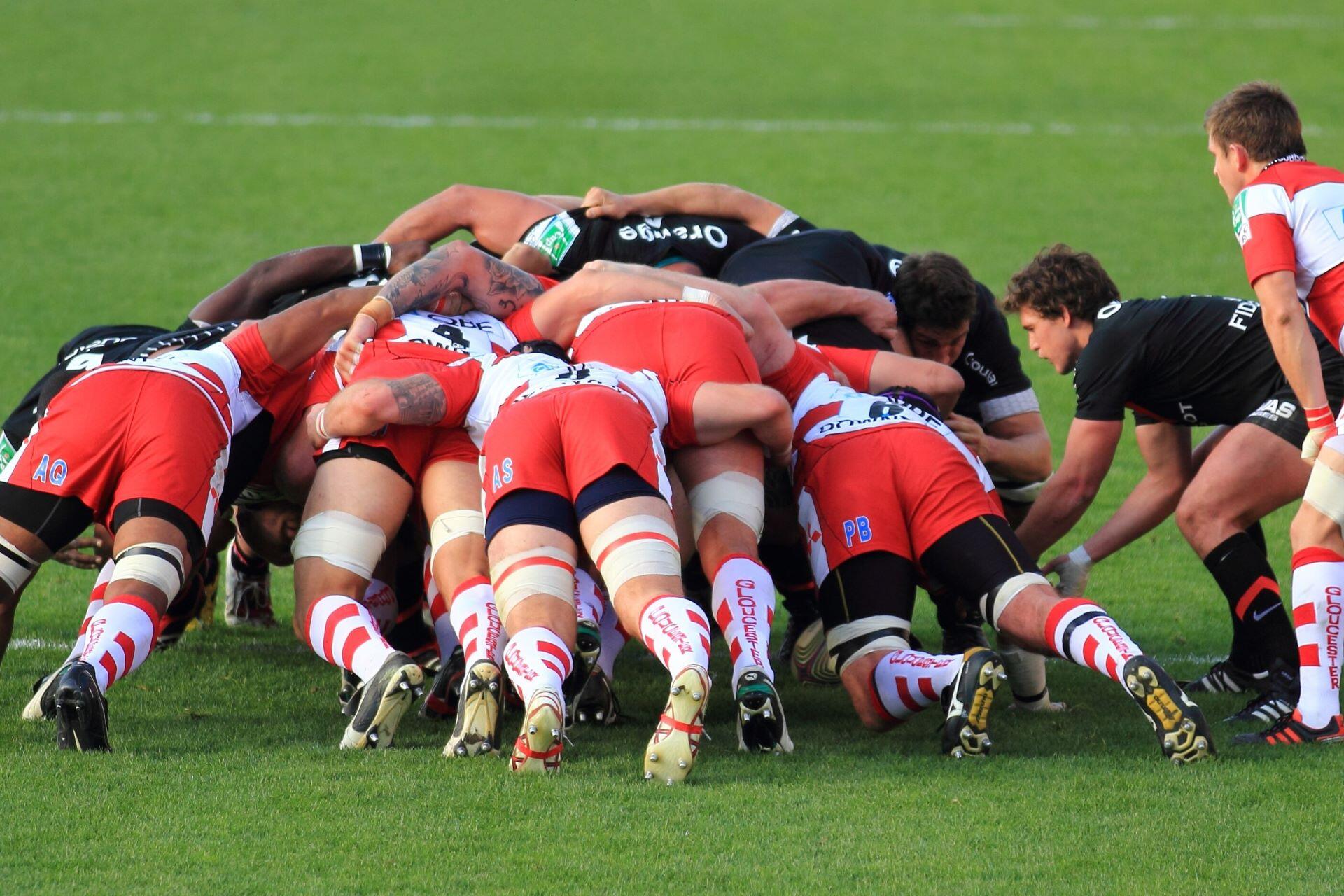
Rugby League
- 6 players take part in a scrum
- Scrums mainly restart play
- They are rarely strongly contested
Rugby Union
- 8 forwards form the scrum
- Scrums are highly competitive
- Teams can win or lose possession in the scrum
Lineouts
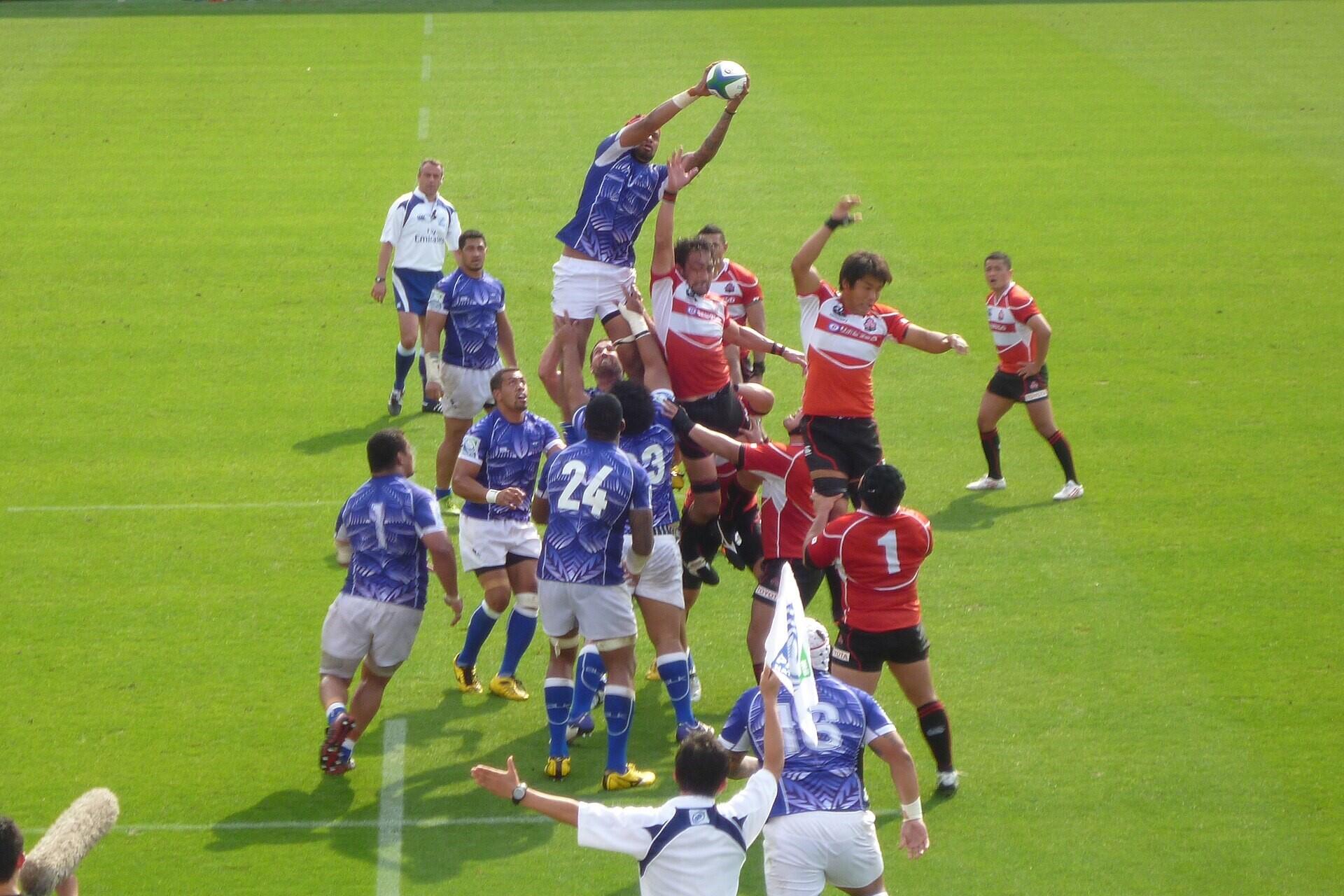
Fans of rugby union will be familiar with lineouts. However, rugby league doesn't have them. This is another way in which league focuses on keeping the play moving more quickly.³
Rugby League
- Lineouts do not exist
- The ball is returned to play through scrums or tap restarts
Rugby Union
- Lineouts restart play when the ball goes out of bounds
- Players lift teammates to catch the thrown ball
- Lineouts are key attacking opportunities
Scoring System
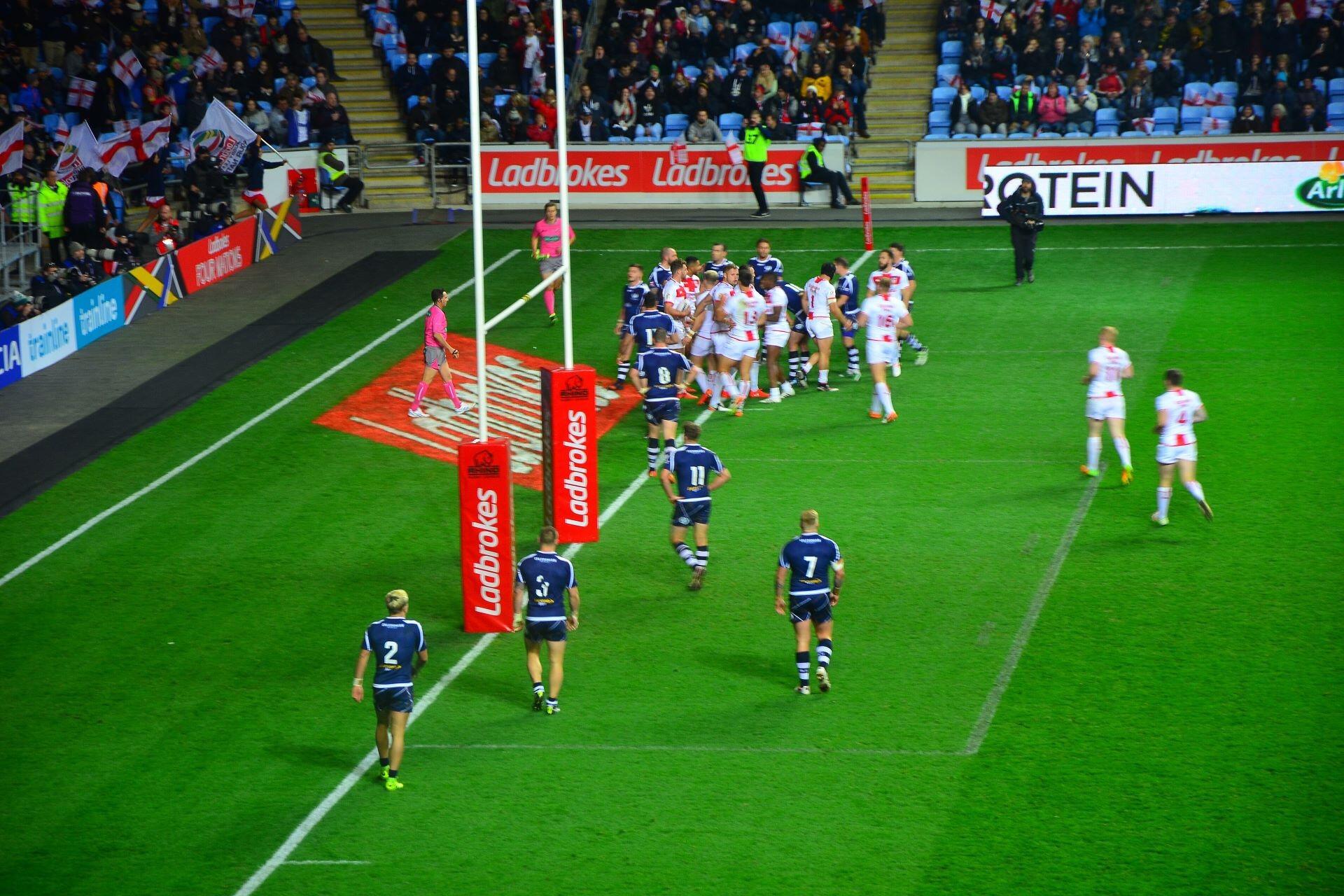
Rugby league and rugby union use different scoring systems. While both offer points for tries, conversions, penalty goals, and drop goals, the amounts of these differ. While rugby league offers fewer points for tries, it offers even fewer for penalty goals and drop goals, meaning there's more emphasis on scoring tries.
Rugby League
- Try: 4 points
- Conversion: 2 points
- Penalty goal: 2 points
- Drop goal: 1 point
Rugby Union
- Try: 5 points
- Conversion: 2 points
- Penalty goal: 3 points
- Drop goal: 3 points
Style of Gameplay
With different rules and different points, the gameplay of both codes is affected. League is typically faster and more structured thanks to the tackle count and quick restarts. Union develops more slowly, with frequent contests for possession and set pieces.⁷ Neither is objectively better; it really depends on what you prefer from your rugby.
Rugby League
- Faster pace with repeated attacking sets
- Fewer stoppages during play
- Structured attacking patterns
Rugby Union
- Slower but more tactical
- Frequent contests for possession
- Greater emphasis on set pieces
minutes in both rugby league and rugby union.
Field Position Strategy
How teams set up and look to win matches is also different. With every rugby league team in the NRL looking to make the finals, strategy in rugby league is just as important as it is in rugby union, but how strategy plays out is quite different. After all, they do have different rules.
Rugby League
- Teams usually kick on the last tackle
- Tactical kicking is used to gain territory
- Kick returns often start new attacking sets
Rugby Union
- Kicking can happen at any time
- Tactical kicking battles are common
- Teams use kicks to apply pressure or gain territory
Player Roles
With different numbers of players and different rules, you'll see that players' roles aren't exactly the same. With more ground to cover, rugby league players often have simpler or more generalist roles. However, they do still have defined positions. In rugby union, with more players, you'll find more specialised roles, especially among the forwards taking part in scrums, lineouts, and other set pieces.⁵
Rugby League
- Positions are simpler
- Players tend to run more during matches
- Less specialisation between forwards
Rugby Union
- Positions are highly specialised
- Certain players focus on scrums or lineouts
- Tactical roles vary widely
Competitions and Tournaments
So, where can you watch these two rugby codes? In Australia, the National Rugby League is rugby league's biggest club competition. Super Rugby is the major rugby union club competition.
Rugby League
- Major league: National Rugby League (NRL)
- Other competitions include the Super League in Europe
- State of Origin is a famous representative series
Rugby Union
- Major club competition: Super Rugby
- Domestic leagues such as Premiership Rugby and Top 14
- International tournaments such as the Rugby World Cup
Global Popularity
Once the two codes were established, they started carving out their own paths. Their popularity developed in different regions. With rugby league starting in northern England, it's still popular there. It also has strong support in Australia, where its evolution followed a similar path to that of English, but the NRL Grand Finals attract massive crowds and viewer figures. Game. Generally, rugby union spreads more widely throughout the world and is a more international game than rugby league.
Rugby union is played in more countries worldwide and has a larger international footprint. Major global competitions, such as the Rugby World Cup, attract teams from dozens of nations. Rugby league, however, dominates in Australia and has passionate fanbases in northern England, New Zealand, and Papua New Guinea.
Rugby League
- Most popular in Australia
- Strong following in northern England
- Also played in New Zealand and Papua New Guinea
Rugby Union
- Played worldwide
- Popular in countries like New Zealand, South Africa, England, and France
- Larger international governing structure

References
- Cheetah Teamwear. Comparing the Differences Between Rugby League and Union. https://cheetateamwear.com.au/blogs/news/comparing-the-difference-between-rugby-league-and-union. Accessed 13 Mar. 2026.
- Decathlon UK. The Key Differences Between Rugby Union and League. https://www.decathlon.co.uk/c/htc/the-key-differences-between-rugby-union-and-league_d46ee94a-8558-4169-aad4-b13a246aa0fa. Accessed 13 Mar. 2026.
- Keith Prowse. The Difference Between Rugby League and Rugby Union. https://www.keithprowse.co.uk/news-and-blog/2018/08/17/the-difference-between-rugby-league-and-rugby-union/. Accessed 13 Mar. 2026.
- Rugby League Rookie. NRL vs Rugby Union. https://rugbyleaguerookie.com/learn/nrl-vs-rugby-union/. Accessed 13 Mar. 2026.
- Rugby World. Rugby Union v Rugby League: What’s the Difference? https://www.rugbyworld.com/news/rugby-union-v-rugby-league-whats-the-difference-174980. Accessed 13 Mar. 2026.
- SportMember. Rugby Rules: A Guide to the Game. https://www.sportmember.co.uk/en/sports-rules/rugby-rules. Accessed 13 Mar. 2026.
- Sporting News Australia. Difference Between Rugby League and Rugby Union. https://www.sportingnews.com/au/rugby-league/news/difference-between-rugby-league-rugby-union/402f8e6dcfd459926ef3721d. Accessed 13 Mar. 2026.
Summarise with AI:
Did you like this article? Leave a rating!

 Loading...
