
At first glance, this article's title might have led you to believe that it covers all of Korean history. Who wouldn't want to know more about the Three Kingdoms, the Joseon Era and the pivotal role the peninsula played after the Second World War? But don't feel disappointed just yet.
The progressive, vibrant, technologically advanced economic powerhouse we identify as South Korea has a relatively short history. The nation was formed only 85 years ago. In that short time, this country and its people have seen wild upheavals and profound social unrest.
South Korean history may span less than a century but it tells a dramatic tale. In that short time, South Koreans cycled through five successive republics. Now on their sixth - by far their longest, South Korea seems to have found its balance. But the people haven't forgotten all that came before and we shouldn't, either.


Learn Korean History: How it Began
Through the Second World War, Korea suffered under Japanese occupation. That imperial power had ruled the peninsula since 1905. Thus, when the Allies - America, the Soviet Union and China came to liberate the Korean people, the country was (officially) hostile to them. Only upon Japan's unconditional surrender in September of 1945 did the ill will somewhat subside.
The Allies set about dividing the country, as they did in Germany. However, the Soviets and US couldn't agree on establishing a provisional government. Their political and economic ideas clashed. The Soviets insisted on a communist regime; the US wanted a democratic system.
Find various Korean classes Melbourne here on Superprof.
The country was partitioned along the 38th Parallel. This division was meant to last only until a unified administration could form. Three years of disagreement between the Soviets and the United States led each party to found an independent government in their Korean territory. This established the Republic of Korea (ROK). In the north, Kim Il-sung was chosen to lead the Soviet-inspired Democratic People's Republic of Korea - DPRK.
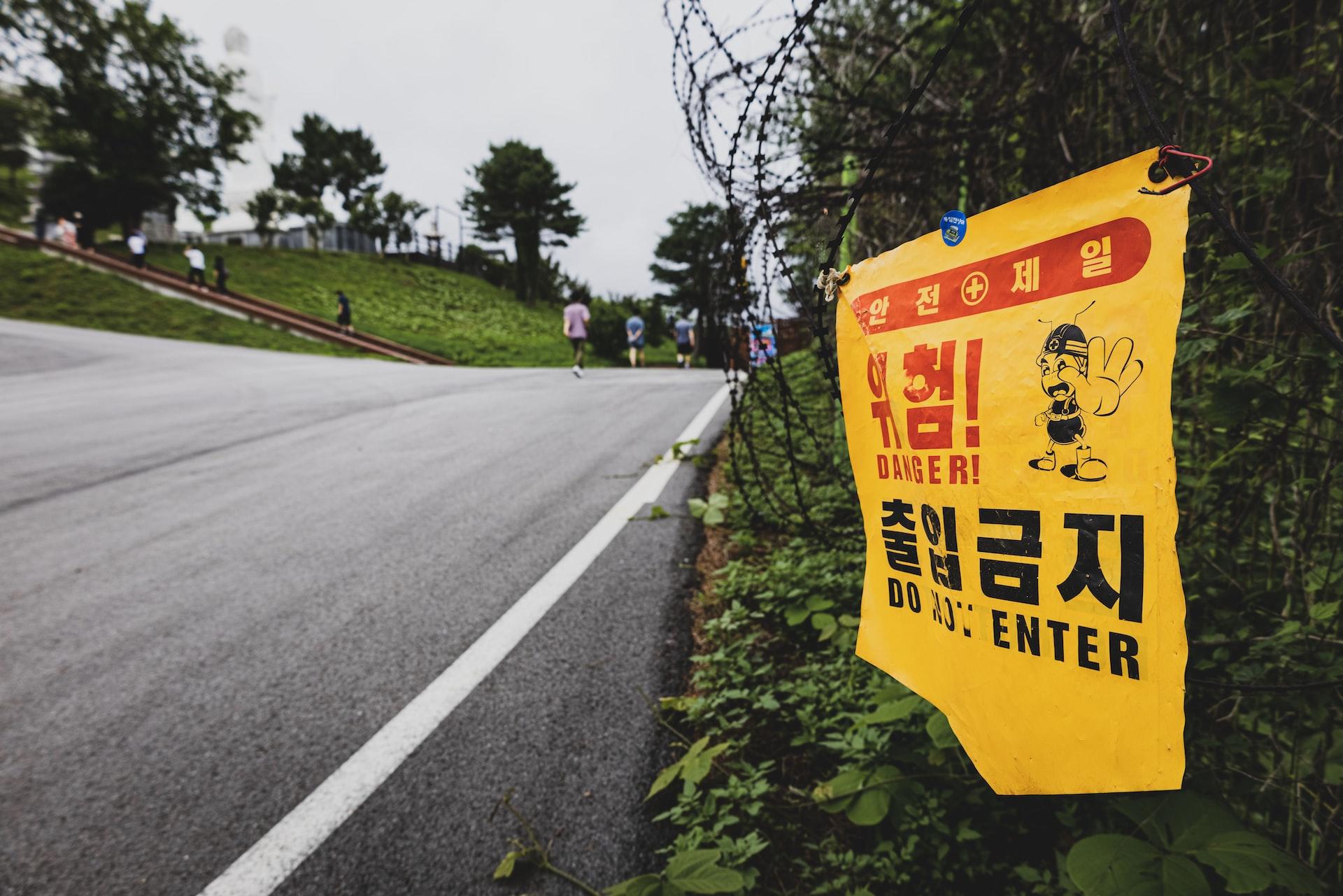
In 1950, two years after formalising the two countries' governments, the North instigated the Korean War. Backed by Soviet and Chinese forces, Kim's army aimed to reunite the country with Kim Il-sung presiding. South Korean troops, reinforced with US firepower and soldiers, repelled them. Still, the North Koreans managed to capture (and lose) Seoul four times before the cease-fire was declared in 1953. The US and Soviet decision-makers enforced the peace by setting up a four-kilometre-wide demilitarized zone (DMZ).
Today, the DMZ reminds us of these turbulent times. Still strewn with mines, it is a no-man's land; proof that the two countries are still technically at war. Many books discuss the two Koreas' military, political and economic aspects in those early Republic days. You can even listen to podcasts that cover this chapter in Korean history.
The First Republic in Korean History
The United States Army handed the reins of power to South Korea's first republican administration in 1948. Rhee Syngman was elected president and the National Assembly of Seoul put forth the country's first constitution. It specified a presidential system of government with a unicameral national legislature.
Far from being a time of progress and development, Rhee's administration proved the adage that power corrupts. It didn't take long for President Rhee's authoritarian tendencies to manifest. Soon, people were rising up in protest against his brutal, corrupt tactics.
He failed to deliver on economic promises and vows of social stability, too. Post-occupation land redistribution - land seized from Japanese occupiers, sparked hopes for fair distribution. Those were dashed when people realised cronies were awarded far larger tracts.
Education was the First Republic's major accomplishment. In 1949, the government established the first Education Law enforcing compulsory primary education. They also developed a National Curriculum. Moving away from the Japanese 'dual ladder' structure, the government established a single educational trajectory from primary through university learning.
This government's greatest accomplishment was also its downfall. Now that people were educated, they had the knowledge to see just how corrupt President Rhee and his administration were. Student protests put an end to the First Republic and President Rhee's authoritarian reign. These protests also gave rise to modern South Korean pop culture.
Military Rule Shapes South Korean History
Three months after the student uprisings and the ROK was still lacking a head of state. Foreign Minister Heo Jeong served in that capacity until July 1960. That election ushered in Korea's Second Republic, with Yun Po-sun at its head.
Parliament had learned its lesson during the First Republic. They rewrote their constitution to redefine governmental roles. This time, the president's role was more ceremonial. Koreans weren't about to invest so much power into one person again.
The country turned into a hive of democracy. The student groups, so instrumental in overthrowing the first regime, grew even more politically active. Labour unions organised, drafted their charters and made their demands. The Second Republic's first eight months amounted to a series of protests.
Discover different Korean classes Sydney here on Superprof.
People of all stripes were agitating for more economic stability. They also wanted members of the previous, corrupt Republic punished. Even though this administration initially had the people's support, citizens soon grew frustrated with their leaders' perceived inaction. Their failure to bring about effective reforms resulted in constant turmoil.
May 16, 1961: the South Korean military overthrows the government. Major General Park Chung-hee installed himself as the head of state. He dissolved the National Assembly and filled the cabinet with his officers. To keep opposition political parties in check, they established the Korean Central Intelligence Agency (KCID). President Park installed a relative into the director's chair.
Now firmly in power, he and his cabinet ushered in the Third Republic. They presented their first five-year Economic Development Plan, which focused on rebuilding and exporting. They ratified the Korea-Japan Treaty in June 1965, which brought in reparations payments for the occupation period.
They also ushered in the Fourth Republic. President Park, intent on ruling for the rest of his life, proclaimed the Yushin Constitution. It expanded his power to include full control of Parliament. Park Chung-hee stayed in power until his assassination in 1979.
Social and political unrest was rampant during his reign but the economy was thriving. That was largely thanks to the preferential treatment he lavished on conglomerate leaders - the chaebols. The citizenry, seeing a repeat of their first president's corruption, grew ever more restive. Still, his Miracle on the Han River - as that period of staggering economic growth is called, turned South Korea into the economic powerhouse it is today.
After President Park's assassination, his prime minister rose to power only to be overthrown six days later. Major General Chun Doo-hwan declared marshal law after a series of student and labour uprisings. That declaration led to the Gwangju Massacre, with nearly 200 civilians killed. President Chun formally assumed the office in 1980, thus ushering in the Fifth Republic.
Throughout these periods of unrest, a new type of music rang out. Minjun-gayo was a type of pop music celebrating democracy and driving its establishment. It was the soundtrack of the Fifth Republic, which lasted until 1987. During that time, the country stabilised and democratised its economic policies. Leaders embraced cultural initiatives, building several museums, including the Seoul Art Centre.
Check out some of our Korean lessons here on Superprof.
Learn Korean in the 6th Republic
Up to 1987, presidents were nominated, not directly elected. Political winds were changing, though. Citizens demanded the right to elect their leaders. That year, presidential nominee Roh Tae-woo put forth the June 29 Declaration, which restored civil rights and a return to popular elections. In December 1987, the country held its first presidential contest in 16 years.
President Roh's election kicked off Korea's Sixth Republic. He and his cabinet got busy cleaning up any vestige of authoritarianism and restoring democratic norms. They revised laws and decrees to ensure the perpetuation of democracy and expanded press freedoms. They restored autonomy to universities and lifted international travel restrictions.
South Korea's more liberal policies had caused somewhat of an economic slowdown. It didn't matter much in the short term. A few months after President Roh took office, Seoul hosted the Summer Olympics. The Korean television show Reply 1988 opens with archive footage of the Seoul Olympics. In fact, that whole anthology series - Reply 1988, 1994 and 1997 weaves aspects of Sixth Republic life and society throughout.
South Korea finally returned to a civilian government with the 1992 election. President Kim Young-sam and his cabinet put paid to previous administrations' mistakes. Former leaders Chun and Roh were both charged with bribery and corruption. Chun was further charged for his role in the Gwangju Massacre. They were both sent to prison in December 1996. In just under a half-century, South Korea transitioned from one of Asia's poorest countries to one of the world's richest.
The Korean people struggled under decades of military rule. Students and labourers fought it at every turn. Relations with China, Russia and North Korea have been frosty, warm, productive and lucrative, all in turn. Japan is still a touchy subject, though. Despite treaties and trade, Japan's adamant refusal to apologise for war and occupation atrocities keeps alive a simmering tension. But you have to know about ROK culture and history to notice it.
Summarise with AI:
Enjoyed this article? Leave a rating!

 Loading...