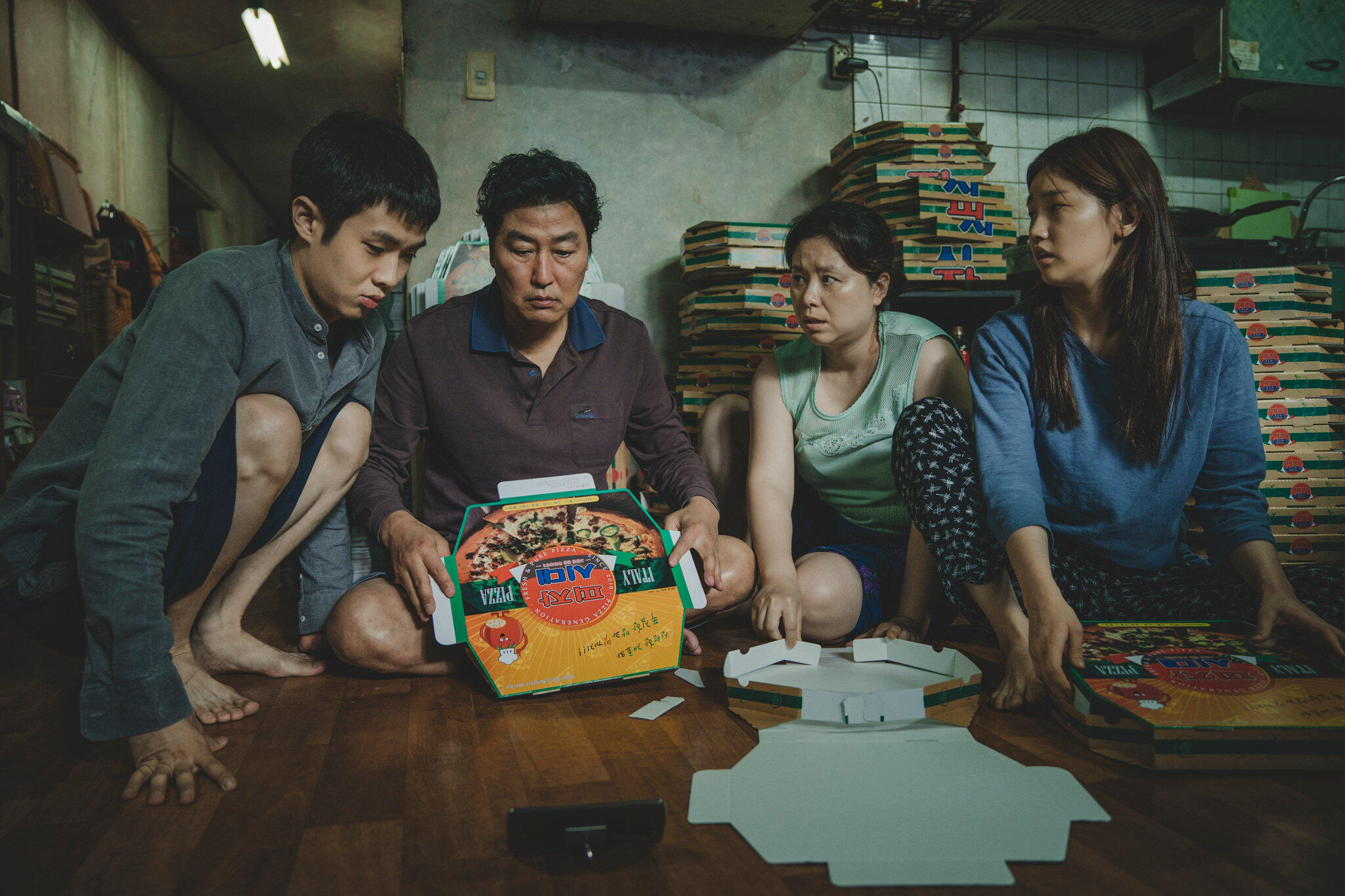

Korean cinema has become more popular across the globe in recent years. Korean film enthusiasts consider the era from 2000 to 2020 to be the height of modern Korean film, but that doesn’t mean there aren’t plenty of great classical and new movies to see! Whether you’re just learning about Korean films or are looking for more recommendations, here are some of the best Korean movies you need to watch.


1. Madame Freedom (1956)
This period piece explores the cultural shift that many Koreans experienced in the 1950s, in the rapidly modernizing post-war city of Seoul. A married woman (Kim Jeong-rim) begins working at a cosmetics shop, eventually becoming fascinated by Western culture and the new sense of romance and freedom it brings. She and her husband begin to struggle with the newfound possibilities in Korean society. Choices they didn’t have before lead to mixed feelings about tradition and expectations.
The film was revolutionary for the time for its frank portrayal of adultery, female desire, and consumerism, especially in conservative Korea. It poses the question, can traditional Korean culture coexist with contemporary (in the 50s) ideas of freedom?
Find out more about the history of Korean cinema.
2. The Housemaid (1960)
Considered one of the greatest Korean films ever made, the story follows a middle-class family after they move to a new house. The father hires a young housemaid (Lee Eun-shim) to help with chores. Soon, she ends up seducing him, becoming pregnant, and terrorising the household. The family is threatened with cruelty, and their stability is at risk as the maid’s obsession creates paranoia and fear.
The director’s use of symbolism, namely cramped interiors, animal imagery, and jarring tonal shifts create a sense of unease and distress. The film’s main messages critique class, patriarchy, and desire as it relates to societal aspirations.
3. Aimless Bullet / Stray Bullet (1961)
Post-war Korea struggled with poverty, and many people became desperate. Obaltan follows the story of an impoverished accountant trying his best to support his family while living in a slum. Each family member suffers in ways that would be manageable if only the resources existed. The family tries to stay afloat and even live out their dreams in a world that constantly crushes them under the weight of debt, bureaucracy, and social indifference. It conveys the reality of many people in that time who struggled against circumstances they simply could not overcome.
After being suppressed for many years, the film is now hailed as one of the greatest Korean movies ever made. It proved that depicting the realities of poverty and trauma in film can resonate with audiences through time.
Many Korean films can be found on streaming services like Netflix, Hulu, Prime Video, Shudder, Tubi, Viki, Kanopy, and YouTube (either to rent or sometimes stream for free).
Some older films can be found in archives, while others are on sites like Criterion Channel or other arthouse streaming sites.
Others are only available through physical media or digital purchase.
4. My Sassy Girl (2001)
Based on a true story, the film quickly gained immense success in South Korea, Japan, Taiwan, and Hong Kong. It became one of the top five highest-grossing films ever (at the time), solidifying its place among the top popular Korean movies, and helping spread the Hallyu Wave across the globe. It showed how overly dramatic comedy can be used to tell a meaningful story and launched actress Jun Ji-hyun’s highly successful career.
Two college students meet in a chance encounter on the subway. Gyeon-woo ends up escorting the girl, who is drunk, home. From there, they develop a roller coaster of a relationship, with the girl (who is not named) treating Gyeon-woo alternately well and quite badly. He ends up understanding she is using “sass” to hide her inner pain from previous experiences. Over the course of several years, the two develop an on-again, off-again relationship that sees them each grow and mature.
Find out which famous Korean actresses to know about!
5. Oldboy (2003)
Oh Dae-su (Choi Min-sik) was imprisoned for 15 years without any explanation. Suddenly, he is released and given five days to discover who it was that locked him up and why. With limited resources, he frantically searches to find out who could have possibly robbed him of 15 years of his life. The plot is full of twists and turns, culminating in a shocking revelation about memory and truth.
The movie debuted at Cannes, where it won the Grand Prix for its cinematography as well as its storytelling. It set the precedent for operatic violence and baroque style, while establishing the rules for the iconic “hallway fight” in action movies going forward.
6. Memories of Murder (2003)
Inspired by the real-life Hwaseong serial killings, the film centres around two detectives in the 1980s trying to solve a string of murders targeting young women. The two detectives, one local and one from Seoul, find it difficult to work together. The pressure is even worse when they can’t seem to find any break in the case. The unresolved ending comes at the end of a long line of frustration, police brutality, and political unrest.
The film is regarded as one of Korea’s greatest movies and created a foundation for nuanced crime dramas.
7. The Host (2006)
A young girl is kidnapped by a monster living in the Han River, a result of mutation from toxic chemicals being dumped into the water. Authorities declare her dead, case closed, but her family believes she is still alive in the sewers. They attempt to find her, leading a dramatic, chaotic, and sometimes comedic rescue mission. Meanwhile, the government mishandles the event even more and ends up perpetuating a crisis by spreading misinformation about an “unknown virus.”
The movie is hailed as a masterpiece in balancing comedy, spectacle, melodrama, political satire, and monsters together to convey a socially-conscious critique.
8. The Man from Nowhere (2010)
An unexpected friendship forms between a pawnshop owner with a dark past and a neglected little girl in his apartment building. Shockingly, she is kidnapped by a drug-organ-trafficking ring. The man steps up to track her down and rescue her from the gang, relying on skills from his violent past. While navigating through the dark underworld of Seoul, the man confronts his own trauma while trying to save the life of an innocent child.
The Man from Nowhere put Korean action films on the map and established actor Won Bin’s fame. The action choreography and emotional subject matter leave viewers feeling changed by the journey.
Discover other famous Korean actors to know.
If you’re just learning about Korean films, some of the best titles you should start with include “Parasite,” “Train to Busan,” and “Oldboy.”
9. I Saw the Devil (2010)
One of the strongest entries in the 2010s flood of popular K-horror films, the graphic violence and moral ambiguity pushed boundaries even by Korean horror standards. Even so, the movie is not considered so extreme as to be unwatchable and manages to convey a meaningful story about revenge, even among the excessive violence.
The plot focuses on the murder of a secret agent’s fiancée by a sadistic serial killer. The agent (Lee Byung-hun) tracks down the killer (Choi Min-sik), but instead of exacting a quick revenge, he begins playing a twisted game of cat-and-mouse. He repeatedly captures, tortures, and releases the murderer, blurring the line between victim and aggressor.
10. The Wailing (2016)
A rural village begins to experience a bizarre illness that causes them to murder their own families, and the locals suspect the newly arrived Japanese stranger. Paranoia spreads as traditional folklore and shamanic rituals collide with Christian symbols. Multiple spiritual practitioners attempt to guide the local policeman in charge of the case, whose daughter has also been infected with the strange disease. But who is really trying to help, and who is working in tandem with the evil spirit?
The film has been praised for its genre-blending storyline and convoluted yet enthralling plot that leaves each viewer with their own interpretation. It showcased how ghost stories can transcend cultural barriers.
11. Train to Busan (2016)
The Korean horror frenzy continues with this interpretation of a zombie film. Several passengers find themselves fighting to avoid infection, including an expecting couple (Jung Yu-mi and Ma Dong-seok), a father and young daughter (Gong Yoo and Kim Su-an), a high school athlete (Choi Woo-shik) and his girlfriend (Sohee), and a homeless man (Choi Gwi-hwa).
in a moving train fight to avoid being infected or killed by a fast-spreading zombie virus. As more passengers are infected, the stakes become higher. The train conductor does all they can to get the train to Busan, where the government has set up a quarantine zone, but not all the protagonists we come to know survive the journey.
Train to Busan was a smash hit domestically and internationally. The chaotic, claustrophobic setting added a new, exciting layer to the zombie horror genre.
12. Parasite (2019)
Famously known as the first non-English film to win the Academy Award for Best Picture, Parasite also won Oscars for Director, Screenplay, and International Feature. For much of the world, it was the first major Korean film they had ever heard of or seen, exposing them to the world of Korean cinema. The satirical film is a masterful critique of social class and inequality.
The very poor Kim family struggles every day just to survive. By luck, the son manages to convince the wealthy Park family that he is a professional tutor. He earns their trust and, over the next few months, manages to help his family get household jobs with the wealthy Parks as well, all the while pretending they don’t know each other.
By chance, the Kims eventually discover an underground bunker where the previous housestaff, whom they forced out to make space for themselves, is living. The two families end up in a fight to maintain their secrets and the modicum of security they’ve managed to scrape together.
Discover which famous Korean film directors to explore.
Honorable Mentions
Hungry for more Korean films? There are hundreds of great movies to watch, each with the potential to give you more insight into Korean history, culture, and more. Here are some of the top Korean movies to add to your must-watch list:
| 🎬 Title | 📆 Year | 🎥 Director | 🎞️ Genre |
|---|---|---|---|
| Righteous Revenge / The Righteous Revenge (Uirijeok Gutu) | 1919 | Kim Do-san | Kino-drama |
| Sweet Dream / Lullaby of Death (Mi Mong) | 1936 | Yang Ju-nam | Colonial melodrama |
| Madame Freedom | 1956 | Han Hyeong-mo | Melodrama |
| Barefooted Youth | 1964 | Kim Ki-duk | Youth drama |
| Joint Security Area | 2000 | Park Chan-wook | Contemporary political |
| The King and the Clown | 2005 | Lee Joon‑ik | Historical fiction |
| Welcome to Dongmakgol | 2005 | Park Kwang‑hyun | Historical |
| Secret Sunshine | 2007 | Lee Chang‑dong | Crime drama |
| Tidal Wave / Haeundae | 2009 | Yoon Je‑kyoon | Disaster film |
| Mother | 2009 | Bong Joon Ho | Crime drama |
| Poetry | 2010 | Lee Chang‑dong | Drama |
| Masquerade | 2012 | Choo Chang‑min | Historical drama |
| Miracle in Cell No. 7 | 2013 | Lee Hwan‑kyung | Crime melodrama |
| The Admiral: Roaring Currents | 2014 | Kim Han‑min | Historical epic |
| The Handmaiden | 2016 | Park Chan-wook | Thriller romance |
| A Taxi Driver | 2017 | Jang Hoon | Political action drama |
| Along with the Gods: The Two Worlds | 2017 | Kim Yong‑hwa | Fantasy |
| Burning | 2018 | Lee Chang-dong | Thriller mystery |
| Extreme Job | 2019 | Lee Byeong‑heon | Crime comedy |
| Night in Paradise | 2020 | Park hoon-jung | Noir action |
| Broker | 2022 | Hirokazu Kore-eda | Drama |
| 12.12: The Day / Seoul's Spring | 2023 | Kim Sung‑soo | Historical political thriller |
| Jung_E | 2023 | Yeon-Sang-ho | Sci-fi |
| Exhuma | 2024 | Jang Jae‑hyun | Horror |
What to Know About Korean Cinema
Whenever you watch films from other cultures, there will be some themes, messaging, and references that go over your head (unless you’re already really knowledgeable about the culture). You don’t need to know every detail of a culture to enjoy a film and understand the premise. However, knowing a little more about the culture can add valuable context and layers of satisfaction.
Hierarchy, Age, and Honorific Titles
Like much of East Asia, Korean culture revolves around the concept of respect through recognising seniority. Notice how characters address one another, using titles like “seonbae,” “hyung,” “oppa,” or simply “team leader.” These details tell you more about the dynamics between characters that will never be spelled out, since they make perfect sense to Korean audiences without explanation.
Family and Groups Come First
In the same vein, many Korean films focus on family, loyalty to friends, and belonging within a group. Individuality isn’t really emphasised in Korean culture, especially in media. In many Korean films, the motivating factor for most characters involves making a sacrifice for their family’s honour or group harmony. To Western audiences, these motivations might not make sense, but to Korean audiences, the character’s choices are completely rational.
History, Change, and Class Tensions
Modern Korea is built on a foundation of turbulence: the Japanese occupation, Korean War, dictatorship, and ultra-fast economic revolution that saw the fortune of lucky families suddenly increase, all shape contemporary culture. Korean films revolve around corruption, protests, military trauma, nostalgia for simpler days in the countryside, and class disparity because they are the main events in society’s collective mind.
Korean films are known for their high production quality, superb acting, and interesting plotlines that you don’t often see in movies from the English-speaking world. Everyone can find a Korean movie or two that speaks to them. Keep looking out for new films – you never know when the next monumental success will surge across the world in the Hallyu Wave!
Summarise with AI:
Did you like this article? Leave a rating!

 Loading...