

During the Dutch Golden Age, there was a time when people went crazy for tulips. It's easy to understand why; those flowers were new to the region, exotic-looking and only bloomed for a short while. Having some on display became a status symbol, a desire that financially savvy Dutch traders cashed in on. Ahead of exploring the details of this tulip craze, we map out its timeline.
ca 1554
The first tulip bulbs arrive in Antwerp and Amsterdam.
1593
Botanist Carolus Clucius establishes the University of Leiden's botanical garden.
He displays tulips in his hortius academicus.
1610
Rare tulip bulbs become currency.
They're used as wedding dowries or traded for real assets.
1610-1630s
Further classification of tulip varieties.
The bulbs are given powerful, exotic names to make their more desirable.
1634
The first forward contracts for tulips are drafted.
Contracts to buy/sell bulbs in the future, with no goods changing hands.
1635
A set of 40 bulbs fetches a record price: 100 000 florins.
The sale cost more than 10 times the average annual salary of the day.
1636-37
The tulip market begins to show signs of instability.
A failed auction caused a sudden loss of confidence.
1637
The market collapses; sellers are left bankrupt.
The Dutch government intervenes, settling contracts at a fraction of their original value.


How Tulip Mania Started
In 1554, Sultan Suleiman the Magnificent gifts the Archduke of Austria, Charles V, a few tulip bulbs. The flower was common throughout the Ottoman lands, a fact that the Austrian ambassador noted while serving there. These tulip bulbs arrived in Europe around the same time as potatoes, tomatoes, and other vegetables.

The Archduke, conscious of his vast territory, distributed all of these gifts throughout. The tulip bulbs made it to Amsterdam and Antwerp, where they were quickly planted. Come time for them to bloom, the public deemed them breathtaking, but not necessarily record-breaking.
The pioneering horticulturist, Carolus Clucius, was a doctor by training but he never practised medicine. It's possible that he was the one responsible for planting Europe's first tulip bulbs in Vienna. After all, his benefactor, Ogier Ghiselin de Busbecq, had been ambassador to the Ottoman Empire, and it was he who arranged for the first tulip bulbs to be sent.
By 1593, Carolus Clucius was established in Leiden, having been appointed to a position as prefect of the city's botanical garden. There, he could cultivate tulips to his heart's content, which he did.
Two factors fuelled tulip mania:
1. The growing wealth of the Dutch citizenry.
2. The flower's unusual, intense appearance.
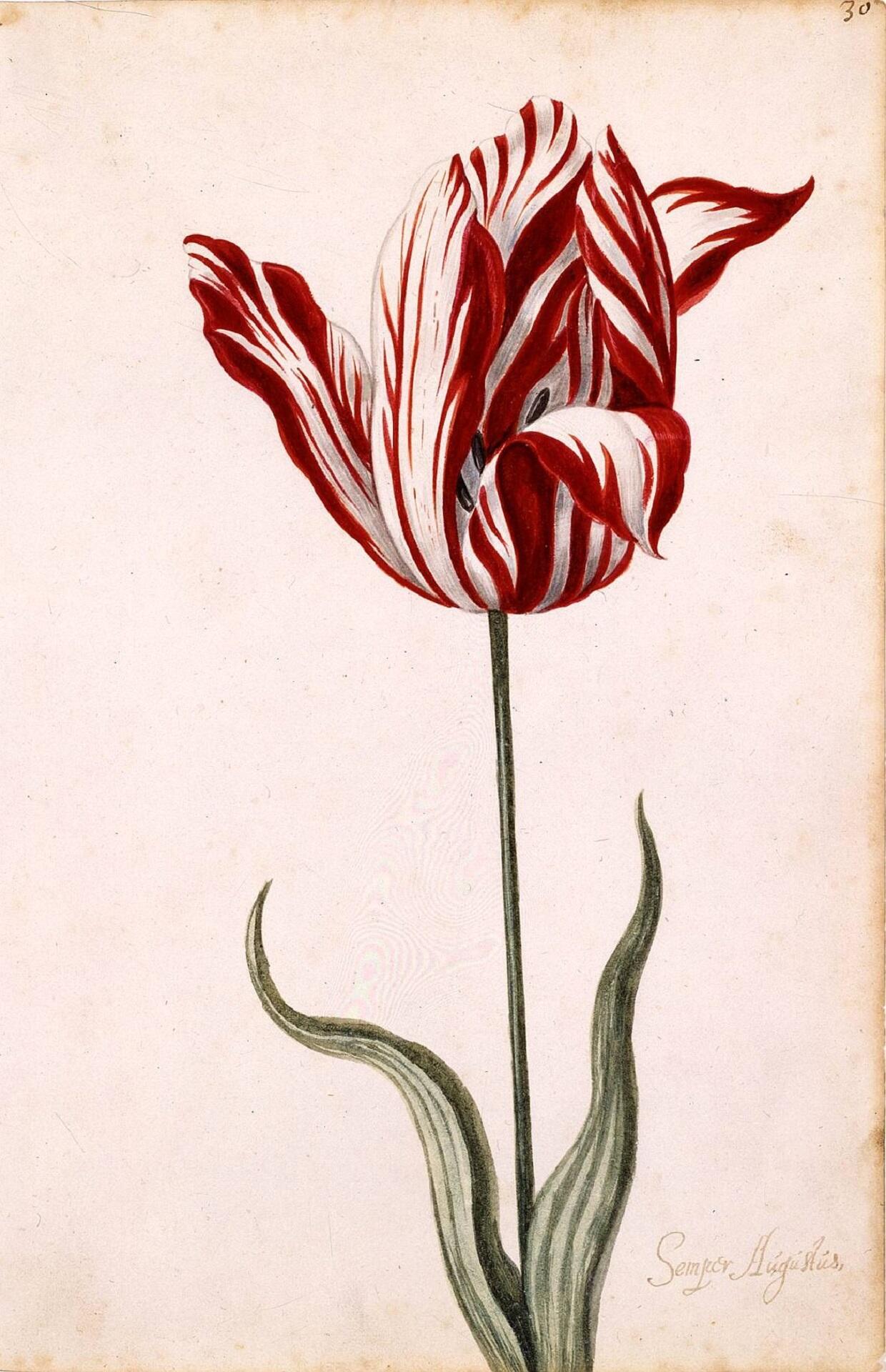
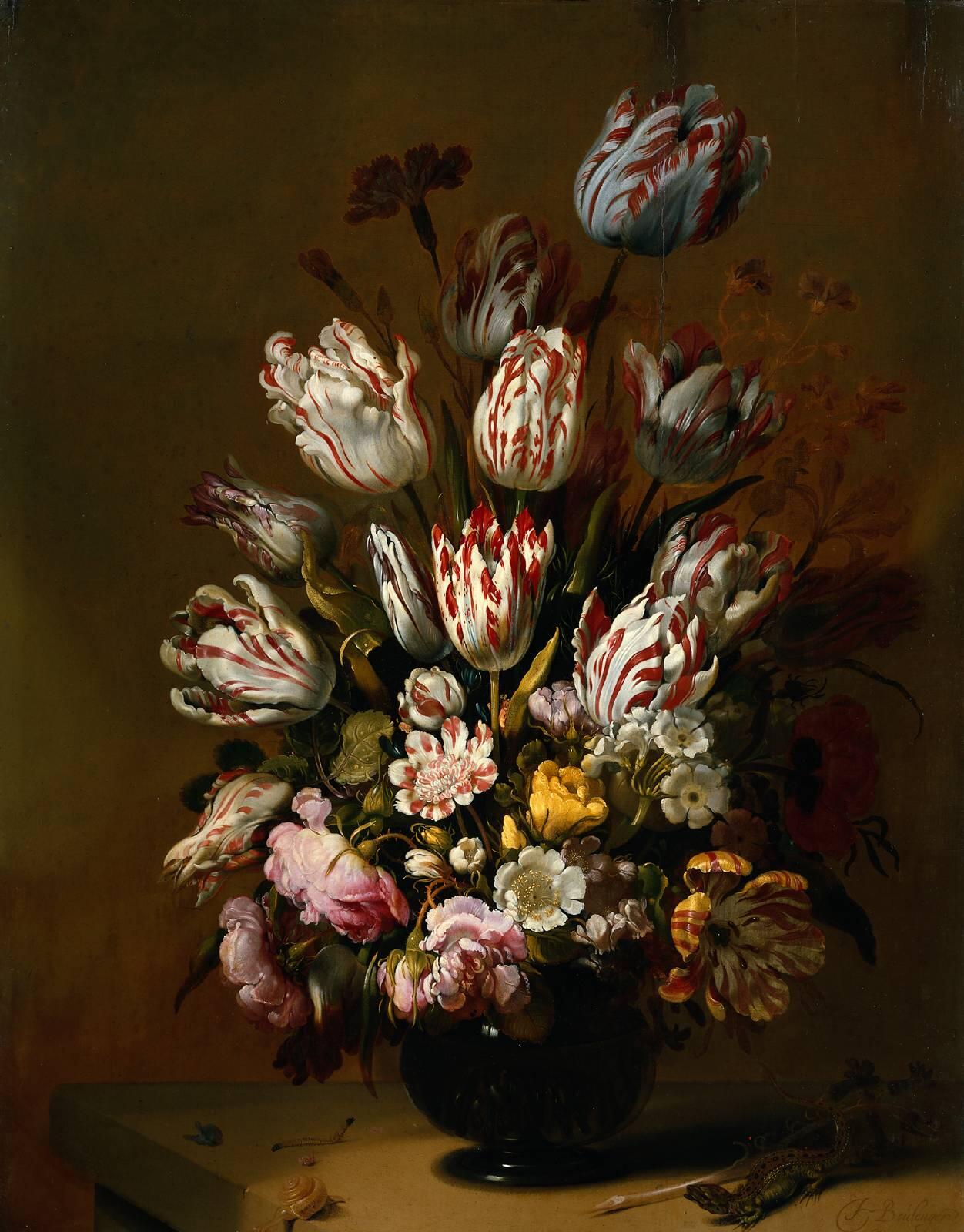
Soon, tulips became the luxury item everyone craved. Flower cultivators and merchants responded to the demand, assigning their blooms ever more extravagant names:
- Couleren: single-colour flowers
- Rosen: white streaks on a red or pink background
- Violetten: white streaks on lilac or purple background
- Bizarden: yellow or white streaks on a dark background.
These classifications were further divided into groups with grand names, typically preceded by 'general' or 'admiral'. As tulip mania intensified, those names got even more grandiose: 'Admiral of Admirals', for instance.
All this sounds a bit over the top, and perhaps just a bit inane. Still, this slice of Dutch history forms the buildup to the mania that would follow.
The Dutch Tulip Bubble
By the early 1630s, prized tulip bulbs had become a currency of sorts. People gave them as wedding gifts, down payments for land parcels, and even to buy homes and breweries. Famous Dutch people, the writers and artists of the day, made sure they had a steady supply of tulips to count on.
Tulips bloom in the spring, only for a week or two.
After that, the bulbs may be dug up, traded, and replanted.
It wasn't unusual for people to stroll around to various properties, assess the blooming tulips, and express a desire to own them. This selling phase, called the spot market, usually ran from June to September. That way, people could take physical delivery of the bulbs they bought.
The rest of the year, florists worked out forward contracts: arrangements to buy a certain number of tulips at a set price sometime in the future. Usually, that was at the end of the season.
As with everything market-related, what sells well will have many buyers. Professional growers paid higher prices to ensure ample stock of the most sought-after blooms. International buyers, particularly the French, compelled speculators into the market. By 1636, traders were meeting in taverns, charging a fee of up to three guilders for each trade (called 'wine money').
We know that, throughout Dutch history, these traders and merchants proved themselves to be masters of financial enterprise. Indeed, they established many of the finance techniques and tools we use today, including stock markets and the central bank concept.
... we find that for the f1,ooo one might pay in January 1637 for one hypothetical Admirael van der Eyck bulb ...
Anne Goldgar, historian and specialist in 17th and 18th century Europe
What might one buy for that kind of money in 1637? Per Ms Goldgar, the average Dutch household might buy a modest house in Haarlem, over 11 500 kilos of rye bread or nearly six thousand pounds of meat.
The Tulip Bubble Crash
That was how the tulip bubble inflated. By the winter of 1636-37, at the height of the tulip craze, it wasn't unusual for contracts to change hands five times or more. Nobody paid anything on those contracts, as they would only come due once the bulbs changed hands.
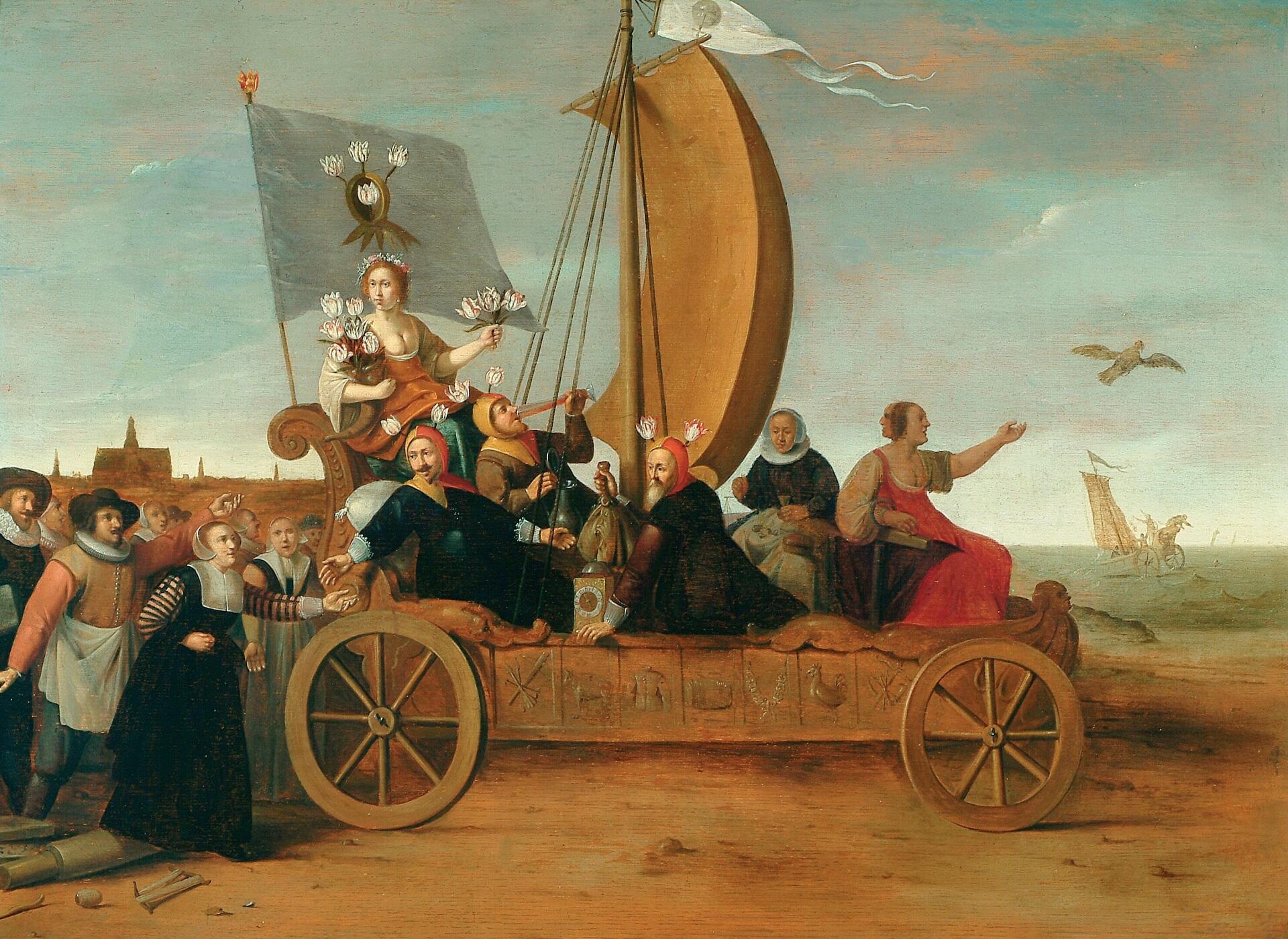
And then, in February 1637, the price of tulip bulb contracts crashed, effectively ending the tulip trade. Frantic growers rushed to find representatives to speak for them at a national assembly in Amsterdam. Held at the end of February, that congress came to a compromise resolution that the courts refused to uphold.
Instead, the Holland legislature suggested voiding all the contracts and starting the trade fresh next summer.
The actual reasons are lost to history.
The governments - local and national, stepped in where feasible and necessary, making laws and recommendations. The courts stayed busy for years beyond the tulip bubble crash, arbitrating and deciding compensation. In the end, most of the contracts just weren't honoured.
What We Can Learn From Tulip Mania History
To make sense of the tulip craze, we must first understand how it came about.
The Dutch Golden Age was a prosperous time. For the most part, people had plenty of money to spend, but there were relatively few goods to splurge on.
Owning something unique, ever the hallmark of the well-to-do, is one reason for the mania. But not everyone was rich. Still, even those less fortunate got caught up in the frenzy.
We see this phenomenon today, with everything from Bitcoin to Labubu, neither of which has any intrinsic value. Still, having the latest thing is intensely gratifying.
Economist Peter Garber contends that the wild pricing of tulip bulbs is nothing unusual. He cites hyacinth sales when they were first introduced. These blooms enjoyed high demand (and high prices) until their novelty wore off. Demand and price for them fell, in line with usual market patterns. But his theory doesn't account for the wildness of the tulip frenzy.
Rethinking Tulip Mania
Contrary to the popular narrative, the Dutch tulip bubble had only a minimal impact on the real economy. Of course, speculators and growers lost money, but they didn't all go bankrupt. The real story is far from being the economic catastrophe this historical event is often billed as.
In the 1630s, financial markets were a new, relatively untested concept.
Today, we have many tools to help us predict which way markets may go. And we have centuries of cumulative experience sensing trends and spotting alarms. None of that existed nearly 400 years ago. However, the perpetually optimistic outlook that often trips finance professionals today apparently did exist back then.
Finally, the tulip craze had a cultural and psychological dimension. Having so recently gained their independence, the Dutch people were still learning what they were all about. Chasing symbols of wealth and status was all-important to this young society.
For that brief time, they let go of their firmly held ideas of value and stability. When the tulip bubble burst, the snap-back brought them to their senses, fortunately at a relatively low cost.
Tulip Mania: a Metaphor
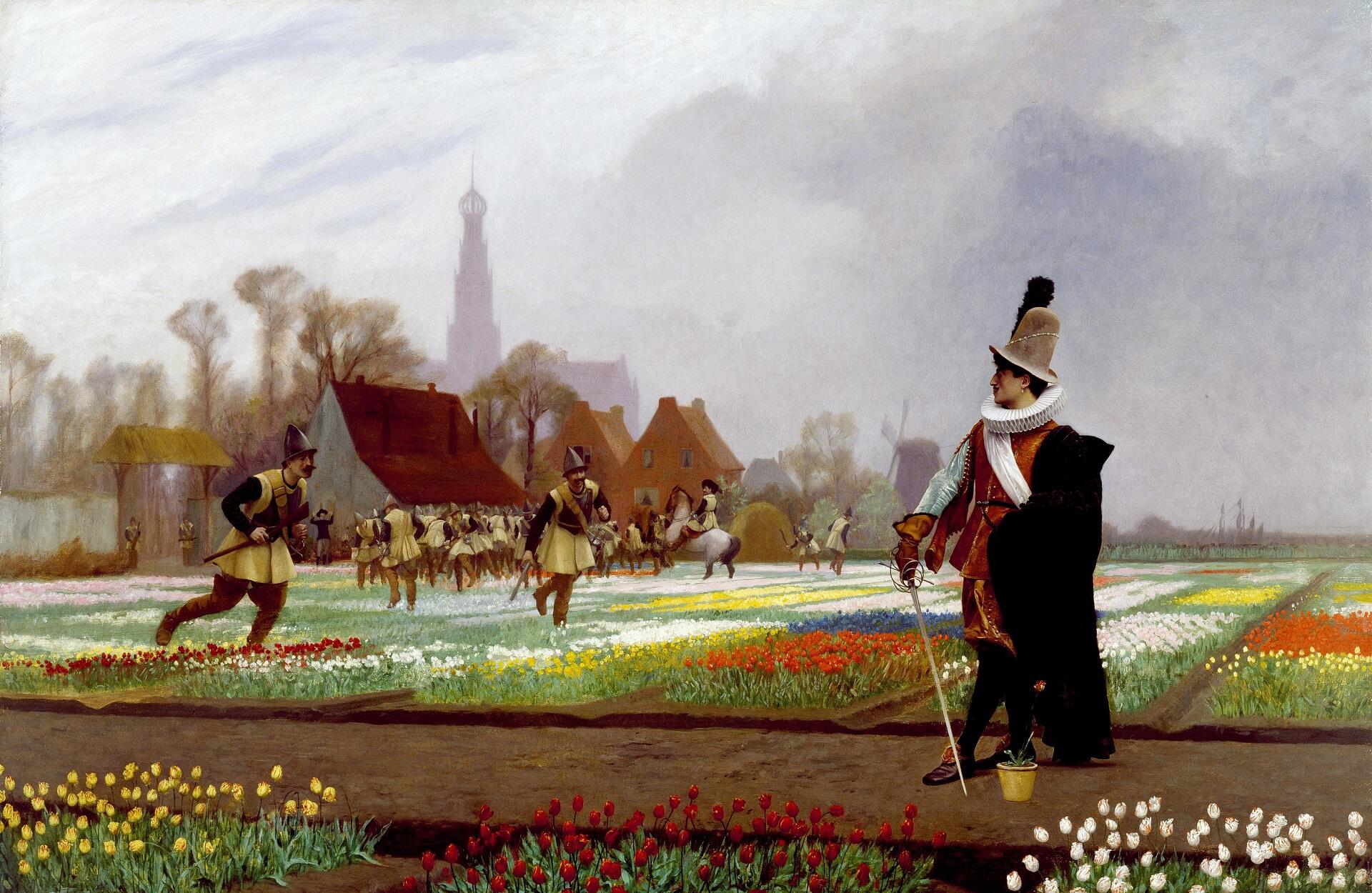
Tulip mania was all about price outpacing intrinsic value. That doesn't happen organically; it's due to the exuberance of possibility. That exuberance is often driven by a carefully spun collective illusion.
[AI] is like breeding ever faster thoroughbreds, thinking one day, a horse will give birth to a locomotive.
Cory Doctorow, author and social commentator
We're seeing such an irrational exuberance today, surrounding the possibilities inherent in artificial intelligence (AI). Investors are piling into the promise of data centres and progressively smarter machines. Corporations are already replacing human employees with AI. But isn't the price of all this far outpacing AI's intrinsic value?
In general, we use the phrase 'tulip mania' to represent any large economic bubble whose asset prices far exceed the asset's actual value. In that sense, we might conclude that, in this moment, we're living our own tulip mania.
Summarise with AI:
Did you like this article? Leave a rating!

 Loading...