Every year in October and November, Year 12 mathematics students around Australia are gearing up for their final examination period. This is the big examination. It's the pair of exams that will combine with coursework marks to give students their level or ranking. And it is this ranking that determines whether or not they have a chance of getting into study at the university of their choice.
It can be a bit of a trial — in terms of stress.
Every state and territory runs a different type of exam, with varying requirements to attain a ranking and a Year 12 certificate. In Western Australia, it's the WACE. In Queensland, students sit for the QCE. In New South Wales, it's the HSC. In Canberra, it's the AST.
And, in Victoria, students prepare for their VCE examination, which is set by the VCAA.
The VCE examination is the focus of this article. Specifically, the VCE maths exam and to narrow it down further — the VCE Further Mathematics exam. (Further Mathematics is one of the three main maths subjects available to students at Year 11 and 12 level.)
However, although we are focusing on the VCE, much of the general information and advice will be applicable to students in other states who are at the same level because although the mathematics subject names are sometimes different, the content is, in general, the same, as are the strategies and methods taught.
Other articles in this VCE Further Maths series contain information on the different components of VCE maths, the Further Mathematics study Design and the reasons for enrolling in VCE Further Maths. In this article, we are delving deeper into the assessment and examination processes for Further Mathematics — looking at how to use Further Maths past exams to prepare and the benefits of engaging a VCE maths tutor.
First of all, though, let's take a quick look at the topics that are covered in the two Further Mathematics units.
You can discover some of the most exceptional maths tutor in Sydney here.


Mathematics for Everyday Life
As mentioned above, there are three main VCE maths subjects students can choose from once they get to senior secondary school — Mathematical Methods, Specialist Mathematics and General Mathematics / Further Mathematics. Each of these caters to students at a certain level, or who have specific goals in mind.
Mathematical Methods and Specialist Maths units both feature higher-level mathematical content, such as calculus. Mathematical Methods units are geared towards students who want to enrol in science or commerce at university. Specialist Mathematics units are recommended for maths students who are considering a career in engineering or technology, and for students who simply love and excel in maths.
This does not mean that Further Mathematics (and its Units 1 and 2 counterpart, General Mathematics) is pointless or for students who are not good at maths. You still have to work hard in these units and, unlike Methods and Specialist units, Further Maths will equip you with real-world mathematical concepts and caters to students who want to go to university, want to undertake an apprenticeship or want to enter the workforce. In other words, Further Maths is a general purpose, all-rounder mathematics for everyone.

So, what will I study if I choose Further Maths?
The VCAA determines the scope of each mathematical subject. Content goes under regular revision to ensure it is keeping up to date with current progression in maths-related fields.
Unit 3 of Further Maths covers two broad topics.
The first topic is data analysis. The study of data analysis includes identifying the different types and uses of data and statistics and applying various methods in the categorisation, analysis, interpretation and presentation of data sets and statistics. Students investigate numerical distributions and use distributions of a range of variables to find solutions and answer statistics questions.
The second topic is recursion and financial modelling. Students are required to use linear recurrence relations and technology in the analysis of various financial situations and then use different methods to model the situations and solutions.
Unit 4 of Further Maths is divided into a four-module structure of which students must complete two modules.
Module 1 is a matrices topic. Students learn to identify the different types of matrices, differentiate between the properties and applications of matrices, perform matrix operations and use linear matrix recurrence relations.
Module 2 covers networks and decision mathematics. Students are introduced to networks, such as graphs, trails, circuits and paths, and then use these networks to find solutions to problems.
Module 3, geometry and measurement, involves determining the angle, length, area and volume of 2D and 3D objects using geometry, measurement and trigonometry.
Module 4, graphs and relations, uses linear and non-linear relations to find solutions to problems. The module is divided into two components — the construction and interpretation of graphs, and linear programming.
Study with Further Maths Practice Exams
The Victorian Curriculum and Assessment Authority (VCAA) is the key body responsible for the curriculum in Victoria. They coordinate the revision of study design frameworks, monitor the implementation and manage the examination and assessment processes, particularly the external exams.
The VCAA website is open to the public and contains detailed information on subject study design as well as examination specifications. It is on the VCAA website that you can find information about the VCE mathematics exams, including sample tests, reports, Further Maths past exams and other resources, including answers to each exam question, to support revision.
Search for some of the best maths tutor in Gold-coast here.
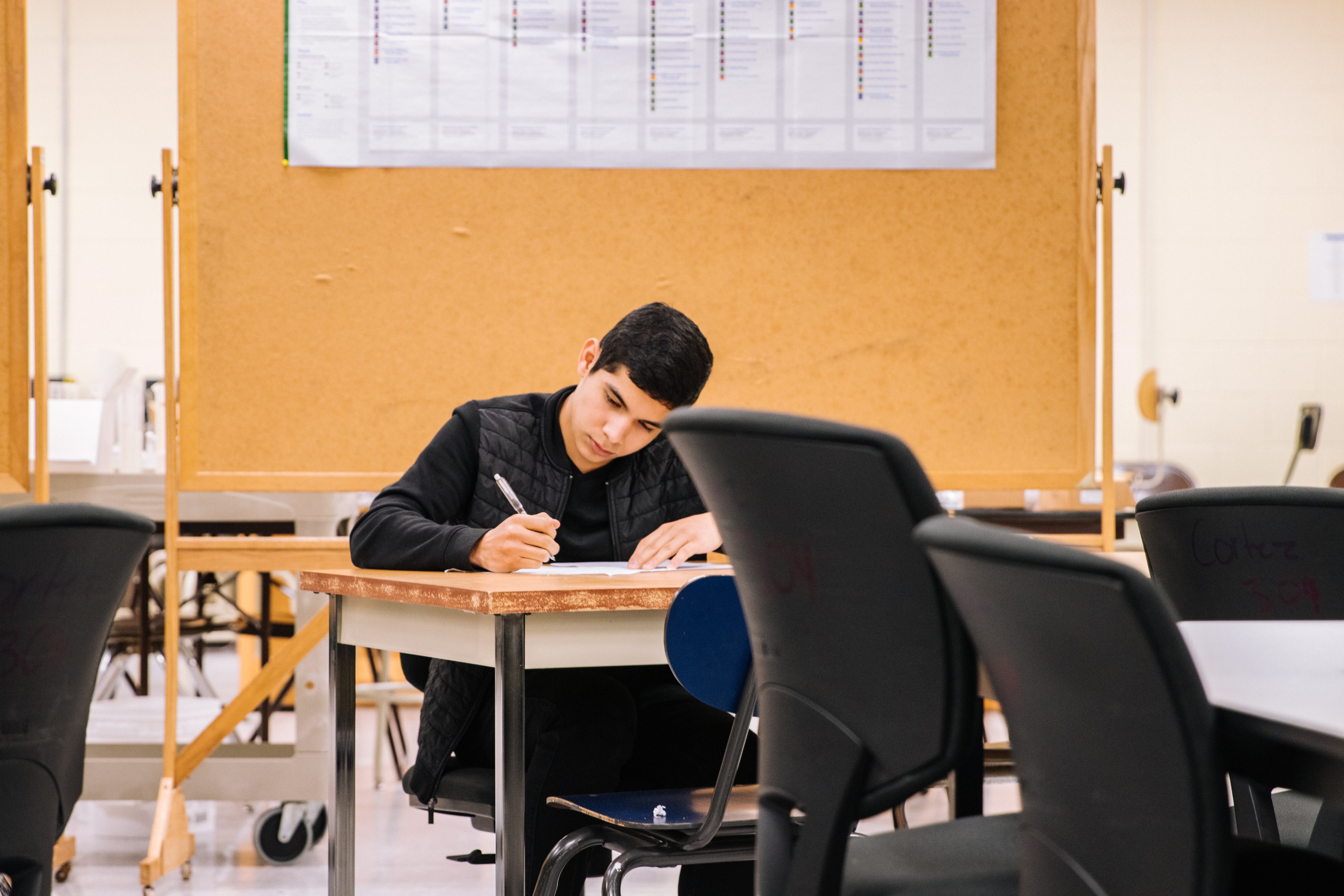
If you have a VCE maths tutor, they may access this website to download Further Maths practice exams and other sample questions and practice tests to provide you with a trial examination as part of your revision practice. Of course, you can also do this yourself — conducting your own timed practice sessions using the exam papers.
Including 'trial' or 'mock' exams in your revision is the best way to prepare yourself for examination conditions, especially regarding time management. You should also ensure to give equal time to your practice of the multiple choice exam papers and the written question, short answer exam papers as both of these tests require different strategies.
If you also download the exam report, you can check the answers and then go back for further revision on the questions you got wrong. There are a large number of Further Maths past exams, complete with answers, on the VCAA website, along with sample questions under specific topics and other resources, so revision can be varied.
Know Your Strengths and Where You Need Support
There is no point in doing revision in areas you are already good at ... but how do you know what you're good at? This is where putting yourself through trial exam conditions with Further Maths practice exams comes in extremely handy.
If you didn't complete the past practice tests in the allocated time, you need to work on time management.
If you got a large number of answers wrong in a particular section, then this is the topic you need to spend more time revising — particularly if you don't know why you got an answer wrong. Also, remember that you can take in study notes (otherwise known as 'cheat sheets'), so make sure these notes contain extra information on more difficult topics.
If you felt you wasted valuable time looking up information, such as formulas, then reorganising your written notes should be a priority.
Above all, if you are finding your revision process overwhelming, or you're struggling with a particular aspect — ask for help ... sooner rather than later.
Engage a VCE Maths Tutor
There is no shame in admitting you need help from a maths specialist; in fact, it is a sign of self-awareness and of an effective learner.
Discover various maths tutoring near me in Australia here.

Engaging a tutor is not cheating, either. It's clever. And, working with a specialist tutor can be highly effective if you are clear on what you need and can communicate your goals and questions to your mathematics tutor.
There are many tutors that offer maths tuition but you could be better off looking for a maths tutor who specialises in VCE maths tutoring or even Further Mathematics tuition. This should mean that they have specialist knowledge of specific VCE requirements and of the outcomes and mathematical content (matrices, statistics, linear programming, solutions etc.) in Further Maths. Ideally, your tutor may even have recently sat the VCE themselves and be able to give you 'insider' tips regarding exam preparation and general revision methods that worked well for them.
The other advantage of engaging a maths tutor is that they will have access to a number of mathematical resources, such as sample tests, sample questions, mathematical tools, past papers and so on. A private maths tutor will use these resources to target lessons and practice specifically to your needs, whether they be particular content or topics, written question interpretation, developing efficient strategies and methods, revision strategies and exam preparation and techniques.
I don't think that everyone should become a mathematician, but I do believe that many students don't give mathematics a real chance.
~ Maryam Mirzakhani ~
Summarise with AI:
Enjoyed this article? Leave a rating!

 Loading...