
If you're in year 11 or year 12 in Victoria, you'll likely be considering what to study for your Victorian Certificate of Education (VCE).
However, no matter where you find yourself, the one thing that schooling and education policy loves to be is confusing and opaque. It seems that nobody wants to make things simple and easy to understand, at least not when it comes to doing a VCE and what that exactly entails.
Here, we're not going to attempt to tackle VCE studies in their entirety. Instead, we'll look to focus on just one subject, psychology, and the study design for it.
The study design for VCE psychology is a fairly long document and we recommend that you read through all of it. However, we'll also outline the main sections you'll find in the study design and then go through them.


What is VCE Psychology?
Psychology is the study of the mind and human behaviour and students in years 11 and 12 in Victoria have the opportunity to study this fascinating subject.
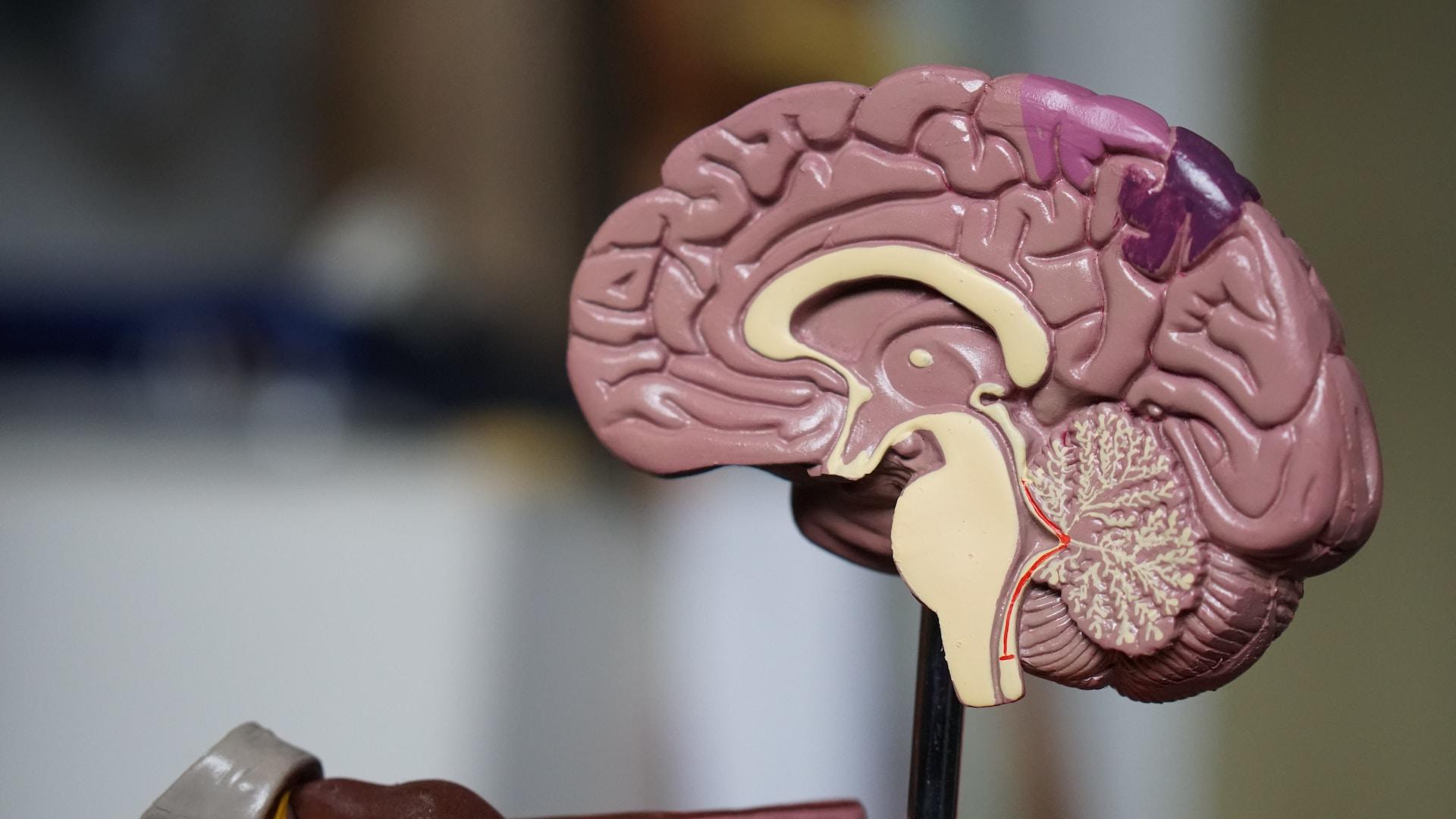
What makes psychology just an interesting subject is the fact that there's a lot to it and it covers multidisciplinary fields.
There are many different schools of thought on psychology and in VCE Psychology, the focus is mainly on the biopsychosocial model of psychology. This model is generally considered to be the holistic approach to psychology as it's at the crossroads between behavioural, psychological, and social psychology.
This isn't to say that the biopsychosocial model is the best, but it's been chosen because of how broadly it can be applied to understanding certain aspects of psychology, making it a good starting point for students who mightn't have ever studied psychology before.
This also means that students can finish their VCE Psychology course with a broad range of knowledge and choose a further specialisation from a broad range of psychological schools of thought.
What Is a Study Design?
Every VCE subject has a "study design", which is a long document explaining pretty much every aspect of the subject.
That said, these documents won't actually teach you anything about the subject itself, but rather what the course should involve, what will be expected of you as a student, how you'll be assessed on the course, and a whole bunch of information that's also useful for your teachers.
The study design is essentially the curriculum, assessment criteria, and course updates all rolled into a single and lengthy document that every student and teacher should read.
Each subject has one and you only really need to look at the study design for the subjects you've chosen and, in this case, the VCE Psychology Study Design.
What's In the VCE Study Design?
The VCE Psychology Study Design for 2023-2027 is nearly 60 pages long and while we do recommend you read it in full, we're going to go through the most important sections of study design.

You don't necessarily have to read it from cover to cover, but you should go through every section at some point and end up reading the whole thing.
For us, these are the most important sections and the ones you should read carefully, highlight, and take notes on.
Scope of Study
The Scope of Study section in the VCE Psychology Study Design outlines the overarching approach that students will take when studying psychology and preparing for their VCE Psychology exams.
This is the section that establishes that VCE students will cover psychology using a biopsychosocial approach and some of the reasoning behind this decision.
The scope of study goes into the general areas of psychology that will be studied. You can think of it like the blurb for the course.
In any VCE subject, it might be worth looking at the scope of study before choosing which subjects you'd like to do. It's also a good idea to go through this section and quickly highlight the key points as you'll want to keep them in your mind as you go through the rest of the study design.
Rationale
While the Scope of Study details what you're going to study in VCE Psychology, the Rationale section will explain why you should study it.
In VCE Psychology, the rationale is that students can learn about thoughts, emotions, and behaviours and see how the science behind psychology works.
According to the study design, these skills are expected to be useful in everyday situations as well as in science.
The rationale also explains what students can do with their VCE Psychology qualification and lists both the skills the course aims to teach and the potential career options that will open up to students who choose to study VCE Psychology.
This section can be particularly useful whenever you're lacking motivation as this is the reason that you should be studying psychology. Feel free to go back to it whenever you have doubts about why you're studying psychology!
Aims
This section lists all the learning objectives for the course in a broader sense. These learning objectives are elaborated upon in later sections so you can quickly read them, but you won't need to intensely study what they say as you should do that for each unit.
Structure
This section explains how the course is broken down into 4 units and the titles of each of these units.
- Unit 1: How are behaviour and mental processes shaped?
- Unit 2: How do internal and external factors influence behaviour and mental processes?
- Unit 3: How does experience affect behaviour and mental processes?
- Unit 4: How is mental well-being supported and maintained?
You can find out more information on each of the units in their dedicated sections later in the study design.
Entry
This section explains what prerequisites are required by students to study VCE Psychology and fortunately for VCE Psychology students, there are no prerequisites for units 1, 2, and 3.
Changes to the Study Design/Monitoring for Quality/Etc.
This section is mainly for teachers so don't worry too much about it. If there are any changes to the study design, psychology teachers will be made aware of them and will communicate these to their students.
If you're interested, feel free to read this section, but it shouldn't be the first thing you read and you probably won't need to read it more than once.
If you do have questions about this section, it's probably worthwhile talking to your teacher about it as they've had to pay even more attention to the study design than you'll ever have to.
Assessment and Reporting
Students are given an "S" or an "N" to indicate whether their work is "Satisfactory" or "Not Satisfactory" as well as their levels of achievement.

This section also details the requirements for each of the units. Units 1 and 2 are assessed by the school whereas Units 3 and 4 are assessed via School-assessed Coursework (SAC) and the end-of-year examination.
- Units 1 and 2 can be marked with the "S" and "N" results as well as a grade a numerical indicator given by the school if they wish to do so.
- Units 3 and 4 count for 20% and 30% of a student's grade respectively with the end-of-year examination accounting for 50%.
Grades for assessment components are given as letters from A+ to E or UG (ungraded).
Units and Areas of Study
For students, this is arguably the most important part of the study design as it will tell you what you need to study and what you'll be tested on in each unit.
Each unit has an introduction section to explain what's included in the said unit and will go on to outline the objectives of the unit in terms of the student's learning.
These sections are incredibly useful to students as they detail the “key knowledge” that students need to know and will be tested on.
For example, the best VCE Psychology resources will cover these “key knowledge” areas as well as further information that you mightn't be tested on but may be useful in improving your understanding of the essentials.
In these areas, you'll also see the “key skills” listed, which are worth reading and keeping in mind whenever you're studying VCE Psychology.
Is VCE Psychology Easy?
It can feel daunting to see VCE Psychology laid out as a 60-page document and it might make you think that psychology is really difficult, but every subject has a study design and they're all much of a muchness.

That said, there are some challenging areas to VCE Psychology and as it's a subject that many students won't have really studied at all, some concepts will be completely novel and take some time to get your head around.
Just remember to focus on what you have to learn for your assessments and don't forget that you can always refer back to the study design when you need to.
For more help with VCE Psychology, you can always ask your teacher or even get help from a private VCE Psychology tutor!
Summarise with AI:
Did you like this article? Leave a rating!

 Loading...