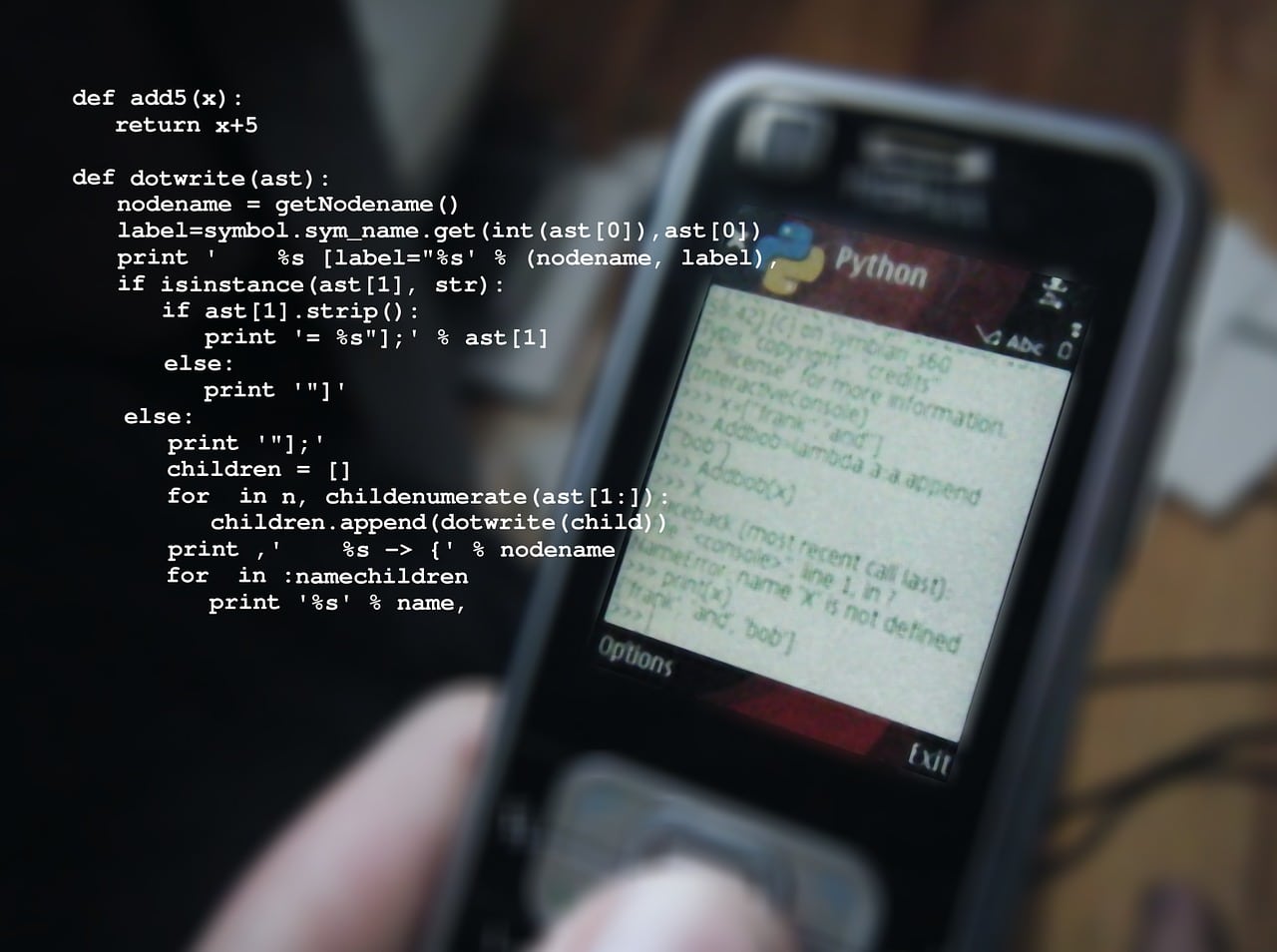

Despite its syntax details, Python’s class system really is largely just a matter of searching for an attribute in a tree of objects, along with a special first argument for functions.
If you were learning Python, the world's most popular computer programming language, you would probably understand what Mark Lutz was talking about in the above quote from his book, Learning Python.
Maybe you do understand when he talks about class systems, syntax, functions and an object tree? Perhaps you have some idea? Or maybe it's all like he's speaking a foreign language.
Whatever your level of understanding, you're reading this article because you are interested in Python — what it is, what it does and whether you should take a Python course.
Let's get the first question out of the way: What is Python?
As mentioned above, Python is a computer programming language. It was developed in 1989 by Dutch computer programmer, Guido van Rossum who also happened to be a fan of comedy series, Monty Python — hence the name.
As far as programming languages go, Python is relatively simple to learn and use, even for those who are beginners when it comes to computer science, coding and programming. Yet, Python is incredibly powerful and very adaptable, which is why it is still around over 30 years after it first came out. Even with dozens of competitors — Java, JavaScript, C++, HTML, SQL, CSS, Rust, Go, Perl ... — Python remains firmly in the top 3 languages favoured by developers and industries that have foundations in programming.
Without further ado, then, let's take a look at what Python can be used for and then some reasons why a Python course could be beneficial to you.
Check out python class here.


What is Python Used For?
Many students initially think of computer programming as something dry and dull involving lots of code and data to produce applications for a business finance system or web development. The latter is true of Python but it's what most people don't know — the relationship between Python and the applications we know and love and use on a day to day basis — that makes Python so exciting and, dare I say it, cool!
So, what is Python used for?
It may be quicker to tell you what Python isn't used for ...
Here are a few popular applications and systems you possibly use every week that were created with Python:
- YouTube
- Google Search
- iRobot machines
- Spotify
- Netflix
- Uber
- Dropbox
- Reddit.
The above applications obviously require some advanced and professional knowledge of Python, however, because Python supports game development, even beginners can create their own simple games and automation tools with a bit of guidance and experience.
At a more practical or professional business level, Python is also one of the best programming languages for:
- automation of tasks
- development of basic web platforms and sites
- web scraping
- data manipulation and analysis
- building robotics applications.
If you're looking at learning coding or a programming language or two, whether out of interest or to boost your career opportunities, you may be asking yourself 'What is Python used for?' If you have and you've come up with several applications that you can see being of benefit in your life or career, then it may be time to start investigating Python courses or tutorials that will help you meet your goals.
Find out about online python course here.

There are all types of courses out there that promise to help you learn the Python functions and skills you want and need. We'll spend a bit of time now looking at a few different ones for beginners or intermediate level students.
What Will I Learn in a Python Course?
Students can spend years learning all the applications and functions of Python or you can spend a few hours learning the Python functions and skills you need. It really depends on your goals.
University degree courses
If you wish to enrol in an undergraduate degree to gain qualifications in computer programming, you cannot undertake a 'degree in Python'. Your best option is to enrol in a Bachelor of Computer Science and then major in programming (or robotics or cyber security ...).
A Bachelor of Computer Science, or similar degree, usually takes around 3 years of full-time study and covers the fundamental principles of computer science and practical software technology development skills for many different platforms and applications. Modules in your bachelor's degree will include the opportunity to learn Python as well as other programming languages.
Obviously, students would be thinking of building a professional career in computer science if they were to undertake study at the university level.
Qualification level courses
If you aren't looking for a full university degree but would still like a professional qualification that focuses on Python, there is the option of certificate courses. A certificate course will generally take around three to six months to complete and can usually be taken full-time or part-time and in-person or online. Professional Certificate courses tend to focus on practical skills and projects and are tailored to specific industries, such as those for engineers, web developers or technicians, making them immediately relevant.
Topics in Professional Certificate courses may include modules on:
- Python basics
- types of data (strings, dictionaries, lists etc.)
- conditionals and errors (object 'truthiness', syntax errors, run time errors, if-elif-and-else etc.)
- data analysis with Pandas
- functions
- object-oriented programming (create classes, overloading etc).
University or TAFE short courses
If you want to learn Python at a higher level, a university or TAFE short course might be for you. Short courses are designed for a wide audience — professional businesspeople, students, academics and members of the public — who want to gain experience and qualifications in (mostly) practical topics. You can enrol in short courses if you're just looking to learn something new as a hobby or interest but usually, students in short courses are there to supplement their skills and knowledge for career purposes.
When enrolling in a Python programming short course at university or TAFE, the assumption will be that students already have the basics of computer and data literacy and have reached the level of ability to perform simple data analysis tasks in Excel. Course content includes topics such as:
- introduction to programming and Python
- variables and data types
- how to write expressions
- using functions
- how to create a class or object
- descriptive and predictive analysis
- data cleaning, sorting and visualisation.
Short courses for people who want to learn Python for professional uses as described above usually run over one or two sessions for a total of eight to ten hours. Often, there are at least two parts to the course, and students can enrol in one or more of these.
Start taking python course Melbourne here.

Other ways to learn Python
Free and online:
The teenagers' 'go-to', YouTube, is actually a great way to get to know a little more about Python and learn the basics. This is particularly good for people who just want to 'muck around' with Python and are not under pressure to learn the programming language for work or study reasons.
An internet search will also net what feels like hundreds of online 'free' tutorials. (Often the 'free' part is only the introduction to get you hooked.) These can be useful to whet your appetite and discover what interests you.
Official Python website:
Python.org has a wealth of information about Python with multiple examples, explanations and a complete list of online tutorials for different topics. One that may interest many hobbyists is the listing of sites that feature Python projects for beginners, intermediate learners and advanced learners.
Private tutoring:
Private tuition is the best, and only, way to have a class or series of lessons tailored exactly to what you want. Your private tutor can introduce you to Python projects, help you practise and consolidate specific skills, or demystify concepts like syntax, variables and strings. You may engage a tutor to support you through your degree or certificate study, coach you through a work project or teach you right from the start. Check out the Superprof tutoring platform, where you'll find over 15,000 tutors throughout Australia who specialise in Python.
Reasons for Learning Python
Your reasons for learning Python will be varied and individual. You may just like learning new skills and challenging yourself to complete projects. It may be that your workplace requires someone to upskill and you'd like that promotion opportunity. Or, you may have decided that a career in information and digital technology is for you.
Becoming a Python developer is not the only career path you can follow with Python. There is a huge range of jobs that open their doors to you if you have Python programming skills — web developer, software engineer, project manager, data scientist, educator, machine learning engineer, financial advisor ...
How wonderful to have so many options.
Summarise with AI:
Did you like this article? Leave a rating!

 Loading...