
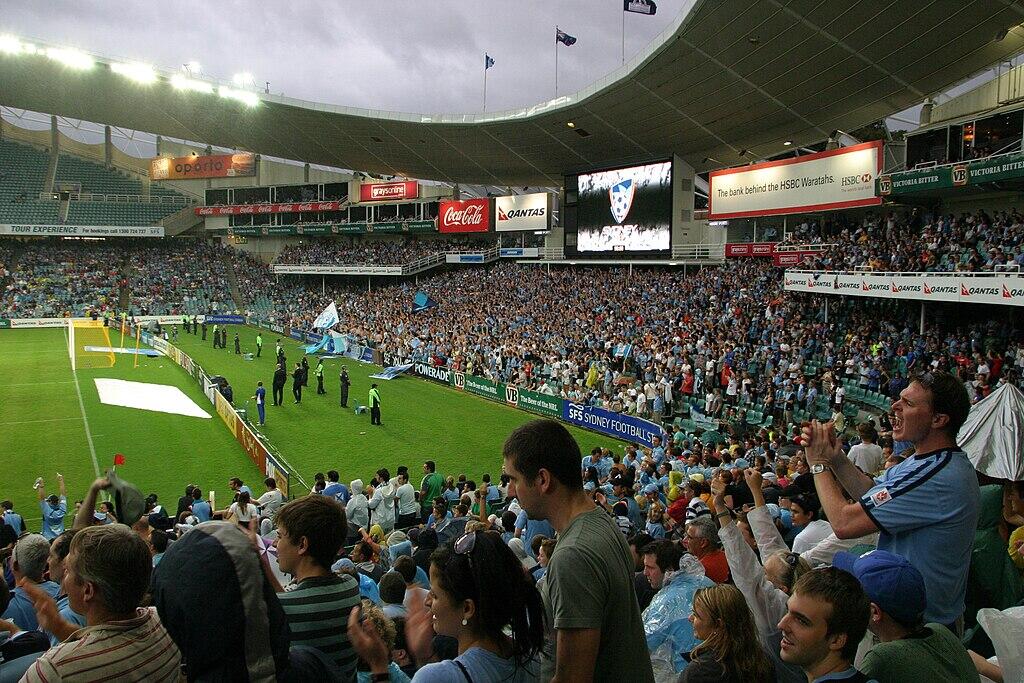

Since its beginning in 2005, the A-League has been the pinnacle of Australian professional leagues in men's football (soccer). It evolved from the now-defunct National Soccer League (NSL) and, over the course of two decades, has undergone expansion, marquee signings, unforgettable finals, and significant structural changes. Here's how the league cemented its place in Australia's sporting landscape, from its founding and original teams to the road ahead.





From NSL to A-League: A New Era for Australian Professional Leagues
As we touched upon, the Australian A-League took over from Australia's former premier football competition. The National Soccer League (NSL) was launched in 1977. While it produced generations of talented players and passionate local rivalries, it also had its problems. For one, the NSL struggled with financial instability, low attendance, and a fragmented management structure. The league stagnated for years, and the 2003 Crawford Report concluded that it would require sweeping reforms.

Ultimately, the idea to revitalise Australian football was the creation of the A-League. The league was under the guidance of the Football Federation Australia (now Football Australia), and its aim was to create a more viable and professionally run competition. The foundation of the A-League marked a turning point in Australian professional football, providing fans and players with a unified league that had broader appeal. In 2004, the A-League was officially announced, and preparations began for its inaugural season.
The Inaugural Season (2005–06): Laying the Foundations
While it was announced in 2004, when did A-League start?
The A-League's inaugural season started in August 2005. The original teams in the A-League were:
- Adelaide United
- Central Coast Mariners
- Melbourne Victory
- Newcastle Jets
- New Zealand Knights
- Perth Glory
- Queensland Roar (now Brisbane Roar)
- Sydney FC
The league was designed to be leaner and more commercially viable than its predecessor, and it launched with a 21-round regular season, followed by a finals series to crown the A-League champions. The competition started with a much higher standard of professionalism, marketing, and fan engagement than the NSL. By the end of the season, Adelaide United was first, but Sydney FC would go on to win the inaugural championship with a 1-0 victory over the Mariners in the final.
With more international talent and passionate local support, the A-League made a strong first impression. However, the league experienced some early growing pains, particularly with the underperformance and eventual demise of the New Zealand Knights.
Expansion, Experimentation, and Evolution
Despite a few initial teething problems, the A-League proved relatively successful and quickly expanded, growing across Australia and beyond. The first significant change occurred in 2007, with the Wellington Phoenix replacing the struggling New Zealand Knights. This team was from the same region.
Melbourne Heart (now Melbourne City) joined in 2010, bringing the number of Australian clubs to nine. Two years later, Western Sydney Wanderers joined and became one of the league's most successful teams, winning the Premiership in its debut season and then winning the AFC Champions League title in 2014, the first for any Australian team.
Western United were added in 2019, and Auckland FC joined in 2024. In 2021, the A-League split from Football Australia and came under the control of the Australian Professional Leagues (APL) in a move designed to give the league more commercial autonomy.
Formed in 2021, APL took over the A-League’s commercial and operational responsibilities from Football Australia. Its goal is to professionalise and grow football through club-driven strategy and independent governance.
In addition to the men's competition, the women's league, which launched in 2008 as the W-League, was unified under the A-League banner, though it doesn't have a salary cap like A-League Men. This decision reflected the league's broader ambition to build a national and inclusive football competition.
The A-League Winners List: Champions Through the Years
Since its very first season, there have been a large number of A-League champions. Sydney FC and Melbourne Victory have been the most successful clubs, with each earning multiple Premierships (the top team in the regular season) and Championships (the grand final winner). Sydney FC, in particular, boasts a strong squad, consistently delivers high-quality performances, and has a loyal fan base.
in the A-League.
Other noteworthy champions include Brisbane Roar, who won back-to-back Championships in 2011 and 2012. Their dynamic style of play under Ange Postecoglou was popular. A decade later, Postecoglou would win the UEFA Europa League with the English football club Tottenham Hotspur, bringing them their first trophy in decades before being sacked at the end of the season.

Western Sydney Wanderers stunned the competition with their immediate success, and Central Coast Mariners, often viewed as underdogs, have enjoyed memorable seasons, including the dramatic Championship win in 2013 and 2023. Adelaide United, Melbourne City, and Newcastle Jets have also added their name to the A-League winners list, proving that at any time, a team can rise to the top of the A-League with the proper coaching, players, and momentum.
The unpredictability of the league has helped build passionate and engaged fan bases across the league, with fierce rivalries and high-stakes matches where everyone believes that each year could be the one for their team.
Turning Points That Shaped the League
With nearly two decades of history, the A-League has been through some pivotal moments. The first of which was the addition of Sydney Wanderers in 2012. The club, which was established in a matter of months to fill the void in Sydney's western suburbs, quickly gained popularity and went on to win the AFC Champions League within two years, putting Australian football on the map.
The introduction and eventual unification of the A-League Women (formerly W-League) under the “A-Leagues” branding was a huge step, too. During the COVID-19 pandemic, the league was suspended, and matches were played in empty stadiums. New Zealand's Wellington Phoenix had to relocate to Australia due to the strict border restrictions in place at the time. That said, the league still completed the season.
The most significant turning point, however, was the shift away from Football Australia and to the newly formed Australian Professional Leagues (APL). This enables clubs to exert greater commercial control and adopt a more business-driven approach to competition management. For better or worse, this change will have a drastic impact on the league.
Major Turning Points That Shaped the League
Memorable Seasons and Matches
The A-League's history is full of incredible campaigns and moments. We can't list them all, but here are just a few of the biggest. In the 2007 Grand Final, for example, Melbourne Victory destroyed Adelaide United 6-0 in front of over 55,000 fans at Docklands Stadium. Archie Thompson scored five goals, a grand final record that still stands today. With this win, Melbourne Victory stamped their authority on the league.
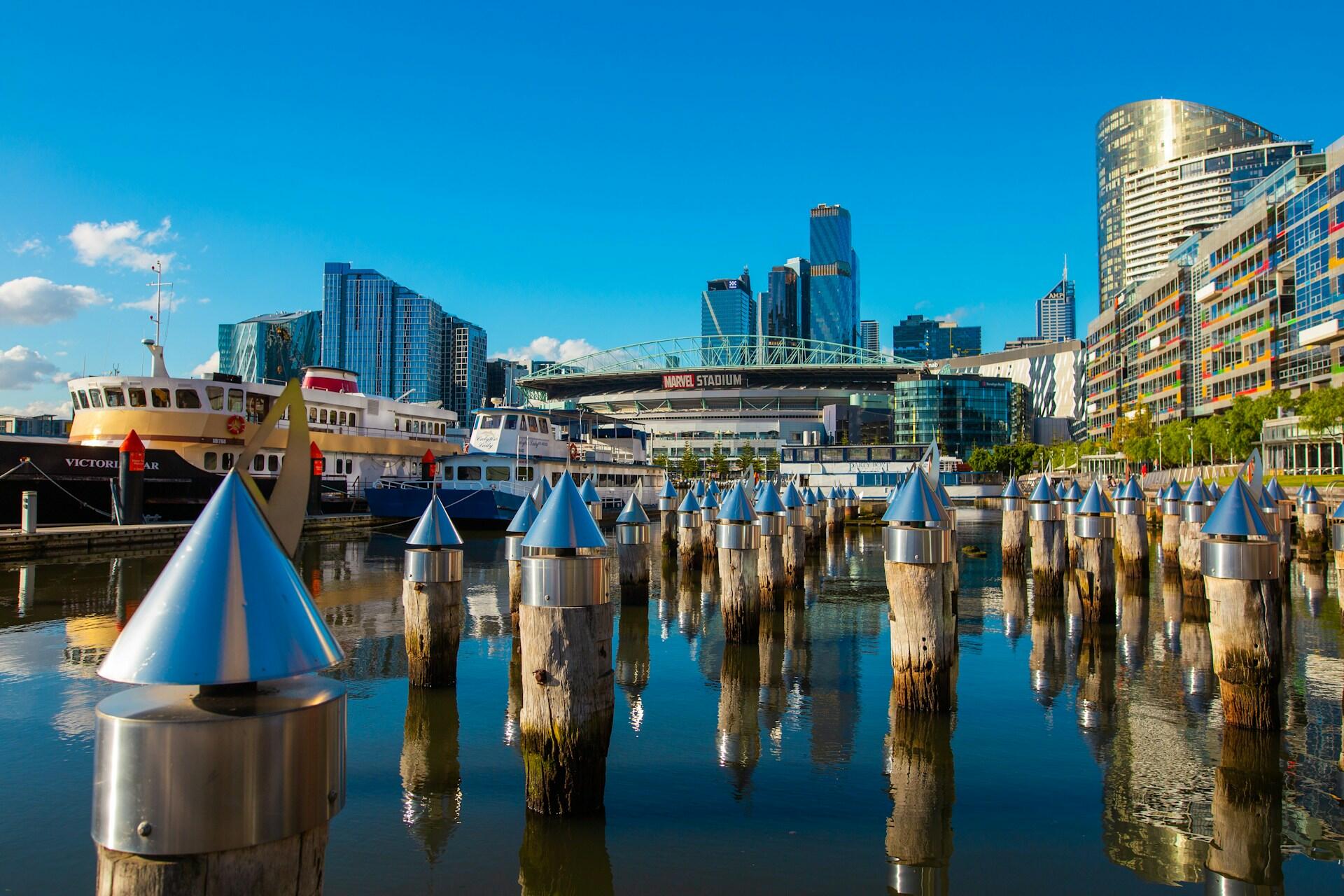
Another huge moment was when Western Sydney Wanderers won the Premiership in their debut season. Then there's the moment in 2014 when they won the AFC Champions League, which wasn't an A-League match. Still, it was a massive victory for the team and the league as a whole, as one of their teams won it.
Brisbane Roar's 2010-11 campaign was massive, too, given their comeback in the Grand Final against the Central Coast Mariners. Trailing 2-0 in extra time, Brisbane scored twice and equalised in the dying moments of the game. Central Coast's 6-1 win over Melbourne City in the 2023 Grand Final was a return to glory for the club, too. Derby matches are also significant events, and the Sydney Derby and Melbourne Derby both bring drama, atmosphere, and passion, attracting the largest crowds and viewership for the league.
Looking Ahead: The Future of the A-League
The A-League is now in its third decade, and recent changes are clearly focusing on sustainable growth, competitive integrity, and better integration with the broader Australian football system. Expansion is still on the cards, especially with the recent addition of Auckland FC and an eye on a trans-Tasman rivalry and market growth. The league is also looking to new areas and markets, such as Canberra and Tasmania, which could become potential future homes for A-League clubs.

Fans and stakeholders are wondering if there'll be relegation in the A-League. The Australian Championship (National Second Division) is expected to launch shortly, and conversations around promotion and relegation are gaining momentum.
A-League History at a Glance
2005–2010
Launch and Early Years
Launch, original 8 clubs, early struggles and consolidation.
2011–2020
The League Expands
Expansion era, introduction of Western Sydney Wanderers and women's league, rise of rivalries.
2021–Future
Commercial Shifts
APL formation, Auckland FC added, second division introduced, discussion of promotion/relegation and further growth.
For the moment, there are no plans to implement such a structure; however, introducing promotion and relegation would make the A-League and Australian Championship more comparable to the larger leagues in Europe, thereby increasing the competitiveness for the lowest-performing A-League teams.
The development of the A-League Women, youth pathways, and increasing fan engagement means the future is looking rosy for the league. With digital platforms, an active supporter culture, and high-profile player signings, the league is solidifying its presence in a crowded sports market, especially in Australia, where football (soccer) isn't the number one sport in several regions and states.
Visibility and sustainability are issues for any relatively new sports league, especially when, even after 30 years, the A-League will always have to compete against the lure of bigger football leagues around the world to hold on to its most talented players. That said, for the time being, the league's clearly on an upward trajectory.
Summarise with AI:
Did you like this article? Leave a rating!

 Loading...
