
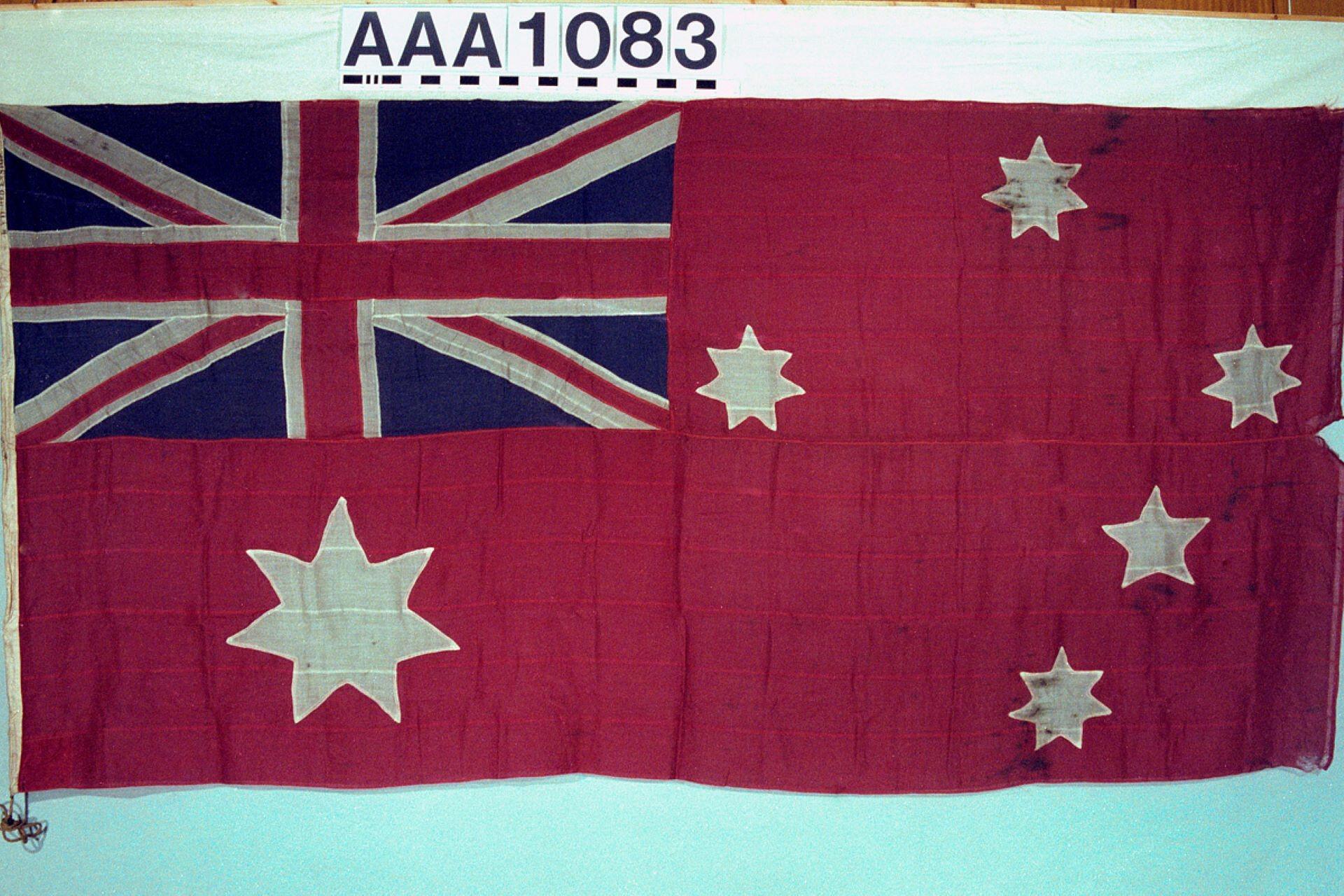

The red ensign isn't as familiar to Australians as their national flag. Still, it was more common than it is for much of the nation's history, especially in everyday life. From merchant vessels to schools, town halls, and Anzac Day parades, the Red Ensign was widely used before the Blue Ensign became the universal national flag in 1954. Let's explore why this Australian maritime flag is an integral part of maritime heritage, how it came about, and which other service flags are still flown across the country.


The Tradition of Ensigns in Australia
The British ensign system is a set of naval flags used by the British Navy. It developed in the 17th and 18th centuries, distinguishing between different branches of service.
White Ensign
Flown by the Royal Navy.
Red Ensign
Originally naval, later adopted for merchant shipping.
Blue Ensign
Used by vessels commanded by Royal Naval Reserve officers and later by colonial governments.
Throughout the British Empire, it was expected that colonies and dominions would use defaced ensigns, basically Blue or Red Ensigns with their local badge, crest, or identifier added in the fly. This allowed imperial consistency while also giving each colony its own flag.
Australia got two official flags after Federation in 1901. The Blue Ensign was used for government purposes, and the Red Ensign was used for merchant vessels. These designs came from the 1901 flag competition, which included the Union Jack in the canton, the Commonwealth Star beneath it, and the Southern Cross constellation in the fly.
For decades, the Red Ensign was the Australian maritime flag par excellence. It was required by law on Australian-registered merchant ships, though its use extended beyond the seas. Australians grew up with the Red Ensign displayed at schools, community halls, and in public ceremonies. However, the Blue Ensign held official standing for government displays.
Until the Flags Act 1953, there was a dual system of ensigns: one for government use and one for public use. After the Act, the Blue Ensign was standardised as the national flag for all Australians. The Red Ensign didn't disappear, though; it's still a massive part of maritime heritage and an emblem with a long story of service and symbolism.
The Red Ensign: Australia’s Maritime Flag
The Red Ensign was the official maritime flag for over half a century. Under the British Merchant Shipping Act, which still applied after Federation, Australian-registered vessels had to fly the Red Ensign at sea. This marked them as part of the British Empire's merchant fleet, distinguishing them from Royal Navy vessels, which used the White and Ensign and government vessels that flew the Blue Ensign.

From 1901 to 1954, the Red Ensign was a legal requirement. An Australian merchant ship flying the Blue Ensign or any other flag other than the Red Ensign risked penalties. The Red Ensign was an everyday sight in harbours from Sydney to Fremantle. It was flown on cargo ships, passenger liners, and coastal steamers. Mariners, dock workers, and travellers would be familiar with the flag, and it would have likely felt more like Australia's flag to them than the Blue Ensign.
Though the Australian maritime flag was required on certain vessels, its use extended to schools, RSL branches, and the homes of ordinary citizens. Despite official protocol, the Red Ensign was more widely available to the public, and it essentially became the "people's flag". Red Ensigns regularly decorated parades, sports grounds, and war memorials.
The Red Ensign was used by merchant seamen in both World Wars, who risked their lives to transport troops, supplies, and munitions. The flag became a symbol of sacrifice and service. By the time the Blue Ensign was legislated as the universal national flag of Australia in 1954, the Red Ensign had already cemented its position in the public consciousness, though many still felt that a flag for Indigenous Australians was needed.
Design and Symbolism of the Red Ensign
The Red Ensign is essentially the same design as the Blue Ensign or the national Australian flag. The key difference is the deep red field that replaces the blue.
The red field is part of the British Ensign system. As mentioned, it denoted the merchant navy, but fell into everyday use. Australians gave the red flag their own meanings. The red Australian flag's meaning was one of wartime service, especially for those who sacrificed their lives. The red colour was also a contrast to the formal and more official associations of blue, with the latter being adapted for all the flags for Australian states, too.
The Blue Ensign and Its Transition to National Status
The Blue Ensign was always intended to be the emblem of government authority. It flew over parliament, courts, and official institutions. Citizens may have encountered the red version more often in most other contexts, but the blue version was “official”.
The Blue Ensign had more restrictions on it. Australians were discouraged from using it. Schools, community halls, and RSL clubs turned to the Red Ensign, which was more readily available and could be used without the risk of improper use that came with the blue official flag.
The Blue Ensign was flown at official military ceremonies, and soldiers marched under it. With the League of Nations (later the United Nations), the Blue Ensign was being more commonly used, especially in international affairs, and it started becoming more commonplace than previously. As the blue version became more common, the transition was eventually finalised with the Flags Act 1953.
The Blue Ensign was the Australian national flag for all purposes. The Act received Royal Assent in 1954 during Queen Elizabeth II's first royal visit to Australia. This ultimately put an end to the confusing two-flag system, and the Blue Ensign became the sole symbol of Australia's national identity. The Red Ensign was relegated to solely maritime use.
From the mid-1950s onwards, fewer and fewer Australians would see the Red Ensign in everyday contexts. Though it would lose its meaning as the official national flag, it would be understood for its maritime role, with navy veterans and their families retaining the emotional associations that came with it.
Other Australian Ensigns: Navy, Air Force, and Civil Use
The British model of defaced ensigns is why the Red Ensign existed, but the system gave Australia many of its other flags and ensigns. Generally, these defaced ensigns represent specific branches of the Australian military.
The White Ensign – Naval Service
Initially, Australia didn't create its own naval ensign. Instead, Australian naval vessels flew the British White Ensign. However, during the Vietnam War in the 1960s, there were concerns that the flag identified Australia too closely with Britain. In 1967, the Royal Australian Navy adopted its own Australian White Ensign. This flag is a white field with the Union Jack in the canton and a blue Commonwealth Star and the Southern Cross, also in blue.

The RAAF Ensign – Air Force Identity
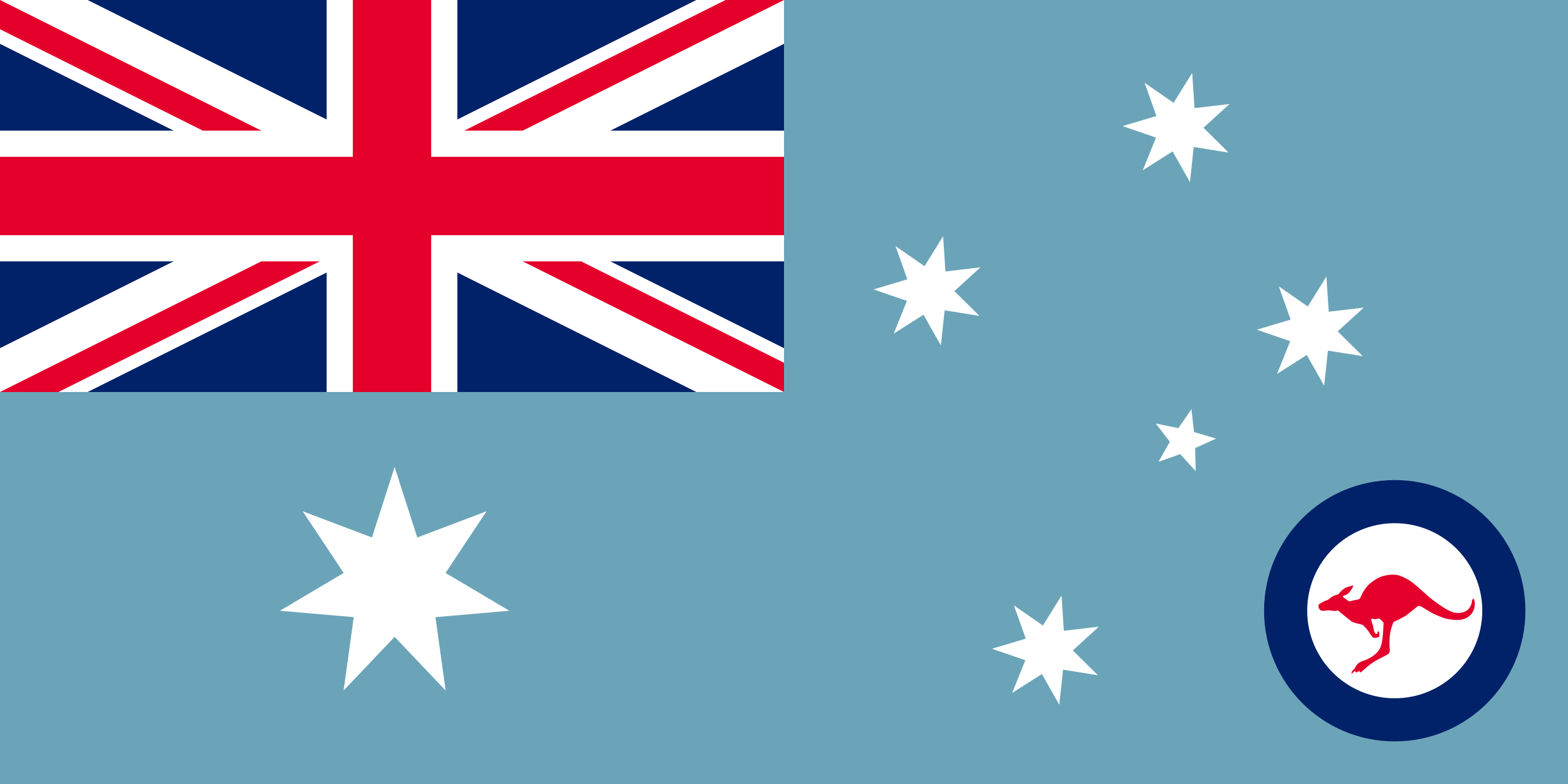
The Royal Australian Air Force Ensign was approved in 1948. It's based on the Blue Ensign but uses a light blue field. It also has the RAAF's red kangaroo roundel in the fly. The light blue represents the sky, while the kangaroo is one of the most recognisable symbols of Australia. This can be seen on air bases, at RAAF ceremonies, and carried into service abroad.
The Civil Air Ensign – Civil Aviation
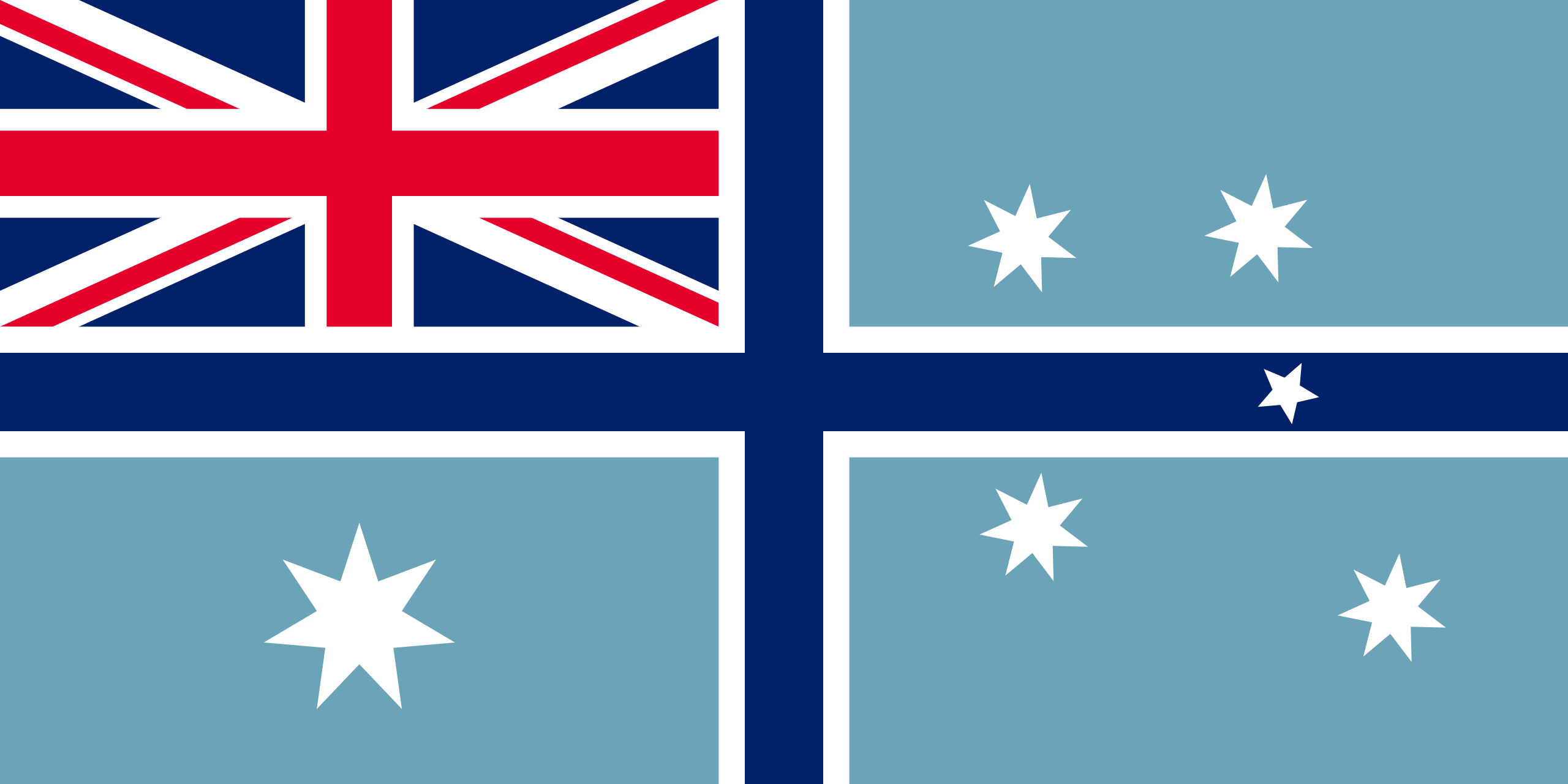
The Civil Air Ensign has been flown since 1935. This flag features a sky-blue field with a dark blue cross edged in white. It still features the national flag's Union Jack with stars superimposed over the cross. It's used for civil aviation purposes, flown at airports, and sometimes seen on aircraft associated with civilian flying organisations.
Controversies and Misuse of the Red Ensign
Although the Red Ensign is Australia's official maritime flag, like many other flags around the world, it has found associations beyond its intended use. Some fringe political and nationalist groups have adopted the Red Ensign in place of the national flag, much like the Eureka Stockade flag, using it in contrast to the blue national flag. However, most uses ignore the flag's original (and continued use).
Though not unique to the Red Ensign, its appearance at rallies can be seen as controversial. Some see it as an innocent display of heritage, while others interpret it as a political statement. This has made it a somewhat contested symbol in modern Australia, much like the Eureka flag. Veterans' groups, historians, and maritime organisations have called for it to be used as a flag of the merchant navy rather than a partisan emblem.
Summarise with AI:
Did you like this article? Leave a rating!

 Loading...
