What You Should Know Before Buying Your First Violin
If you don't know anything about sizing a violin, you might become overwhelmed at all the violin sizes available. Follow this guide for proper care of violins.
If you're in any way familiar with the Monterey Jazz Festival, you've surely heard of Jean-Luc Ponty. Many credit this French-born jazz violinist with pioneering violin technique in jazz music; others accord him the loftier title of Father of the Jazz Fusion genre. It's not like it happened out of the blue. He had an advantageous start; his father taught the violin - not just to him but to hordes of budding violinists. How much do you want to bet he gave them all plenty of advice about the mechanics of violins - how to buy the right instrument for their size and how to take care of it properly? We can't all have the benefit of a Mr Ponty, Sr. We can and do have the joy of his son's music to delight and inspire us, though. And you have Superprof to help you understand the steps to buying and taking care of your first violin.
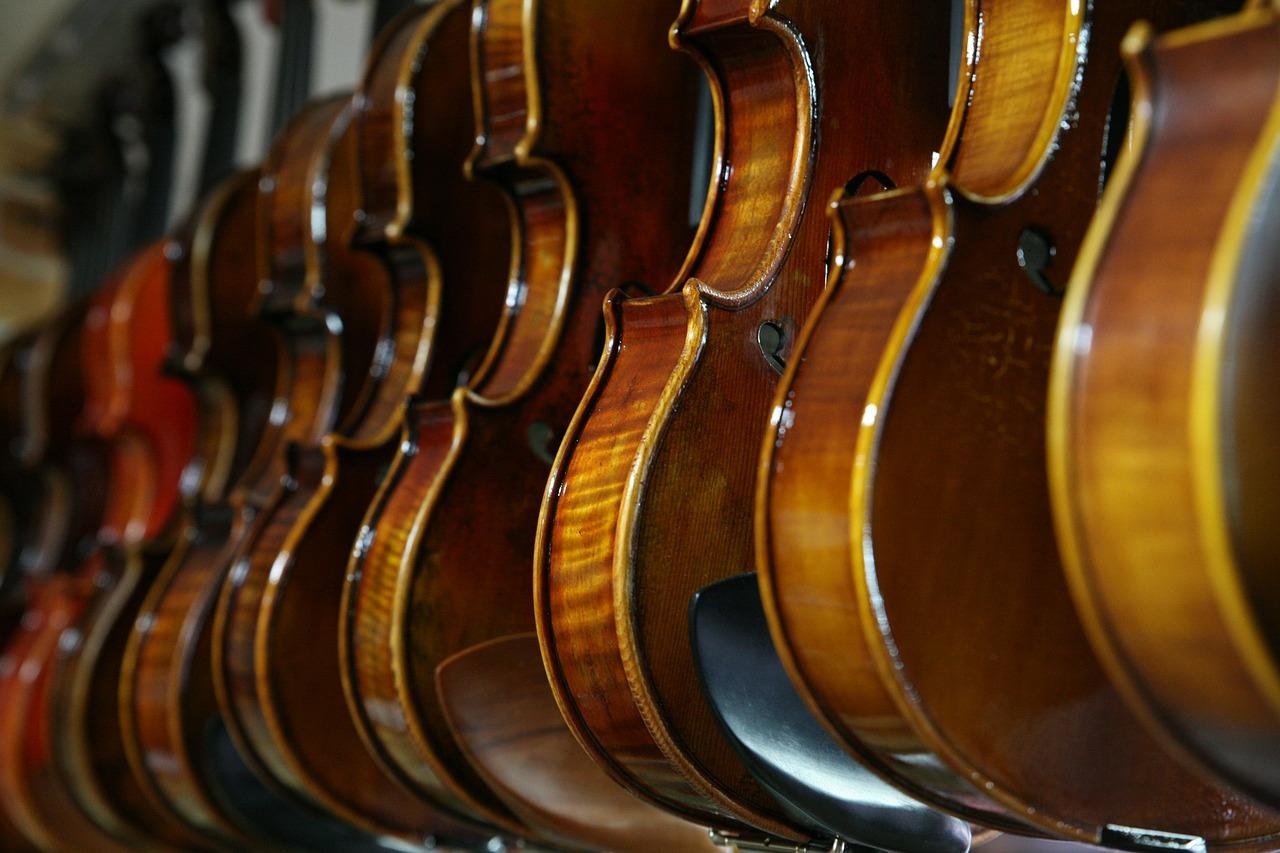
Luthiers in 16th Century Italy were busily crafting a new instrument, one that would have a soprano voice. They were aiming for a stringed instrument that would cause people to celebrate joyfully - the very definition of the Latin word 'Vitularia'. That word is derived from the Roman goddess of joy and victory, Vitula. You might think that Vitula sounds nothing like 'violin', and you'd be right. To get the connection, you have to know that Vitula gained other meanings over time; those are the ones that became associated with the violin. Violins are made in a variety of sizes so violin players of all ages may rejoice. Photo credit: VaIerio Ferron on Visualhunt You might also wonder what all of this has to do with violin sizes. It's important to know this history because it helps to explain why there are so many different sizes of violins. Historians believe that luthiers and composers wanted even the youngest musicians to adopt this lovely instrument with its high-pitched voice because... aren't happy children the epitome of joy and celebration? So how young - how small a child can learn how to play the violin? If your two-year-old is particularly precocious and sturdily built, there are violins small enough for them to play comfortably. The only trouble might be finding violin lessons; most music teachers prefer their students to be at least three years old. Violin sizes range from:
1/10: 36cm, suitable for 3-5 year-olds
1/8: 38.5cm, also suitable for 3-5 year-olds
1/4: 44cm, ideal for 4-7 year-olds
1/2: 48.5cm, perfect for 6-10 year-olds
3/4; 52cm, great for 9-11 year-olds
4/4: 54cm, for ages 11 to adult
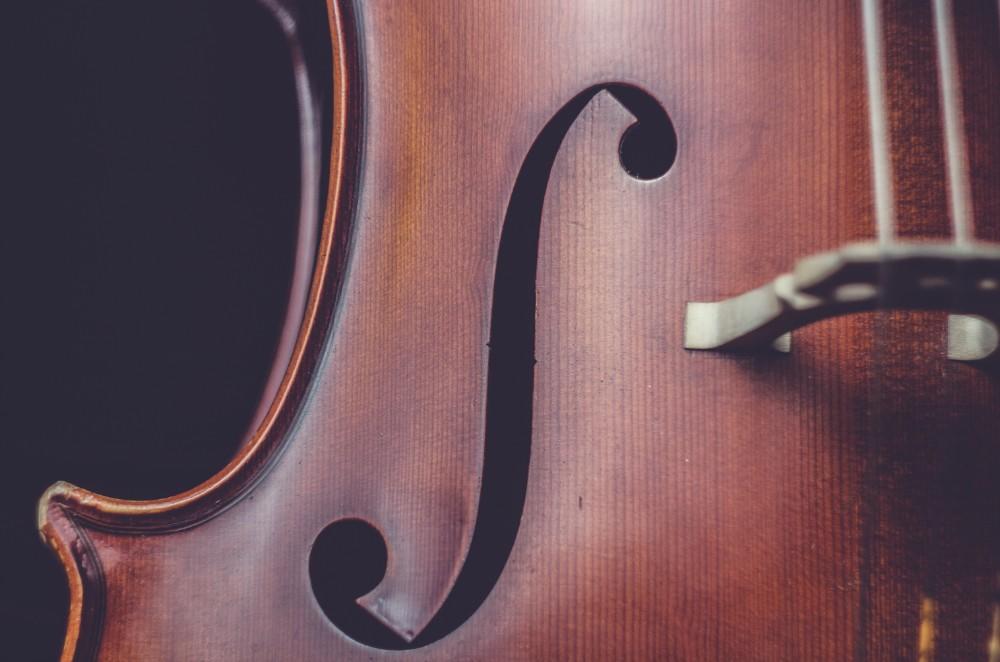
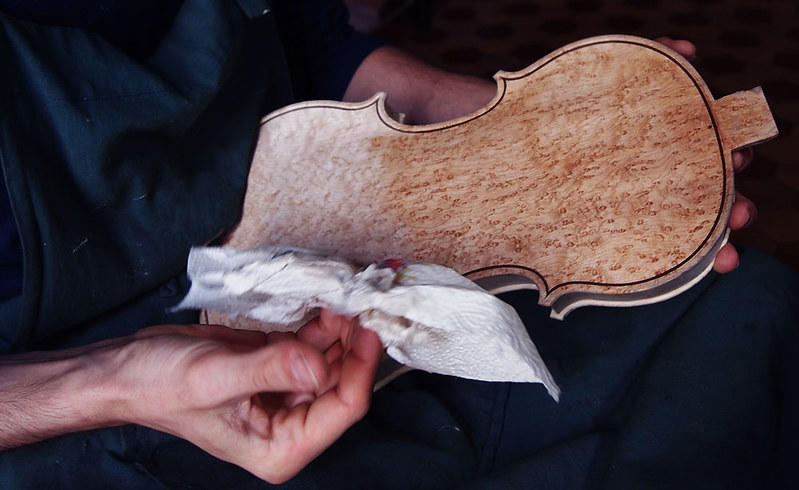
The lengths listed are for the violin body, they don't include the fingerboard and scroll, Furthermore, the age breakdown is just a suggestion. You might have a particularly husky, long eight-year-old who would be more comfortable playing a full-sized violin or a delicate ten-year-old who would perform better on a 1/2-sized instrument. It all comes down to measuring your beginner violin player to find their perfect instrument fit. There are two ways to do that and plenty of other considerations to factor in. It would be best to get the whole story on how to size a violin properly before you invest in one. Wipe your violin's face delicately around the F-holes. Photo credit: wuestenigel on Visualhunt
How to Clean Your Violin
An acquaintance tells of the time he asked his partner to wash some potatoes prior to cooking them. She ran a sink of water, squirted some soap in and started scrubbing. To this day, they laugh about how ignorant of kitchen procedures she was, back then. Can you blame her, though? Didn't we all have it firmly pounded into our heads that 'washing' means 'with soap'? Fortunately, to keep your violin clean, you need neither soap nor water. You don't need any solvents, either. And as far as varnishes are concerned, think twice before you apply even the first coat. Your violin's rich tone comes from a combination of factors: finely-tuned strings, a well-cambered bow and the different types of wood it is made from. Even the varnish your instrument's wood is coated with affects its sound; an unevenly-applied coat could distort your instrument's timbre entirely. Thus, it stands to reason that, if applying another coat would alter its tone, if only slightly, applying varnish only on spots where the wood shows through... Quel horreur! Luthiers recommend that, if your instrument needs a new coat of varnish, it should be applied by a professional. Fortunately, if you take proper care of your violin, you shouldn't need a new coat of varnish very often. The first step to keeping your violin clean is wiping it down before and after every time you play it. Simply handling your violin leaves a residue of naturally occurring oils from your fingerprints. Far more than just being unsightly, they could damage your instrument over time. Another reason to wipe down your violin before and after playing: resin. Ask any violin player if they've ever opened their violin case to find that their resin cake shattered, leaving sticky particles all over the inside of their case and their instrument. They'll likely reply with a rueful grin (because they realised they hadn't secured their resin properly) or expressions of aggravation and annoyance. Just wait till you have to clean resin from your case's velour interior! Of course, resin cakes don't explode every day; it's far more likely that your violin's resin accumulation will result from playing it. That's why you need to wipe it down after every playing session: each individual string, the fingerboard and the face, especially. Don't forget the rest of the body and the neck! Simply wiping your violin down after every lesson or session isn't good enough; there's much more to keeping a violin in optimal playing condition. You need to know how to clean around the bridge and the pegs, and how to get dust and dirt out of your instrument's body. Fortunately, there's a complete list of cleaning instructions already available. Taking care of your violin means sheltering it from the elements. Photo credit: Wasfi Akab on Visualhunt
How to Take Care of Your Violin
The 2010 film How to Train Your Dragon was a box office smash; the book series, published seven years earlier, enjoyed similar popularity. The book How to Win Friends and Influence People, written in 1936 - one of the world's first self-help books, is touted as one of the best-selling books of all time. These how-to books are the exception rather than the rule. Most such works address a specific topic, often a niche subject such as how to care for a certain make and model car and, more recently, how to care for elderly parents. That we know of, there is no how-to book for taking care of a violin. Amazon lists an instrument care manual that includes violins, though. Their book is called Commonsense Instrument Care. By that title, one might presume that every violin owner and player should have sense enough not to leave their instrument in the rain, not to shove food through the F-holes and not to bash it into a wall. You probably already knew all that too, right? There is much more to caring for a violin, though, like storing it in the right environment when you're not playing it - and by that, we don't just mean keep it in its case, even though that's exactly what you should do. Earlier, we mentioned your violin is made up of several different types of wood. Each is sensitive to temperature and humidity in its own way. Some are more resistant to those conditions than others, meaning that continued exposure to high temperatures and humidity (or the inverse) could result in cracks in the wood and seam separations. Protecting your violin from high/low temps and humidity is Rule #2 for taking proper care of your instrument. We'll get to Rule #1 in a mo. Oh, and don't ever leave it in the car, even in the boot, as it might get overheated, even if it's snug in its case. Speaking of snug... Have you seen the inside of a violin case? It is velour-lined and cushioned, the better to protect your instrument from getting knocked about. That's a good reason to only ever transport it in its case; the other one is protecting it from the elements. Did you know you could get a humidifier specially designed to fit in your violin case? Taking proper care of your instrument means you'll have the pleasure of playing your violin for as long as you wish, provided that you won't graduate to a bigger size. And if you do, taking good care of your instrument will mean that you may get a higher trade-in value if your music store offers such a perk. If not, you can command a higher price if you sell it privately. So what's Rule #1 for taking care of a violin? Wiping it down before and after playing it, of course. As you wipe it down, you should watch for signs of potential trouble like slight cracks or a bridge askew - both indicators that a trip to the luthier is in order. If you want to avoid possibly costly repairs to your violin, you should follow all of the steps to taking proper care of your violin.
Summarise with AI:
Did you like this article?Leave a rating!
5.00 (1 rating(s))
Loading...
Dan
A student by trade, Daniel spends most of his time working on that essay that's due in a couple of days' time. When he's not working, he can be found working on his salsa steps, or in bed.
What Are The Instruments In the Violin Family? Famous for its rich and emotive sound, the violin is a staple in orchestras and solo performances alike. What many don’t realise is that it belongs to a broader violin family, alongside the viola, cello, and double bass. Although these instruments share similar designs, each one produces […]
The Quick Guide to Violin Exams in Australia If you're learning the violin in Australia, you don't necessarily need to take any exams or get any qualifications if you're doing it just for fun. However, if you'd like to play professionally or just have proof of your progress, there are several ways to do it. […]
How To Learn The Violin And Where Let's say you've always yearned to play a musical instrument but, for whatever reason, you simply never got the chance. Now, master of your own destiny, you intend to pursue the need to express your artistic side by studying music and learning how to play an instrument. You're […]
Learning to Play the Violin Many of us dream of having the ability to play a musical instrument. We usually find ourselves inspired by the orchestras on TV, or even the beauty of the musical instruments themselves as we yearn to experience the euphoria of being a part of such a wonderful sound. Watching violinists […]
What are Violin Tutor Rates like in Australia? Learning a musical instrument is a dream held by many and learning to play the violin is a particularly popular aspiration. Sadly, however, the majority of these dreams are never realised. But why is this the case for so many people? Unfortunately, regardless of your level of […]
Which Works Of Art Are Inspired By The Violin? Culture is not only food for the soul - Renaud Donnedieu de Vabres The violin is one of the most famous instruments in our contemporary society. Piano, clarinet, double bass, oboe, guitar, every note of these instruments, even played with genius, does not resemble the violin, […]
How Do Violinists Play Around the World? “If it is true that the violin is the most perfect of musical instruments, then Greek is the violin of human thought.” - Helen Keller The violin, viola, and cello all originated in Europe and Italy, in particular. So does that mean that the violin is played in […]
Playing The Violin Takes Lots Of Practice The only way to raise your proficiency in the violin is to practice. In the world of the string instruments more than any other, practice makes perfect. There is so much to learn and so many ways to learn the violin. You will need to employ targeted focus […]
What Should You Ask Yourself Before you Buy a Violin? Whether you’re completely new to music lessons or you’re simply looking to fully commit to your musical education by purchasing a violin of your very own, the process of looking for a suitable violin can quickly become complicated. When it comes to choosing a violin […]







 Loading...