
If you're interested in chess, you may have heard players talking about their ratings. You too can earn your International Chess Federation (FIDE) chess rating by first joining the Australian Chess Federation (ACF). After playing five games against players who already have a rating, you too will be rated. Of course, you have to play at least to a draw, if not a win. That's how to get a chess rating, minus a few details, which we cover here.
How to Go From ACF Ratings to a FIDE Rating
- The first step to earning a chess rating is to register with your local chess club and compete in local tournaments.
- Next, register with the ACF and play 5 games, at least to a draw, against rated players.
- You may also build a chess rating online via the FIDE Online Arena (FOA).
- There exist several chess rating systems but FIDE ratings carry all the weight internationally.


What to Know about Chess Ratings
Chess is a sport.
Max Euwe, former World Chess Champion and FIDE president
Mr Euwe's declaration makes the case for why chess players receive ratings. Civilisations have been rating athletes since forever. So, it follows that these athletes also have rules for competition and systems for rating their performances. We must understand how these rating work and the bodies that assign them before we decide which ratings to strive for.
Defining Chess Ratings
Anyone even vaguely familiar with competitive sports understands the purpose and value of ranking athletes. These three reasons guide the practice of rating in any athletic contest, including chess.
Measurable statistics
Spectators get a trackable progression of athletes' careers.
Determining pay
Rankings help organising bodies determine how much to pay athletes.
Competitive hierarchy
Athletes can plan their game strategy to face off against specific players.
These reasons for rating athletes prevail across all sports, but each sport has its own rating system. In chess, those systems are Elo and, for online chess players, Glicko.
The Elo Rating System
- established in the 1960s
- named after physicist-inventor Arpad Elo
- calculates players' relative skill levels
- FIDE adopted it in 1970, making it the official chess rating system.
The Glicko Rating System
- established in 1995
- named after inventor Mark Glickman
- designed to improve on the Elo system
- relies on algorithm-driven 'ratings reliability', called RD (ratings deviation).
Though both rating systems were primarily designed to measure chess players' performances, both of these systems have found uses in other zero-sum games. A variation of the Elo system now informs tennis, basketball, and other sports' rankings. By contrast, the Glicko rating system applies to popular online games, particularly roleplay and first-person shooter games, as well as online chess.

Exploring Other Types of Chess Rating Systems
Elo and Glicko dominate the chess rating space but they are not the only active rating systems to measure competitive chess results. These local rating bodies track players’ progress and coordinate with FIDE to keep the international rating stats current.
Cyberspace has democratised chess playing, as it has so many other human endeavours. However, this new arena poses a challenge for rating players. In chess' traditional format, two players face off across the board in one physical location, making it easy to rate the contestants' performances.
Online platforms, such as chess.com and Lichess, had to devise a way to track and measure players' relative strength. They both rely on Glicko-2, which makes adjustments for individual players' rating uncertainty.
The AFC relies on the Glicko system for local and national ratings.
It draws on the Elo system for international ratings.
The Path to AFC Ratings
Living in Australia, your first step towards playing competitive chess at any level is earning your AFC rating.
Learn to Play Chess
The first and most obvious thing to do is learn how to play chess. If you can't play chess, you can't get a good FIDE rating. It's that simple.
Fortunately for you, there are plenty of ways to learn to play chess, and if you're reading this, you're already using one of them; the internet.
You'll find many great chess websites that can teach you how to play the game. The most common one is chess.com1. There, you can learn how to play the game and explore strategies, practise, and play against other players and the computer.
You could also go really old-school and read chess books and guides. Since the game of chess has been around for hundreds of years, people have studied it, the rules, and how to best play it for centuries.
Join a Local Chess Club
Joining your local chess club will ensure you're in the loop about chess tournaments and opportunities to gain or improve your rating. You should be able to find a chess club, provided that you don't live too far out of the way. If you have no local club, you can join a chess community online.
If you do attend your local chess club, you will be able to play against other players and improve your game. You'll also learn about local tournaments and, most importantly, local rated tournaments.
If you're not part of a chess club, you can find tournaments via local chess federations like the Australian Chess Federation2. The AFC website keeps an events calendar detailing tournaments, their location, the entry fees, and whether or not they're rated.
Compete in Local Tournaments
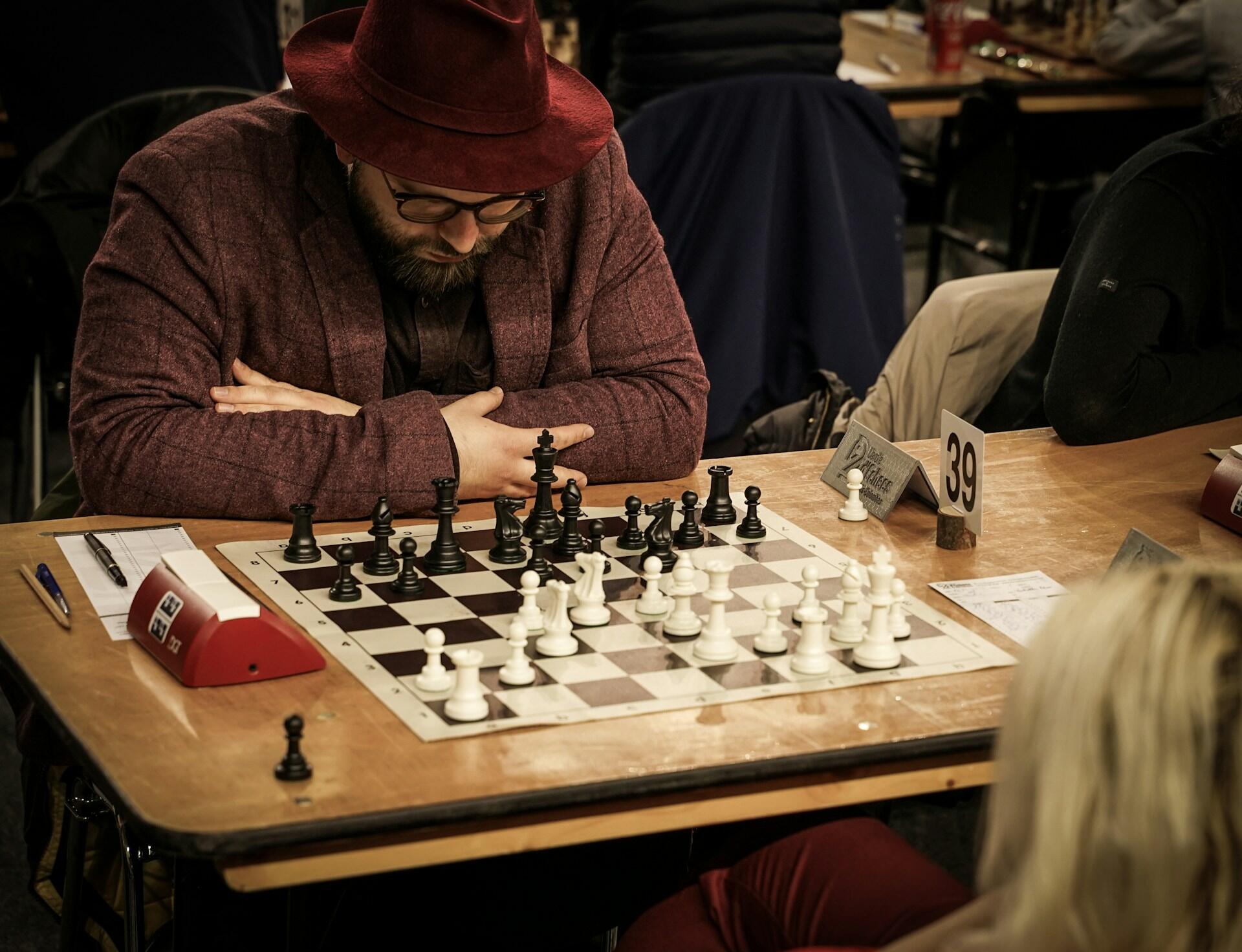
Tournaments are often organised by level. If your local chess club features a range of player abilities, a tournament should have you playing games against players with skill levels on par with yours.
According to Chess.com discussion boards, beginner players should play opponents who have higher levels than they do3. But not much higher, as their greater skill could lead to your frustration and disappointment.
If you play in rated tournaments and win matches, you'll gain points towards either your initial rating or improve your current rating. Keep in mind that not every tournament is rated. This basically means that the results won't be reported to and/or considered by FIDE for the purpose of player evaluation and rating.
Get Chess Rankings by Competing in Tournaments with Rated Players
In rated tournaments, you also have to play against rated players. You can't play against unrated opponents as FIDE won't have anything to go off.
It might be tempting to play higher-rated players (or even Australia's best players). While this is good for improving your play, there's little to be gained when your opponent is significantly better than you, as noted above.
Before you get your initial rating, you have several requirements you have to consider. Currently, players have to play against 5 FIDE-rated players and score at least 1 point (either through 1 win or 2 draws).
Once you have your rating, you can improve it through tournament play, but you can also have it decrease through losses.
If your rating drops below 1000, you are no longer considered rated and will have to go through the process again to regain your rating.
Your rating is a useful indicator of your level, which you can use to make sure you're playing against players of a similar level. You can also use it to find more advanced players to learn from. The best way to avoid losing it is by practising, playing regularly, and studying to improve your chess game.
How to Get a FIDE Rating
It is better to be a strong 1900 player, than a weak 2000.
John Bartholomew, International Master
Once you have a decent ACF rating, you can start working towards getting your FIDE rating. To get a FIDE rating, you have to play matches in rated tournaments.
As tournament play is essential to gaining and improving your FIDE rank, you need to make sure that you know how tournaments work.
Study Tournament Rules
Chess tournaments have specific rules, and they are usually more structured than the casual games of chess you may play with family, friends, or people in the park.
Different tournaments may have different rules and conventions, but there are a few common rules that tournaments almost always follow.
Don't forget that tournaments have rules about interfering with the game or other games taking place. They typically cover having phones at the table and distracting players. These and other rules are clearly communicated before Australia's best tournaments.

Attending Online Chess Matches and Tournaments
One of the most accessible ways to attend chess tournaments is online. You can use these to get a chess rating, too, but with the FIDE rating, for example, you can only get the FIDE online rating.
This isn't exactly the same as the original FIDE rating and only actually applies to online play. For some players, it might be useful to get familiar with aspects of tournament play by participating online. Doing so allows you to get a FIDE online rating.
FIDE online ratings are considered more 'volatile' and are typically higher than traditional ratings earned through tournament play.
Online play is also a great way to regularly practise, as you can find players from all over the world and it's much easier to find players at a similar level to yours online as you have a bigger pool of players ready to play a match without having to travel.
More on ACF Ratings and Chess Ratings
- “Top Chess Blogs.” Chess.com, 3 Apr. 2026, www.chess.com/blogs. Accessed 4 Apr. 2026.
- “About | Australian Chess Federation Inc.” Auschess.org.au, 2022, auschess.org.au/about/. Accessed 4 Apr. 2026.
- Stwils. “Do You Really Get Better by Playing Opponents Higher Rated than You? - Chess Forums.” Chess.com, 2024, www.chess.com/forum/view/general/do-you-really-get-better-by-playing-opponents-higher-rated-than-you. Accessed 4 Apr. 2026.
- the, What’s. “What’s the Correlation between FIDE Rating and Online Rating?” Chess Stack Exchange, 2018, chess.stackexchange.com/questions/189/whats-the-correlation-between-fide-rating-and-online-rating. Accessed 6 Apr. 2026.
Summarise with AI:
Did you like this article? Leave a rating!


 Loading...