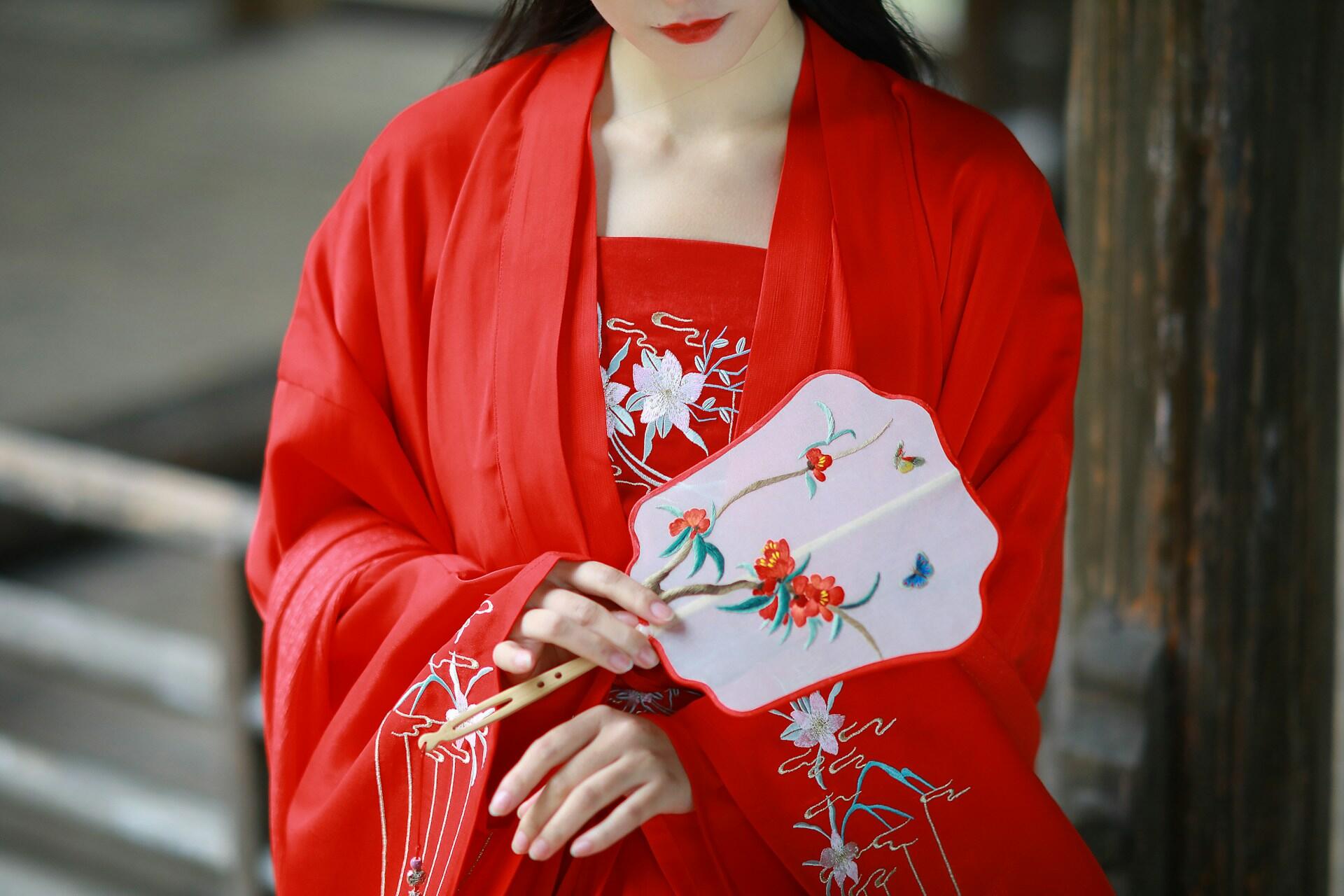

Hanfu (汉服) translates to Han clothing; the Han people comprise China's ethnic majority. They were inventors and trendsetters, both in customs and in clothing. Subsequent dynasties added distinctive touches to their clothes but left the hanfu style essentially unchanged. This timeline gives us a preview of hanfu particulars through the centuries.
202 BCE to 220 CE
Han Dynasty marks the historical debut of Hanfu
Main features: long robe with wide, crossed collars tied at the waist; later becomes a two-piece outfit.
220 CE to 420 CE
Wei and Jin Dynasties
Hanfu main features: multi-panelled skirts, 'swallow tail' hems; the rúqún remains popular for everyday dress.
420 CE to 589 CE
The Northern and Southern Dynasties
The rúqún ties off directly under the breast, collars worn off the shoulder, jacket sleeves grow longer.
618 CE to 907 CE
The Tang Dynasty
Slimmer skirts with short tops and an added shawl.
960 to 1279 CE
The Song Dynasty
The addition of 'Song pants' and long outer jacket
1358 CE to 1644 CE
The Ming Dynasty
Debuts the 'horse face' skirt, jackets are shorter and sleeves are cuffed.
1645
The Qing Dynasty's power spreads
The tifa yifu edict makes wearing Hanfu illegal.


Hanfu During the Han Dynasty
The Han Dynasty - hanfu connection gives the impression that other styles of clothing existed before 202 BCE (before the current era).
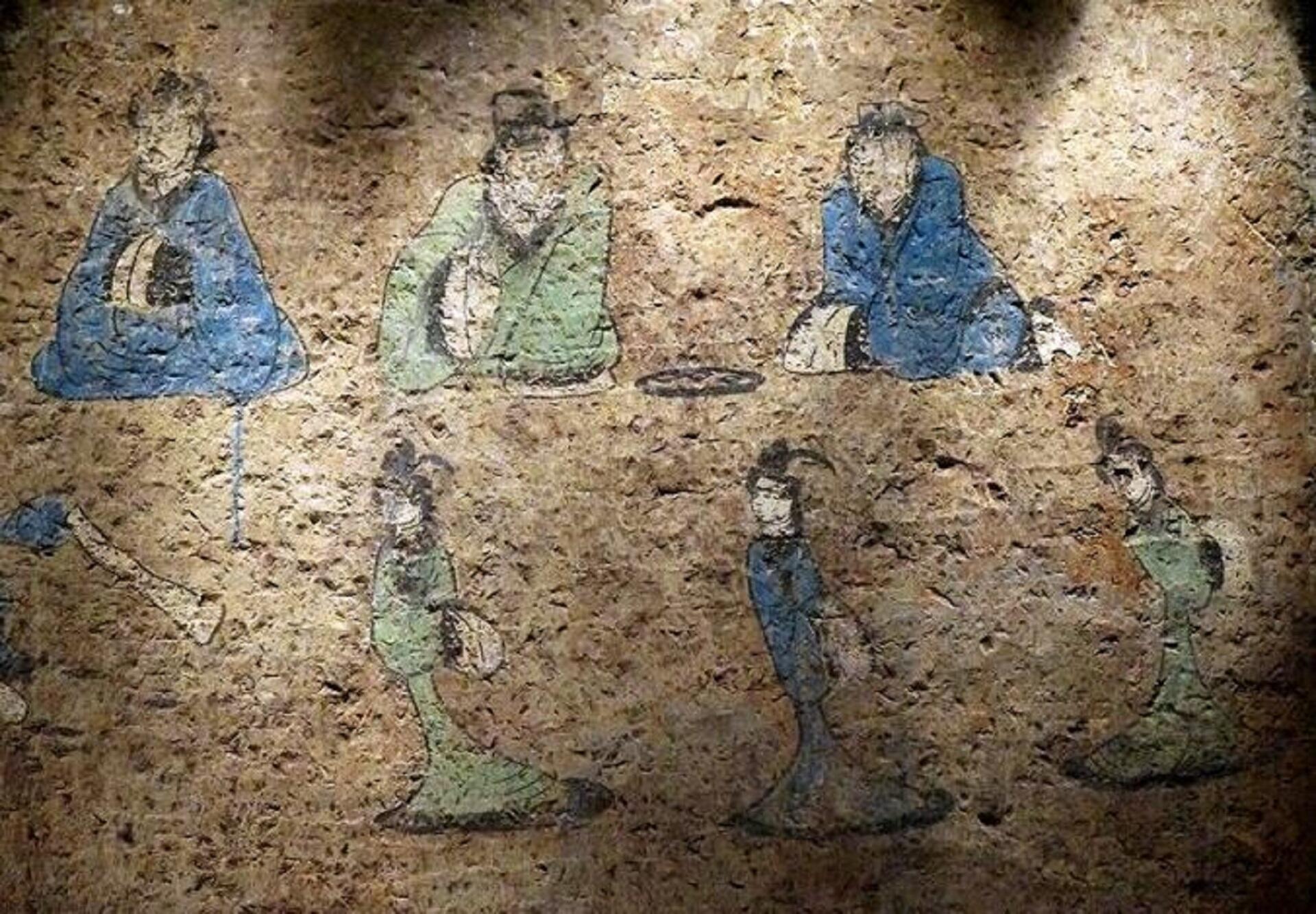
In fact, Chinese people had been wearing similar garb since at least the Shang Dynasty (1600 BCE - 1045 BCE). However, it wasn't until the Han Dynasty that China and its people began coalescing into a unique Chinese identity. So, while we could trace this style of clothing much further back, the Han ruling period is the most logical starting place.
At this stage of hanfu development, we call the outer garment shēnyī (深衣). It was a long, flowing robe with wide, cuffed sleeves and a wide collar, one that crossed over and tied at the waist. Men and women wore the shēnyī, though they could choose to have a rounded hem or a straight one.
Historians consider the Han Dynasty one of several golden ages in Chinese history.
Han influence impacted Korean and Japanese societies, including clothing styles.
Despite the Han explosion of discovery and innovation, this was not a peaceful time. In fact, we can split this era in two: Eastern and Western Han. During the Eastern Han period (25 to 220 CE), hanfu abandoned the one-piece shēnyī in favour of a two-part outfit.
From then on, the high-waisted skirt (rúqún - 襦裙) paired with a shorter jacket defined what is hanfu. So begins our journey through traditional clothing in China.
Hanfu After the Han Dynasty
The Han Dynasty ended in turmoil; that same warring spirit limited subsequent dynasties to just a couple of hundred years apiece. Still, these four minor periods had a substantial impact on how people dressed.
The Wei
So fractured was Wei rulership that it broke into Eastern and Western factions that each only ruled for a handful of years. Eastern Wei (534-550) and Western Wei (535-557) themselves broke from the Northern and Southern Dynasties. More on them in a mo.
Despite the turmoil, this period saw an explosion of art, fashion, and culture. Women enhanced their hanfu with streaming ribbons and overlaid their rúqún with triangle-shaped overskirts.
The Jin
This dynasty lasted about 200 years but still comprised two parts. As usual, there was lots of usurping and throne-stealing and warring between East and West Jin, but in terms of hanfu, the changes were consequential.
The rúqún still dominates, but it becomes more colourful. 'Broken' skirts (pò qún 破裙) made their appearance around that time. This garment featured many colourful panels with different patterns. The look was long, broad, vertical strips sewn together and topped with a solid-colour jacket.
The Northern and Southern Dynasties
For nearly 200 years, the land we now call China was ruled by two dominant factions. They defined their territory geographically and, thus, became known as the Northern and Southern Dynasties. It was a strange time, when warring did battle with growing spirituality.
Monks, artisans and scholars migrated between the two territories, sharing what they learnt along the way. This kicked off a period of 'Immortal style', which included makeup as well as fashion.
The single greatest hanfu innovation was the skirt's raised silhouette. Women began tying their rú just under their bustlines, which highlighted redesigned undergarments. Now, women could choose a round-collared, square, or raised-collar undershirt.
They showed off their style with an off-the-shoulder shēnyī (outer robe) that featured voluminous sleeves. This shēnyī style influenced the Japanese kimono.
The Tang Dynasty
The Tang dynasty is widely considered one of China's most prosperous and influential periods, notably in cosmopolitan culture and fashion.
Contrary to popular belief and logic, the traditional tang suit did not originate in the Tang Dynasty. Hanfu was still the outfit of choice, but it underwent substantial revisions.
Women now preferred narrower skirts made of colourful fabric that tied off at the bustline. These qíxiōng rúqún (齐胸襦裙) paired with a short jacket, a style that influenced the Korean hanbok.
Song Dynasty Clothing
Now, we come to a major milestone in Chinese history, as well as redefining what hanfu is. During this dynasty, Han clothing comprised five main styles.
rúqún 襦裙
A jacket with a long outer skirt.
bèizi 褙子
A loose outer coat with wide, long sleeves.
ǎoqún 袄裙
A jacket with a long underskirt.
shēnyī 深衣
A long outer robe with straight plackets and overlapping lapels.
shānkù 衫裤
An upper garment that overlaps and ties on the right side, worn with trousers.
For the most part, hanfu was unisex, but women favoured the more ornate skirts while men preferred decorated upper-body clothing. However, Song Dynasty cultural norms had a strong influence on hanfu, particularly women's garments.
In a sense, we might say that the Song rulers returned women's wear to more muted, understated tones, while making clothing more functional. The trousers were a notable addition: an improved shānkù design. Song rulers saw no point in getting rid of the serviceable bèizi.
Ming Dynasty Clothing
After the relative austerity of Song Dynasty clothing, Ming Dynasty hanfu exploded with colours and style changes.
The Ming dynasty brought land stability and economic prosperity. With society assured, people could afford to create art and modernise industry.
Advances in textile-making offered hanfu wearers more selection in their garment choices.
Rich brocades and fine silk became cheap enough for everyday wear. Lower prices on cloth meant that wardrobes could contain expansive, frilly garments.
Both men and women wore jackets with long, full sleeves (later cuffed at the wrist), and voluminous skirts.
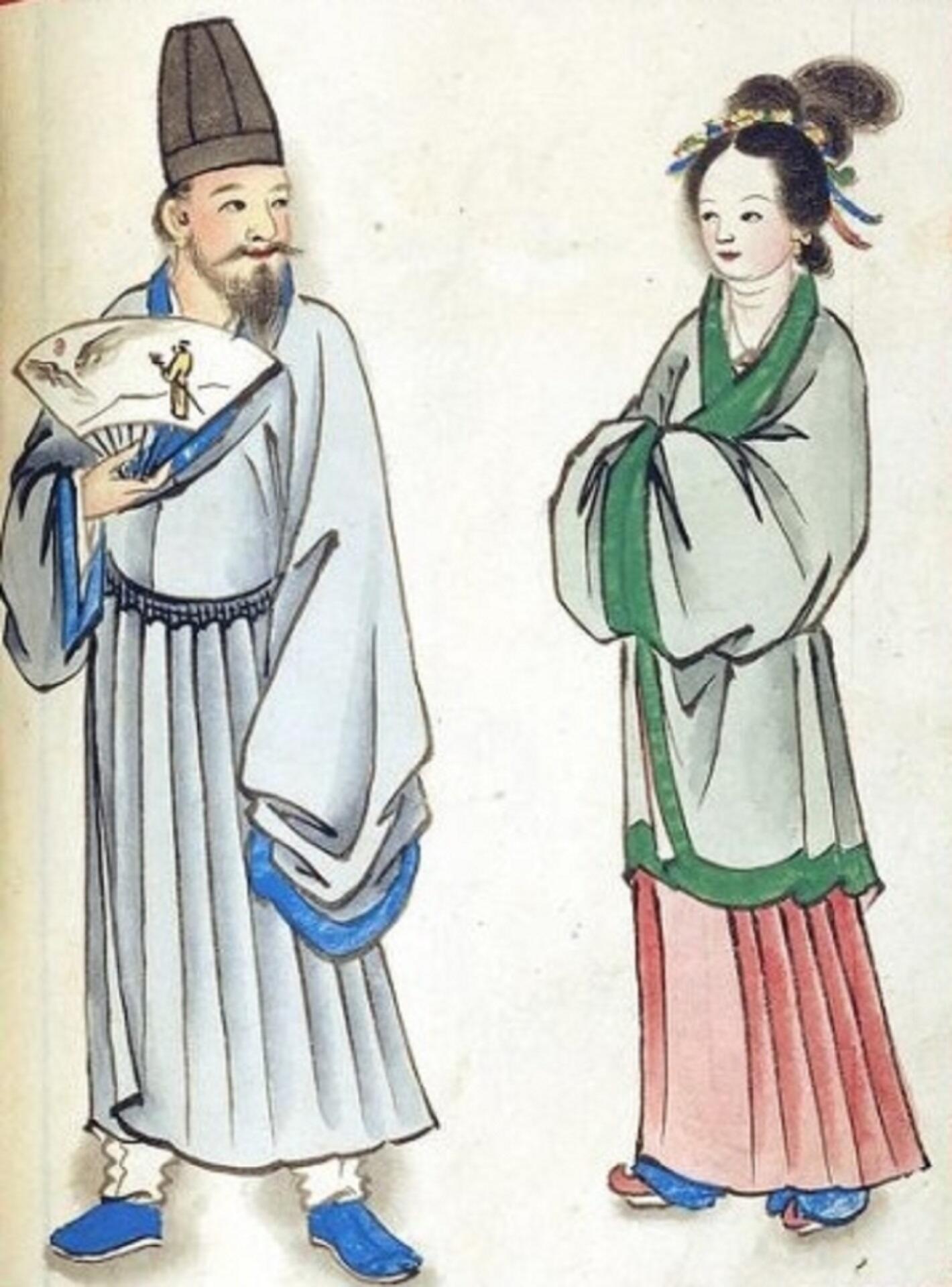
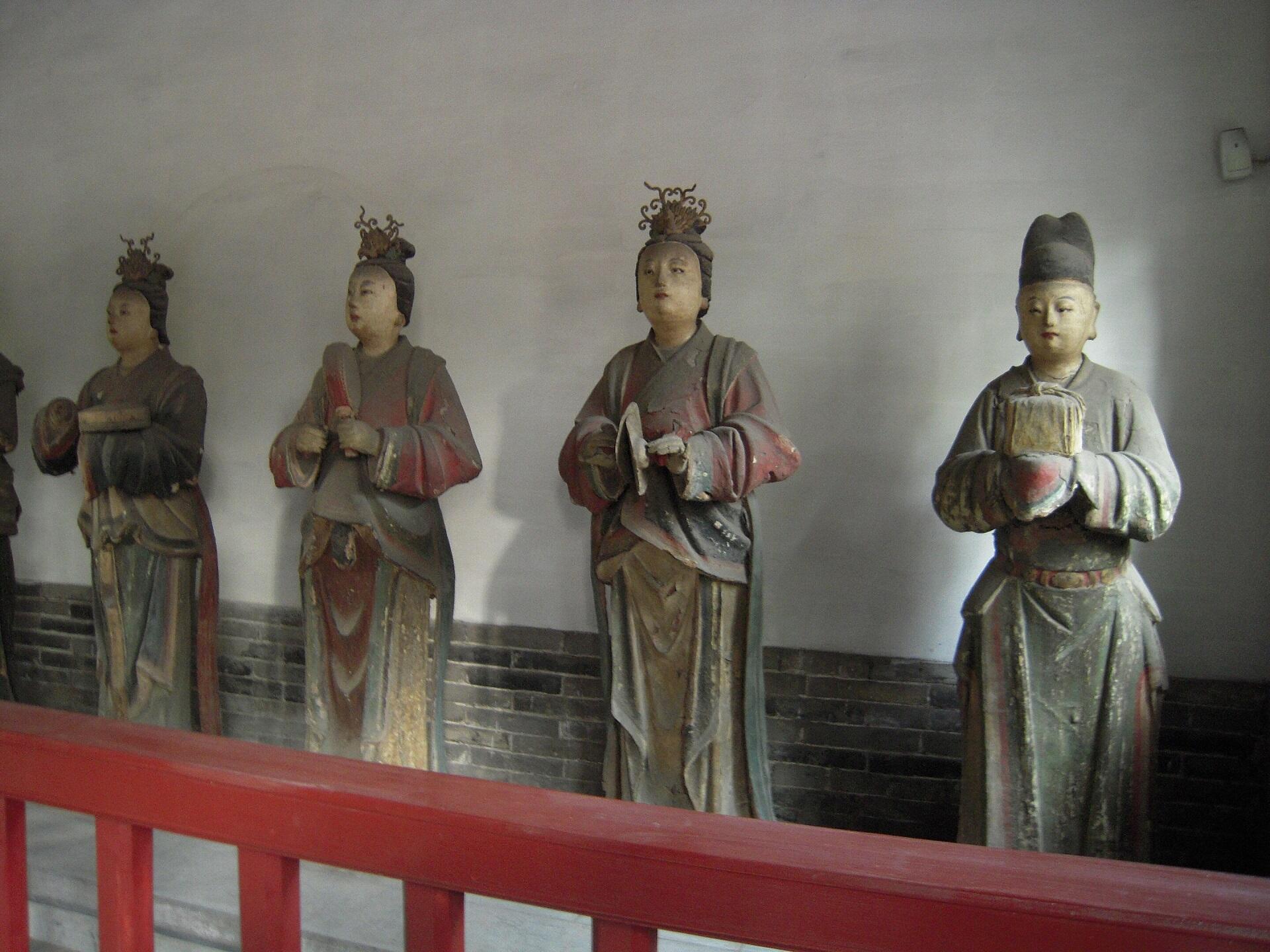
The 'horse-face skirt' (mǎmiàn qún - 马面裙) is the most famous Ming dynasty hanfu contribution. This long skirt had nothing to do with horses. Rather, it had a wide, flat panel in the front and back, and many pleats around the side. The photo above is a good representation of the mǎmiàn qún.
Compared to the 20th century Mao suit's severe lines, Ming Dynasty hanfu represented a wealth of colour and style. It was arguably hanfu's finest iteration, but when the Qing warring forces put an end to Ming power, all that lavishness and excess disappeared.
The Illegal Hanfu
In 1644, Emperor Shunzhi of Qing consolidated power into Qing rulership, launching China's last dynasty. Among the Manchu-led regime's first acts was to ban the wearing of hanfu (and everything else Han related). From then on, everyone must wear Manchu clothing and sport a queue — the traditional Manchu hairstyle.
The proclamation tìfà yìfú (剃发易服) translates to 'shave hair change clothes'.
Far from the elegant, leisurely styles of the Ming Dynasty hanfu, manfu (also called qízhuāng - 旗裝) was made for action. Men and women wore trousers, boots, and short jackets. To see how dramatic the contrast, you have to see them side-by-side.
Hanfu
- loose, delicate undergarments
- loose-fitting jackets with wide sleeves
- long, flowing skirts
- soft-soled slip-on shoes
Manfu
- long, snug-fitting undergarments/robes
- a long coat slit on four sides
- trousers
- hard-soled boots
It wasn't a smooth transition. Han populations gave plenty of resistance and did everything possible to preserve their legacy. Their efforts included written texts as well as artwork. It's thanks to them that we know so much about hanfu and its changes throughout history.
Wearing Hanfu Today
Today's cultured women are more likely to wear a form-fitting qipao than drape themselves in bolts of flowing silk and linen. Still, many find a time and place to wear hanfu.
Celebrations, such as weddings, the New Year, and family occasions, are a fine time to drape oneself in Han traditional clothing. It's a bit challenging to navigate daily life in flowing robes, though. So, most people incorporate hanfu elements into their everyday attire instead.
Long, wide scarves are an obvious choice to complement your outfit. You may also top your western style with a paofu for a distinctive look. Otherwise, a short-waisted rú jacket sets off the high-waisted trousers look. And if those trousers have wide, flaring legs, all the more attractive!
Summarise with AI:
Did you like this article? Leave a rating!

 Loading...