Anyone who keeps up with current events must have seen Chinese President Xi Jinping wearing a rather severe looking grey jacket. They might wonder why, as the head of state, he wears such a no-frills garment rather than a power suit. To be sure, President Xi wears western-style dress, as needed. However, he also has meaningful reasons to wear his Mao jacket.
The Zhongshan Suit's Hidden Cultural Meaning
- Its five buttons represent China's five branches of government: legislative, executive, judicial, examination, and control.
- The four pockets symbolise the Four Virtues: justice, honesty, propriety, and humility.
- The three buttons on the sleeve cuffs stand for the Three Principles of the People: nationalism, democracy, and livelihood.
- This garment is a symbol of Chinese national sovereignty.


The Mao Suit's Origins
Of all China's traditional clothing styles, the Mao jacket is the youngest. Archaeologists have traced the history of traditional hanfu (Han people's clothing) to the second millennium before the current era (BCE).

When seen in that light, the 112 years that the Zhongshan suit has been around are nothing. Still, this garment has enormous significance in Chinese culture.
Sun Yat-sen was a young doctor when China emerged from its Boxer Rebellion and subsequent foreign occupation. The country was poor and in disarray, with various factions vying for power.
Our young doctor joined in the fray, forming the Tongmenghui resistance group, with the aim of overthrowing the Qing emperor.
The empire fell in 1912, and China became a self-declared republic. The revolutionary Tongmenghui rebranded itself as the Kuomintang, a political party, with Sun Yat-sen as its leader.
Sun Yat-sen had many names. Sun was his family name throughout.
Yat-sen (逸仙) was the 'art-name' he adopted while at Hong Kong University.
Sun Zhongshan (孙中山) remained his most popular Chinese name.
Today, we call the jacket he made famous the Sun Yat-sen suit or the Zhongshan suit. He wore it in all his revolutionary and political dealings. So instrumental was he in founding and shaping the Chinese Republic that even his clothing legacy remains intact.
Sun Yat-sen's birth city was renamed Zhongshan in his honour.
It's one of only 13 cities in China named after a person.
Practically every city in China has a Zhongshan Street, too!
Sun Yat-sen popularised this garment, whose style blends Western and Chinese fashion elements.
Who Designed the Zhongshan Suit?
According to the website NewHanfu, Sun Yat-sen himself designed this jacket. He drew on traditional Chinese clothing for inspiration, particularly the garment's high collar. We see similar collar height with legacy Chinese clothing styles such as the qipao and the tangzhuang.
However, Sun's exposure to Western clothing styles influenced his design, too. As a student in Hawaii and Japan, he noted their turned-down collar styles, which he incorporated into his Zhongshan suit.
The tunic's military lines come from Japanese revolutionary garb. For a time, Sun Yat-sen participated in Japanese uprisings, giving him the chance to note the garment's fit, functionality, and style.
The Mao Jacket's Historical Development and Usage
Of course, these garments aren't only called Zhongshan suits. Furthermore, their style changed a bit over the years.
Quite a lot happened in China between 1912 and 1949, the year that the country became The People's Republic of China. Not the least of that was the horror of Japanese occupation, which often overshadows local conflicts in history books.
Excluding the Japanese, we can boil the domestic turmoil down to rival parties vying for country unity — not to gloss over (or disrespect!) this profound history. In the end, Mao Zedong and his People's Liberation Army succeeded; the Kuomintang left the mainland to establish itself in Taiwan.
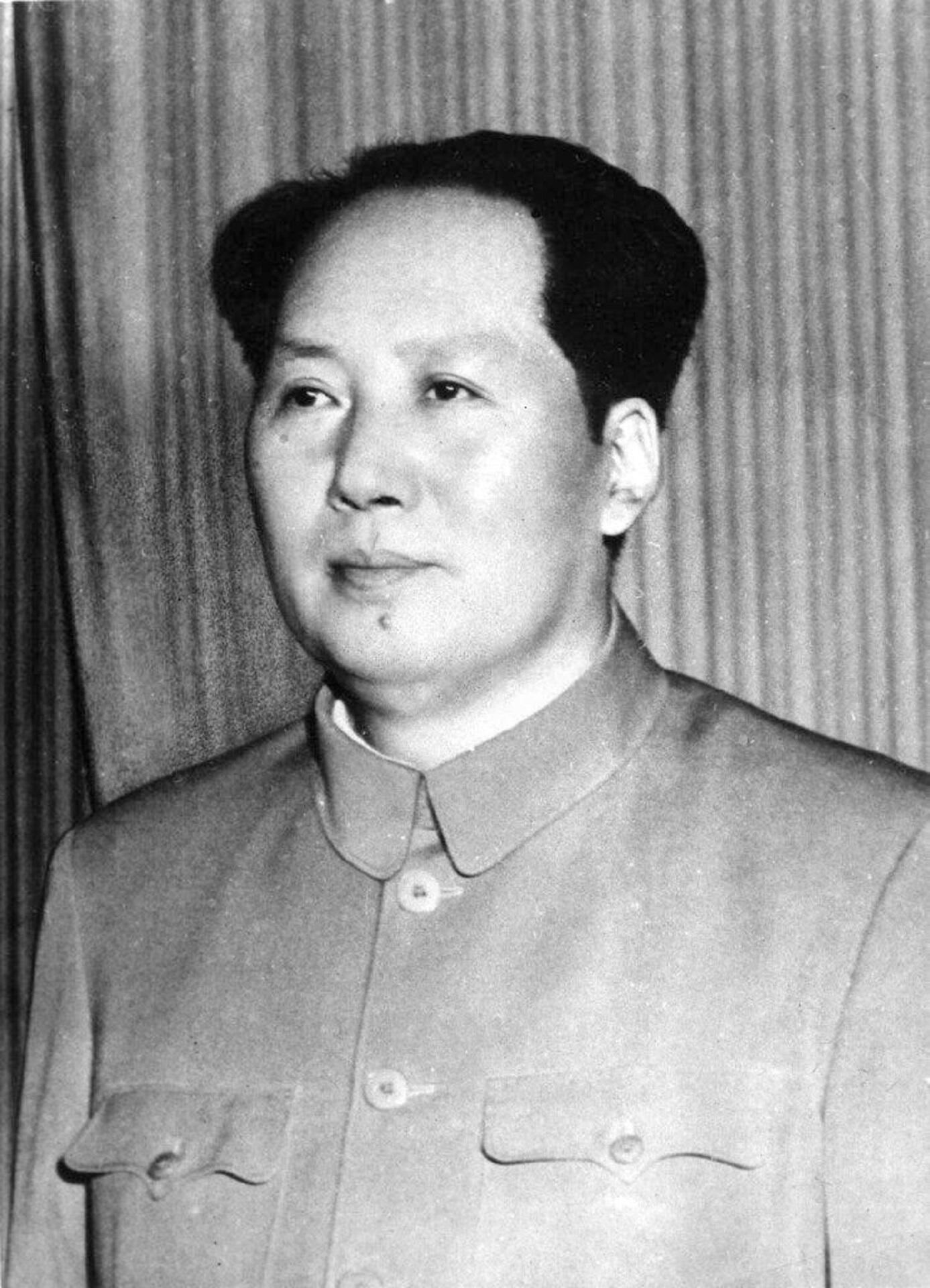
With the unity and leadership questions decided, the newly-declared People's Republic of China began the monumental task of structuring itself. Debating how Chairman Mao accomplished this goes far beyond this article's scope. For our purposes, everyone wearing the same style of clothing as a matter of efficiency is enough.
In Mao's China, men and women wore the Sun Yat-sen suit to work in the fields as well as the shops and factories. Bureaucrats and politicians wore them too. Soon, such attire came to be known as the Mao suit.
During that time, the lack of materials — and rejection of all things Japanese — demanded that this garment undergo a few style revisions.
Sun Yat-sen suit
- pleated upper pockets
- seven buttons
- slit in the back (called 'vent')
- leather belt
Mao suit
- flat upper pockets
- five buttons
- no vent
- no belt
The Great Leap Forward (1958-62) and Chinese Cultural Revolution (1966-76) were difficult times, to say the least. Still, those struggles put China in a position to at least consider outreach from western countries.
It doesn't matter whether a cat is black or white ...
Deng Xiaoping
Following Chairman Mao's death, leader Deng Xiaoping followed through on his predecessor's initiatives. In one memorable interview, he delivered that quote, finishing it with "as long as it catches mice, it's a good cat." He was implying that capitalism can be beneficial if it delivers desired results.
Among his 'good cat' initiatives, opening China up to Western commerce was a top priority. Inevitably, Western influence leached into traditional Chinese culture.
Starting in the early 80s, as China incorporated capitalist aspects into its socialist framework, the Mao suit fell out of favour. Not for long, though. By the 1990s, it reemerged as a symbol of culture and national unity.
Today, everyone from movie stars to politicians favours elegant Mao suits in a variety of colours. That is, when they're not decked out in their traditional tang jacket.
Design and Symbolism of the Sun Yat-sen Suit
One of the Zhongshan suit's most remarkable, yet most muted aspects is its back. It is an entire piece of cloth with no seams, unlike western suits, which have two panels sewn together. Admittedly, that seam in the back makes it easy to incorporate a vent. On the other hand, what purpose does that vent serve?
More than 100 years ago, gentlemen rode on horseback.
Vents allowed the jacket to drape across a horse's flanks, so the rider wouldn't sit on it.
Today, few ride horses and even fewer do so in a suit, but the vents remain. Including one in the suit's style demands extra work, time and resources. The Mao suit abandoned the vent, as it served no purpose, nor did it have any historical relevance in China.
Functionality and efficiency are Sun Yat-sen suit hallmarks. Still, amidst the minimalist look, we find profound cultural beauty.
Did Sun Yat-sen design his jacket with cultural representation in mind? Or did the jacket's functional design spur thoughts of cultural representation?
The latter is likely true. As noted above, Sun Yat-sen borrowed from Japanese and Western styles in designing his jacket.
But the question is moot. Just as the qipao symbolises Chinese tradition for women, the Mao jacket is a quiet testament of cultural respect for men to display.
There's something ironic about tying a noose around your neck to engage in business.
Yann Martell
Comparing the Mao Suit With Western Business Attire
You have to admit that the author of Life of Pi has a point. Does a necktie, a required component of businessmen's attire, serve any purpose? The history of the necktie reveals its origins, first as a sign of Czech solidarity and then, as a royal embellishment in France.
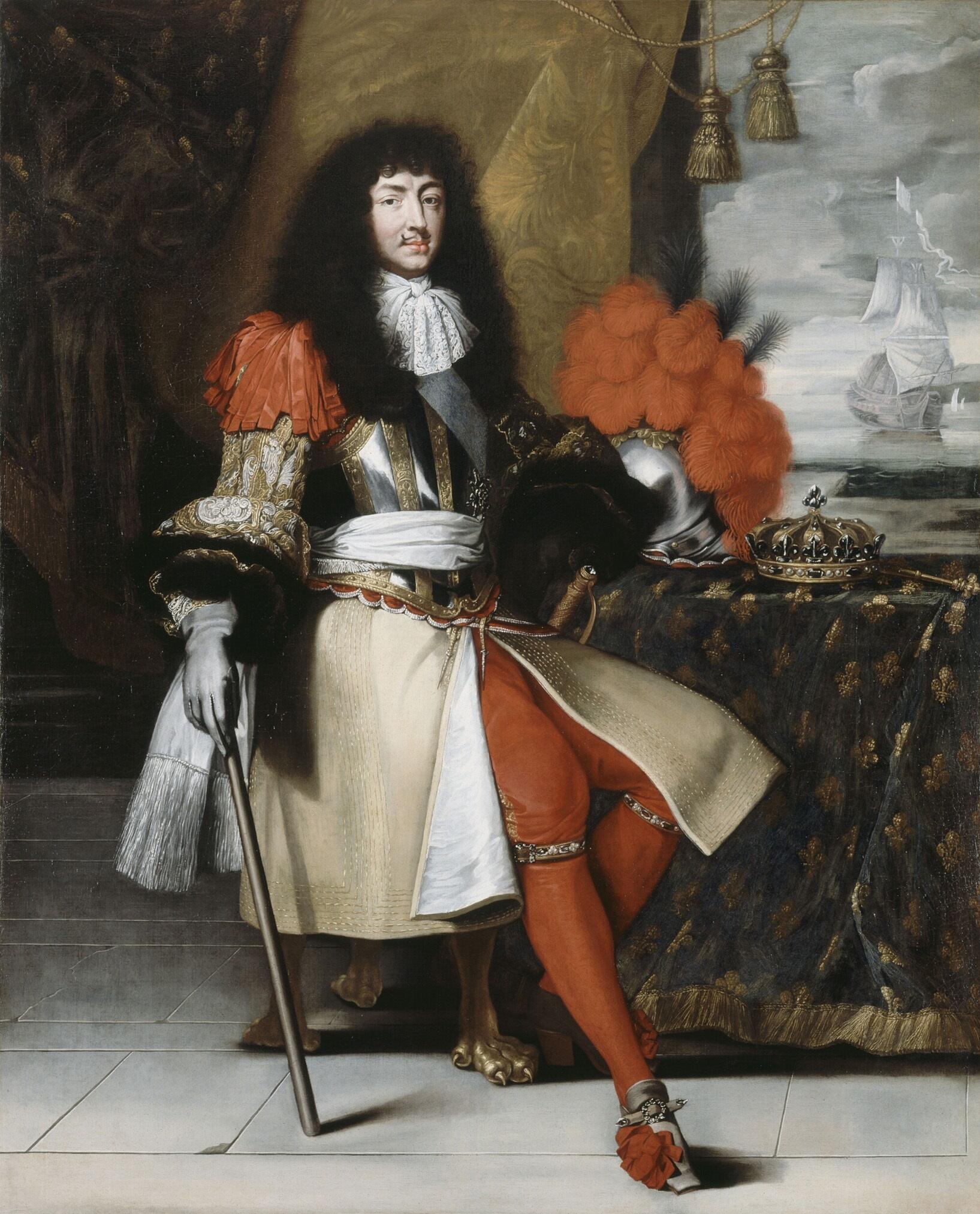
Likewise, the modern business suit has its roots in royalty. Starting in the 17th century, the English king Charles II insisted that everyone in his court dress formally.
He was following French King Louis XIV's example. In those days, few could afford extra clothes and even fewer could splurge on lace and finery that served no practical purpose, such as the jabot.
So, western clothing traces a history of instilling and maintaining class divisions: those who could afford rich clothing showed their wealth via their wardrobe.
By contrast, the Zhongshan suit united the population by wrapping wearers in identical garb that represents cultural values and historical significance.
We find other points to compare these two styles of dress on.
The Sun Yat-sen suit
- meant for both genders
- multifunctional: suitable for physical and intellectual labour
- made with standard material
- no designer labels
Western business dress
- meant for men
- limited wear: suitable only for white-collar work
- material quality varies
- designer suits cost more
We close with this point: the Mao suit comes in one style. The western business suit comprises a range of styles, including:
- double-breasted/single-breasted
- with or without vest
- one or two vents
- broad versus narrow lapels
- pleated or non-pleated trousers
- cuffed or uncuffed trousers
- varying number of pockets
- pockets with/without flaps
- various colours
- pinstriped/solid colour
Western dress styles, in general, reflect individual tastes, albeit within the fashion trends of the day. China is a collectivistic society, meaning that the safety and stability of the collective outweigh individual desires. Chinese clothing styles throughout history reflect that, but none as much as the Mao suit.
Summarise with AI:
Did you like this article? Leave a rating!

 Loading...