
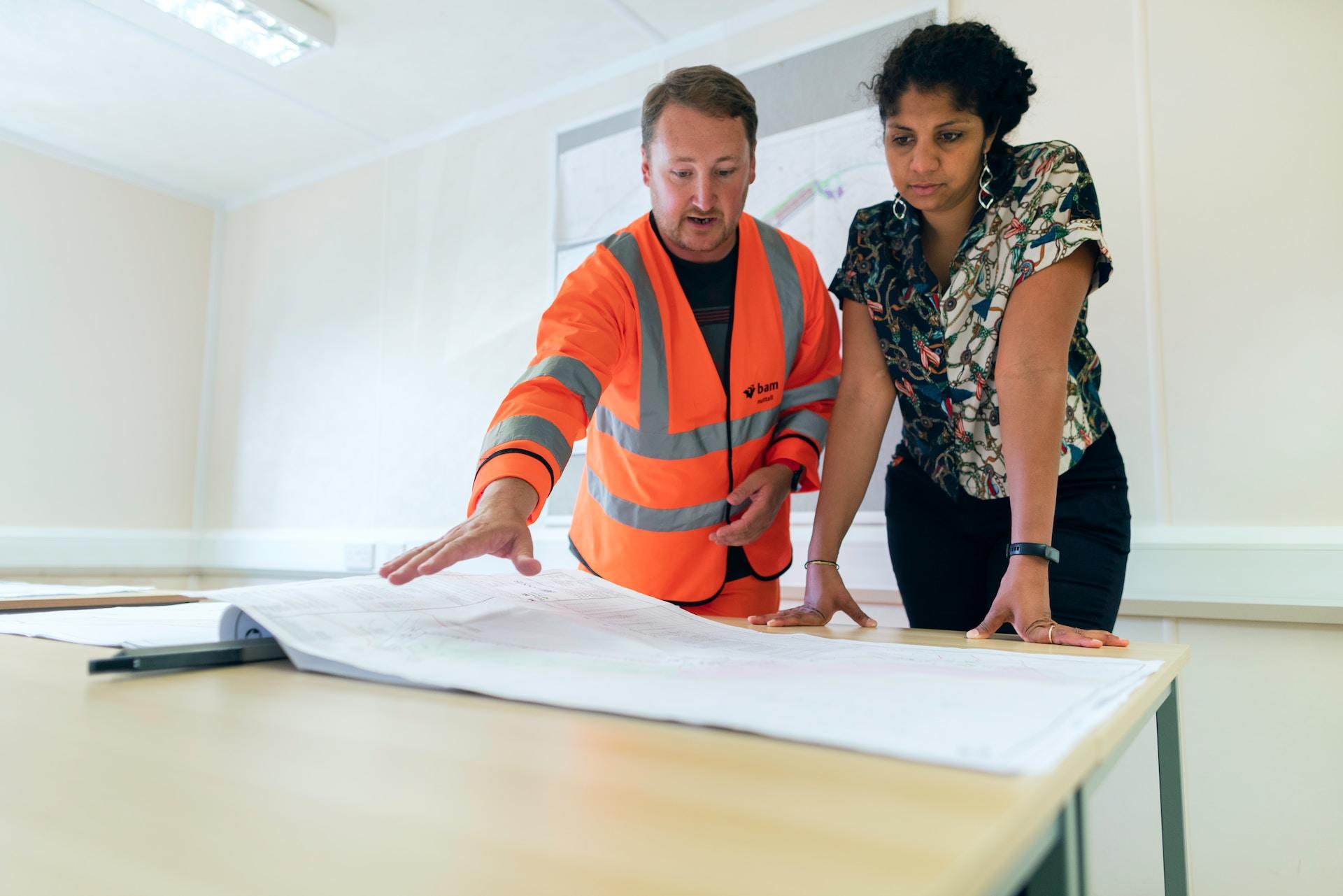

Engineering is quite a popular career choice and one that's seemingly been popular forever. It's one of those jobs that seems to always have carried a fair amount of respect, been thought of as a wise choice, and comes with a good salary.
But if you've been hearing that all your life, you're probably wondering if it's still true or just something that previous generations thought.
Let's see the reasons why you should study engineering, whether it's easy to find work or not, if the salary is worth it, and where you can study engineering in Sydney if you decide that it is for you.


Why You Should Study Engineering
Before we talk about finding work and how much you can get paid, we need to talk about engineering itself and why it's worth studying.

Engineering is by no means for everyone as it can be quite a tricky subject. After all, engineers need to combine maths and science to design, test, or build things. You can't be an engineer without STEM skills.
However, engineering is more than maths and science. It takes a creative person to be an engineer because you need to solve problems, often in ways that haven't been solved yet. Engineering combines science and creativity, which is why so many engineers love what they do.
How Easy Is It To Find Work As an Engineer?
When choosing to study anything, you'll likely want to know that you can find a job once you finish your course.
Engineering, especially in Australia, is in high demand and one of the most common job types advertised. Demand for engineering jobs in Australia is so high that the government is making visas for engineers easier to get. This means that both Australian and foreign engineers should be able to find work without too many problems.
The growth in terms of engineering jobs is double that of the national average across all areas making engineering much easier to get into than a lot of other areas, even some that you may have thought were ideal careers.
There's currently a very low number of engineers for the number of jobs out there and one of the reasons for the shortage is that engineering has traditionally been an area where very few women choose to study, which suggests that a large portion of around half the population isn't getting into engineering.
What this does mean, though, is that there are excellent opportunities for everybody in Australia when it comes to engineering.
How Much Do Engineers Get Paid?
You're probably quite happy to hear that there are lots of engineering jobs out there, but you also want to make sure that doing these jobs is worth the time and effort of becoming an engineer.

Fortunately, the average salary for an engineer is around $112,000 a year, nearly double that of the national median salary of $65,000 a year. This average salary isn't what you'll start on as an engineer with the average starting salary closer to $94,000 a year.
As with any career choice, experience, seniority, and the qualifications you have will all affect your salary and the higher earners' salaries are closer to $155,000 a year.
Many factors can affect your salary including your specialisation, your role, the company you work for, and the industry that you're working in.
Higher positions in companies in lucrative industries tend to pay more than entry-level positions in smaller companies, for example.
Discover the best engineering courses in Melbourne.
The Best Engineering Courses in Sydney
By now, it should be pretty clear that becoming an engineer is a good choice. While engineering is fascinating, it's also difficult and they don't just let anybody become an engineer. This is why you need to study engineering.

In Sydney, there are lots of great courses in different kinds of engineering at different levels. We've picked out a few of the places you can study engineering in and around Sydney so take a look. Whether you want to study a diploma, certificate, bachelor's degree, or master's degree, these places should certainly be a good starting point for anyone starting to consider a future in engineering.
Sydney School of Business and Technology
The engineering faculty at the Sydney School of Business and Technology offers certificates and diplomas in project management, an advanced diploma in civil construction design, and an advanced diploma in telecommunications network engineering.
UNSW College
UNSW College is basically the college part of the University of New South Wales in the sense that it offers pre-university courses or university pathway courses.
These are good options if you're thinking about studying engineering at university but don't have the qualifications necessary for admission.
The diploma in engineering lasts a year and allows students to develop foundational skills in engineering. It also means that you'll go from the course into the second year of a Bachelor of Engineering.
The course itself is also taught at a level similar to the first year of the Bachelor of Engineering but with smaller classes and extra support to help students prepare for an engineering degree.
Check out engineering courses in Perth.
Macquarie University
Macquarie University has been around for over half a century and was Sydney's third university. Its engineering courses are available for those interested in civil and environmental engineering, electrical and electronic engineering, mechanical engineering, mechatronic engineering, and software engineering.
The university offers a Bachelor of Engineering degree as well as double honours degrees that include engineering combined with arts, commerce, environment, IT, law, or science.
There are also master's courses in engineering in electronics engineering and engineering management as well as research masters.
Western Sydney University
Western Sydney University is a highly-ranked university across all subjects and in engineering despite being one of the newer universities in the country (it was founded in 1939).
The undergraduate engineering programs at Western Sydney University include the Bachelor of Engineering Science and the Bachelor of Engineering which allow for specialisation in multiple areas.
Areas of interest and specialisation include:
- Advanced Manufacturing Engineering
- Civil Engineering
- Construction Engineering
- Electrical Engineering
- Materials Engineering
- Mechanical Engineering
- Robotics and Mechatronics Engineering
- Sustainability Engineering
There are also postgraduate qualifications including the Master of Applied Neuromorphic Engineering, Master of Engineering, Graduate Certificate in Engineering, and Graduate Certificate in Vertical Transportation.
There are also college-level courses available such as the Associate Degree in Engineering and the Diploma in Engineering.
You can also find out more about engineering courses in Brisbane.
Deakin University
Deakin University is another public university with a great reputation for engineering courses. The university is in the top 1% for engineering and technology and ranks #1 for course satisfaction, graduate employment, teaching quality, and facilities and resources.
Undergraduates can study bachelor's degrees in engineering, civil engineering, electrical and electronics engineering, mechanical engineering, mechatronics engineering, software engineering, and environmental engineering.
Postgraduate options include master's degrees in infrastructure engineering and management, energy system management, engineering, and a graduate certificate in engineering.
University of Sydney
The University of Sydney is regularly ranked in the top 50 universities in the world and is one of the best both domestically and globally.

The city's namesake university was founded in 1850 and is Australia's oldest university. Naturally, these rankings and history make it one of the hardest universities to get into, but if you have the right stuff, it's an excellent choice for people interested in engineering.
The Faculty of Engineering at the University of Sydney offers undergraduate courses, postgraduate courses, and professional training and short courses.
Like many other undergraduate engineering degrees, the University of Sydney offers a flexible first year where students learn the foundations of engineering before moving on to one of the following areas of specialisation:
- Advanced computing
- Aeronautical engineering
- Biomedical engineering
- Chemical and biomolecular engineering
- Civil engineering
- Electrical engineering
- Mechanical engineering
- Mechatronic engineering
- Software engineering
- Project management
The postgraduate courses at the University of Sydney include the typical master's degrees and graduate certificates as offered at other universities with specialisation areas such as complex systems, computer science, project management, transport, or engineering.
University of Technology Sydney
The University of Technology Sydney offers undergraduate and graduate degrees in engineering with a wide range of specialisations including biomedical engineering, systems and operations, and telecommunications as well as the others we've seen in the other universities so far. There are also postgraduate options in engineering and IT.
Don't forget that a lot of universities and MOOCs offer engineering qualifications online.
University of New South Wales
Last but not least, we have the University of New South Wales. This university, along with the University of Sydney, is a member of the Group of Eight research universities and ranks 3rd or 4th (depending on who you ask) within this group despite being a much newer establishment.
For engineering, it's one of the best ranked in the country and the world and according to some, it's the very best for engineering in the country.
In many ways, it offers the same courses as every other university, but with some of the best teaching around.
Summarise with AI:
Enjoyed this article? Leave a rating!

 Loading...
