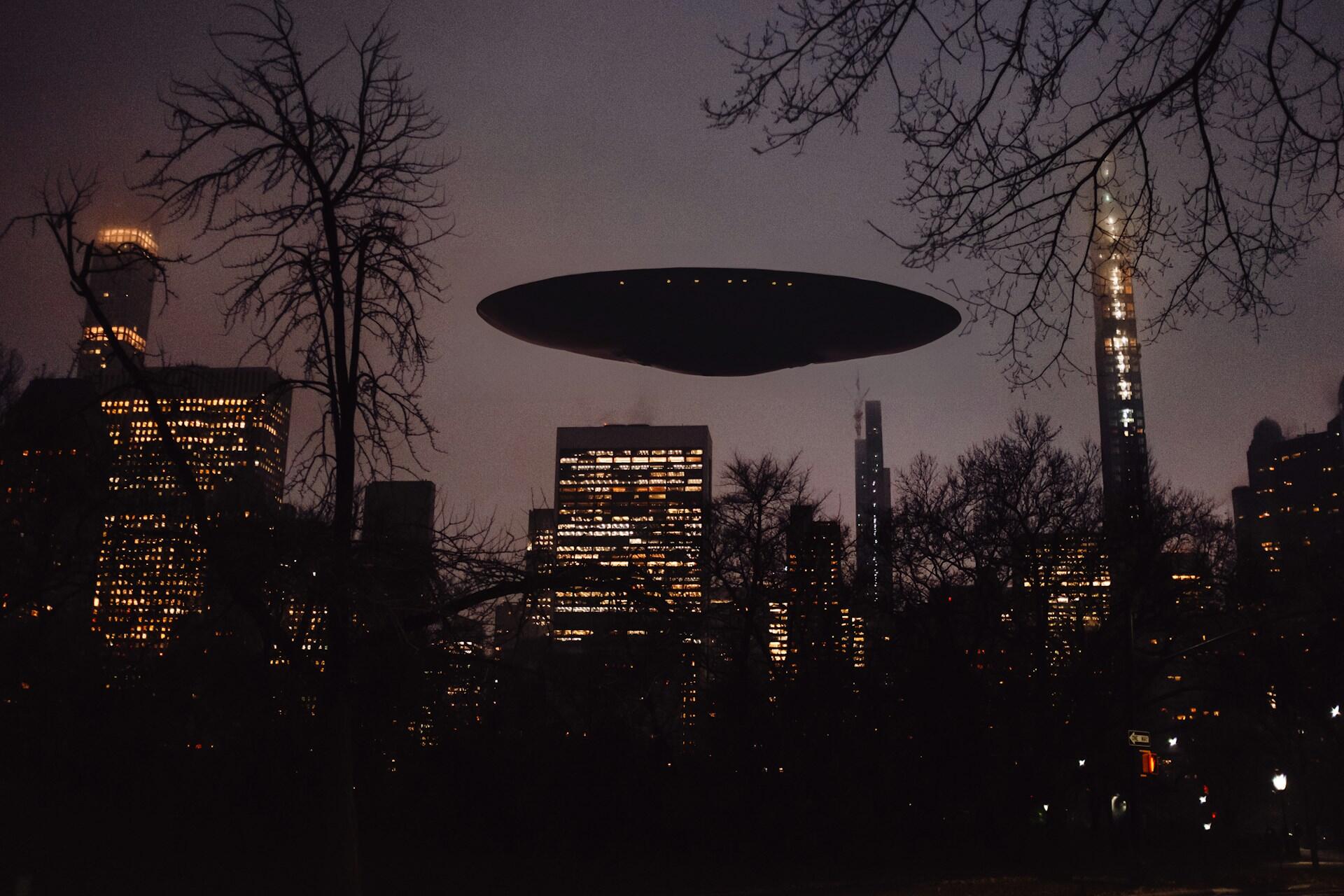

Since ancient times, people have wondered about the possibility of life elsewhere. They may not have had the scientific knowledge to theorise about habitable planets across the galaxy, but you don’t need science to wonder about space. Mentions of alien life exist in ancient texts as well as modern science fiction, and are now part of serious scientific debate. As astronomers, astrophysicists, and biologists gain more information about space, the possibility of life on other planets seems more and more likely.


The Scientific Search for Extraterrestrial Life
The scientific search for alien life is much more methodical, structured, and sceptical compared to what’s depicted in films and TV. Scientists generally don’t expect advanced beings to arrive on Earth in spaceships suddenly. Instead, researchers carefully analyse information they receive about other planets to make logical hypotheses about the possibility of life.
Astrobiology and the Conditions for Life
Astrobiology is the study of life outside of Earth. It’s a combination of biology, chemistry, geology, and astronomy. Astrobiologists must take into consideration a planet’s (or other celestial object’s) physical composition and qualities, its position in space, and what chemical processes could take place in those conditions.
They must also examine the history of life on Earth to understand what materials and conditions were required for life to form here in the first place, as a reference for what to look for elsewhere.
Learn more about astronomers, astrophysicists, and cosmologists.

Conditions for Life
Since all life on Earth was only made possible with liquid water, scientists search for planets with water. Water, especially liquid water, is rare to find on other planets; they are usually too cold or have an atmosphere that is too thin.
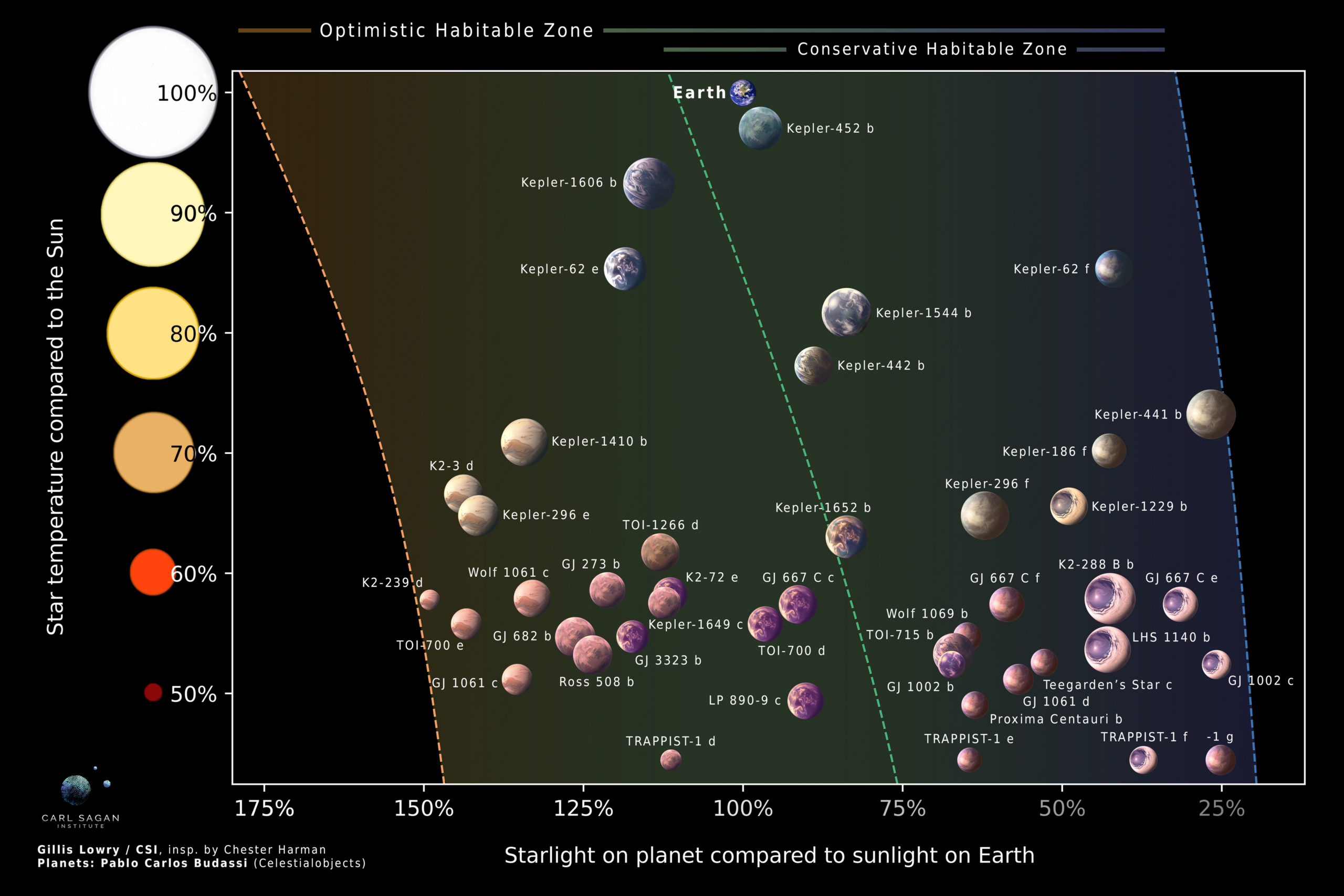
Life needs a lot of time, millions or billions of years, to develop. A planet must orbit a star in its main sequence phase at the right distance, within the habitable zone.
While there needs to be a stable environment, there must also be changes that spark movement within the environment. Weather, tectonic activity, and cycles of different conditions act as catalysts for change and allow things like nutrients to be cycled and renewed, providing continuous habitable conditions.
The right atmosphere regulates the planet’s surface temperature, is conducive to creating a habitable climate, and protects from harmful space radiation.
Astrobiology doesn’t assume that alien life will look the same, or even similar, to that found on Earth. However, Earth is still the only example we have, so it’s hard to imagine any other type of life. What makes research even more difficult is that we cannot physically go to other planets to directly research them, nor can we retrieve samples.
There is a push in the space science field to work on creating a rover that could retrieve samples from Mars, but it hasn’t yet happened. The only celestial body we currently have any substantial samples from (besides asteroids) is the moon.
Find physics tutors here on Superprof.
The Drake Equation and Probability Estimates
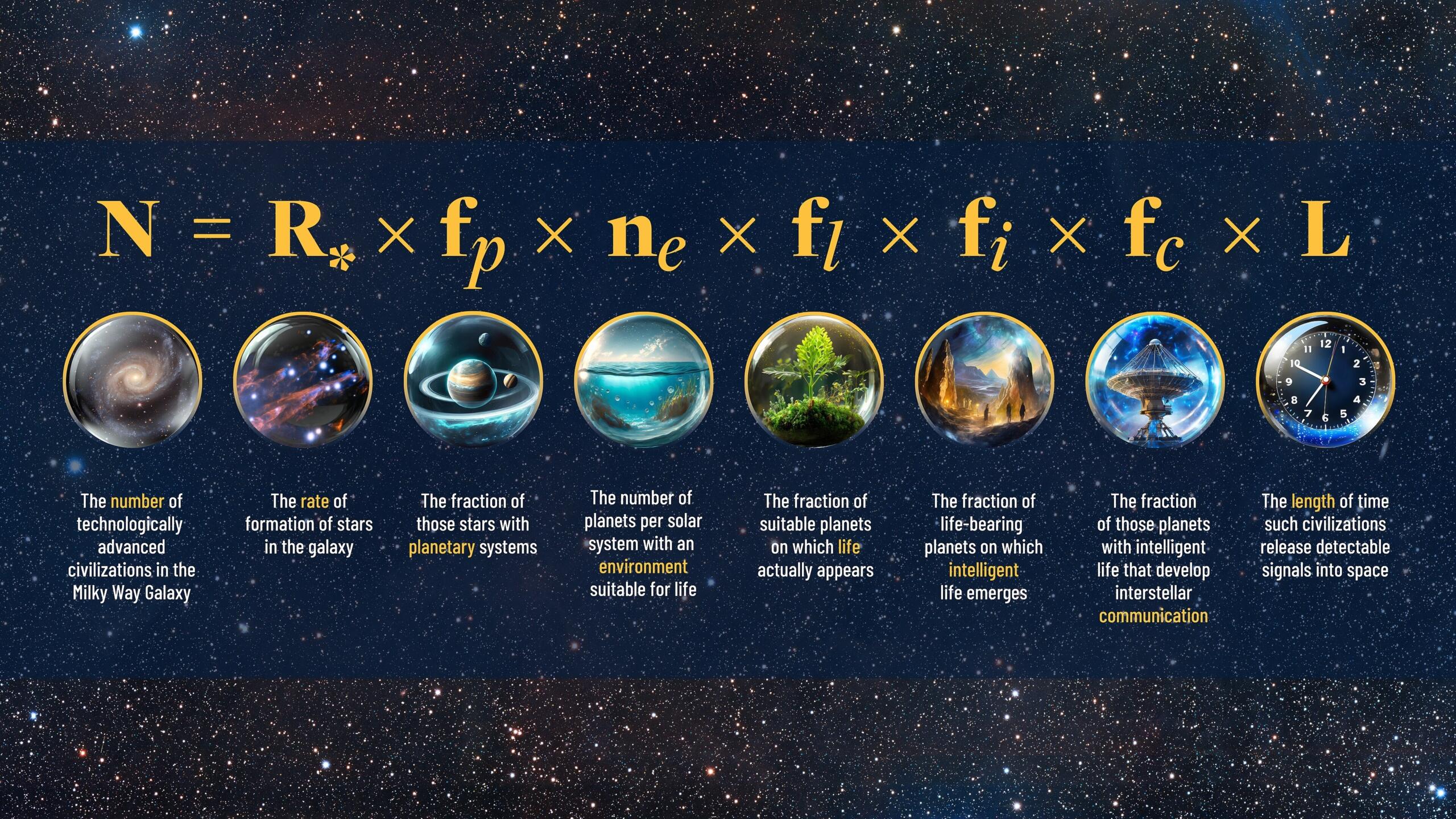
The Drake Equation is a mathematical formula proposed by astronomer Frank Drake in 1961. It was the first attempt to mathematically estimate the number of planets in our galaxy that could have alien life, with the caveat that the alien life would also need to have communication systems that we could find and recognise.
N = R* * fp * ne * fl * fi * fc * L
Essentially, the equation posits that the number of civilisations in the Milky Way galaxy that might have communication technology that we can perceive (N) depends on factors like how many stars with planets exist in our galaxy, how many of the stars have planets in the habitable zone, how many planets actually have life, and how advanced the lifeforms are.
Scientists have recently proposed an updated version of the equation, which combines many of these factors into one variable, but the premise remains the same.
Many of the values in the equation are mostly unknown, and small assumptions lead to exponentially varied results. Some scientists think the likelihood of other life is extremely rare, while others insist it’s statistically very likely. When examining things (like the galaxy and the universe) at such a large scale, it’s difficult to accurately perceive what is actually rare and what is common.
As I planned the meeting, I realized a few day[s] ahead of time we needed an agenda. And so I wrote down all the things you needed to know to predict how hard it's going to be to detect extraterrestrial life. And looking at them it became pretty evident that if you multiplied all these together, you got a number, N, which is the number of detectable civilizations in our galaxy. This was aimed at the radio search, and not to search for primordial or primitive life forms.
Frank Drake
Recent Discoveries and Ongoing Research
Space research technology has greatly improved over the last 30 years. As a result, thousands of exoplanets (planets outside of our solar system that also orbit a sun) have been discovered. Some are similar in size to Earth, but many are smaller or larger. Some orbit within their planetary system’s habitable zone.
Advanced space telescopes measuring light and heat have detected atmospheric chemicals on these planets. Some of the chemicals include gases that are also found on Earth and are imperative for life here. It doesn’t prove the existence of life on other planets, but it proves that Earthlike conditions may be possible on them. More research needs to be done to learn more.
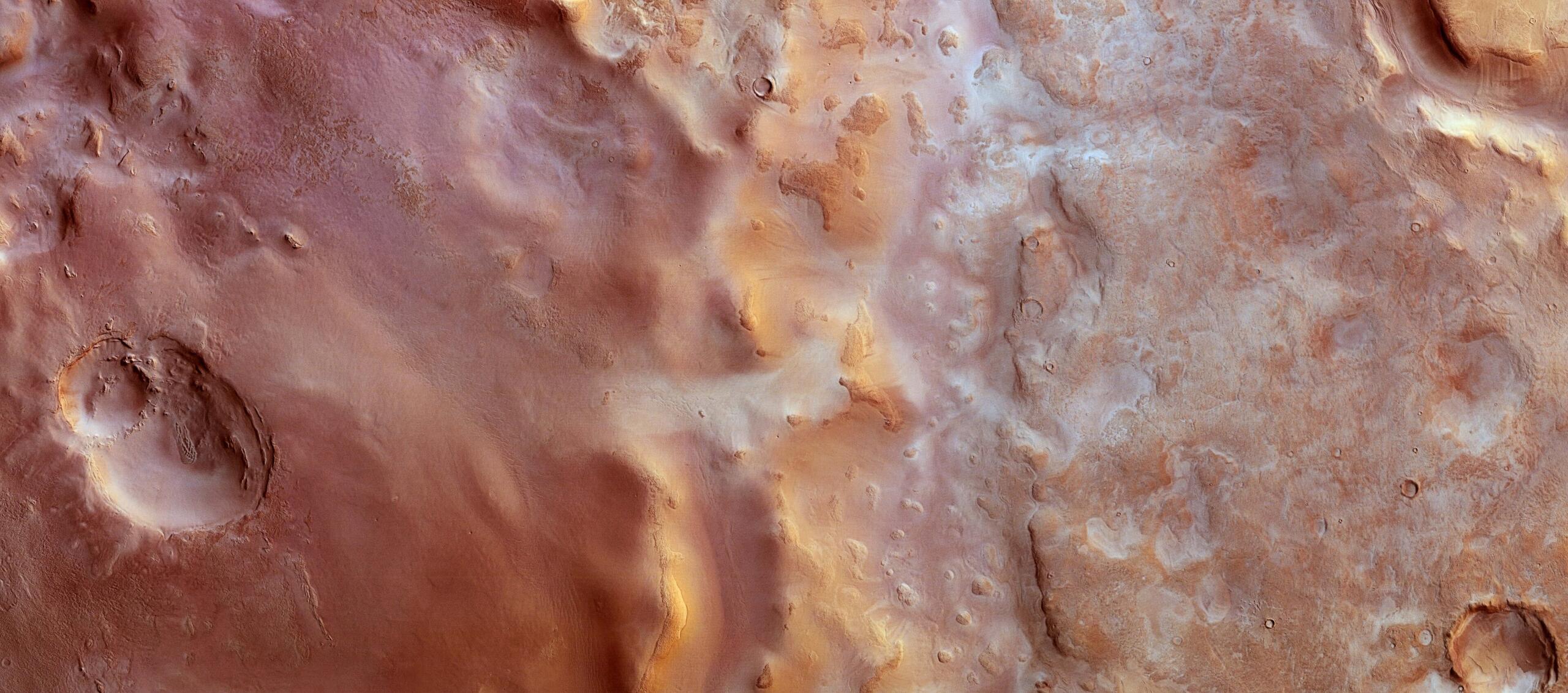
Mars has been in the spotlight for many years, especially since it’s so close by. NASA rovers have explored the surface of Mars since 1976. They have found several pieces of evidence that suggest there was once liquid water on the surface, and new findings also suggest there may be water underground.
Currently, Mars missions are looking for signs of past microbial life, such as fossils and chemical patterns that indicate the past existence of life. One sample on Mars looks extremely promising, but until it’s retrieved and studied in a lab on Earth, it’s not possible to draw any strong conclusions from it.
Other places in our solar system scientists think may have once had life or might possibly support life now or in the future include:
- Ceres
- Europa
- Enceladus
- Mars
- Venus
- Titan
Outside the solar system, scientists are interested in:
- Kepler-22b
- Kepler-69c
- Kepler-62f
- Kepler-442b
Unidentified Aerial Phenomena (UAPs) and Government Investigations
Previously, the common term Unidentified Flying Objects (UFOs) was used. Now, the phenomenon has been renamed to try to create distance from the old term, which comes with a connotation of fakeness. These reports are often seen by the untrained public as evidence of aliens, but this is not substantiated by the scientific process. UAPs are a real phenomenon, and it’s important to study them; writing them off as UFOs or government conspiracies each time is detrimental to science.

Historical Context of UFO Sightings
People have been seeing unexplained phenomena for centuries, especially in the sky. Modern interest grew after World War II, since the advances in aircraft technology and radar led to more sightings, conspiracies, actual secret aircraft, and confusion. There have been several notable events over the years that keep conspiracy theorists interested, even when some of them are explained. Others are still unexplained.
There are even ancient examples of UAPs, such as “ships in the sky” in Rome in 218 BCE and Ireland in 740 CE.
Unfortunately, we’ll likely never know what these events may have been.
With more advanced technology today, we know more about the natural world as well as space, which explains many previously unexplained events.

However, there are still many sightings that do not have an explanation. It’s impossible to discuss all AUP sightings in this short article – that subject is massive and extensive on its own – but here are some highlights from over the years:
June 1947
Pilot Kenneth Arnold Sees 9 Flying Objects (USA)
He was flying his plane near Mount Rainier when he noticed 9 unusual flying objects. Being a pilot, he observed them carefully, wondering if they were new government test ships. He immediately relayed all the information he observed to a journalist, saying, “they flew erratic, like a saucer if you skip it across the water,” which is where the term “flying saucer” comes from (though he never described the objects looking like saucers). No explanation was ever given.
July 1947
Roswell Incident (USA)
A rancher found debris from a crashed airship in the desert, and rumours circulated that it was alien technology. Due to the recent “flying saucer” sensationalism, the public was convinced. The government first claimed it was wreckage from a “flying disc” before saying it was actually a weather balloon, which stoked the sensationalism. The 1980 book “The Roswell Incident” and fake evidence (including an “alien dissection” film in 1995) solidified the idea of a government cover-up. In 1994, the US government officially declared the debris part of a top-secret (at the time) military project called Project Mogul.
August 1950
Mariana UFO Film (USA)
A small-town baseball coach, Nick Mariana, catches two UAPs flying in the sky on film. The U.S. Air Force examines the film and claims the fast, white dots are reflections from government aircraft. Mariana claims the government removed part of the footage while it was in their possession. In the end, the government defends its claims, while independent investigators say the film is “inconclusive.”
1983
Project Hessdalen (Norway)
Since the 1930s, residents have reported seeing bright white, yellow or red lights moving at various speedsfloat through and above the Hessadalen valley. The research project established there has determined that the cause is likely an unknown chemical reaction having to do with specific dust particles and/or natural radiation in the landscape.
2004
The USS Nimitz Encounter (USA)
U.S. Navy pilots encountered fast-moving, “Tic Tac”-shaped objects performing maneuvers far more advanced than any known aircraft can do. Despite various video evidence documenting the encounter, there is no confirmed explanation as of yet. The U.S. government reports that it may be advanced technology from an unknown source on Earth or the result of sensor errors or spoofing, but has not ruled out other possibilities.
Most incidents are explained as government equipment or aircraft, debris (like dust, water vapour, or gas) in the sky being lit up by the sun in an unusual way, different types of meteors, different types of lightning, or malfunctions in sensors such as radar.
Not every incident can be explained this way, which most likely points to undiscovered natural phenomena or secret aircraft projects. Could some of these incidents be contact with advanced alien species? It’s unlikely, but not impossible.
Discover the life cycle of stars in space.

Recent Government Reports and Findings
In recent years, governments have released various reports about UAPs, including declassifying information from past events. They reveal that some sightings remain unexplained, but they also emphasise that “unexplained” doesn’t mean “extraterrestrial.”
In 2021, the United States government released the “Preliminary Assessment: Unidentified Aerial Phenomena” report. It discloses that while the government has investigated many incidents of UAPs, the unexplained ones are thought to be foreign military technology.
The concern of government agencies is security: they evaluate if a UAP looks like a threat to their country’s safety. If it doesn’t appear to pose a danger, they don’t typically investigate further.
Find a VCE Physics tutor on Superprof.
Public Perception and Media Influence
Beginning with the “flying saucer” craze in the 1940s, reports of UAPs increased greatly. The reasons appear to be multifold:
- Widespread sensationalism: people are convinced they are seeing something extraordinary, even when they aren’t.
- Widespread paranoia: people attribute things to aliens because they are afraid.
- Attention, fame, artistic endeavours: people want attention and fame and make false claims to garner attention; film and other types of artists make fake videos, photos, crop circles, and other media for various reasons.
- We want to believe: anyone, including scientists, can fall prey to the logical fallacy that makes them classify something as “evidence” because they want it to be true.
- Increased number of flying objects: After WWII, there have been so many different types of flying objects that both the frequency and variety cause lots of confusion for civilians and military personnel. Additionally, drones and satellites in the atmosphere can also look like UAPs.
- Actual unexplained phenomena: many events have not been explained, leaving space for aliens to enter the conversation.
- Depictions in media: Even though we "know" movies and TV aren't real, they make the subject matter more approachable. With so much sci-fi media about aliens, the idea seems less far-fetched.
These factors, combined with the scientific approaches of the Drake Equation and Fermi Paradox, mean many people are constantly on the lookout for proof of extraterrestrials. Phenomena like ‘Oumuamua, 31/Atlas, and the Wow! signal give believers more fuel to keep looking for proof.
As a result, the question “Are aliens real?” becomes emotionally charged in the same way as religious views. It’s a valid question because many scientists believe the statistical probability of the existence of life on other planets is high. However, we do not have any undeniable proof that there are any lifeforms advanced enough to create the UAP phenomena we see on Earth.
Find out what astronomy really is.
The Fermi Paradox and Theoretical Considerations
In the ongoing search for extraterrestrial life, there is one glaring question above all others. It was asked by physicist Enrico Fermi in 1950: “Where is everybody?”
Understanding the Fermi Paradox
Fermi wasn’t the first to ask this question, and he was far from the last. The question posits that since there are so many stars and planets in the galaxy, nevermind the entire universe, the likelihood of alien life seems plausible. If it exists, why have we not yet detected it?
The paradox lies in the gap between expectation and observation, combined with our limited knowledge. Currently, there has been no clear contact or evidence of extraterrestrial life. We haven’t been visited, received signals, or found organisms on other celestial objects.
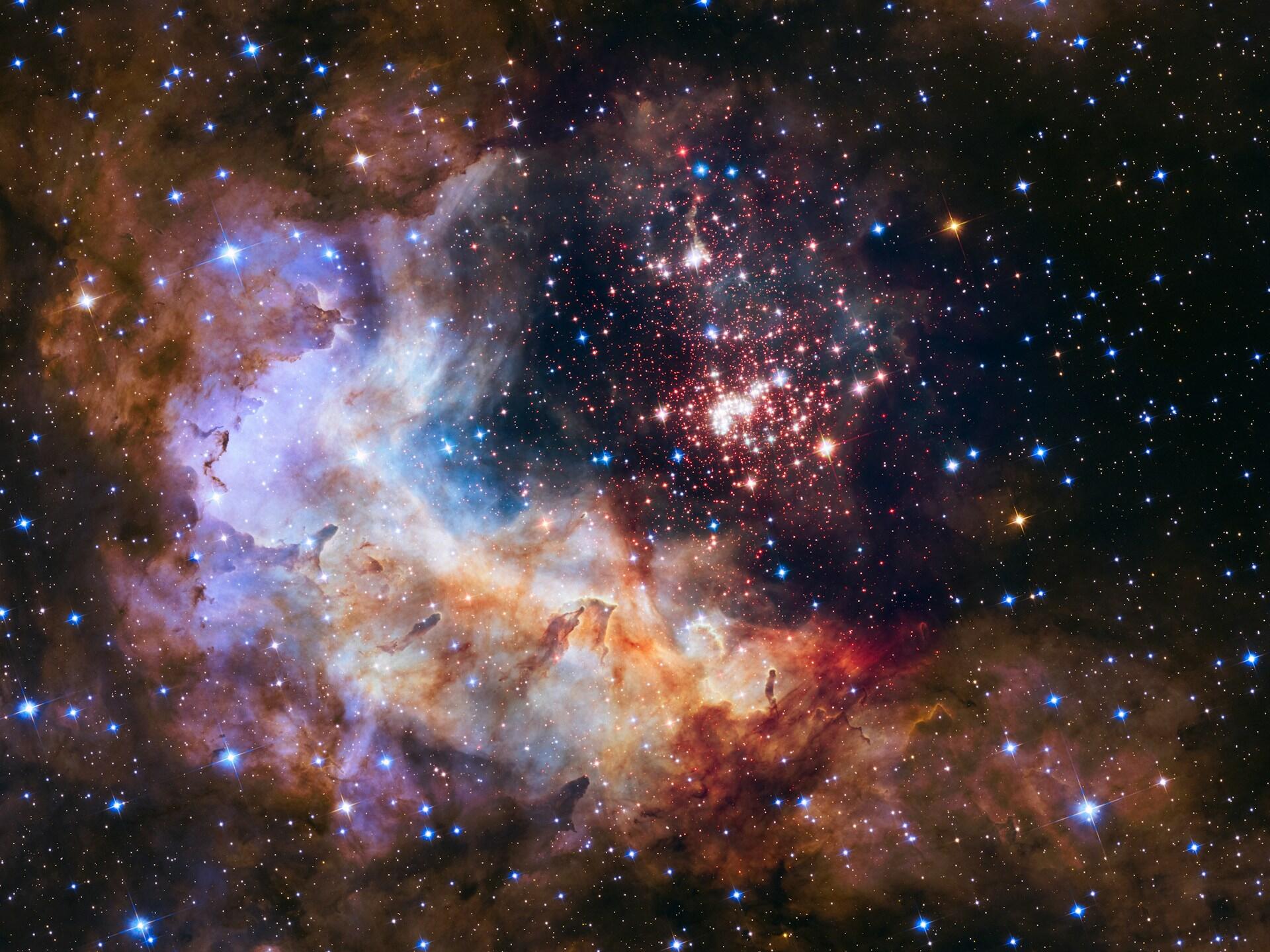
At the same time, we feel that we have seen quite a lot of our galaxy through various telescopes, probes, and other research equipment. But, in the grand scheme of things, we haven’t seen very much at all. According to researcher Sarafina El-Badry Nance, only about 5% of the entire universe is made up of the things we can see (like asteroids, stars, planets including everything on Earth, etc.). The rest is dark matter and dark energy, which we don’t yet know how to comprehend.
Of that 5%, we have only ever seen a tiny, tiny fraction of it, called the “observable universe,” which is the area in a sphere around Earth that our instruments can detect. And of that fraction, we have only examined a very small portion.
With that in mind, it becomes clearer why we have yet to find life on other planets.
Everything we know — everything we see — is just 5% of everything in the Universe.
"STARSTRUCK: A Memoir of Astrophysics and Finding Light in the Dark" by Sarafina El-Badry Nance
Proposed Solutions and Hypotheses
Beyond the purely mathematical fact that we know very little about the universe around us, there are a few theories about why we haven’t discovered alien life yet.
The Great Filter Idea
The idea proposes that there are many steps to the creation of lifeforms capable of exploring space. These steps include the habitability of a planet, to the first single-celled organisms, to complex creatures that can use tools, to advanced lifeforms and civilisations with the technology and means to embark on space exploration (with many other steps in between).
Since the only example we have of the “last” step is ourselves, we can conclude one of two things:
- Either one, some, or all of the previous steps are extremely difficult, causing life to not form at all or die out before reaching the stage of space exploration.
- Or, there’s another stage coming after our current stage that tends to wipe out civilisations (or at least their ability to traverse space).
If the filter is behind where we are now, then Earth may be a rare occurrence. If it’s ahead, it suggests advanced civilisations destroy themselves before spreading through space, and we may be headed for the same fate.
The Zoo Hypothesis
This hypothesis posits that advanced alien civilisations do exist and know about Earth, and choose not to contact us. They might be observing from a distance, like how humans observe animals in the wild. Whether the reason is that these other lifeforms want to avoid interfering in our sociocultural development and evolution, to prevent cross-contamination, or a desire to remain unknown, we can’t be sure.
The hypothesis also suggests that perhaps alien civilisations are waiting for Earth to pass a certain threshold of technological or intelligence advancement before making contact.
Other Hypotheses
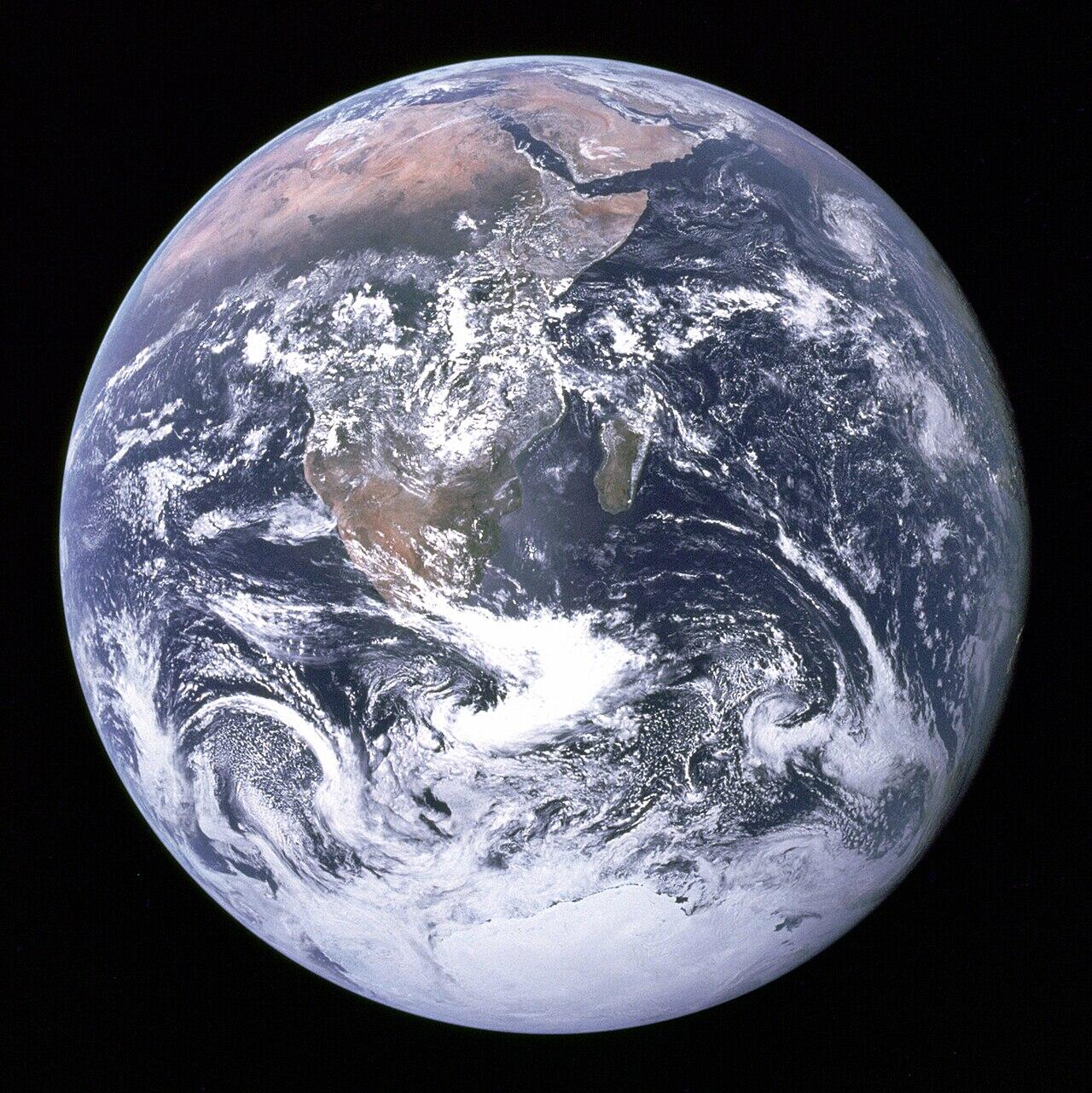
There could be any number of reasons why we feel alone in space so far. Perhaps we live in an area of the universe without much life, while other areas are teeming with it. Maybe intelligent life is extremely rare, and we really are the only ones who have advanced to this level.
Maybe civilisations don’t last long enough on different planets to overlap with one another. Perhaps our communication methods are incompatible, so neither civilisation can perceive the messages from one another, or transmissions get lost in the cosmos.
Or, maybe we have found life, but it looks so different from our own experience that we don’t recognise it as life.
None of these ideas is easy to test. Mathematical, physics, and biological theories are the best tools scientists have at their disposal when trying to answer these questions so far.
So, is there life on other planets?
The answer is: we don’t know.
At present, there is no evidence to suggest there is. But, there also isn't evidence proving life cannot exist.
We have no definitive evidence either way. Scientists will need to keep searching, developing new ways to observe, survey, and analyse the things we find in space.
Find out more with an online Physics course on Superprof!
👽 Do you think extraterrestrial life exists?
Summarise with AI:
Did you like this article? Leave a rating!

 Loading...