
For most of human history, sewing was a vital life skill. Pelts didn't fashion themselves into anything wearable. They had to be measured, cut and somehow held together. Only in the last 120 years or so have people been able to buy ready-made clothing but even then, it was a privilege to do so.
Around 1980, people in the developed world went all-in on clothes shopping; producing one's wardrobe - or the odd eclectic piece became a niche pursuit. Affordable fast fashion made the hours and expense of creating one's own clothes unnecessary.
But today, we see a reversion to needlecraft of all types. Dire financial straits mandate a 'repair and re-wear' mentality. Dire environmental conditions demand that we stop discarding entire closets full of clothes every season. Once again, crafty people are dragging out their sewing machines to give last season's clothes a new look.
But learning how to sew can take some time and mastering the French seam can take some practice. But once you have these skills, you can revamp your entire wardrobe. Whether crafting a bag, customising your jeans, decorating a tote bag, or using a serger, you have many different ways to learn how to sew.
Just like cross-stitch, crochet, knitting, embroidery, and patchwork, needlework requires passion and dexterity. All that folding, tracing, cutting and stitching will exercise your fingers in ways you might not ever have.
So get a few free patterns, some fabric offcuts, needles and thread. In fact, it's not a bad idea to build an entire sewing kit. If you're new to the craft, you'll also need a few guides. Whether you’re starting a blog, setting up a haberdashery, or just for yourself, here's your need-to-know about the French seam.


What Is a French Seam?
When you start a new hobby, it can be difficult to understand all the different terms you come across in sewing lessons. Unlike other hobbies such as cycling, swimming and writing, this craft has a vocabulary all its own. Without a teacher to help clear things up, you might get frustrated at not knowing what all these words mean.
A bike rider doesn't need to know how their bike's bearings function to ride well. A writer doesn't need to master spelling and punctuation to put a story together. Especially not these days, when word processors point out or auto-correct every error. But a needlework hobbyist must know how to measure, cut, stitch and create with different types of fabrics.
New hobbyists often try to go it on their own and gain skills as they practise. At times, they may pick up tips for better performance from more experienced practitioners of their craft. But, overall, they are quite satisfied digging into the meat of things without any education on how to make the most of it. As this clip explains, taking this route is not a shortcut to great needle skills.
As Ms Wood makes clear, sewing is one hobby that you need a bit of training to practise. To spare you any brushes with discouragement, you can gain knowledge from someone in your family who is experienced in the needle arts. Mastering the basics, such as hemming your new trousers or repairing a split seam is fairly straightforward. Conversely, creating your own designs requires a bit more knowledge and skill.
You need to know how different fabrics act. Jerseys tend to roll and silks require finer stitches, for example. You also need to know the different types of stitches that make your creations both beautiful and functional. For instance, a running stitch won't hold as seam as securely as a backstitch, and basting is no substitute for running.
Discover sewing classes Melbourne here on Superprof.
What Are French Seams?
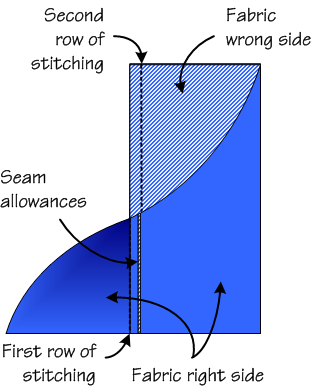
As this diagram shows, a French seam is “a seam with the raw edges enclosed.” You’ll not be able to see the edges of the fabric.
French seams are sometimes called “invisible" seams because you can't see any hint of one. Do not let that name fool you, though. There is a world of difference between a French seam and a blind stitch which, if properly executed, also results in invisible unions. You can find examples of blind stitches in the hem of your trousers, skirts or dresses.
Sewing masters and designers like the French seam because it gives garments a lovely finish. The clothes appear more sophisticated and more carefully crafted because there's no visible needlework that holds the pieces together. Furthermore, it makes for a much stronger seam because it is folded over on itself and doubled.
It is also a seam that is comfortable to wear. Remember that the French seam cannot fray and leaves no stray threads. So it won't irritate as it rubs against your skin, nor will any threads tickle. French seams make garments look professional.
Anyone can sew a French seam. It requires more patience and skill than your typical seam. In fact, a French seam needs to be worked twice: once with the wrong sides of the fabric together. And once again after the first seam is complete, folded, and ironed.
The technique isn’t complicated but it can be time-consuming. Once you’ve mastered it, you’ll be able to sew French seams as a matter of course.
Historical footnote: the French seam was a sewing revolution. Originally, this seam only served to hold undergarments together to prevent the chafing and itching mentioned above. That's because French seams are inaccessible, making alterations impossible. It was only in the era of haute couture that French seams came into vogue.
Why Use a French Seam?
Today's slimmer silhouettes and close fits demand discreet seams. Fine fabrics make the need for strong seams necessary, too. French seams permit today's fashion trends to go where ordinary 'bumpy' seams can't. But what else is a French seam good for?
Besides the ones just mentioned, using a French seam presents several advantages. It can make the edges of your garments seem more elegant and the fabric is less likely to fray, especially if you wear that garment often. Perhaps the top reason to incorporate French seams into your craft repertoire is that no one will see any defects in your needlework or in the finished garment, no matter how critical and keen their eye is.
We're not saying that you're bound to make mistakes while sewing; only that such mistakes are common. So rather than make frequent use of your seam ripper and start again, why not make the French seam a standard practice? That should save you the risk of damaging your fabric.
Why choose this type of seam over any other? This skill is useful for producing clothes for people with sensitive skin. Over the past 20-odd years, there's been a push to do away with labels that might poke or irritate. Even serged seams are under fire from those demanding more comfortable clothing.
If you or anyone you know has such a sensitivity, you might make them a few shirts or dresses with French seams so their clothes won’t irritate their skin. After all, that was the fundamental reason sewing courses from then to now adopted the French seam.

Designers like incorporating the French seam in designs of clothing that doesn’t have a lining. The folds can be used to hide the seams in the same way that a second layer of cloth (a lining) would. As you might have intuited, today's fashions do not always permit a lining, so a French seam is the next best step to hiding seam flaws.
French seams are far more elegant than serged seams. Besides lending garments an obvious distinction, the French seam is useful for thin, light, or even transparent materials. You may find it adds an extra layer of strength to your silk, polyester or nylon creations. In fact, most experienced seamstresses advocate for the French seam if you are working with silk.
Note that a serger has nearly the same effect as a French seam. The edges won't come unraveled and the seams can be ironed flat. But serged seams don't have the elegance, style and comfort that a French seam offers. Besides, not everyone has a serger or access to one.
If you don’t have a serger, you may consider the French seam as a good alternative to producing resilient seams. As the French seam makes for very smooth edges, once you get used to executing them, you'll find you may not need a serger at all.
Even if you’re new to the needle arts, the skill involved in creating French seams is minimal. You can master French seams before trying your hand at producing lined clothes. Lining a jacket or trousers is an ambitious goal because you'll deal with two different fabrics and leave no visible seams.
Rather than trying to marry two disparate fabrics together, say a cotton dress with a nylon lining, why not leave off the lining altogether and opt instead for the French seam? You can always study how to add a lining later, once you feel more confident with your craft. Thus the French seam offers yet another benefit.
Learn more about sewing with sewing classes Sydney.

When You Shouldn't Use a French Seam
There are so many online needlework tutorials you could pick up the skill of executing French seams from. Naturally, we'll feature the best of them a bit later in this article but now, we need to talk about when French seams are not suitable. For instance, if your project calls for a heavy fabric like denim, it's better to give French seams a pass. Likewise with jerseys; they tend to roll and are mildly uncooperative so it's easier to serge them.
Keep in mind that you can only use a French seam on straight edges like the shoulder or side seams. It’s almost impossible to use this method on round seams like an armhole or collar.
Do not forget to be patient! It takes a few minutes more to execute properly than an ordinary seam does. You'll have to sew, fold, iron, cut and resew - far more steps than regular seams. Now, on with the lesson.
French seam trivia: in French, ateliers refer to this seam as “couture anglaise”, which means “English seam”. Also, did you think that needle arts were just for women? The next vid proves it's not. You can share your thoughts on the subject in the comments section below.
How to Make a French Seam
It’s much easier to understand a French seam once you’ve tried it at least once. This should give you a better idea of each step you have to do and exactly how you perform each one. So here are a few ways to make your first invisible seams.
French Seams and the Seam Allowance
A French seam can take around twice as long to execute as a regular seam because you have to sew two seams. Besides requiring additional minutes, it also requires more fabric. You must make sure to change the seam allowance on your patterns to reflect this.
The seam allowance (also known as inlays) is the extra margin of fabric you must factor in for seams. They are usually around 1cm. It’s the space between the stitch line and the edge of the fabric. A French seam usually requires a seam allowance of 1.5cm: 5mm for the first line and 1cm for the second.
Sew the First Part of Your French Seam
The French seam consists of two passes along the same seam. Before you make your first pass, you should iron the fabric panels you’re about to sew. This helps line up your edges and corners.
Once your panels are pressed, position them with their wrong sides together and pin them in position. Start 5mm from the edge of the fabric. This should leave you with another centimetre to sew the second part. You should use your machine's guide engraved on its needle plate.
Once your first seam is finished, turn over the fabric so it's right-side up. Iron your seam so it lays flat to one side. This gives you the chance to inspect your handiwork.
Sew the Second Part of Your French Seam
Now that you're sure your needlework is fine and your fabric is nicely ironed, fold your project so that the right sides are exposed. Then, use your straightedge and chalk to mark where you'll sew your next seam.
You now just have to sew one centimetre from the edge of the fabric to finish off your French seam. You should finish off by ironing it one last time to make sure that the fabric is sitting correctly
Your French seam is done! There’s nothing too difficult about it, is there? Give it a go and set aside a few hours to practice and get it right. Such a great skill to add to your crafts basket!
The Equipment You Need for a French Seam
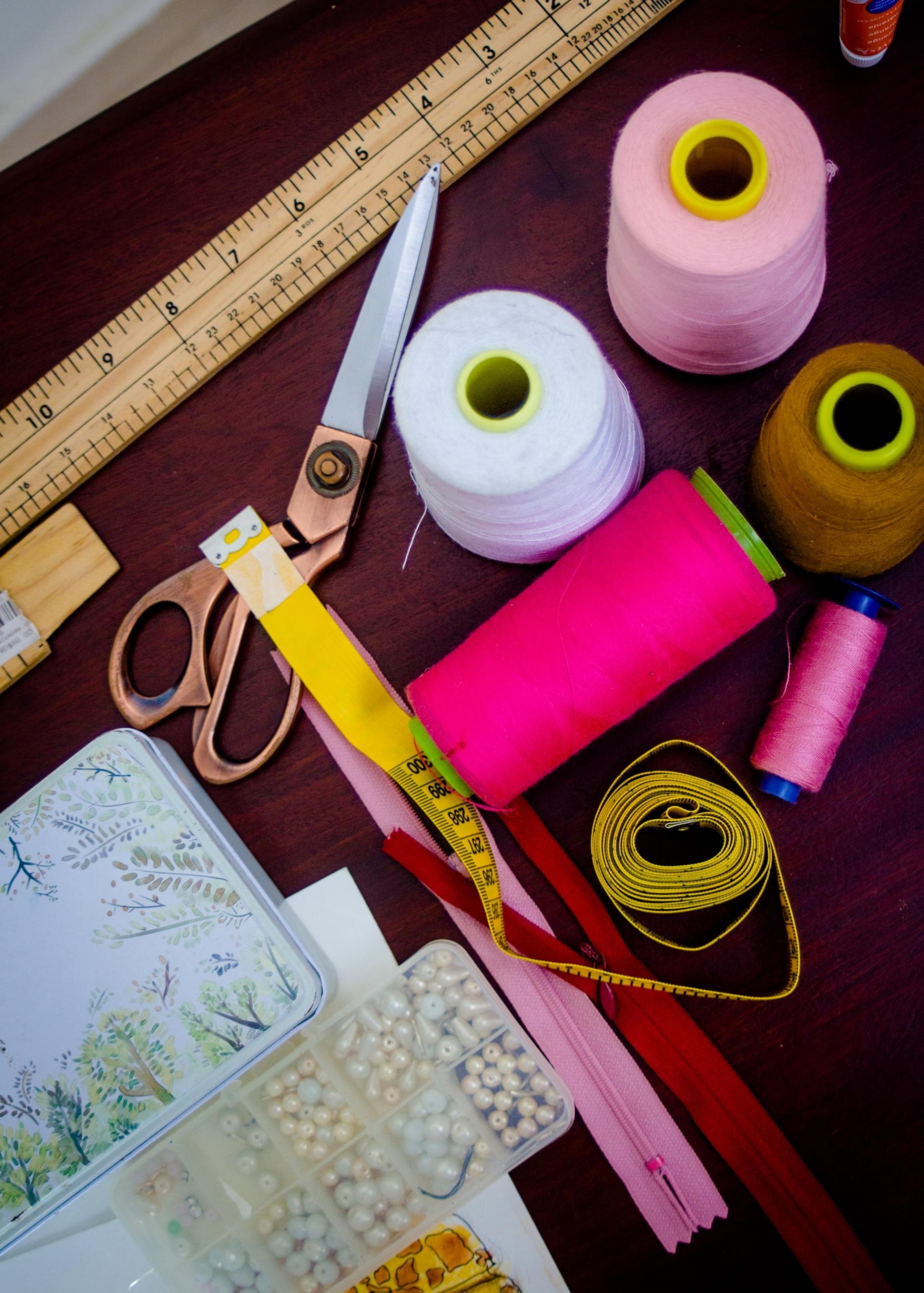
You may wonder whether you need any special equipment to make a French seam. At the most fundamental level, you only need two things: know-how and supplies. You can even execute this seam with nothing more than a basic sewing kit but we confess it is much easier to do mechaically.
But if you lack a Pfaff or Singer, no worries; it's not absolutely necessary. Likewise, an iron is useful but not essential - unless you want to use fusible interlining.
Beginners often ask about the type of needlework which should be hand-sewn and which require using an appliance. The favoured methods are the ones that you feel most comfortable with. You won’t go faster or sew better with a sewing device if you do not know how to use it.
The needles, thread and other tools you’ll need for a French seam will also be useful when doing other types of hem. You'll find this equipment is inexpensive; you can master how to sew without bankrupting yourself.
You need to carefully choose where you’re going to sew as well. Choose somewhere where you have a good amount of space and lots of light. You should feel comfortable in your area, not wedged between your crafts table and appliance.
A word about stitching by hand: Did you know that it helps you improve your focus and builds patience? When your hand does finely detailed work, your brain engages differently. You forge new neural pathways that help stimulate various areas of your brain. That's a good reason to sew by hand!
French Seam Sewing and Other Tips Online
Some of us know firsthand the frantic feeling you get when searching the Internet for just the nugget of information needed. It's maddening to seek guidance when you have to wade through pages of search results that have little to do with the topic at hand. Have you ever experienced that brand of frustration?
If not, you could try looking up the history of the French seam; when it first came into vogue and who capitalised on that new look. But you're surely more interested in executing a French seam than reading about who dreamed it up. So we withdraw our challenge and present you with some of the top places you can get online instruction for French seams and any other needlework questions you may have.
French Seams on YouTube
Often, it helps to have a visual guide to what you're trying to accomplish; in this respect, YouTube is unparalleled. You may have noted that the videos throughout this article all feature a different presenter. We chose to present information from different channels to hint at the selection of learning materials you can find on this platform.
There are indeed plenty of YouTube needle art channels; some of them demonstrating advanced skills. Many of them present a hodge-podge of the art; there seems to be no clear progression between threading a needle and finishing a garment. You would most likely end up going from one channel to another, wondering why it is so difficult to find easy-to-follow sewing lessons.
But these bitesize lessons are great for answering a specific question or learning a particular skill. These needle arts specialists are generous with their information and most of the channels have a full library of clips for you to learn from. Some presenters livestream their broadcasts so viewers can pose their questions directly.
One more reason why YouTube should be a go-to source for sewing information: you can search for information you need. Type your question in the search bar and comb through the results for the clip that comes closest to addressing your question.
But this platform isn't the only place to find the instruction you need. There are other online instructions available to get you started with your needlework projects. Much to our good fortune, several experienced seamstresses have put together compilations of the best online sewing hacks, conveniently located on a single web page:
- Sew Some Stuff has put together 12 of the top guides on the 'net in an easy-to-follow format.
- Not be be outdone, Seams and Scissors has compiled 10 videos of basic needle skills, from replacing buttons to using bias tape
- Seasoned Homemaker Leslie has foraged around as well; her site also boasts a list of instructional sewing videos!
French Seams at Sewing.Com
From their clever logo (the I is a needle and the O is a button!) to their informative, easy-to-digest articles, this site is a delight for anyone interested in plying a needle. Those new to the art and seasoned veterans with craft rooms find valuable titbits on their pages.
As you rummage around this site, you'll find a complete guide to needleworking, from the basics to the more difficult-to-execute pick stitch used for hemming quality garments. You'll find a page of vintage patterns, some you can download for free and others that charge a small fee. Another page has helpful information regarding how to organise your crafts room, how to alter clothing and sew your home decor.
We found the information on their needle skills page most helpful. Under that tab, you'll find a list of needlework hacks to make every project easy to realise. Do you have trouble replacing zippers? Do your buttons always fall off? Are you perpetually frustrated when working with elastics and gathering fabric?
Sewing.Com has all of these answers and more. However, if you are a beginner at the craft, you would most likely be more interested in their Sewing for Beginners visual guides. They cover everything from how to make a scented sachet to creating a lace skirt.
The National Sewing Circle Presents the French Seam
Four American seamstresses have built a database of instructional videos; some you can watch for free and others for a small fee. You can access it from their webpage, along with their 'Core Skills' section. This area includes videos on topics that range from the technical - how to adjust the bobbin on your machine, to the practical: how to sew invisible zippers.
As your skills progress, you may appreciate their Finishing Touches section or browse through their Design Workshop. Of course, you may refer to their Tips and Techniques collection at any time during your needleworking experience.
Professor Pincushion and the French Seam

Professor Pincushion may just be the perfect site for online sewing tutorials! Sponsored by Spiegel, the online clothing retailer, Professor Pincushion has over 350 free instructive clips covering a wide variety of subjects. But their Sewing Class page wipes out the competition.
Organised by topic - Thread 101 to What is a Tracing Wheel, each clip lasts around five minutes. Together, they describe anything you want to know about any needlework implement or skill. You'll even find one on how to sew a French seam and a mock French seam.
One word of caution, though: the videos are in American English. You could encounter some words you're not familiar with and the accent might make these videos a bit hard to understand.
All over the Internet you can find sewing hacks but for quality learning, the easiest solution is always to study with a teacher. Getting together with others who are passionate about needle arts is a step in the right direction too. You may find a group you click with and, perhaps, even a mentor for guidance.
Discover the perfect tutor to take a sewing course here on Superprof!
Are you Ready to Try the French Seam?
If you’re worried about trying your first French seam or you’d prefer to get to grips with the basics before you start, you can always get someone to help you. Have a look around for workshops or classes for beginners. Your teacher doesn't have to be any of the greats of the fashion world; just someone who sews like they should be such a one.
Don’t forget to check out sites like Etsy and Pinterest for inspiration. A lot of needle art groups offer lessons around certain themes. Those might include making clothes for children, overcasting, zippers, customising, replacing a button, hems, choosing the right needles and so on.
You can find workshops that last just a day to find out how to do a French seam. They rarely last any longer than a few hours but they are lively events. You may find a day class on how to follow patterns and the different steps involved in making clothes.
You could also choose a private tutor. You can master how to do a French seam as well as other needle skills in your own home with such a mentor. Whether you’re a beginner, intermediate, or expert, private tutors can work around your schedule.
Your local haberdashery may also offer needlework tutorials and how-to articles for specific techniques. You should check out all of these options and choose the ones that suit you the best.
Don’t forget that the French seam technique is used in haute couture and at respectable fashion houses. So as you map out your journey to sewing mastery, make sure that learning this skill features in your curriculum.
Summarise with AI:
Did you like this article? Leave a rating!


 Loading...