
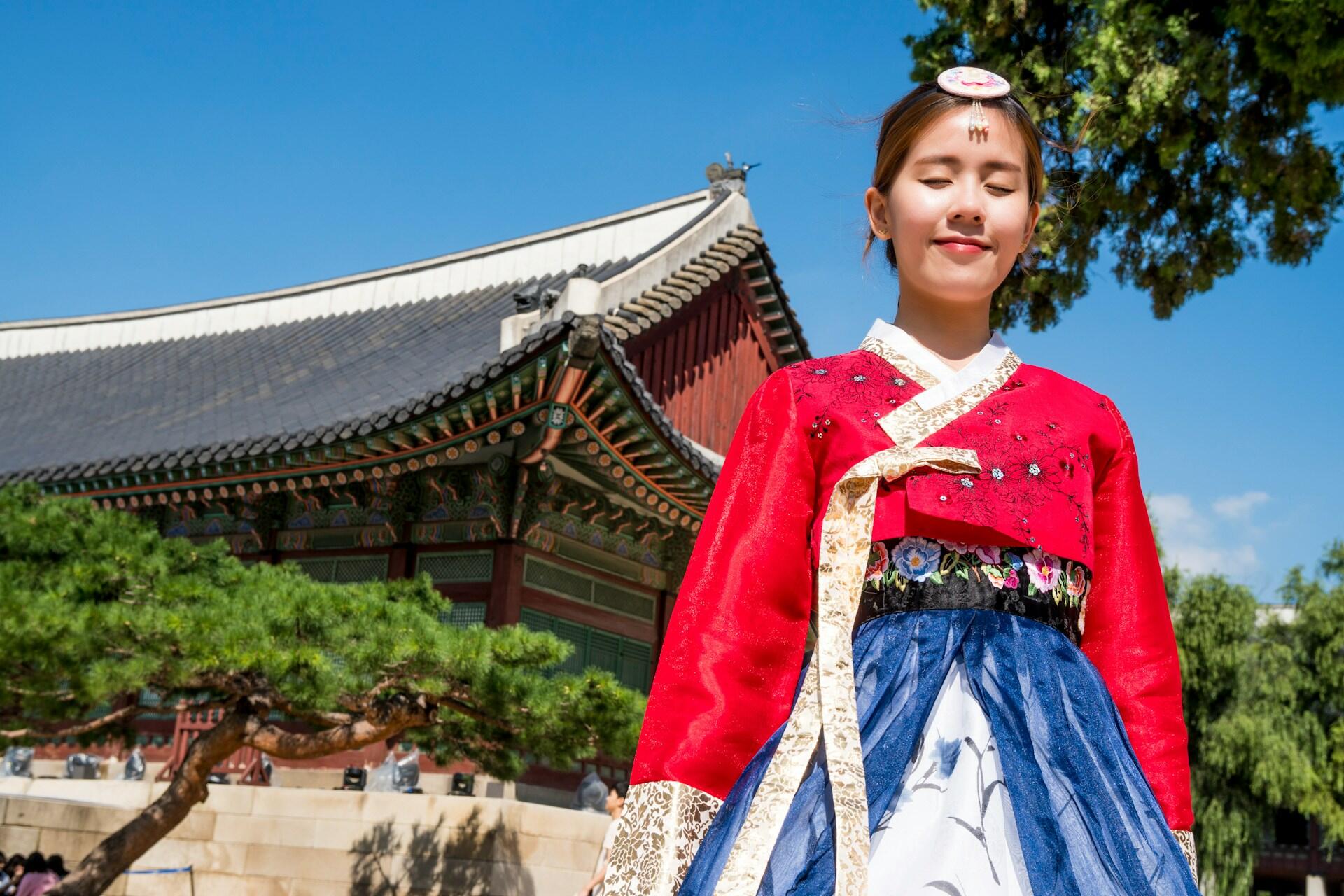

For those who appreciate the style and even many who don't, the Korean hanbok is a graceful, flowing garment, even those worn by men. However, this practical attire has secrets to divulge. Not just in the different styles of hanbok, but in their decorations, embroidery, and even their colours. Hanbok colours have distinct meanings, from what those colours represent to who traditionally wore them.
| 🟥 Colour | 📖 What it means | 👫 Who typically wears it |
|---|---|---|
| White | purity modesty | commoners |
| Red | passion good fortune protection against evil | brides and mothers of brides |
| Blue | vitality growth harmony | mothers of grooms |
| Yellow | royalty the Earth the centre of the universe | unmarried women royal descendants (traditionally, royalty) |
| Black | wisdom depth eternity | K-pop idols politicians (traditionally, government officials) |
| Pink | innocence femininity | young women |
| Green | youth | married women |
| Purple | wealth | aristocratic men |
| Gold | prestige | well-to-do men and women |


The Importance of Hanbok Colours
Most people in Western cultures wear colours that suit our complexion, match our shoes and bag, or represent a certain aesthetic. Fashionistas distinguish between spring and fall colours, for instance. By contrast, a Korean person chooses their hanbok's colours with care, knowing what each one represents.
Oh, I must buy a new hanbok!
From the television series, What's With This Family?
In that excellent series, the occasion for the new hanbok is a wedding, the first in that branch of the family. The family's auntie delivered the line, and one gets the impression she has a closet full of hanbok. Still, she needed a new one because the colours of the ones she already had likely didn't convey the proper message.
The hanbok wearer will choose their garment's colour depending on the occasion, their social station/position at the time of the occasion, and other factors.
That way, they will send the proper social signals.
For instance, had she greeted wedding guests wearing a light blue hanbok, they would have thought she was on the groom's side of the family (she represented the bride's clan). Conversely, had she worn her red hanbok, seen in an earlier episode, she would have signalled she was the mother of the bride instead of her aunt.
She settled on a lovely pale pink: on the red end of the colour scale to say 'bride's family', yet pale enough to signal 'I'm not mum'. Already, Korea's traditional clothing has told us so much!
Understanding Obangsaek
Western cultures teach their children the primary colours, cardinal points, and elements such as earth, air, fire, and water. Korean children learn them as a single concept called obangsaek (오방색).
'Obangsaek'(오방색) literally means 'five direction colours'. The concept has its roots in the ancient Chinese Wu Xing (five elements) tradition and Korea's philosophy of yin-yang. It posits that each colour 'belongs' to a direction and corresponds to a specific element.
Furthermore, each colour represents a specific quality, such as innocence, humility, power, strength, and social status. Obangsaek brings all these aspects together to define an entire cultural norm1.
| 🟥 Colour | ↕ Direction | 💦 Element | 📖 Meaning |
|---|---|---|---|
| Red | south | fire | passion propriety protection from evil |
| Yellow | centre | earth | authority trust sovereign power |
| Blue | east | wood | life creation benevolence |
| Black | north | water | depth wisdom formality |
| White | west | metal | purity innocence righteousness |
It's pretty easy to understand how a colour could have special significance. But it's rather a challenge to imagine what elements could have to do with social status and clothing choices. This brief explanation shows us their importance.
The generating cycle of creation
- Wood feeds fire.
- Fire creates earth.
- Earth produces metal.
- Metal condenses water.
- Water nourishes wood.
The controlling cycle of creation
- Wood parts earth.
- Earth dams water.
- Water extinguishes fire.
- Fire melts metal.
- Metal cuts wood.
These elements have further associations with other life aspects, such as emotions, points in the body, and seasons. But for obangsaek, we don't need to explore those connections. Knowing the power each element wields explains its influence on colours and direction.
Choosing the wrong colour/element may impact the hanbok wearer's energy as well as the event's atmosphere. One risks disrupting the natural cycles, bringing disharmony.
The Five Korean Traditional Colours
In many Western cultures, red traditionally represents power, purple stands for royalty, and yellow is all about sunshine and happiness. But unless you know a bit about traditional Korean culture, it will escape you why red means protection for Koreans, yellow means royalty, and blue is all about life.
We'll start with red because it's the most fun story to tell. Putting it simply, evil spirits and mischief doers are afraid of red. Brides wear red hanbok, literally wrapping themselves in protection so sprites and monsters won't even get near them.
Few people today put stock in those beliefs of old, but they're ingrained in the culture. Modern brides wearing red is usually more of a nod to traditional Korean culture than an actual belief.
A yellow hanbok implies veneration and authority. If you're an avid K-Drama fan, you may have seen a family's patriarch decked out in a regal-looking yellow or gold hanbok for a holiday celebration. As nice as he looks, he's communicating that he's the family's ultimate authority.
Earlier, you read that mothers of grooms wear blue hanbok. Blue is the colour of life and creation, as well as kindness and generosity. Those mothers are signalling their station as a life-giver, and also that they will treat their new daughters with benevolence.
Queen Victoria settled on a white wedding dress to save the expense of dyeing yards of fabric.
Her white dress also communicated wealth, as white clothes were more expensive to keep clean.
England's Queen Victoria popularised the white wedding dress tradition2 that even Korean brides now embrace. But for the hanbok wearers of Victorian times, white garments were a testament to their poverty and low social class.
For us, black is equally confounding. In our culture, it's mournful and sad, suitable for only the most solemn of occasions. In Korea, thanks to its association with winter and water, it takes a deep, serene meaning. Add its cardinal direction, North, and we see that black is the colour to guide us, as the North Star has guided sailors for centuries.
None of these associations is a set-in-stone rule.
They come from millennia of culture-building, social organisation, structure, and restructuring.
Today's hanbok wearers mostly choose their garments based on personal preference. They may honour hanbok traditional style and colour meanings for special occasions, such as weddings, New Year celebrations (Seollal), and Harvest Festival (Chuseok). But today's hanbok come in many styles and colours, inspiring some of today's hottest fashions.
Patterns, Embroidery, and Other Symbols on Hanbok
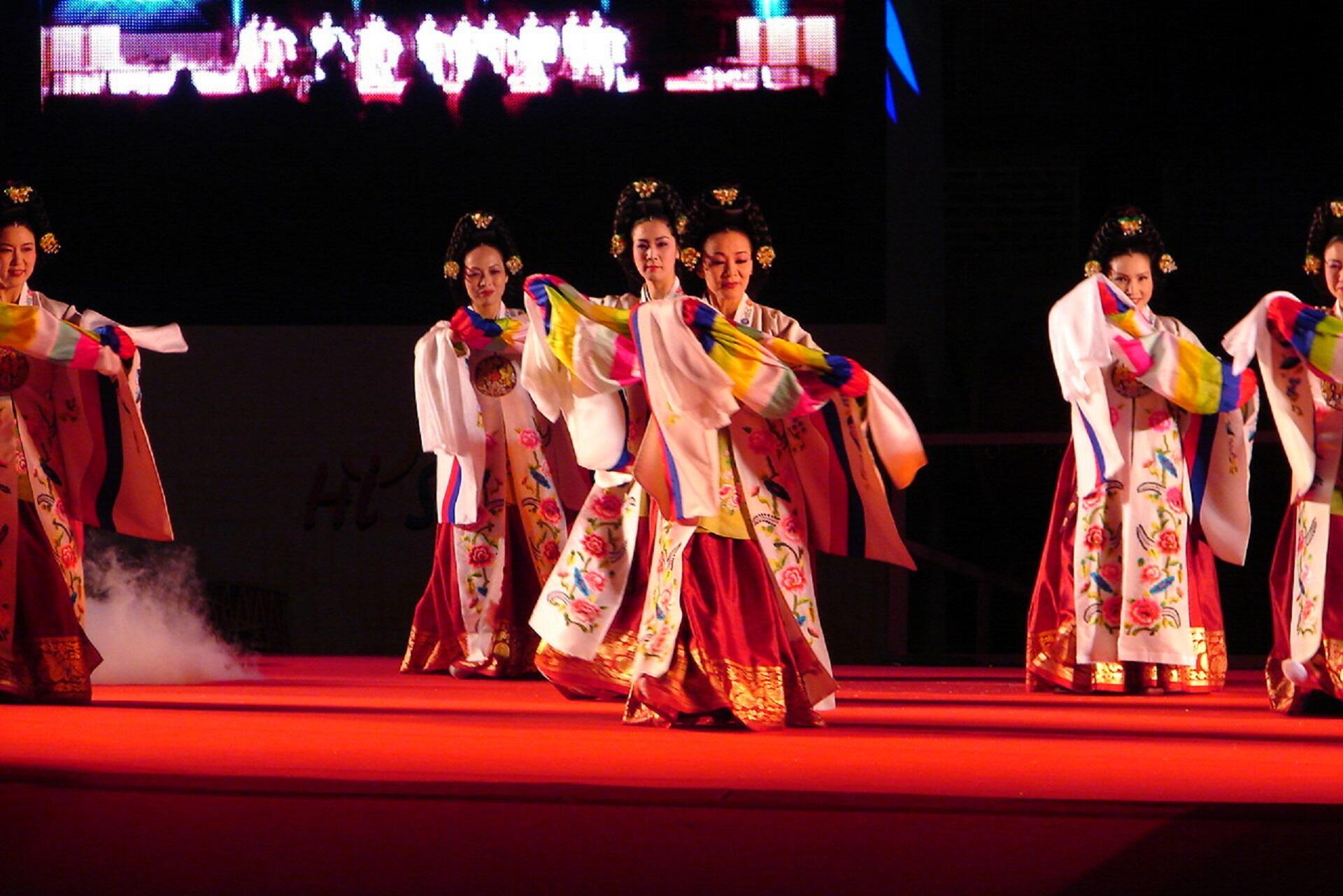
On their own, hanbok are graceful, flowing garments. Their colour sends signals to cultural insiders, but their decorations have yet more to tell us.
Besides these, one may wear a hanbok adorned with other symbols of longevity. Traditional Korean culture lists 10 such symbols: mountains, stone, water, clouds, the sun, specific herbs, pine, turtles, deer, and the above-mentioned crane.
Hanbok wearers aren't limited to just one symbol. Richly embroidered hanbok may invoke power, status, long life, and purity all on the same garment. Often, couples' hanbok will reflect complementary symbols: he with a dragon and she with a phoenix, for example.
Pins and Amulets
Besides embroidery, it's common for hanbok wearers to enhance their outfit with gold chains and pins, especially those styled as powerful mythical creatures. Imagine a phoenix pin with rubies for eyes, or a delicately carved lily as a brooch! In fact, any of the 10 luck signals may further bless and protect the hanbok wearer as an amulet or pin.
Do Today's Hanbok Colours Still Have the Same Meanings?
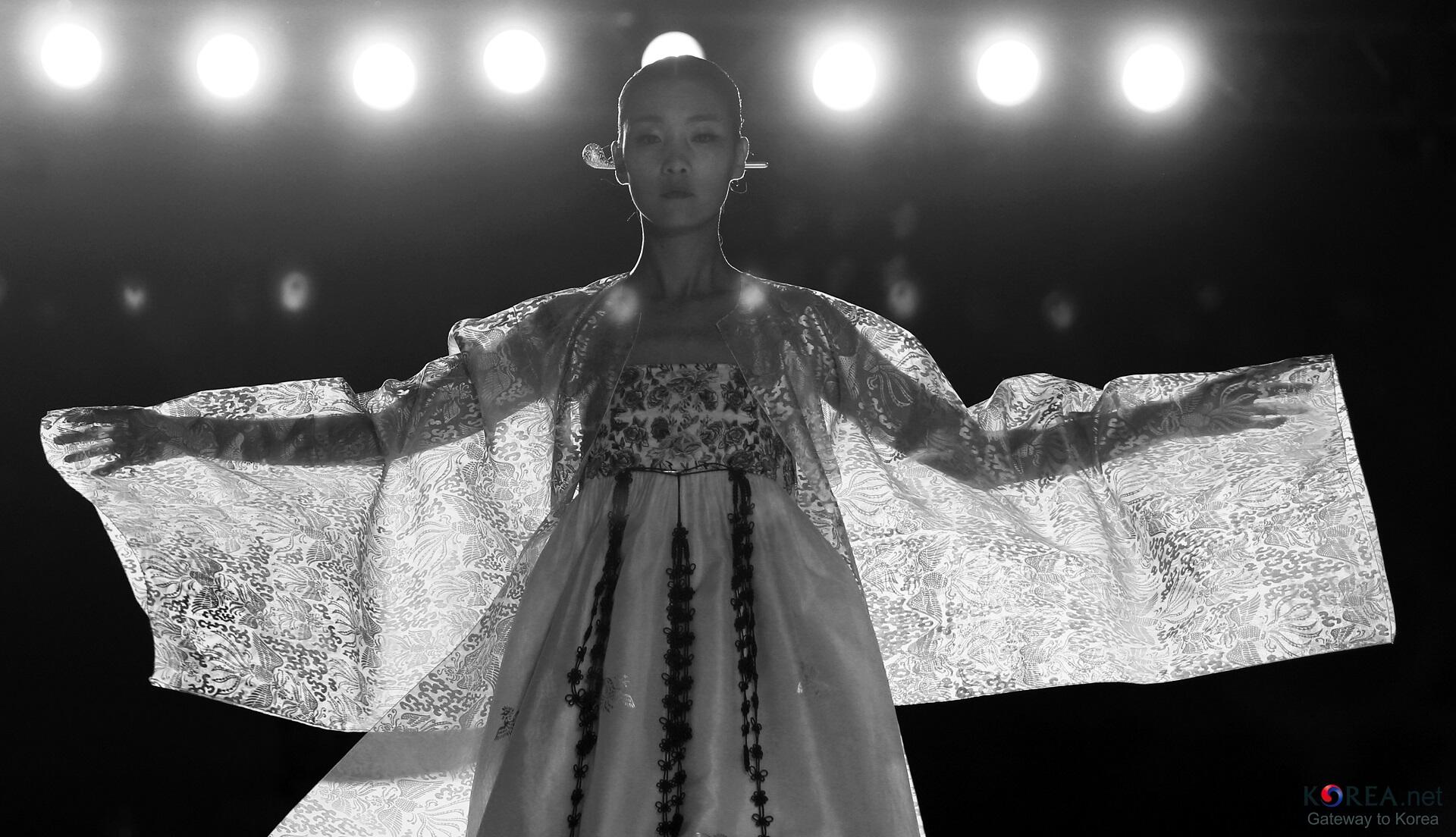
Today, hanbok come in a variety of styles and colours that don't feature in the traditional obangsaeng array. Fashion designers have created stylish garments out of the traditional hanbok lines, giving them a modern look. Still, the question of meaning has many answers.
Yes, of course!
Older generations tend to reinforce traditional culture.
Yes, but only culturally
Younger generations typically follow their seniors' advice on hanbok choices.
Hardly
Today's hanbok come in a variety of styles and colours with barely a nod to traditional symbolism.
Often, modern hanbok enthusiasts combine colours when selecting hanbok parts. At the start of this article, you saw a picture of a girl wearing a red hanbok jacket (jeogori) with a blue skirt (chima). Such mixing and matching is generally acceptable as long as the wearer does so outside of high-significance events3.
Twenty-first-century designers and the clothing industry have a greater selection of materials to make hanbok from. As for colours, modern dyeing techniques and ingredient blending turn out eye-popping hues that make hanbok fabric seem otherworldly.
The strong traditional-cultural pull often compels today's hanbok wearers to stick with original colour meanings, at least for ceremonial occasions. However, nothing says that one can't go beyond the primary hues and style when dressing for everyday life or a night out. That makes the best answer to the original question: "Yes, and then some!"
References
- TigerMagpie. “Korean Five Color Theory: Obangsaek 오방색.” Medium, 17 May 2021, https://tigermagpie.medium.com/korean-five-color-theory-obangsaek-obangsaek-오방색-e116c564ccf7. Accessed 25 Sept. 2026.
- Burack, Emily. “The Royal Reason Why Brides Wear White.” Town & Country, 18 June 2022, https://www.townandcountrymag.com/society/tradition/a40313023/queen-victoria-brides-white-gowns/. Accessed 25 Sept. 2026.
- Gi, Oh. “Obangsaek: Decoding Korea’s Cosmic Colors and Irworobongdo.” Kculture.Com, 4 Jan. 2026, https://kculture.com/obangsaek-decoding-koreas-cosmic-colors-and-irworobongdo/. Accessed 25 Sept. 2026.
Summarise with AI:
Did you like this article? Leave a rating!

 Loading...
