


A lot of students in Years 11 and 12 in Victoria, Australia, will spend two years studying for the Victoria Certificate of Education, the qualification administered by the Victorian Curriculum and Assessment Authority (VCAA).
There are over 90 subjects to choose from and the only requirement is for English, which includes three units from the "English group" with two of these units being a Unit 3 and Unit 4 sequence, which is usually done in year 12.
Other than that, students are pretty much free to choose from all the other subjects on offer, meaning that they combine subjects they enjoy or choose subjects required by universities or Technical and Further Education (TAFE) institutes.
Students will also pick subjects based on difficulty, either choosing difficult subjects to challenge themselves, impress potential employers or academic institutes, or choose easy VCE subjects to lighten their workload or attempt to secure good grades.
However, not only is difficulty relative (some students find things difficult that others don't), but the VCAA has already taken into account that it's impossible to make exams and assessments across 90 subjects equally difficult, but that students of different levels are taking different subject choices.
Some VCE subjects will certainly be challenging, but we first need to see how VCE scores work, and how scaling works.




VCE Study Scores, Assessments, and Scaling
You can't talk about which subjects are difficult or easy without understanding how students are scored in different VCE subjects.
VCE Assessments and Exams
Every VCE subject includes a mix of internal and external assessments. There's school-assessed coursework (SAC) and school-assessed tasks (SAT), which will be graded by the schools themselves.

Tasks and coursework are often pass or fail (satisfactory or non-satisfactory) or marked following assessment criteria that are provided by the VCAA.
For certain assessments or tasks, a numbered grade isn't required, but the school can choose to give students one if they wish.
The main part of a student's VCE results is down to the external examinations that they take towards the end of the program in Year 12. These exams are the ones marked by the VCAA and tend to account for a significant portion of the student's study score.
How Study Scores Are Calculated
For each VCE subject, students will be given a numerical score out of 50 based on their performance in that subject relative to their peers.
The score indirectly reflects the student's performance in the aforementioned assessments such as coursework, tasks, and exams, but the study score is really more of a rank than a score.
A study score of 30 means that the student's results were average for the group. A score of 50 indicates that they're among the very best students.
Numerical scores aren't given out equally but are instead given out according to a distribution curve. More students will receive a study score of 30 than 35, 40, 45, or 50, for example, with fewer and fewer students receiving a higher score. The same works in reverse and fewer students will be given a 20 than a 25 or 30.
A score over 38 means that the student is in the top 15% of students in terms of their performance. Only 2% of students are given a 45 or higher.
This is all well and good, but not every subject is the same and to account for this, the VCAA also scales results to ensure comparability across subjects and perceived difficulty.
How VCE Subjects Scale
As every VCE subject is different and studied by different students, there needs to be a way to compare the subjects and also make the results reflective of the student's level, especially if the competition is more fierce in certain subjects than others.
A student's "raw study score" can be shifted upwards or downwards based on several "scaling factors". Scaling at VCE basically means that the VCAA uses statistical analysis to look at the performances of all students across all subjects and adjust accordingly.
The scaling factor isn't applied equally across all study scores, either. While some students may see a 30 become a 27 in a subject that's being scaled down, students in the same subject that achieved a raw study score of 44 may only see their score scaled down by 1 or not at all.
Students shouldn't worry about scaling and they shouldn't attempt to game the system by choosing VCE subjects that they think will scale up because they're difficult because if you do really poorly on a subject that scales up, you could still end up with an unsatisfying study score.
What Is the Hardest VCE Subject?
Don't forget that difficulty is relative and that what one student finds easy, another may find extremely difficult.
For these subjects, we've chosen the subjects that tend to have a reputation as difficult and have to be clear in reminding you that your experience may differ.
Mathematical Methods
Get ready to see a few of the different maths subjects. The Maths VCE subjects are one of the few subjects that have fairly clear levels within the same subject.
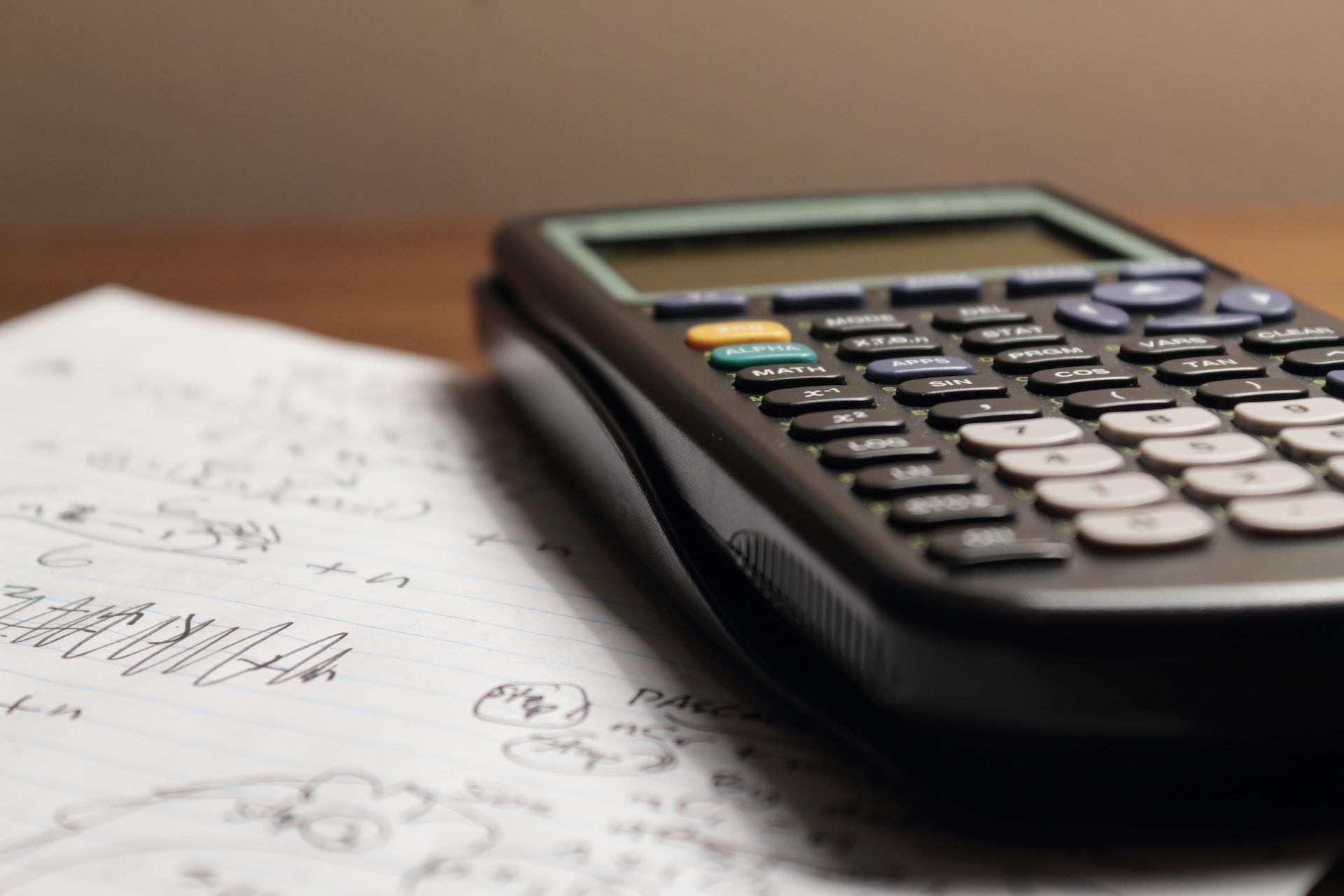
Again, as they cover different aspects of maths, some students mightn't find one more difficult than another, but this is one of the subjects where it's made clearer which are supposed to be the more difficult subjects.
For example, Foundation Mathematics is only available for Units 1 & 2 and in year 11. Foundation Maths should be simpler as it's for students who aren't likely to study any more maths after year 11. That said, you can take Foundation Mathematics and then Further Mathematics (Units 3 & 4).
Mathematical Methods is the second most popular mathematics choice for VCE students (after Further Maths) and is available in years 11 and 12 (Units 1-4) and is generally considered to be more difficult than the Foundation and Further Maths combination.
Maths Methods is also a common requirement for medicine and engineering courses at university and its reputation as a difficult subject is helped by the fact that it can scale by up to 4 or 5 points!
For example, in 2022, a raw 45 scaled to a 49 and a raw 40 scaled to a 45.
Specialist Mathematics
Specialist Mathematics is another one of the maths VCE subjects considered to be the most difficult.
Its reputation precedes it as it's also the least popular choice for VCE students when it comes to maths, but it's been known to scale upwards by between 9 and 12 points!
It's a VCE maths subject that covers both years 11 and 12 and covers functions and graphs, algebra, calculus, vectors, mechanics, probability, and statistics. You also have to study specialist maths either alongside or after maths methods.
Physics
For some, physics is an incredibly fascinating science, but for others, it's the stuff of nightmares. As physics covers pretty much the entire universe, there are some abstract concepts that students can find difficult to grasp. Physics also famously involves a lot of mathematics, which some students tend to find very challenging.
Despite having a reputation for being difficult, VCE Physics only scales up about 2 points.
Chemistry
Chemistry also features theoretical concepts that some students can find challenging plus a bunch of chemical equations and data analysis that some students don't seem to like.

Chemistry's reputation as a difficult subject isn't helped by the fact that it's the highest-scaling science subject. This is suspected to be because a lot of high-achieving students take chemistry. After all, it's often a requirement for studying medicine at university.
Chemistry scaled by up to 4 points in 2022.
Literature
We've mentioned that difficulty is relative and literature's reputation for being difficult is because many students see it as more difficult than VCE English.
However, despite the reputation for being more difficult than VCE English, VCE Literature only scaled up by 2 points. That said, VCE English did scale down by 1 or 2 points last year.
Interestingly, VCE English Language scaled very similarly to Literature.
Languages
Foreign languages or Languages Other Than English (LOTE) subjects are notorious for scaling upwards.

Last year, subjects like Latin scaled up by as much as 16 points with other languages like Hebrew, French, Chinese, and Korean all scaling up, too.
Get Help with the Hardest VCE Subjects
Even if you pick the best VCE subjects, if you find them difficult, you should consider getting help to ensure you get the best study score. Luckily for you, there are private tutors all over Victoria, Australia, and the World who can help you with each subject, study skill, or revision.
There are tutors for all levels and budgets and they'll tailor the sessions to you so you can make the most out of every minute you spend studying with them.
Many tutors offer the first hour of tutoring for free so you can try a few different ones before deciding which one is right for you and what you want to learn.
Summarise with AI:
Enjoyed this article? Leave a rating!


 Loading...
