

Students all over Australia work year after year on the VCE. The Victorian Certificate of Education (VCE) is the certificate that the majority of students in Victoria receive on satisfactory completion of their secondary education.
It is pivotal to students' futures since it provides diverse pathways to further study or training at university or TAFE and to employment.
The VCE course is made up of studies and units, some of which must be studied as a sequence.
A study is a subject, for example, English, Biology or Maths. It is made up of four units (Units,1,2,3 and 4), each of which is a semester in length.
With it being such an important moment in students' academic lives, it is no wonder that there is a big need for VCE maths tutors who can help grade 11 and grade 12 students reach their academic goals.
If you want to help students make the most out of their VCE and want to find out how you can too become a VCE tutor, keep reading to learn more.
Get ready to become a private VCE tutor with Superprof!
Want to give private lessons?
Join the Superprof community and share your knowledge with interested and motivated students.
VCE Maths Methods
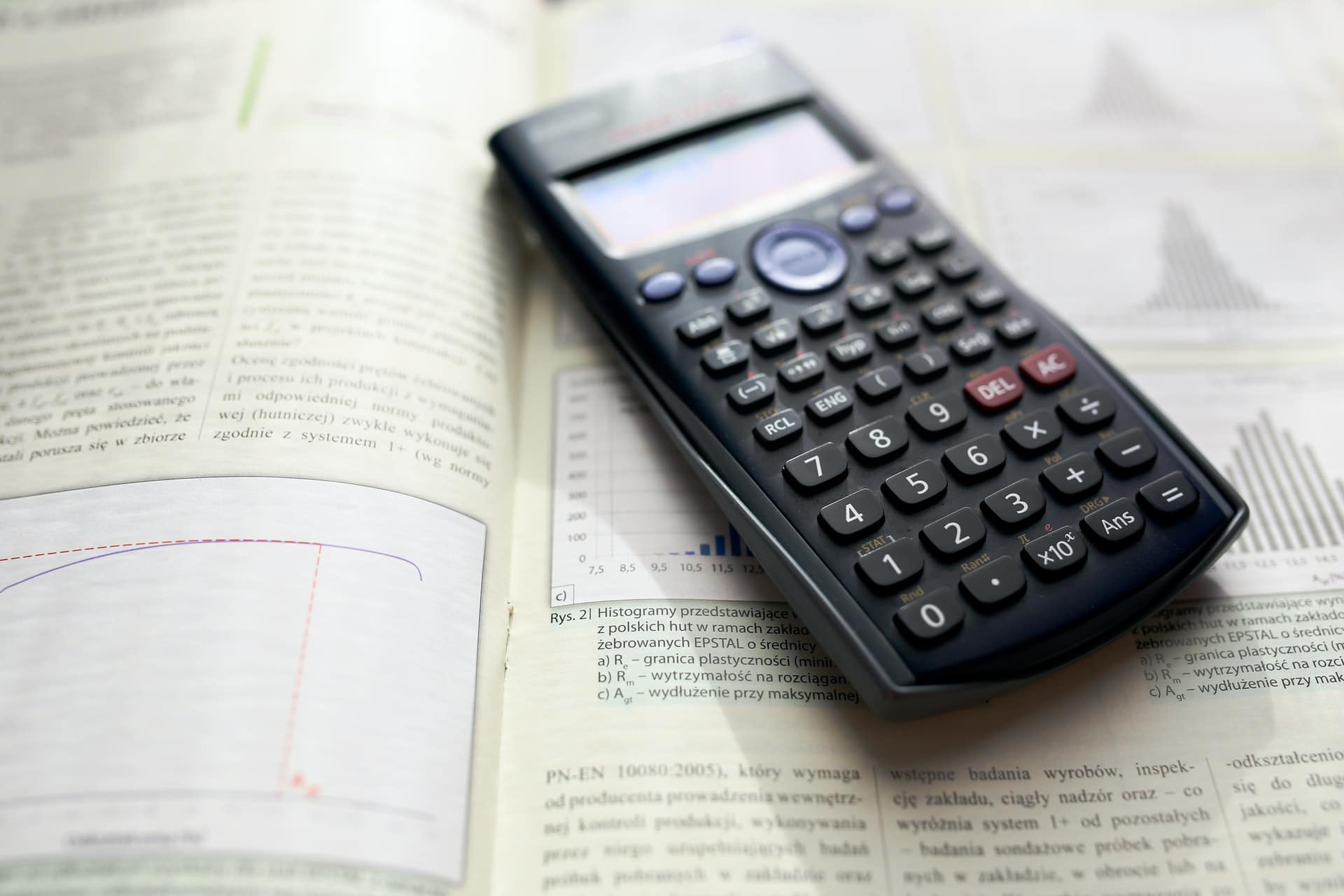
Mathematics is one of the studies included in the VCE. It's designed to provide access to worthwhile and challenging mathematical learning in a way that takes into account the interests, needs, dispositions and aspirations of a wide range of students, and introduces them to key aspects of the discipline
The mathematics content for VCE is subdivided into the following units:
- Foundation Mathematics Units 1 and 2: these are completely prescribed and provide for the continuing mathematical development of students entering VCE.
- General Mathematics Units 1 and 2: these provide for a range of courses of study involving non-calculus based
topics for a broad range of students and may be implemented in various ways to reflect student interests in, and
applications of mathematics. - Mathematical Methods Units 1 and 2: they are completely prescribed and provide an introductory study of simple elementary functions, algebra, calculus, probability and statistics and their applications in a variety of practical and theoretical contexts.
- Specialist Mathematics Units 1 and 2: they comprise a combination of prescribed and selected non-calculus based topics and provide courses of study for students interested in advanced study of mathematics, with a focus on
mathematical structure and reasoning - Further Mathematics Units 3 and 4: they provide general preparation for employment or further study, in particular where data analysis, recursion and number patterns are important.
- Mathematical Methods Units 3 and 4: they are completely prescribed and extend the study of simple elementary functions to include combinations of these functions, algebra, calculus, probability and statistics, and their applications in a variety of practical and theoretical contexts. They also provide background for further study in, for example, science, humanities, economics and medicine.
- Specialist Mathematics Units 3 and 4: they are designed to be taken in conjunction with Mathematical Methods Units 3 and 4, or following the previous completion of Mathematical Methods Units 3 and 4. The areas of study extend content from Mathematical Methods Units 3 and 4 to include rational and other quotient functions as well as other advanced mathematics topics such as complex numbers, vectors, differential equations, mechanics and statistical inference.
For many students, VCE Maths Methods presents the biggest challenge since it is the most specific of the curriculum. Those students who choose VCE Maths Methods typically are planning to go into something related to numbers at university, like a Science degree or Commerce.
It provides a background in mathematics to understand the world around you and is often a prerequisite for courses in science and technology. It provides a foundation for study in various fields, ranging from medical technology and engineering to economic predictions and statistical modelling.
Mathematical Methods (CAS) Unit 1 and 2 is for high-level maths ability students (students working above the Standard in Year 10 Victorian Curriculum)
Units 1 and 2 are divided as follows:
- Functions and Graphs
- Algebra
- Calculus
- Probability
- Statistics
Mathematical Methods (CAS) Units 3 and 4 consists of the following areas of study which must be covered in progression from Unit 3 to Unit 4:
- Functions and graphs
- Calculus
- Algebra
- Probablity and statistics
Unit 3 begins with graphs of different functions, and how to sketch them and find their equations. You will also explore how to transform the functions graphically and algebraically. Some of the different functions include polynomials (quadratics, cubics, quartics); logarithmic, exponential and trigonometric functions (sine, cos and tan). In Calculus, students look at the rates of change in these functions and use algebraic skills and graphs to analyse how rates of change affect each function.
Calculus then continues into Unit 4, where students dive into integration (how to find the area under the curve of a graphed function). The final topic is Probability and Statistics. Where students learn about the outcomes of chance, work out probabilities and analyse the outcomes of probability events.
If you are interested in becoming a VCE English tutor you can head to our guide for VCE English here.
Online Resources for VCE Maths Tutors
If you want to become a VCE tutor and help students across Australia reach their academic goals for school, there is one excellent resource that you should count on: the Internet.
A quick online search will show you all the excellent mathematics resources available for you to use during your tutorials and classes.
You will find exercise examples, teaching cheat sheets, videos, audios, texts... Also, the Internet can provide you with quite a lot of engaging things for students who struggle to keep their attention span and aren't as engaged.
Technology has made it so that we have information just a few clicks away and anyone with a tablet, computer or mobile phone can access this information seamlessly.
That said, it is also important that you use these resources wisely as they can also become sources of distraction for both you and your students during the courses or lessons.
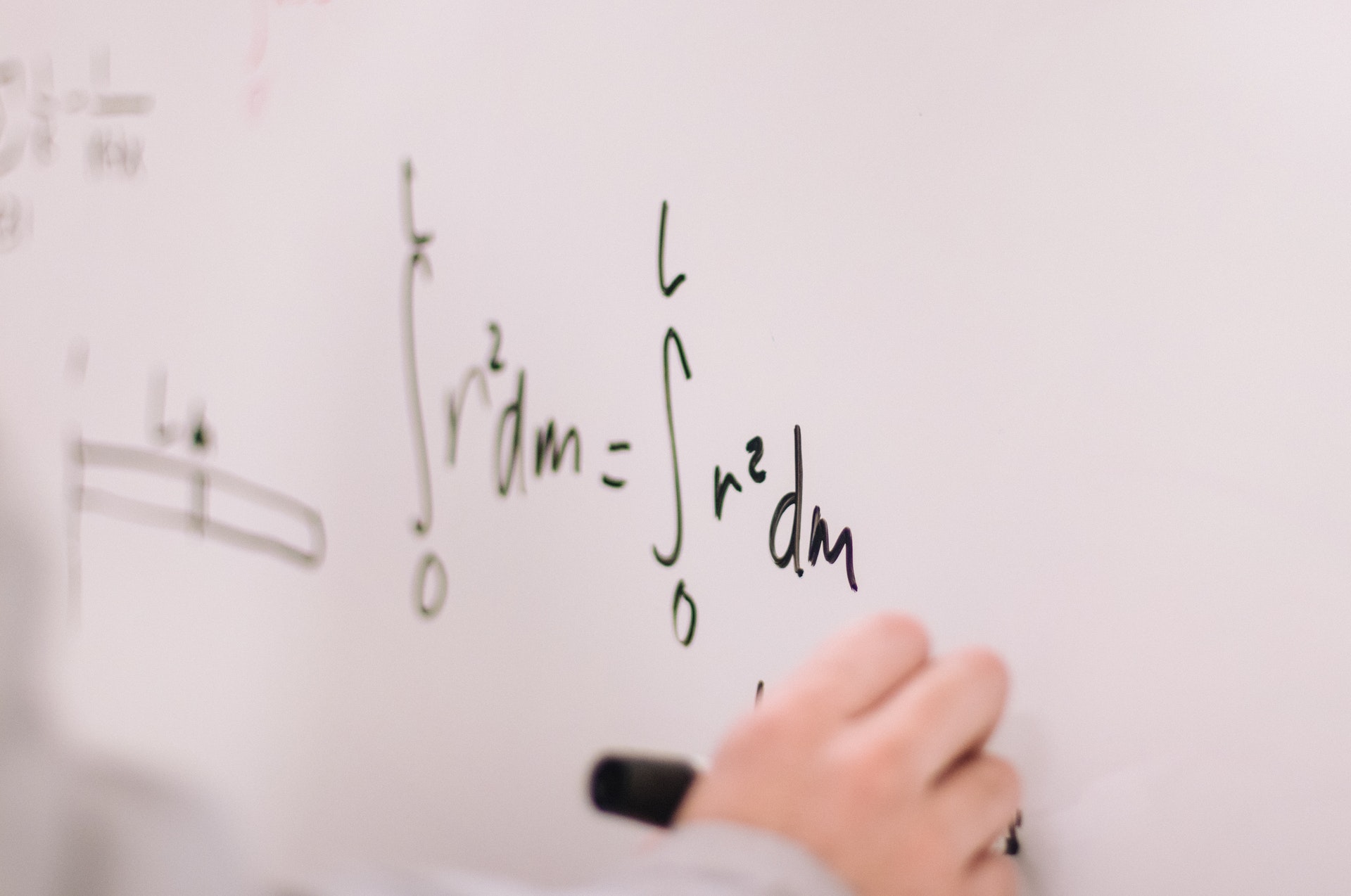
Maths can be a particularly tedious subject for many so finding a way around it can be of great help. How about using informative videos to explain complex mathematical subjects? You will see great engagement for your tutorials! Truth is, having even just a small visual to illustrate a problem can help students have a better comprehension of concepts.
You can look at several online platforms and resources to help your students such as:
- Maths Methods on YouTube: Video tutorials designed for VCE Maths Methods.
- Ti-Nspire CX: For tutorials on how to use the Ti-Nspire CX calculator in Maths Methods.
- ClassPad Help: The ClassPad Help site includes a series of videos on how to use the Casio ClassPad calculator.
The Mathematical Association of Victoria also produces a number of resources for VCE teachers. Also, for teachers who are new to teaching VCE, MAV opens up the VCE Revision Program for teacher access from November to March so that those teachers can get ready over the summer holidays and before they are required to teach the subject.
If you are interested in teaching VCE Science, check out our VCE science article!
How to Become a VCE Tutor With Superprof

If you are looking to dive into the world of private tutoring and want to help students by becoming a VCE tutor in Australia, Superprof is the best place for you to find prospective students and connect with those who want to learn more about VCE maths.
Tutoring is a mix between knowledge and connection and the best tutors are those who understand the reasoning of each student, what their learning path and experience have been like and what is the best way to approach the concepts of the course.
In order to set up your tutor profile on Superprof, you will need to provide information about your course or lesson, your experience and how much time you've spent as a tutor, how much your tuition service costs, and the content of your tuition and your method. You can also share if you are open to online tutoring and if you offer a free first lesson or course to get to know the student.
Private tutoring in math is well sought after so your rates could be relatively high depending on the living cost of the city where you are based. For example, tuition in Adelaide might have a different cost than in Melbourne. We recommend you look into the service costs in your area in order to set your rate. Also, an online class might be less costly since it doesn't involve travel expenses for the tutors.
Make sure you establish a clear way for people to contact you and your available time as well as a description of the subjects you are a specialist in.
Get ready to become a private tutor and teach math in Australia with the help of Superprof!
If you want to learn more about the qualifications to become a VCE tutor, head to our becoming a VCE tutor article!
Want to give private lessons?
Join the Superprof community and share your knowledge with interested and motivated students.
Summarise with AI:
Did you like this article? Leave a rating!

 Loading...