

Thoroughly studying for the HSC biology exam is paramount if you want to score well! One of the best resources at your disposal is the past papers of previous exams.
There are many components to use when learning HSC biology and when studying for the exam. So let’s dive into utilising past papers to help you ace the exam!


What Are Past Papers and Where Can They Be Found?
Past papers are simply exams from previous years.
You can find the past 4 years of exam packs on the NSW Education website. An exam pack includes both the HSC exam paper and the marking guidelines used to mark the exam.
If you want more practice, you can also access exams in the archive located in a different section of the NSW Education site.
Past Exam Papers
This aspect of the exam pack is pretty self-explanatory: this is a copy of that year’s HSC exam questions.
Past Marking Guidelines
This document in the pack serves as the answer key for the multiple-choice questions and reveals the rubric used to mark the written answers in the past exam. You can see that a certain amount of marks was awarded for different components the student could have given in the written answer.
Feedback on Written Examination
A very helpful component of the exam pack is this feedback page. You can see the general feedback, as well as feedback on specific written answers that the Supervisors of Marking use as a reference when marking answers.
For certain answers, there is also feedback about which elements of the response students frequently omitted.

How to Use Past Papers During Your Course Studies
You can start using past papers and the exam pack to study while you’re still taking your HSC course. You don’t have to wait until the HSC exam is coming up!
Read through a few exam packs and see what kinds of answers the marking rubric recommends. As you study modules in your biology course, ask yourself if you could answer a question about the topic to the degree that would be satisfactory to a Supervisor of Marking.
Of course, you won’t know the answers to most of the questions on past papers at the beginning of your course. Your goal is not to seek out the answers to those specific questions because they’re already appeared on the past exam and are unlikely to appear in the exact same way on your upcoming exam.
Instead, you want to make sure that you are learning and retaining the elements of each topic that might be asked about on the HSC biology exam. Pay close attention during your studies to these elements, especially if you feel that they are harder for you to grasp.
Key Words
Do you know what the NESA directive verbs are, how to identify them, and how to respond to each directive? Written exam questions are posed with a NESA directive verb that tells you what kind of answer is required.
If someone asked you to analyse how a fish is beneficial to a biome, could you? If they then asked you to justify why that fish should be introduced to the biome, could you modify your answer to meet the question?
Scientific Terms
Do you understand the scientific terms you learn in your course, like mitosis, homologous chromosomes, translation, infectious disease, and so on? Do you know how to tell if a biology experiment is sound, and how to identify the variables? Ensure you are really learning and retaining the definitions rather than just memorising them.
Logical Sequencing of Information
Can you present information in order, in a way that makes sense, while including relevant information and excluding superfluous information? Can you use the correct terms required to describe a process?
Reading and Writing Statistical Data
Can you read graphs, grids, and charts, as well as create one if needed? Do you know how to decide which way of displaying information is the most effective depending on what data needs to be conveyed?
Inferring and Linking
Can you use two separate ideas together to come to a conclusion? Can you explain how these different concepts go together to support your answer?
Practice these skills while you are learning in class. Test yourself, even if it’s just mentally, to check if you can see the connections between different concepts. Can you use a concept from a previous module to help give context to a new concept you’ve just learned?
When you ensure that you understand the material thoroughly, you can handle anything the HSC exam might throw at you.
Prepare for exams and ace your courses with biology tutoring here on Superprof!
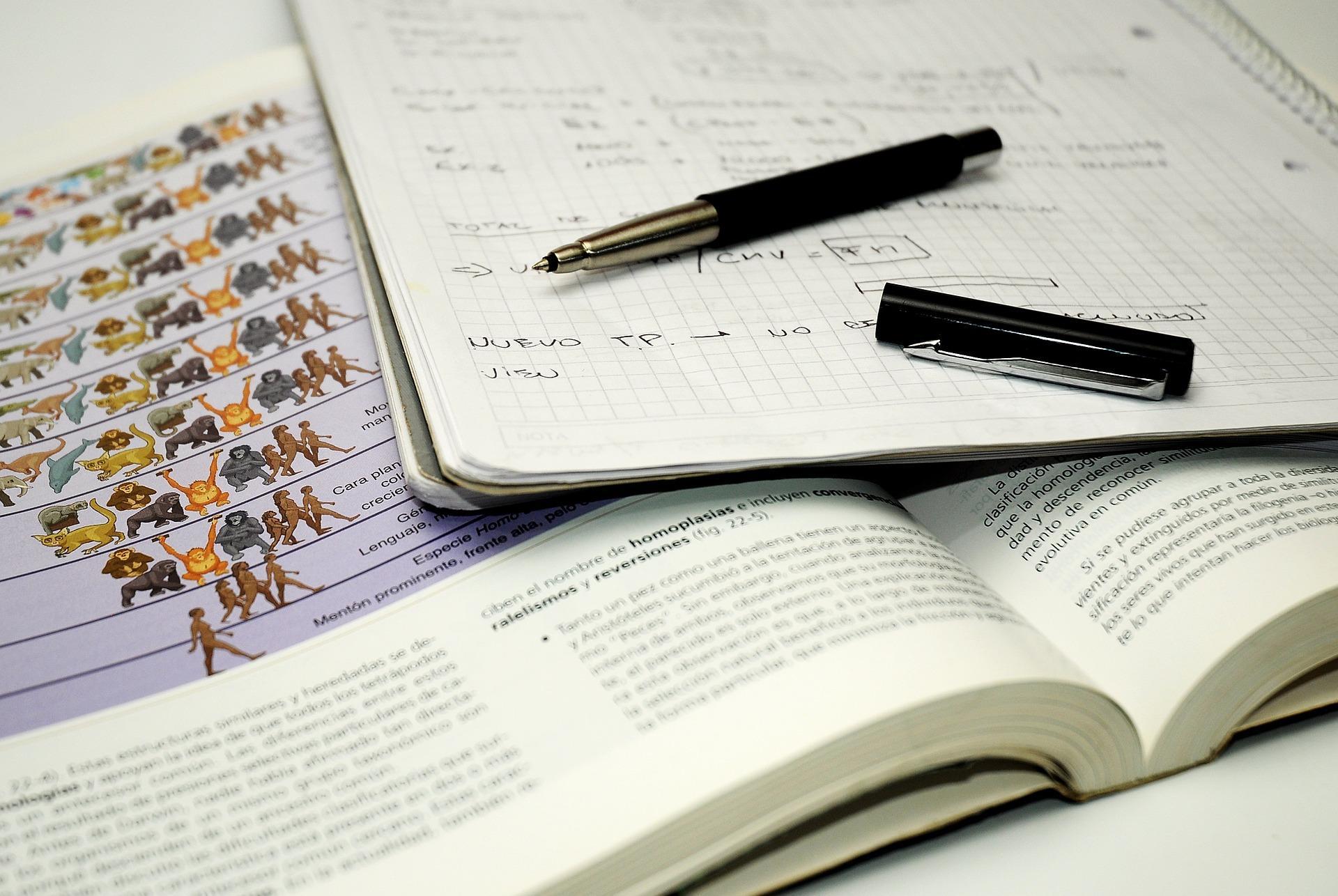
Using Past Papers to Study for the HSC Biology Exam
Past papers are traditionally used during your exam-prep period. And for good reason!
For free, you can take many years’ worth of tests to practice all aspects of your HSC biology knowledge and test-taking skills.
Exam Content
Practice with a few exam packs at your own leisure, meaning without timing yourself. You might answer a handful of multiple-choice questions plus one short response and one extended response question per week to start with (probably about 3 months before the exam).
This way, you get used to the ways questions are worded and the level of knowledge they are really expecting of you.
Check your answers against the rubric to see what areas of your answers need more reinforcement.
You also get more practice writing down information, which is crucial for truly retaining knowledge! The more you write it with your own hand, the more you are going to remember that information later.
Practice Tests
There are three ways to practice the HSC biology exam using test papers: open-book, closed-book, and under assessment conditions.
1 - 2 months before the exam, begin practising the whole test.
If you have time, practice an entire exam. Set your timer for 3 hours and 5 minutes. If you have limited time, try to complete different sections in the amount of time recommended.
- 40 minutes for multiple choice section
- 1 hour and 10 minutes each for the short and long answer questions
- Alternatively, practice the guideline of designating about 1.5 minutes per mark, so a 1-mark question should take about 1.5 minutes to answer, and an 8-mark question should take about 12 minutes.
With these practice exams, you prepare yourself to work under pressure as well as have experience reading and answering questions that meet the guidelines. You will:
- Develop time-management strategies that help you complete the exam within the time limit
- Enhance your ability to quickly pull information from your memory
- Learn how to think on the spot
- Develop your skills in making outlines when constructing an extended answer
- Test your knowledge, especially of formulas, definitions, and terms
- Desensitise yourself to the stress of exam conditions
Open-Book
When practising the HSC exam with an open book, it simply means that you will have access to your notes and textbooks while going through the questions.
This is a good place to start because you can look up the information to questions you are struggling with, rather than guessing the answers.
When you guess an answer or don’t look up the information you’re wondering about at the moment, you’re making it harder for yourself to remember later on. By trying your best to answer a question and having the ability to check your notes to make sure you’re right, you reinforce the correct information in your memory. If you guess, you might remember that guessed, incorrect information later.
You might choose to time this open-book practice, but you can do it without a time limit as well. The goal is to get yourself used to reading exam questions, develop your test-taking skills, reinforce your knowledge, and identify weak spots in what you know.

Closed-Book
The closed-book method is simply that. With or without a timer (your choice), practice using the past papers and completing the HSC exam.
Again, you’re getting used to reading and comprehending exam questions, formulating answers, and getting them down on paper in a way that satisfies the marking rubric.
With closed-book practice, you take away your safety net of having your open-book notes nearby.
At this point, you should be fairly confident in your HSC biology knowledge, so that you don’t spend a lot of time trying to remember the information. With all of your previous note-taking, studying, and open-book practice, you should have a pretty thorough understanding.
Review your answers against the rubric and see if there is any way to make your responses stronger.
Assessment Conditions
This method of practice means pretending you’re actually in the HSC exam.
Make time and space to give yourself an exam-like environment:
- Have a quiet space with no distractions (perhaps wear noise-blocking headphones if you can’t get away from sounds, but do not play music since that is not allowed in the HSC exam)
- Have a timer set for 3 hours and 5 minutes
- Turn off your phone, your smartwatch, and any other technology nearby
- Use only a NESA approved calculator
- No notes or textbooks
- Tell your friends and family that you are unavailable during this time
This practice method helps you learn how to stay calm and focused when facing the HSC exam environment. Your honed abilities from the open and closed-book practices are sharpened even more when you use this method.
Having the ability to look up and use past papers from the exam packs is a great way to ensure that you can do your very best on the HSC biology exam!
Summarise with AI:
Did you like this article? Leave a rating!

 Loading...