


Going through more than 100 business English idioms, it was hard to miss that many of them relate to sports. It's easy to see why; both fields are competitive, and the 'game theory' framework draws a straight line between the two. Keep that in mind as you learn about the origins of these unusual phrases and how to use them.


All Hands On Deck
This is one of the oldest business idioms; it traces back to the times of great powers at sea. When storms threatened the ship and its precious cargo, the captain would call for all hands on deck. It meant that every sailor must help to keep the ship upright and sailing through the storm.
Usage in today's business circles carries that same spirit. Your boss might deny your request for a day off, for example, saying, "We need all hands on deck to get this order out!" They mean, "We have too much work to do to excuse you."
Back to Square One
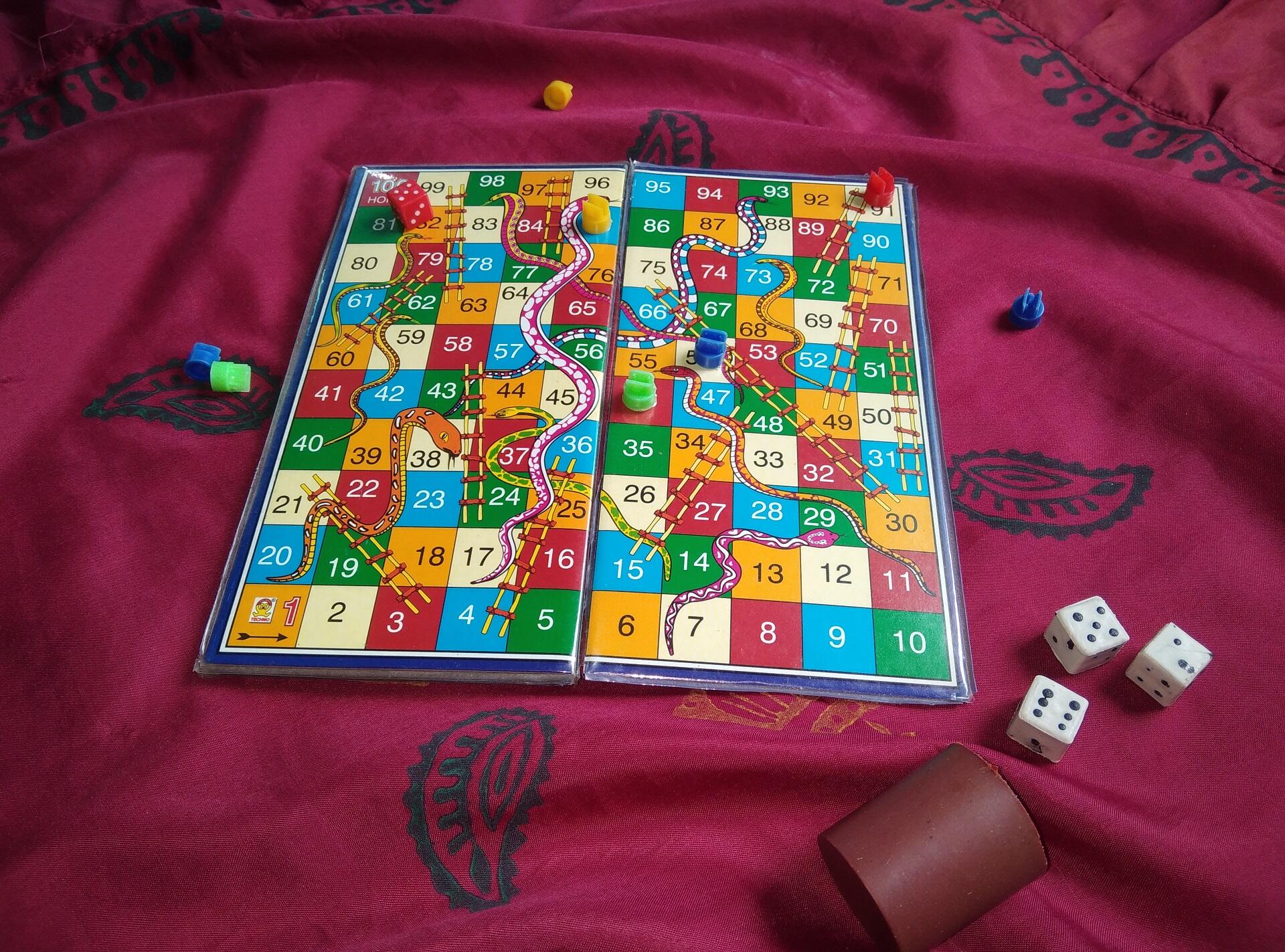
Have you ever played Snakes and Ladders (also called Chutes and Ladders)? This game is far older than people realise; it is a perfect metaphor for the business environment. Every business owner wants to climb the ladder of success, but as it often happens, a 'snake' might knock them back down.
People may spend their whole lives climbing the ladder of success ...
Thomas Merton, monk and social activist
Snakes and Ladders is the origin of this idiom. Going back to square 1 is also a feature of this game. When a player lands on a particularly dangerous square, they lose all their gains and must start playing all over again.
In business circles, this idiom means, "Our idea didn't work. Throw away all the work you've done on this project and come up with a new idea."
Back to the Drawing Board
Having to go back to square one is more of an expression of defeat. It's what you might say when you first realise you did a lot of work for nothing. By contrast, going back to the drawing board means you're ready to work on a new idea.
The Ball's in Your Court
Of all the business English idioms, this one is most directly tied to sports. In racket games like tennis and squash, the position of the ball decides how the game progresses. Over time, it came to represent any venture where someone must take responsibility.
Bang for the Buck
This is a very American way to say you want your money's worth. The US dollar is called 'buck' informally, and the 'bang' refers to firepower. This idiom originated in the 1950s, when the US military wanted to know how to make more powerful weapons (bang!) for less money (buck).
"Ms Manager, I guarantee you'll get more bang for your buck if you buy from us than if you buy from our competitor", for example.
The Bottom Line
This is a 'bottom line' question most business leaders ask.
It translates to: "How much will it cost, and what do we get for our money?"
On an invoice or accounting ledger, the bottom line is all that matters. On an invoice, it represents how much a business has to pay. On the ledger, it means profits. For busy executives, asking, "What's the bottom line?" is a shortcut to help them decide whether a project or investment is worth the money.
The Buck Stops Here
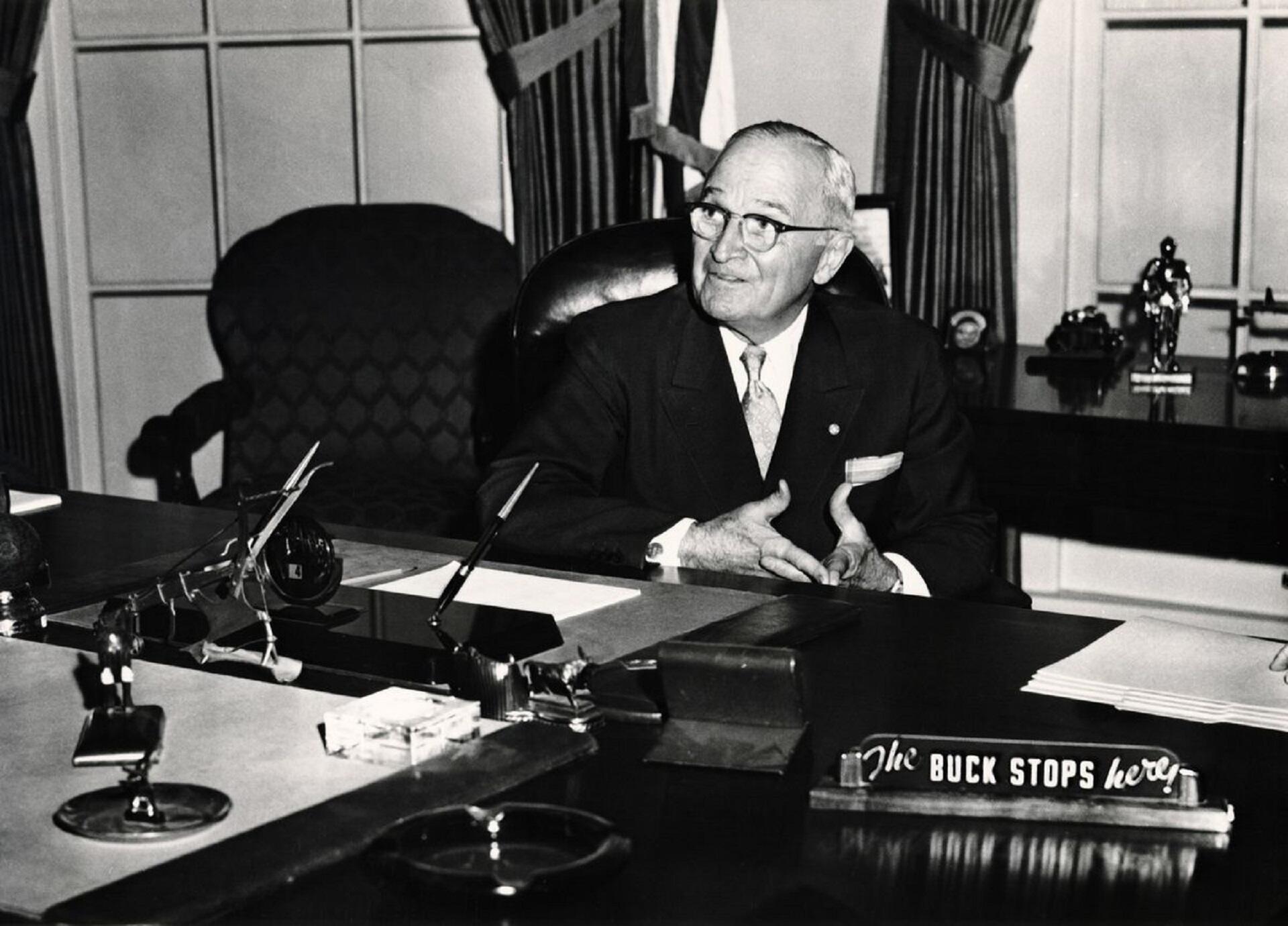
Harry Truman, the 33rd US president, famously kept a sign on his desk that said: "The buck stops here". It meant that he held himself responsible for anything the US did. That connects with another 'buck' business idiom: 'passing the buck', which means 'passing the blame'.
Many businessmen respected that American president so they, too, adopted the 'buck stops here' mentality. Today, it's still common for managers and business owners to embrace the 'buck stops with me' mindset, even if they don't post signs on their desks.
Burn the Midnight Oil
This idiom takes us back at least to Tudor England, when people had to work late into the night. Their oil lamps burnt whale fat, an expensive but efficient fuel. Even though this phrase features whales, in no way is this a fun English idiom with animals.
Still, its meaning hasn't changed through the centuries. Thanks to electricity, we don't have to burn oil when we work late at night. Now, if we could only stop working late at night.
Corner the Market
This business idiom comes from another ugly reality: when you back someone in a corner, they have no choice but to do what you want. When a business owner corners a market, they have every other seller and all the clients in a corner. They have no choice but to trade with that dominant business.
The race is currently on to corner the AI market. Not just which AI platforms will rule cyberspace, but also the hardware: processors (Nvidia) and data centres.
Costing an Arm and a Leg
This idiom likely originated from wars, where soldiers lost arms and legs in battle. Such losses are high prices to pay, which tells us what this idiom means. A company's finance officer might exclaim, "No, I'm not signing that contract. It will cost us an arm and a leg!". What they're saying is the deal is too expensive.
Cutting Corners
'Cutting corners' relates to driving and transportation. In the 1800s, roads weren't well-defined, so carriage drivers could 'cut the corner' to save a little bit of time. Unfortunately, it often meant that their carriage turned over or got stuck.
Cutting corners is a bad strategy. It might look like a good way to save time but the risks are often much greater than the time savings.
The Game Changer
In team sports, swapping players out mid-game often changes the event's outcome. In business, game changers can be anything from a particularly talented employee to a brilliant idea. As on the football pitch, so too in the office. The game changer delivers fresh energy and potential success.
1. Suggest an alternative path to a challenge that stands in the way of project completion.
2. Enjoy your boss complimenting you: "Excellent idea! What a game changer!"
Get Down to Business
This business idiom is a throwback to the days when doing business was a formal affair. Wheelers and dealers would meet, have coffee, drinks or lunch, after which they might enjoy a cigar.
Finally, one of them would say, "Shall we get down to business?" Getting down to business is when people put away the social niceties and turn into cut-throat competitors.
Get the Ball Rolling
In today's fast-paced business environment, getting the ball rolling is more common than getting down to business. Because who has time for long lunches and cigars these days?
You might hear this phrase when you decide to buy a new car. The salesperson might ask, "Shall we get the ball rolling?", meaning "Shall we start the sales paperwork?" Or at a job interview, the hiring manager might ask a few personal questions to put you at ease. And then, they'll say this idiom to signal the formal interview process.
Gut-Check Time
'Gut-check time' comes to us from military and sports vocabulary. It means "a time for testing resolve, courage, and determination". You might think of it as a test of character or, to use another business-related idiom, a 'trial by fire'. Any student approaching exam day knows the tense feeling that signals gut check time. They brace themselves much like the character in this clip does.
If it Ain't Broke, Don't Fix it
This phrase sounds sensible and practical, but in fact, it serves to hold business back. It means, "We don't need to change anything." But the world doesn't stand still, certainly not the business world. So, maybe 'it' isn't broken, but 'fixing' is needed to keep up with this fast-paced world.
A business dinosaur is someone whose business ideas are outdated, and they refuse to change. These dinosaurs and their old-fashioned ideas haunt boardrooms, saying things like, "If it ain't broke, don't fix it."
In the Black
This business phrase relates to the colour of ink accountants used to record a company's finances with. Black ink meant that the company had money or they turned a profit. The opposite term is 'in the red', a colour no business owner wants to see in their accounting books.
Put it on the Back Burner
If you love cooking, you might already know that putting something to simmer on the back burner allows you to use the front burner for active cooking. That's the spirit behind this business idiom. Note that, even though it relates to food, we cannot consider it a food-related idiom. So how does it apply to business?
"So, should we go ahead with project XYZ?"
"No, put that one on the back burner for now. We need to take care of Company LMN first."
"How about hiring this applicant?"
"Let's keep him on the back burner until we interview this one. He looks more promising."
Raise the Bar
You might think that this phrase belongs on the list of funniest English idioms if you don't know where it came from. It refers to high jumpers, those athletes who take a running start, leap over a bar, and land on a mattress. The higher the bar, the more skilled the jumper.
Your boss might use this idiom to demand your best performance on a high-dollar project. "I'm raising the bar on this one" means "I expect everyone to put forth their best effort."
Think Outside the Box
Think outside the box, collapse the box ...
Banksy, artist
If anyone knows about out-of-the-box thinking, it would be the anonymous artist quoted above. He expresses political criticism through his art. He does so through an art form still considered illegal, though the artist himself and his work are celebrated.
Most bosses want their employees to think outside the box. They want workers to be innovative and creative in finding solutions to business challenges. Will you be the worker to whom the boss says, "That's some real out of the box thinking! Let's go with your idea!"
Throw in the Towel
When an athlete - specifically, a boxer - throws in the towel, it means they admit defeat.

In the early 1900s, a boxing coach would throw his fighter's towel in the ring to end the match. It was a sign that the boxer could not stand one more punch.
In business, throwing in the towel has the same meaning. A negotiating team might throw in the towel if a client is too demanding.
Or if the scope of work stretches too far beyond the services the company provides. There's no shame in saying, "We're going to throw in the towel on this one" when a client is asking for too much.
As noted at the start of this article, many of these business idioms have a strong connection to sports.
In fact, they're common phrases that work well in all situations, not just business and sports. For instance, you should throw in the towel on a bad relationship and a terrible job.
Summarise with AI:
Did you like this article? Leave a rating!

 Loading...
