


Every language uses idioms to communicate ideas that would sound boring if expressed with standard terms. Idioms make language colourful and vibrant; they are a reflection of the culture. In English, food idioms tend to represent feelings and situations. Using these idioms when you speak English will make your language richer and more fun.


The Apple of One's Eye
When you tell someone they are the apple of your eye, it means they are very dear and precious to you. This idiom originates from a 9th-century religious manuscript that was not translated properly. The original text meant 'the pupil of the eye' - the black spot in the middle.
The translator wrote 'apple' instead of the unloving word 'pupil'. It's not their fault, though. In Old English, the word 'arppel' means both 'apple' and 'pupil'. It's a wonderful mistake, though, because now we have a delightful idiom to say what someone we love means to us! This song, often played at weddings in the US, uses this idiom in the best possible way.
Bread and Butter
A man's bread and butter is only insured when he works for it.
Marcus Garvey, Jamaican political activist
A man's (or woman's) bread and butter is the work they do to earn their living. In many countries, bread and butter are the most fundamental of foods. Providing necessities and earning the money to make sure you have them is also fundamental. So, it makes sense to use these foods to express that idea.
"I dream of directing feature films, but commercials are my bread and butter right now."
Meaning: Making films is my goal, but I pay my bills by directing ads.
Bringing Home the Bacon
Bacon is a versatile food that has been around for centuries. A bit of bacon in your soup or vegetables gives the dish a savoury boost. This tasty idiom about food has two possible origins.
A 1906 boxing match
- Boxer Joe Gans was fighting for a world title.
- Before the match, his mother sent him a telegraph that said "Bring home the bacon"
- Meaning, "Win the match and earn lots of money."
An English tradition
- In 1104 AD, the Dunmow Filch trials awarded a couple a slab of bacon if they could prove they did not argue for a whole year.
This tradition continues today.
In both cases, the idiom means "Make some effort to bring home some reward." In modern contexts, it simply means "bringing home a paycheque". You can use it like this:
Where are your parents at?
My dad's bringing home the bacon and my mum's at the shops, spending it.
Buttering Up
When you butter someone up, it's usually because you want them to do something for you.
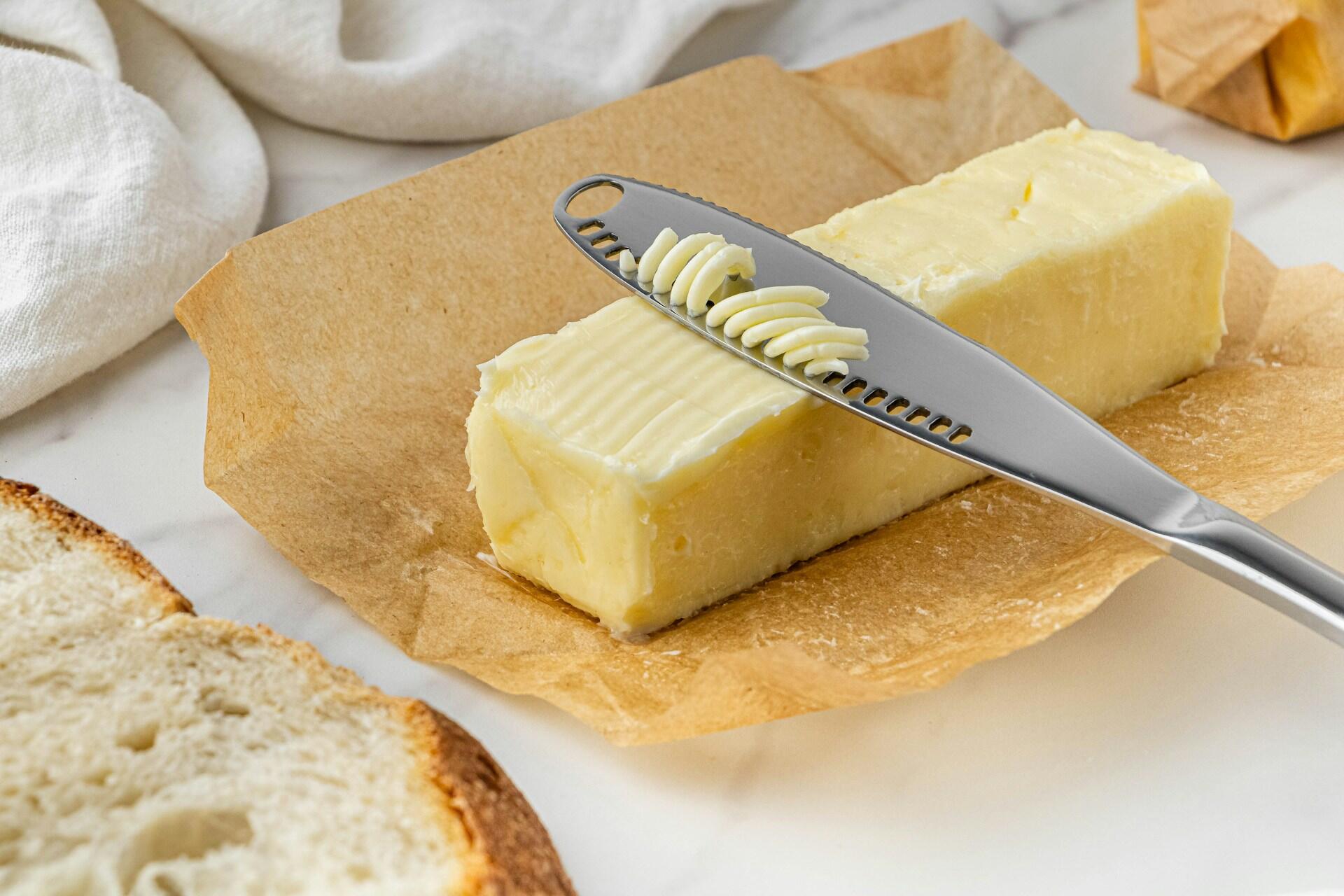
The idea behind this idiom is that butter is slippery. You can easily push something through a narrow channel if you apply a coat of butter.
Likewise, you can convince someone to do something for you when you butter them up, even if it might be difficult for them to do.
Have you ever had a situation like this with your parents or friends?
Have One's Cake and Eat It Too
The way we use this idiom today is confusing: if one has cake, they can surely also eat it. The original phrase, quoted here, makes much more sense. If you eat your cake, it no longer exists and, therefore, you cannot still have it. Either way, this idiom means you must give up something to obtain something.
You cannot eat your cake and have it still.
John Davies, English poet
Not My Cup of Tea
English speakers use this idiom to describe things they don't like or would rather not do. If someone invites you to the opera or a rave, you can say, "No, that's not my cup of tea." If you really don't want to do or have the thing, you can insist, "It's really not my cup of tea!"
A person might drink a cup of tea that's not theirs if they're really thirsty.
One might also do something they don't like if they feel they have to.
In that case, you can say, "It wasn't my cup of tea but I did it anyway, just to be a friend."
Piece of Cake
Have you ever had trouble eating a piece of cake? Most people find eating cake very easy; that gives you an idea of this idiom's meaning. If you want to assure your boss you can handle a task, give them a big smile and say, "It'll be a piece of cake, Boss!" This is one of the most common idioms in the English language.
Spill the Beans
This idiom has an interesting origin that traces to ancient Greece, when people used black or white beans to vote. If the jar containing the beans (the votes) got knocked over, the beans would spill out, revealing the vote's outcome too early.
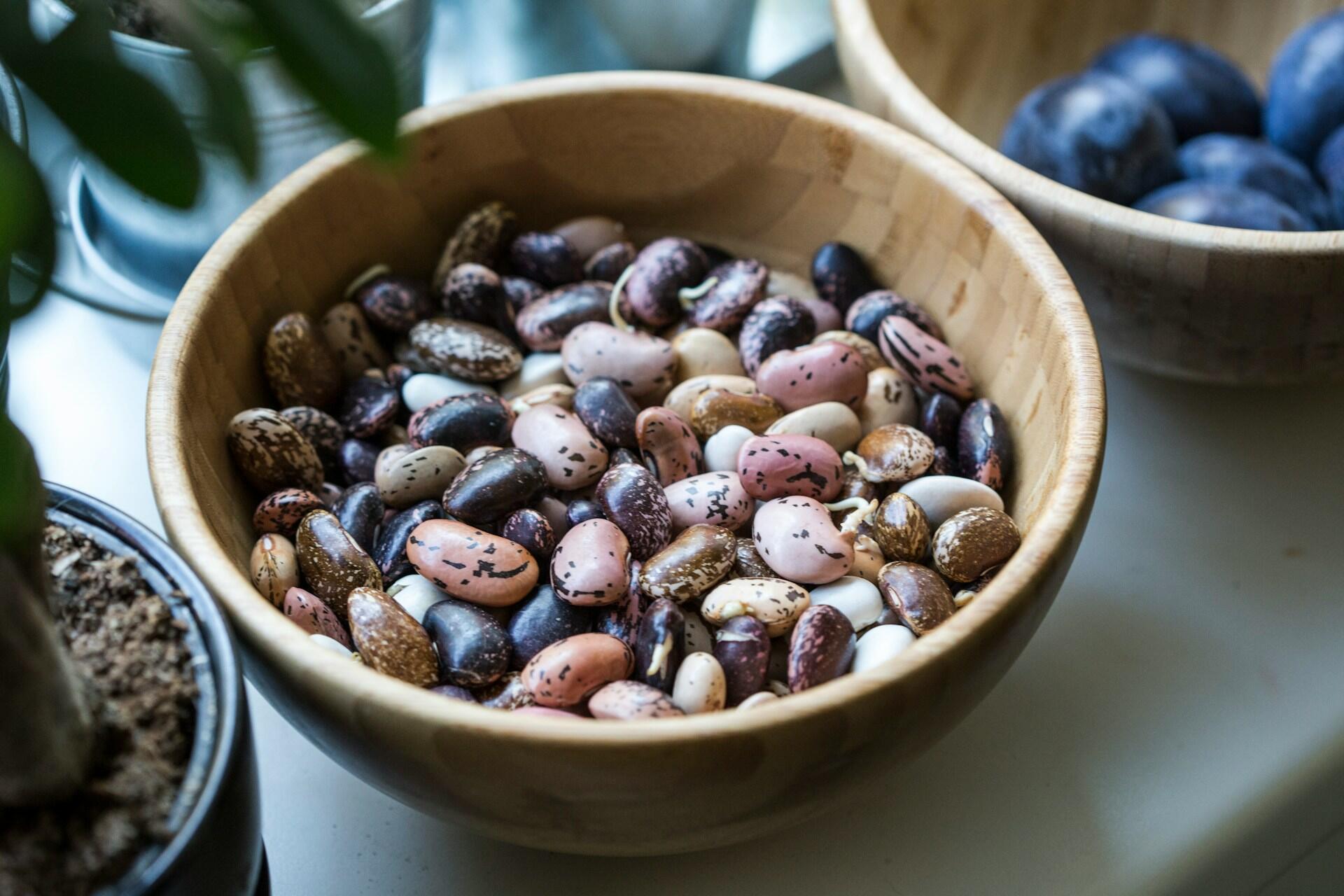
Today's use of 'spill the beans' relates to the original meaning of keeping something secret. You can spill the beans to your English teacher about your classmates who plan to cheat on the next test, for example.
A related idiom, 'spill the tea', means gossiping or sharing news.
A Pinch of Salt
This idiom relates to an ancient king who was almost poisoned. A text by Pliny the Elder recommends a drink made up of various ingredients, including a pinch of salt, to prevent the poison's effect.
Over time, "take that with a pinch of salt" came to mean "Don't believe (something) completely, as the information might be wrong." Suspicion is the feeling connecting the two meanings.
All the Eggs in One Basket
Imagine you're so lucky that you have a whole basket of eggs to feed your family. Walking home, your feeling of satisfaction distracts you, and you trip over a crack in the sidewalk. The basket falls out of your hands and all the eggs break.
This is why you do not want to put all your eggs in one basket: you risk losing everything at once. This idiom is usually given as a warning, spoken in the negative: "Don't put all your eggs in one basket!"
Egg Someone On
This egg-related idiom means 'to encourage someone to do something'. Usually, the something in question is bad, like beating a person up or making them do something foolish or wrong.
In this clip, we can hear Thanos egging Peter Quill on, shoving Gamora closer and shouting "Do it!"
The Cream of the Crop
Like many of the English language's funny idioms, this idiom about food is confusing. Cream relates to milk, while crops are plants. What's the connection?
The French language has a similar idiom: the cream of the cream, meaning the best part that rises to the top. It was well-known to English speakers but, sometime around 1850, someone thought to pair 'crops' and 'cream' because they sound good together. You can say either 'cream of the cream' or 'cream of the crop'; they both mean 'the best of the best'.
A Hard Nut to Crack
If you want to describe something that is difficult to do, you can say that it was a hard nut to crack. Likewise, a challenging problem, a difficult person to deal with, and a tough exam are all hard nuts to crack. These sentences are examples of this idiom at work.
Cool as a Cucumber
Is there anything as satisfying as biting into a cool, crispy cucumber on a hot summer day? To imagine this idiom properly, you must picture yourself as the cucumber: crisp, chill, and firm. It describes someone who remains calm under pressure. You might use it to talk about a job interview you just finished.
Like a Fish Out of Water
Have you ever gone to a party and felt like you just didn't fit in? If so, you felt like this popular animal idiom, which describes situations where you might feel uncomfortable. It's a suitable way to portray your first day on a new job or in a new English class. But feeling like a fish out of water is only temporary.
Use this idiom only to describe short moments where you felt uncomfortable. "I felt like a fish out of water because everyone was talking about something I didn't know anything about."
Hot Potato
A hot potato (a jacket potato in British English) is not something you want to hold with your bare hands for very long because it will burn you. In the same vein, any difficult or potentially explosive situation isn't something you want to be around very long.
"We never talk politics during dinner. It is too much of a hot potato." This sentence communicates that the family wants harmony at the dinner table, not arguments. 'Hot potato' discussions are nowhere as cheery as this popular kids' song makes hot potatoes out to be!
Comparing Apples and Oranges
This is the idiom to use when you want to tell someone their argument doesn't make sense. Apples and oranges are both fruits, but they are fundamentally different. For example, let's imagine a discussion between friends talking about transportation.
Sure, a Porsche is nice but an e-bike is more efficient and better for the environment.
You're comparing apples and oranges; a bike is not a car!
In a Nutshell
Nutshells are not very big, so you can't put very much into them. When you present information 'in a nutshell', you are giving only the most important fact(s). You can use 'in a nutshell' the same way you use 'in summary', especially if the information you're summarising needs a little humour.
Spice Things Up
Faith is like porridge. Better with milk and honey.
George R. R. Martin, author
Porridge is the essential bland food: no particular flavour, no particular form; something you slurp on when you're sick. People who eat porridge willingly - in the UK, Ireland, and many countries in Asia, tend to add flavour to the mix. As the author above says, it's better with "milk and honey".
That is the essence of what this idiom means. You take something ordinary, say, porridge, and add things to make it more flavourful and desirable. Of course, it doesn't have to be a food you're spicing up; it can be conversations such as these.
Is it true that Mary's getting married?
No, she just likes to spice up her life with those little stories.
How about dinner this weekend?
Dinner, again? How about we spice things up a little?
Sell Like Hot Cakes
If you're describing things that sell really well, 'selling like hotcakes' is the way to do it. Hotcakes don't stay hot for long once you take them from the fire, so they must sell quickly so they'll still be warm and tasty.
Note that this phrase works as an idiom in Business English, too. Advertisers and marketing departments are forever telling company decision-makers that whatever product they're pitching will "sell like hot cakes!" thanks to their marketing strategies.
Summarise with AI:
Did you like this article? Leave a rating!

 Loading...
