
Biology has long been an understated science, often toiling far out of the spotlight. And then, it bursts to the fore with some amazing discovery that expands or, often, redefines our understanding of life. Now, recent biology discoveries, such as artificial intelligence (AI) applications, promise to revolutionise how we do science. This table presents the milestones that brought us here, ahead of the article detailing the most remarkable accomplishments.
| Year | Discovery | Authors | Scientific Milestone |
|---|---|---|---|
| 1859 | Theory of Evolution by Natural Selection | Charles Darwin; Alfred Russel Wallace | Founded evolutionary biology and transformed understanding of species adaptation. |
| 1861 | Germ Theory of Disease | Louis Pasteur | Established microorganisms as the cause of disease, enabling modern medicine and public health. |
| 1865 | Laws of Inheritance | Gregor Mendel | Laid the mathematical and conceptual foundation of modern genetics. |
| 1892 | Discovery of Viruses | Dmitri Ivanovsky | Revealed infectious agents smaller than bacteria, founding virology. |
| 1922 | Insulin Isolated and Used Clinically | Frederick Banting; Charles Best; J.J.R. Macleod; James Collip | Transformed diabetes from a fatal disease into a manageable condition. |
| 1928 | Discovery of Penicillin | Alexander Fleming | Initiated the antibiotic era, revolutionizing infectious disease treatment. |
| 1944 | DNA Identified as the Genetic Material | Oswald Avery; Colin MacLeod; Maclyn McCarty | Demonstrated that DNA—not protein—carries hereditary information. |
| 1952 | First Effective Polio Vaccine | Jonas Salk | Prevented widespread paralysis and led to near-global polio eradication. |
| 1953 | Structure of DNA Determined | James Watson; Francis Crick; Rosalind Franklin; Maurice Wilkins | Enabled molecular biology and modern biotechnology. |
| 1953 | Miller–Urey Experiment | Stanley Miller; Harold Urey | Demonstrated that organic molecules could form under early Earth conditions. |
| 1996 | Cloning of Dolly the Sheep | Roslin Institute | Proved that differentiated cells can be reprogrammed, advancing cloning and stem cell research. |
| 2003 | Human Genome Fully Sequenced | International Human Genome Project Consortium | Enabled genomic medicine, personalized therapies, and disease risk prediction. |
| 2000 | Development of GLP-1 Receptor Agonists | Novo Nordisk research teams | Introduced novel treatments for type 2 diabetes and obesity. |
| 2012 | CRISPR-Cas9 Gene Editing System | Jennifer Doudna; Emmanuelle Charpentier | Enabled precise, efficient genome editing across organisms. |
| 2020 | AI-Driven Biological Systems | Global academic & industry research groups | Accelerated drug discovery, protein design, and systems biology research. |


Pioneering Discoveries in Biology
Arguably, every discovery listed in the table above is pioneering. And, to be sure, each rests on the discoveries that came before, but then, that's the nature of science, no? Of the momentous discoveries above, we choose three to discuss that were positively earth-shattering.
Locating the Origins of Genetic Material
Avery is the most deserving scientist never to receive the Nobel Prize for his work.
Arne Tiselius, Nobel laureate in Chemistry
Do you know about Canadian-born Oswald Avery? He was a medical researcher and doctor who made pioneering discoveries in immunochemistry. I learned about him from my Biology tutors Melbourne. Today, we count him as one of the first microbiologists. He helped establish the field before it properly existed.
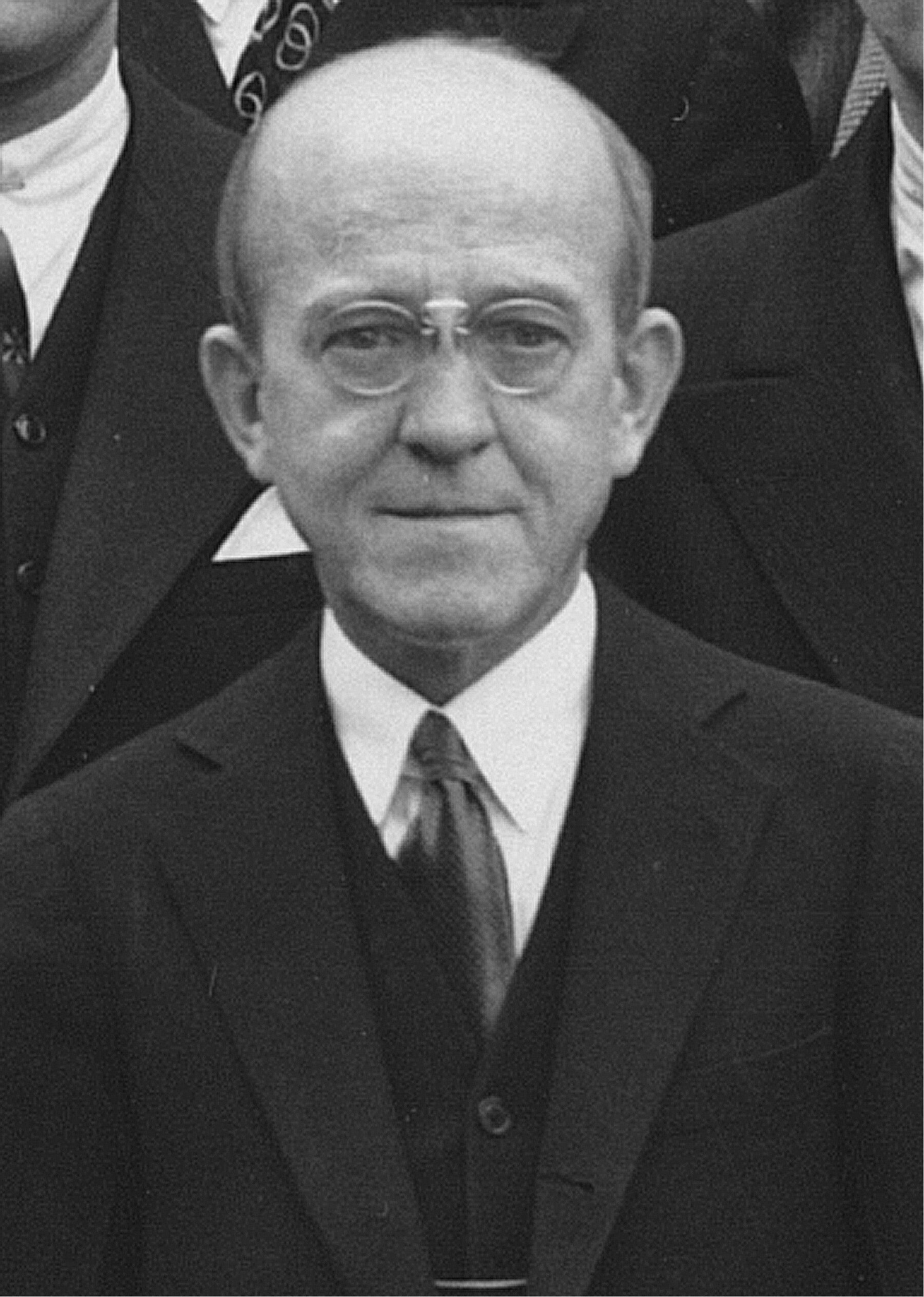
Of his impressive body of work, his isolation of DNA and establishing DNA as the source for genetic and chromosomal material is the most impactful.
He published his paper in 1944, giving due credit to his colleagues, Colin Macleod and Maclyn McCarty.
Despite having already retired, Avery continued his painstaking and meticulous study of S- and R-proteins.
His work and dedication set the course for the discovery, 10 years later, of DNA's structure.
Until his discovery, biologists centred their research on cell protein, figuring it to be the storage of genetic information.
Dr Avery was repeatedly nominated for a Nobel Prize, from the 1930s through the 50s. Finally, in 1976, the International Astronomical Union named a lunar crater Avery in his honour.
DNA's Double-Helix Structure
We have discovered the secret of life.
Francis Crick, Nobel laureate in Physiology and Medicine
DNA was first isolated in the late 1800s but we didn't call it that, at first. Early 'nuclein', as it was referred to, was further defined in 1927, when scientists proposed that it was a ‘giant hereditary molecule’ made up of two strands.
Above, you read about how Avery's team identified DNA’s specific role in hereditary transfer, calling it the transforming principle. Working together, geneticists Alfred Hershey and Martha Chase confirmed Avery's discovery in the 50s through a series of experiments. That established the double-helix model of DNA structure we know today.
Banter about deoxyribonucleic acid, what DNA stands for, is now everywhere, from crime shows on the telly to what AI could do with it. Meanwhile, in laboratories around the world, scientists are working with DNA to eradicate disease and prevent the next pandemic, if need be. Such is the power and impact of biological breakthroughs.
Discovering How We Age
By the 1970s, the structure and function of DNA were well established. Sometime in 1975, a young Australian biological researcher noticed a strange phenomenon. The protective endcaps of chromosomes, called telomeres, grew shorter after every cell division.
When the enzyme telomerase fails to add DNA base pairs to telomeres, that signals impending cell death. This discovery's implications are huge! In this clip, Nobel laureate Dr Elizabeth Blackburn explains what this all means.
Recent Breakthroughs in Biology
You don't have to be an enthusiast of Biology to feel a thrill over biology discoveries. Today's work, in labs around the world, is awe-inspiring.
Managing Diabetes and Obesity
Today, we all talk about Wegovy, Ozempic, and other semaglutides as though they were miracle drugs (maybe they are!). However, research into the hormone called glucagon-like peptide 1 (GLP-1) has been underway for more than 40 years.
GLP-1 was long known to stimulate insulin production. Unfortunately, the naturally occurring version lasts only minutes in the body.
In the late 1980s, Danish researcher Lotte Knudsen1 was part of a team investigating new treatments for diabetes. She isolated the elusive, fast-disappearing hormone and found a way to synthesise it. And then, she and her team developed ways to extend its half-life. By 2010, the first GLP-1 medication was market-ready.
Today, social media feeds are full of GLP-1 stories, from wild successes in shedding pounds to nightmare fuel about serious medical conditions caused by GLP-1 overuse.

Those stories, the good and bad ones, obscure the fact that GLP-1 agonists are game changers for type II diabetics, and may even provide relief for type I diabetics. They also show promise in managing fatty liver disease, kidney disease, and sleep apnoea.
AI's Role in Biological Research
Ask your Biology tutor: no matter where you stand on the AI spectrum – love or hate it – it's fast becoming a tool in biological research.
Traditional research models involve making a change to an organism and waiting for results.
Now, instead of waiting weeks, months or years to record experiment results, AI can predict probable outcomes within days. This gives researchers a certain path to discovery, rather than testing and having to reject hypotheses. Even though AI is still in its infancy, already we’re seeing stunning results.
Alphafold
- makes predictions of protein structures
- enables quick mapping of complex protein structures
- predicts interactions between proteins and other structures
PROTEUS
- accelerates evolution cycles
- creates new molecular functions
- may improve gene editing technology
- speeds up the formulation of new medicines
PROTEUS is the brainchild of scientists at the University of Sydney2. Across Australia and around the world, research facilities such as these are fast embracing the possibilities AI has unlocked.
As noted above, AI is still in its infancy, meaning those are remarkable advances in such a short time. We may well have to update our research essential vocabulary to keep up with all the innovations headed our way!
The Impact of Biological Discoveries on Society
You don’t have to be fresh out of Biology class to realise how much society has benefited from biology discoveries. Pasteurising has dramatically lowered deaths from foodborne illness. Vaccinations have saved countless lives. Do we need more discovery?
Advancements in Medicine
Throughout this article, we’ve covered many discoveries in biology that advanced medical treatments. We’re not just talking about establishing new classes of drugs to treat conditions we (may) already have drugs for. Today’s biology study takes things down to the cellular level.
Those are all baseline goals. Imagine what advances in this science can do for those living with genetic conditions, neurological dysfunction, and degenerative diseases! How about for those who have a greater-than-average chance of dementia? If you're currently engaged in Biology revision so you can join the ranks of researchers one day, hats off to you!
Synthetic Biology And Genetic Engineering
Synthetic biology, also called Syn-Bio and bioengineering, is a cutting-edge discipline that stands to redefine biological study. As new discoveries add to the knowledge body, this catch-all field expands to include a growing number of sub-disciplines:
- evolutionary biology
- molecular engineering
- genetic engineering
- biophysics
- chemical/biological engineering
- membrane science
- systems biology
- materials science
- biomaterials
- control engineering
- biotechnology
This discipline applies engineering principles to biological systems, which helps redesign existing natural biological systems. Still, the focus remains on living systems and organisms.
Despite the controversy (designer babies and all), genetic engineering is more geared towards treatments for genetic disorders and preventing environmental catastrophes.
Environmental and Evolutionary Impacts
Genetic engineering also leads the way in environmental concerns, such as species preservation and cataloguing new animal and plant species.
For some, the mere idea of genetically modified crops is enough to cause an uproar. However, making our food supply hardier and more resistant to environmental degradation is imperative.
Over the past 40 years, we’ve seen a substantial decline in the Earth’s arable land3.
That statistic is serious enough; now add to it that our Earth has hit its first climate tipping point4. Whatever your position is on climate change, the science doesn’t lie. Our planet is changing, and scientists around the world are rushing to stave off disaster.
Biologists are at the front of this race, neck in neck with scientists from other disciplines. They’re racing to preserve all the artistry in biology, so evident in nature. Surely, a little genetic engineering for preservation’s sake isn’t all bad?
Biological Discoveries: Further Reading
- Phelan, Meagan. “Innovators Who Fought to Unlock GLP-1 Drugs for Obesity Awarded Mani L. Bhaumik Breakthrough of the Year Award | American Association for the Advancement of Science (AAAS).” American Association for the Advancement of Science (AAAS), 2024, www.aaas.org/news/innovators-glp-1-obesity-bhaumik-breakthrough. Accessed 19 Jan. 2026.
- The University of Sydney. “Scientists Create Biological Artificial Intelligence System.” The University of Sydney, 2025, www.sydney.edu.au/news-opinion/news/2025/07/07/scientists-create-biological-artificial-intelligence-system.html. Accessed 19 Jan. 2026.
- Ritchie, Hannah, and Max Roser. “Land Use.” Our World in Data, Sept. 2019, ourworldindata.org/land-use. Accessed 19 Jan. 2026.
- Morrison, Alex. ““New Reality” as World Reaches First Climate Tipping Point.” News, 13 Oct. 2025, news.exeter.ac.uk/research/new-reality-as-world-reaches-first-climate-tipping-point/. Accessed 19 Jan. 2026.
Summarise with AI:
Did you like this article? Leave a rating!

 Loading...