
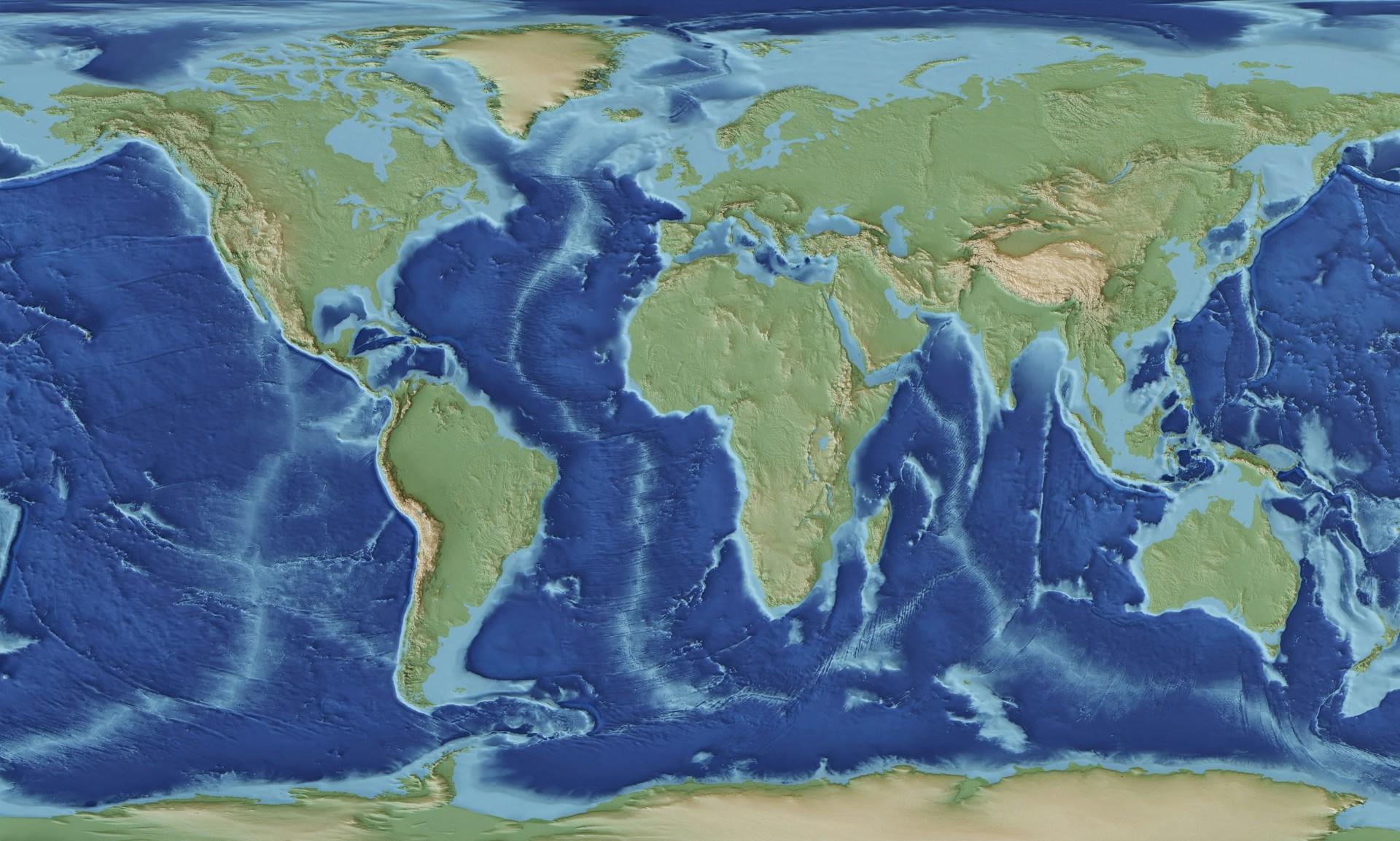

Geographers shape our understanding of the world. They explore the relationships between people, places, and the environment, helping us make sense of everything from climate patterns to urban development. Some geographers have made lasting impacts, laying the foundations of modern geography and influencing how we see the planet. This article highlights 12 famous geographers whose ideas and discoveries shaped the way we study the world today.
| Geographer | Born | Known For |
|---|---|---|
| Alexander von Humboldt | 1769, Berlin | Biogeography, and much more. |
| Carl Ritter | 1779, Germany | Being a founder of modern geography |
| Muhammad al-Idrisi | Around 1100, Ceuta, Almoravid dynasty (present-day Spain) | The Tabula Rogeriana |
| Ellen Churchill Semple | 1863, USA | Environmental determinism |
| Claudius Ptolemy | Around AD 100, possibly in Egypt | The Geographica |
| Robert Duane Ballard | 1942, USA | Hydrothermal vents, finding the Titanic |
| Yi-Fu Tuan | 1930, China | Humanistic Geography |
| Sir Halford John Mackinder | 1861, England | Establishing Geopolitics as a discipline |
| William Morris Davis | 1850, the USA | Established Geomorphology as a discipline |
| Paul Vidal de la Blache | 1845, France | Established the French School of Geopolitics |
| Arnold Henry Guyot | 1807, Switzerland | Established a national system of meteorological observations |
| David Harvey | 1935, England | Being one of the most cited geographers. |


Alexander von Humboldt
Alexander von Humboldt was a Prussian polymath, geographer, naturalist, and explorer. As a young child, he earned the 'little apothecary' nickname, thanks to his interest in plants. In 1789, he enrolled at the University of Göttingen, where the lectures sparked his desire to explore the world. He travelled through the Americas, collecting geographical and biological data.
This scientist answers your questions about who is the father of modern geography. He is best known for developing the concept that weather patterns, geology, and biology determine which plants will survive in which areas. His work in botanical geography became the foundation of biogeography studies.
Carl Ritter
Like von Humboldt, this geographer spent some years at Göttingen (1814-1819), studying geography. There, he wrote and published the first two volumes of his magnum opus. The Erdkunde is Carl Ritter's 19 part (21 volume) great work. It is one of the most extensive geography literature works by a single author, addressing the five themes of geography.
Writing the Erdkunde, he planned on three major categories: the continents, the elements, and the bodies of nature. Ritter's discoveries, works, and theories are valid, still today. Alongside Kant and van Humboldt, he was indispensable in establishing geography as an academic discipline.
Al Idrisi
Long before Columbus set sail, Muslim scholar Al Idrisi created an atlas showing Europe, Asia, and North Africa. His most famous work is the Tabula Rogeriana, a volume he compiled 1154, that lists the different types of geography known at the time. The Tabula Rogeriana describes the Eurasian continent, parts of the African continent, and includes details of the Horn of Africa and Southeast Asia.
Al Idrisi is a famous geographer as much as for being a cartographer. From an early age, he migrated across North Africa, and what we now call Spain and Portugal. He spent time in Anatolia (Asia Minor), and travelled to various European regions. Besides his university studies in Córdoba, his travels gave him a great education in geography.
Ellen Churchill Semple
Ellen Churchill Semple's first love was history, which she studied at Vassar College. After graduating, in 1882, she travelled to London, where she discovered the works of Friedrich Ratzel. She switched her focus to geography, even travelling to Leipzig, where he taught, to attend his lectures.
She found the right master for her geography lessons; you can find your geography lesson master on Superprof. What Ellen learned led her to establish the theory of environmental determinism, for which she is most famous. It's the research of how the physical environment sets societies on their paths to development.
Ptolemy
Claudius Ptolemy is famous for his contributions to the fields of mathematics, astronomy, geography, and astrology. He spent most of his life studying essential concepts in distinct academic disciplines. In the field of geography, his work resulted in an eight-volume collection of geographic coordinates that were known to the Roman Empire at the time they were recorded.
Many credit him with establishing the concept of longitude and latitude. Also, at a time when mapping and recording geographic locations were uncommon, Ptolemy uncovered facts that proved useful. He did, however, mention the difficulties of mapping.
Robert Ballard
Dr Ballard isn't a geographer in the classic sense; his work focuses on the oceans and ocean beds. He began mapping the Gulf of Maine in 1970, for his doctoral dissertation. Five years later, his quest to find hydrothermal vents began. He succeeded in 1977, discovering entire ecosystems that thrived in inhospitable environments.
Dr Ballard is more famous for discovering the Titanic and other shipwrecks, than for his geological and mapping work. He is also an ardent conservationist, and passionate about teaching future oceanographers. To that end, he established the JASON Project, a science curriculum project, which teaches more than geography facts.
Yi-Fu Tuan
Even today, we have a tendency to hold humans - ourselves, apart from our environment. Dr Tuan insists that we are a part of our environment, not masters of it. Thus, the whole of the human experience must blend philosophy, psychology, religion, and art with the geography where those ideas appear.
He established the Humanistic Geography discipline to study humans' interactions with their environment. It's different from Human Geography, which studies human relationships. He spent his career teaching and doing research in various US universities. He wrote more than 20 books about various geography topics.
Halford Mckinder
Sir Mackinder's interest in geography did not seem to matter while he studied at university. There, he earned degrees in biology and history, but somehow earned a position as a reader in Geography at Oxford University. From his biography, it's rather hard to tell how he became a geographer, as he neither travelled, nor studied the subject.
Regardless, his views were on-point. He believed the physical and human geography should be learnt together, and studied in context. He presented a paper to the Royal Geographic Society in 1904, which began the geopolitics field. He didn't get much credit for his ideas at the time, though.
William Morris Davis
An explorer in the time when the US hadn't yet extended to its western coast. Mr Davis had plenty of exploring to do. He joined the Harvard Expedition to explore the Colorado Territory and, later, worked as a mining engineer. He worked in other areas of geographical study too, such as meteorology, and teaching geology.
His greatest legacy was defining the geographical cycle. Otherwise known as the cycle of erosion, it explains how landscapes change under various pressures, such as water or wind. Besides being the father of geomorphology, Davis devoted a lot of time to analysing scientific racism.
Paul Vidal de la Blache
This geographer had little choice in becoming an academic, as his father was a professor and academic administrator. He took his studies seriously, and his father ensured he had the best educational opportunities. He also travelled extensively, throughout Egypt, Palestine, and Europe.
What Sir Mackinder did for British geographical studies, de la Blache did for the French geography establishment. His travels gave him the chance to study how regional geography impacted politics and human relations. He gathered his knowledge of these subjects into a study programme, called the Vidalian Programme.
Arnold Henry Guyot
Arnold Guyot had his eye on living a religious life and serving the ministry, but his scientific mind made that impossible. As a student, he explored philosophy as well as natural science. In his spare time, he collected botanical samples and shells. Also, his lifelong friend, the biologist and geologist Louis Agassiz, likely had a heavy influence in Guyot's career choices.
He suggested that Guyot tour the Swiss glaciers, and report his findings to the French Geological Society. Guyot's fresh eyes noticed glacial motions and patterns that a more experienced geography scientist had missed. The encouragement and esteem he received, from his friend and the Society, reinforced his life's path. Later, both men emigrated to the US, to continue their discoveries.
David Harvey
Humans have a tendency to label and pigeonhole every aspect of the human experience. Yi-Fu Tuan was among the first to break those lines, when he incorporated philosophy and psychology into geographical studies.
David Harvey continues that trend by blending economics with geography. He delivered his seminal paper, Explanation in Geography in 1969, which describes applying scientific philosophy to geographical study. However, his Social Justice and the City paper was much more impactful. His novel approach to geographical studies helped improve and expand the world's geography glossary.
Summarise with AI:
Did you like this article? Leave a rating!


 Loading...
