
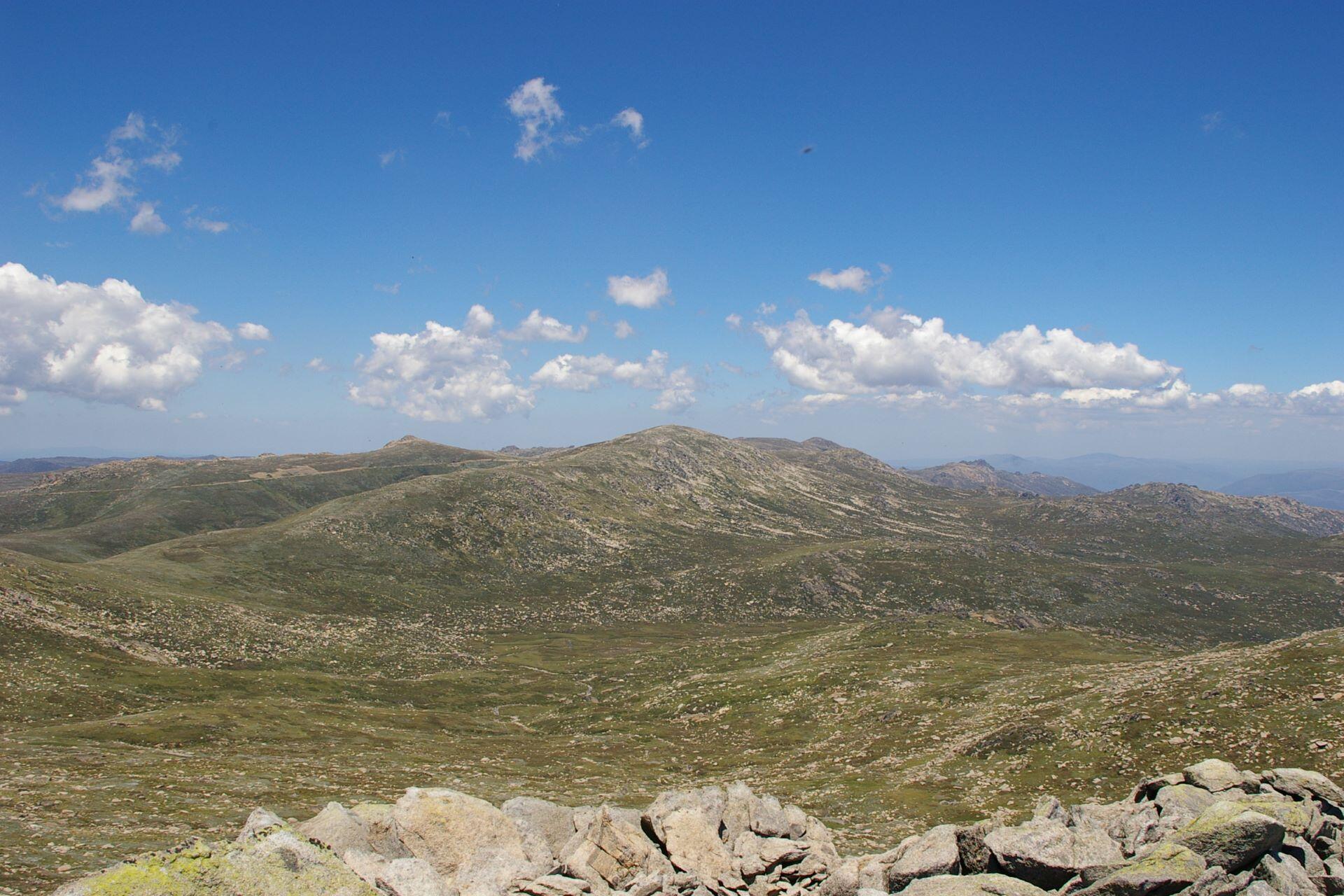

Unlike many of the mountains on other continents, Australia doesn't boast the biggest mountains. However, that's because they're older and more eroded. Millions of years ago, Australia's landscape featured dramatic peaks, but geological time put an end to that. This is why Australia's better known for its rolling ranges and high plateaus rather than jagged, snow-covered summits.
| Mountain | Altitude (m) | Prominence (m) | Location |
|---|---|---|---|
| Mount Kosciuszko | 2228 | 2228 | Snowy Mountains, New South Wales |
| Mount Townsend | 2209 | 189 | Snowy Mountains, New South Wales |
| Mount Twynam | 2195 | 63 | Snowy Mountains, New South Wales |
| Rams Head | 2190 | 86 | Snowy Mountains, New South Wales |
| Mount Bogong | 1986 | 1772 | Victorian Alps, Victoria |
| Mount Ossa | 1617 | 1079 | Central Highlands, Tasmania |
| Mount Bartle Frere | 1611 | 1592 | Bellenden Ker Range, Queensland |
| Mount Feathertop | 1922 | 709 | Victorian Alps, Victoria |
| Cradle Mountain | 1545 | 355 | Cradle Mountain–Lake St Clair National Park, Tasmania |
| Mount Wellington / Kunanyi | 1271 | 1227 | Hobart, Tasmania |


Does Australia Have Mountains?
Australia is the flattest inhabited continent, but it still has highland systems like the Great Dividing Range, which stretches over 3,500 kilometres from Queensland through New South Wales into Victoria. The range features the Australian Alps and Snowy Mountains, where you'll find the nation's tallest peaks. Australia's highest mountain is Mount Kosciuszko, which is 2,228 metres above sea level¹².
These ranges play a significant role in everything from weather patterns and biodiversity to outdoor recreation. From the alpine meadows in New South Wales to Victoria and Tasmania's rugged granite ridges, Australia's mountain environments are ecologically diverse and visually striking, many of which were formed by volcanoes millions of years ago.
Where Are Australia’s Major Mountain Ranges?
Australia's mountains are spread across the east, southeast, and islands. Each of them has been shaped by millions of years of erosion and uplift. The Great Dividing Range is the country's largest, and it runs parallel to the east coast. From the towering Australian Alps to the forested Blue Mountains and ancient Tasmanian Highlands, here are Australia's most significant mountain ranges.
Great Dividing Range
The Great Dividing Range is eastern Australia's spine. It stretches from Cape York Peninsula in Queensland through New South Wales and into Victoria. At 3,500 kilometres, it's one of the world's longest mountain ranges, creating a natural barrier between the coastal plains and the inland regions.
Australia's agricultural zones are affected by it, and its most famous subranges, such as the Australian Alps, Blue Mountains, and Snowy Mountains, are all part of this formation¹².
Australian Alps
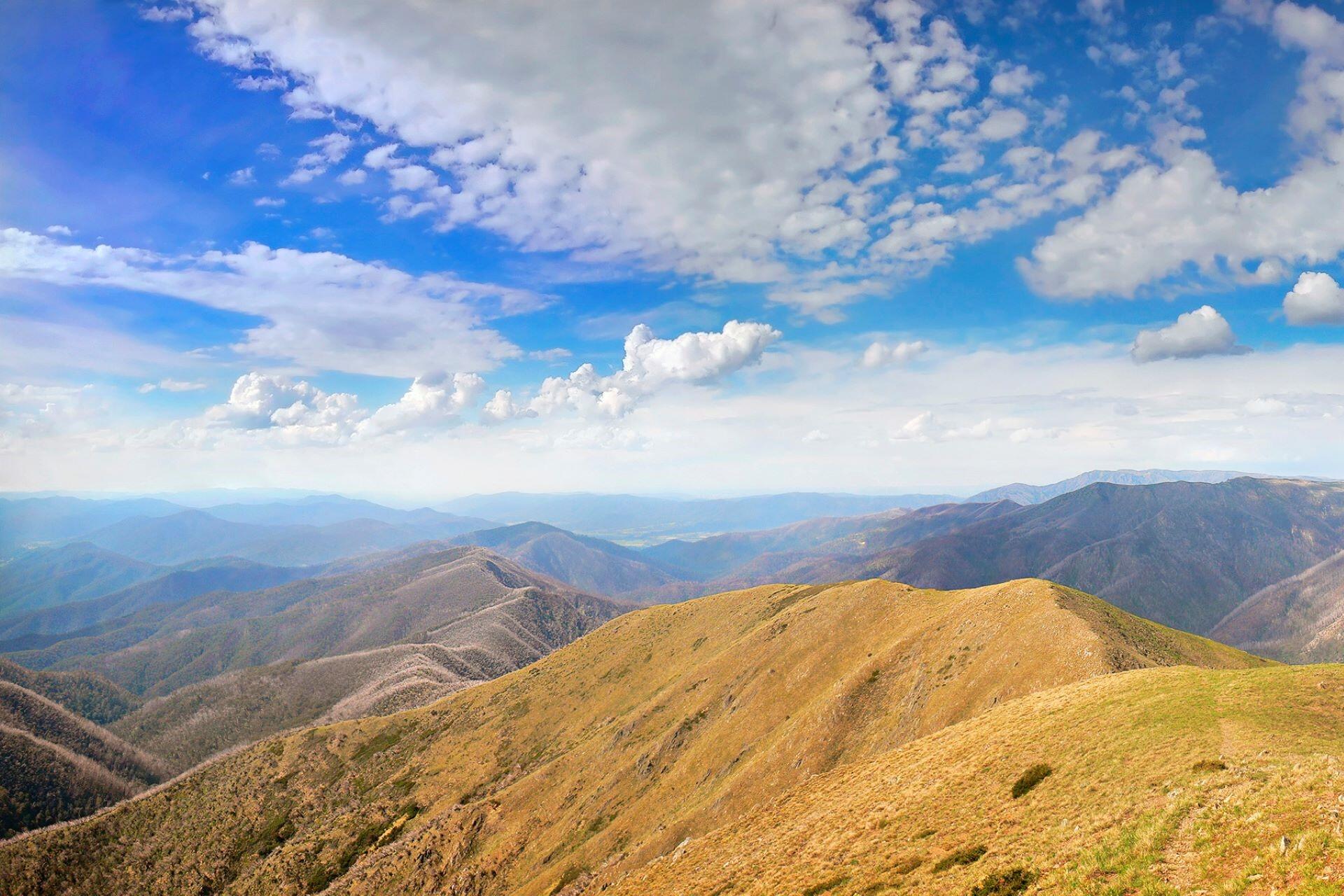
The Australian Alps are the country's only true alpine region. Snow in winter and lush alpine meadows in the summer, they're part of the aforementioned Great Dividing Range. They are home to Australia's highest peaks, including Mount Kosciuszko.
The Australian Alps are a National Heritage Place because of their natural beauty and ecological importance. Granite peaks, glacial valleys, and subalpine forests all provide vital habitats for native species like the mountain pygmy-possum and alpine skink³⁴.
Snowy Mountains
The Snowy Mountains are within the Australian Alps. This is specifically where you'll find Australia's highest mountain, Mount Kosciuszko (2,228m). This subrange in New South Wales is famous for its alpine resorts like Thredbo and Perisher, hiking trails, and the historic Snowy Hydro Scheme, powered by one of Australia's biggest rivers. These mountains are mostly granite and were formed by ancient glaciation. They left behind cirques and alpine lakes like Lake Cootapatamba. During the summer, Kosciuszko's summit trail is hugely popular, with thousands of hikers heading from Charlotte Pass or Thredbo to the top⁷.
Blue Mountains
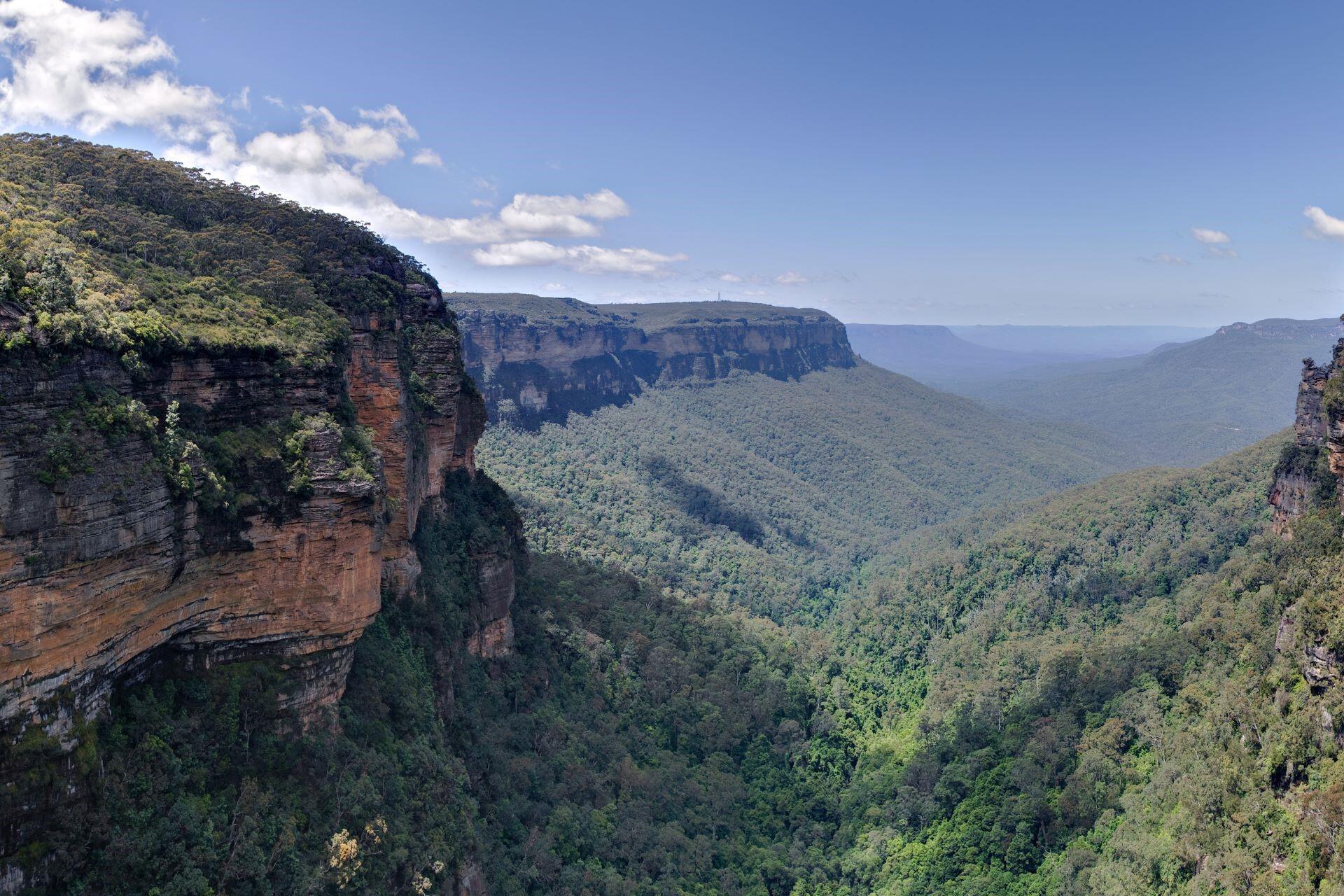
The Blue Mountains are West of Sydney. They're famous for their sheer sandstone cliffs, deep valleys, and distinctive blue haze caused by eucalyptus oil in the air. Between 800 and 1,100m, they're more famous for their scenery than their height.
The Great Blue Mountains Area is a UNESCO World Heritage Site, and it covers over one million hectares of bushland, waterfalls and escarpments. Popular viewpoints include Echo Point and Three Sisters, and it's one of New South Wales' most visited natural attractions⁵⁶.
Tasmanian Highlands
The Tasmanian Highlands include Tasmania's highest peak, Mount Ossa (1,617m), and Cradle Mountain, Frenchmans Cap, and Ben Lomond⁹.
The Highest Mountains in Australia
Australia's highest peaks are primarily concentrated in the Australian Alps along the Great Dividing Range in New South Wales and Victoria¹². While most people may think of Australia's deserts and plains, here are its biggest mountains.
1. Mount Kosciuszko (NSW)
The highest mountain in Australia, Mount Kosciuszko, rises gracefully above the alpine meadows of Kosciuszko National Park. Its gentle summit trail makes it one of the easiest "highest peaks" in the world to climb. Visitors are rewarded with panoramic views over the Snowy Mountains.
2,228 m
2,228 m
Snowy Mountains, New South Wales
2. Mount Townsend (NSW)
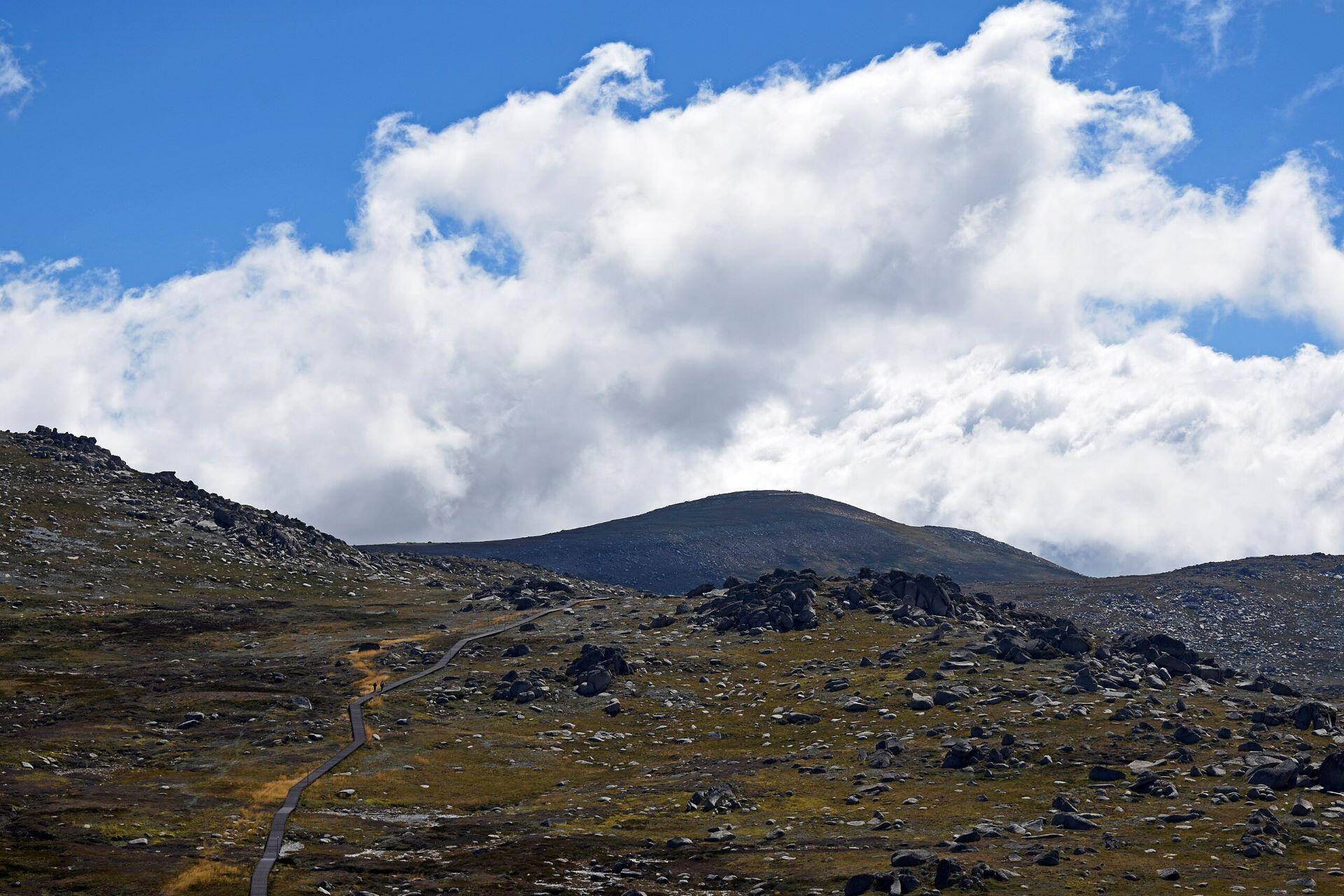
Just a short ridge away from Kosciuszko, Mount Townsend offers steeper slopes and a more rugged alpine feel. Its granite ridges catch the early morning light beautifully, making it a photographer’s favourite. The mountain sits within the Main Range, surrounded by glacial lakes and wildflowers.
2,209 m
189 m
Snowy Mountains, New South Wales
3. Mount Twynam (NSW)
Part of the Main Range, Mount Twynam is Australia's third-highest mountain, yet one of its quietest. The broad summit provides sweeping views of the Snowy River Valley and the Blue Lake cirque. Its rolling alpine slopes are especially popular with backcountry skiers.
2,195 m
63 m
Snowy Mountains, New South Wales
4. Rams Head (NSW)
South of Kosciuszko, Rams Head forms a cluster of jagged granite peaks often dusted with snow even in early summer. It’s easily accessible from the ski resort of Thredbo, making it ideal for short alpine hikes. From its summit, you can see across the Main Range into Victoria.
2,190 m
86 m
Snowy Mountains, New South Wales
5. Mount Bogong (VIC)
The highest peak in Victoria is Mount Bogong. Its name means "Big Mountain" in the local Aboriginal language. Its vast ridgeline is popular with experienced hikers and cross-country skiers. The Bogong High Plains below are covered in alpine grasses and snow gums.
1,986 m
1,772 m
Victorian Alps, Victoria
6. Mount Ossa (TAS)
Mount Ossa rises dramatically from Tasmania’s wilderness heartland within Cradle Mountain–Lake St Clair National Park. Its dolerite cliffs and alpine tarns make it one of Australia’s most striking summits. Many hikers climb Ossa while completing the world-famous Overland Track.
1,617 m
1,079 m
Central Highlands, Tasmania
7. Mount Bartle Frere (QLD)
Queensland’s highest mountain, Mount Bartle Frere, towers above the tropical rainforests of Wooroonooran National Park¹⁰. Its slopes are often shrouded in mist and heavy rainfall, nurturing rare flora found nowhere else in Australia. The summit views stretch from the Coral Sea to the Atherton Tablelands.
1,611 m
1,592 m
Bellenden Ker Range, Queensland
8. Mount Feathertop (VIC)
The sharp ridges of Mount Feathertop, shaped by Australia's climate, make it one of Australia’s most photogenic alpine summits. Unlike most rounded Australian peaks, it has steep, narrow spurs resembling Europe’s high mountains. Hikers reach the top via the Razorback Trail for stunning views of the Victorian Alps.
1,922 m
709 m
Victorian Alps, Victoria
9. Cradle Mountain (TAS)
Arguably the most famous Tasmanian mountain, Cradle Mountain anchors the state’s premier national park. Its dramatic twin peaks rise over Dove Lake, reflected perfectly on calm days. The area attracts thousands of trekkers each year for the iconic Overland Track experience.
1,545 m
355 m
Cradle Mountain–Lake St Clair National Park, Tasmania
10. Mount Wellington / Kunanyi (TAS)
Overlooking the city of Hobart, Mount Wellington (Kunanyi) is one of Australia’s most accessible major peaks. Locals and visitors drive or hike to its summit for sweeping views of the Derwent River and the Southern Ocean. Its dolerite cliffs and subalpine vegetation make it a distinctive backdrop to Tasmania’s capital.
1,271 m
1,227 m
Hobart, Tasmania
Bibliography
- Elevations. (n.d.). Geoscience Australia. Retrieved October 9, 2025, from https://www.ga.gov.au/scientific-topics/national-location-information/landforms/elevations
- Highest Mountains. (n.d.). Geoscience Australia. Retrieved October 9, 2025, from https://www.ga.gov.au/scientific-topics/national-location-information/landforms/highest-mountains
- National Heritage Places – Australian Alps National Parks and Reserves. (Last updated November 10, 2023). Department of Climate Change, Energy, the Environment and Water (Australia). Retrieved October 9, 2025, from https://www.dcceew.gov.au/parks-heritage/heritage/places/national/australia-alps
- Australian Alps bioregion. (n.d.). NSW Environment and Heritage. Retrieved October 9, 2025, from https://www.environment.nsw.gov.au/topics/animals-and-plants/biodiversity/bioregions/bioregions-of-nsw/australian-alps
- Greater Blue Mountains World Heritage Area. (n.d.). NSW National Parks and Wildlife Service. Retrieved October 9, 2025, from https://www.nationalparks.nsw.gov.au/conservation-and-heritage/greater-blue-mountains
- Greater Blue Mountains Area. (n.d.). UNESCO World Heritage Centre. Retrieved October 9, 2025, from https://whc.unesco.org/en/list/917/
- Kosciuszko National Park. (n.d.). NSW National Parks and Wildlife Service. Retrieved October 9, 2025, from https://www.nationalparks.nsw.gov.au/visit-a-park/parks/kosciuszko-national-park
- Mount Bogong (Alpine National Park). (n.d.). Parks Victoria. Retrieved October 9, 2025, from https://www.parks.vic.gov.au/places-to-see/parks/alpine-national-park/attractions/mount-bogong
- Overland Track – Walk notes (Mount Ossa 1,617 m). (Updated July 28, 2025). Parks and Wildlife Service Tasmania. Retrieved October 9, 2025, from https://parks.tas.gov.au/explore-our-parks/cradle-mountain/overland-track/overland-track-walk-notes
- Bartle Frere trail, Wooroonooran National Park. (Updated June 14, 2024). Queensland Parks and Wildlife Service. Retrieved October 9, 2025, from https://parks.qld.gov.au/parks/bartle-frere/journeys/bartle-frere-trail
Summarise with AI:
Enjoyed this article? Leave a rating!

 Loading...
