


The Occupational English Test (OET) is a unique English language test for healthcare workers. Unlike general English tests like IELTS, PTE, or CAE, the OET is for English in medical and healthcare contexts. Naturally, this is a preferred choice of English test for doctors, nurses, and medical professionals.


What is the OET, and Why is it Important?
The Occupational English Test (OET) is internationally recognised. What makes it so important? For one, in Australia, the OET is accepted by several organisations and bodies, including:
- Healthcare regulatory bodies for professional registration.
- Hospitals, clinics, and healthcare employers for recruitment.
- Universities and training institutions for medical courses and degrees.
The test is required for healthcare registration, is accepted for visa applications, and comes with plenty of real-world relevance.
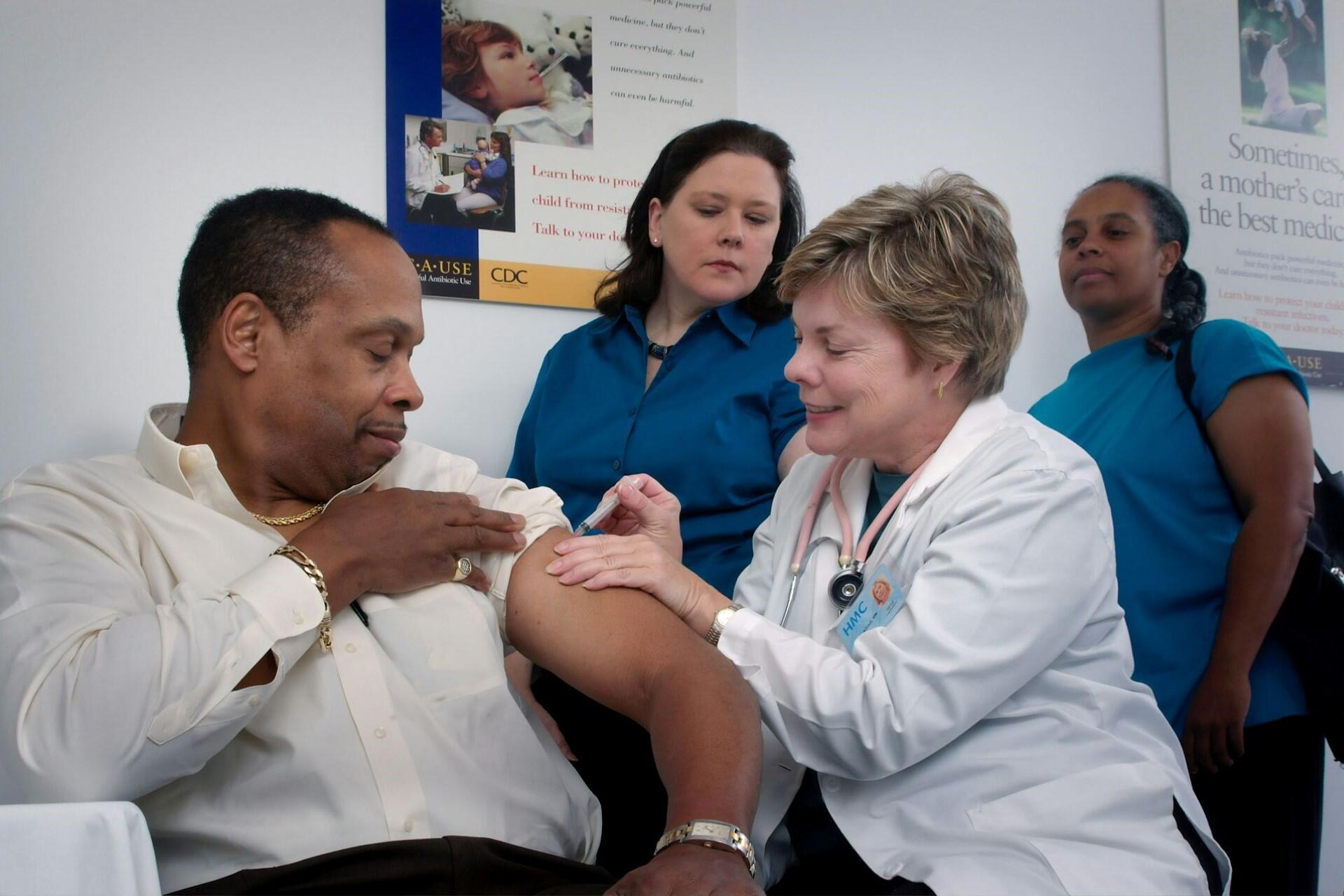
There are also plenty of healthcare professions in Australia that require the OET, including:
- Doctors (Medicine, Surgery, General Practice)
- Nurses & Midwives
- Dentists & Dental Hygienists
- Pharmacists
- Physiotherapists
- Radiographers
- Occupational Therapists
- Veterinarians
Many overseas-trained healthcare professionals take OET as part of their qualification and registration process in Australia.
Who Needs to Take the OET?
The OET is specifically for healthcare professionals to ensure they have English proficiency for work, study, or their visa applications. Unlike the academic CAE, the OET focuses explicitly on medical communication.
Here are the people who should consider the OET.
1. Healthcare Professionals Seeking Registration in Australia
Many Australian healthcare regulatory bodies require OET scores for professional certification. The test is accepted by:
- The Australian Health Practitioner Regulation Agency (AHPRA) for medical, nursing, and allied health registrations.
- The Medical Board of Australia for doctors and general practitioners.
- The Nursing and Midwifery Board of Australia (NMBA) for nurses and midwives.
- The Australian Dental Council (ADC) for dentists.
- The Pharmacy Board of Australia for pharmacists.

Check the score requirements of your specific profession before booking your test.
2. International Healthcare Graduates Applying to Australian Universities
Many universities and medical training programs in Australia accept OET scores as proof of English proficiency as well as other English proficiency tests like TOEFL, IELTS, or PTE. However, OET is often required for postgraduate medical, nursing, and allied health courses.
Common programs that require OET
- Bachelor of Nursing (BN) and Master of Nursing (MN)
- Bachelor of Medicine, Bachelor of Surgery (MBBS)
- Diploma and Certificate courses in healthcare fields
If you're an international student planning to study a healthcare-related course in Australia, OET may be required for admission.
3. Overseas-Trained Healthcare Workers Applying for an Australian Work Visa
- The Australian Department of Home Affairs accepts OET scores for work visas (Subclass 482, 186, 190, etc.).
- The test is helpful for doctors, nurses, and other medical professionals seeking employment in Australia.
Minimum OET Score Requirements for Australian Visas:
- Vocational English: Minimum B grade (OET score 350+) in all four sections.
- Competent English: Minimum B grade in each section for skilled migration pathways.
- Proficient or Superior English: Higher scores can earn more visa points.
A higher OET score can increase your visa eligibility, improving your chances of getting a work permit or permanent residency in Australia.
4. Medical Professionals Seeking Career Growth
- Some healthcare employers and training institutions prefer candidates with an OET certification to ensure strong medical communication skills.
- Having a high OET score can improve career opportunities in Australia, the UK, Ireland, and New Zealand.
Even if OET is not mandatory for your job, it can help you stand out in competitive healthcare recruitment processes.
OET vs. Other English Tests (IELTS, PTE)
So why would somebody consider the OET versus any other English test, such as the IELTS or the PTE? Here are the key differences.
| Feature | OET (Occupational English Test) | IELTS (International English Language Testing System) | PTE (Pearson Test of English) |
|---|---|---|---|
| Test Focus | Healthcare & Medical English | General & Academic English | Academic English |
| Test Format | Case-based, professional healthcare scenarios | Academic & general topics | Fully computer-based |
| Who Takes It? | Doctors, nurses, pharmacists, healthcare professionals | Students, professionals, migrants | Students, visa applicants, professionals |
| Speaking Test | Healthcare role-play with an examiner | Face-to-face interview | Computer-recorded responses |
| Writing Test | Writing a referral or discharge letter | Writing essays or reports | Writing short & long responses |
| Accepted for Australian Visas? | ✅ Yes | ✅ Yes | ✅ Yes |
| Results Validity | 2 years | 2 years | 2 years |
| Scoring System | Graded from A to E | Band score (1.0–9.0) | Scored (10–90) |
OET is recommended for healthcare professionals because it tests real-world medical communication skills, making it more relevant for clinical practice than IELTS or PTE.
OET Test Format and Key Components
One thing the OET has in common with other general English proficiency tests is that it still tests the four essential language skills: listening, reading, writing, and speaking.
Each section of the test is dedicated to these core skills, but they include medical and healthcare focuses.
| Section | Duration | Number of Parts | Focus |
|---|---|---|---|
| Listening | ~40 minutes | 3 Parts | Understanding patient interactions & medical discussions |
| Reading | 60 minutes | 3 Parts | Comprehending medical texts & healthcare materials |
| Writing | 45 minutes | 1 Task | Writing a professional healthcare letter |
| Speaking | ~20 minutes | 2 Role-Plays | Simulating patient-professional conversations |
1. OET Listening (40 Minutes)
The Listening section tests the ability to understand spoken English in medical contexts. Candidates listen to realistic healthcare interactions and answer questions.
Part A
Patient Consultation
Listen to a conversation between a healthcare professional and a patient, then complete notes.
Part B
Workplace Communication
Listen to short healthcare-related discussions (e.g., handovers, team briefings) and answer multiple-choice questions.
Part C
Medical Lectures & Presentations
Listen to a healthcare professional giving a talk and answer multiple-choice questions.
Listen to medical podcasts and hospital briefings to improve comprehension of different accents and medical terminology.
2. OET Reading (60 Minutes)
The Reading section evaluates the ability to understand and interpret medical texts and healthcare-related materials.
Part A
Expedited Reading Task
Quickly locate information from four short medical texts (e.g., guidelines, patient leaflets).
Part B
Workplace Reading
Answer multiple-choice questions based on short healthcare-related texts (e.g., policy updates, staff communications).
Part C
Academic Reading
Read two longer texts on medical topics and answer multiple-choice questions.
Practice skimming and scanning techniques to find answers quickly in Part A.
3. OET Writing (45 Minutes)
The Writing task requires candidates to produce a profession-specific letter based on a given case scenario.
- Task: Write a referral, discharge, transfer, or advice letter using patient case notes.
- The letter must be professionally structured, using clear, concise, and medically appropriate language.
Focus on task structure, clarity, and relevance—unnecessary details can lower your score.
4. OET Speaking (20 Minutes)
The Speaking section involves two role-play scenarios in which candidates interact with an examiner acting as a patient or a caregiver.
- Task: Engage in a profession-specific consultation, addressing a patient's concerns, symptoms, or treatment plans.
- Assessment Criteria: Pronunciation, fluency, clarity, and the ability to communicate empathetically in a professional setting.
Practice role-playing with a partner or tutor to develop confidence in medical consultations and patient interactions.
OET Scoring Criteria and How the Test is Evaluated
The OET is given lettered grades, and each section is graded separately. Here's how the OET scores break down.
| Grade | Score Range | Proficiency Level | Meaning |
|---|---|---|---|
| A | 450 – 500 | Highly Proficient | Can communicate fluently in professional settings with full understanding of complex medical language. |
| B | 350 – 440 | Proficient | Can effectively communicate with patients and colleagues, with minor inaccuracies that don’t impact meaning. |
| C+ | 300 – 340 | Competent | Can understand and communicate essential medical information but may require clarification. |
| C | 200 – 290 | Limited Competence | Can handle basic interactions but struggles with complex topics and patient communication. |
| D – E | Below 200 | Weak Proficiency | Has difficulty understanding and expressing medical information. |
Most Australian healthcare boards and employers require a minimum score of B (350+) in all four sections.
Where to Take the OET Test in Australia?
Several test centres across Australia offer either paper-based or computer-based formats. Here are some of the main ones.
| City | Test Centers | Available Formats |
|---|---|---|
| Sydney | Pearson OET Test Centre, Navitas English, UNSW Global | Paper & Computer |
| Melbourne | Pearson OET Test Centre, RMIT English Worldwide, Hawthorn English | Paper & Computer |
| Brisbane | International House Brisbane, Griffith English Language Institute | Paper & Computer |
| Perth | Pearson OET Test Centre, Navitas English Perth | Paper & Computer |
| Adelaide | SA College of English, ILSC Adelaide | Paper & Computer |
| Canberra | ANU College, Canberra Institute of Technology | Paper-based only |
| Hobart | Cambridge Tasmania English Centre | Paper-based only |
| Darwin | Charles Darwin University | Paper-based only |
Computer-based OET exams provide faster results (10 days) compared to paper-based exams (16 days).
OET Exam Fees
The standard OET exam fee is $587, but there are different charges for late booking, rescheduling, or retaking sections.
- Resitting One Sub-Test: $265
- Resitting Two Sub-Tests: $400
- Resitting Three Sub-Tests: $505
If you fail one section, you can retake only that section instead of the whole test, saving money and time.
How to Book Your OET Test in Australia
To register for the OET exam, follow these steps:
- Visit the official OET website.
- Create an account and enter your personal details.
- Choose a test centre and select a date.
- Select paper-based or computer-based format.
- Pay the test fee and receive a confirmation email.

Book your test at least 4–6 weeks in advance, as test slots in major cities like Sydney and Melbourne fill up quickly.
How Superprof Can Help with OET Preparation
To prepare for the Occupational English Test (OET), the PTE, or any English proficiency test, you need excellent English communication skills, especially in healthcare. The Superprof website offers private tutors.
Why Choose Superprof for OET Preparation?
- Expert Healthcare English Tutors – Learn from OET trainers specialising in medical communication skills.
- Customised Study Plans – Focus on Speaking, Writing, Listening, or Reading based on your strengths and weaknesses.
- Flexible Learning Options – Choose private lessons online or in-person at a time that suits your schedule.
- Mock Tests & Real Exam Practice – Get access to OET sample questions and role-play scenarios to build confidence.
- Affordable & Accessible – Select tutors based on budget, experience, and availability.

How to Find an OET Tutor on Superprof
- Visit Superprof’s website and search for OET tutors.
- Filter by expertise, location, and pricing to find the best fit.
- Book a trial lesson to discuss your goals and get a customised study plan.
- Start improving your OET skills with expert guidance and real-world practice.
So many tutors on Superprof offer the first lesson for free, so why not try a session before committing?
Summarise with AI:
Enjoyed this article? Leave a rating!

 Loading...
