

This may be waxing philosophical but people don't often consider the complexity of living organisms. Save perhaps for in Biology class, have you ever thought about the billions of cells that make up your body? And how they all work together as components of a single, large organism? This article details how cells work, what they're made of, and how they compare across fauna and flora.
What to Know about Animal and Plant Cells
- They are both eukaryotic.
- They share many common features: a nucleus, and an assortment of organelles that perform similar functions.
- Animal cells form many types of tissues but plant cells only form five.
- Plant cells include chloroplasts; animal cells do not.
- Plant cells do not have the same structural support and protection that animal cells enjoy.


Overview of Eukaryotes - Animal and Plant Cells
Cells are the basic unit of life. They contain all of the structure and components, and - most importantly - the genetic information to ensure the survival and perpetuation of the organism. There are two fundamental categories of cells: prokaryotic and eukaryotic.
Plants and animals, complex beings that they are, have eukaryotic cells1.
That means that practically every plant and animal cell contains a nucleus, cytoplasm - the fluid filling the cells, and a membrane.
The variety of cells an animal may have, and the different functions they fulfil mean that not every animal cell is equipped with the same set of organelles.
Your Superprof biology teacher might prod you to compare a cell's membrane to our skin, as it completely contains everything inside of the cell.
All cells, plant or animal, contain mitochondria and ribosomes, both of which are organelles. However, plant cells contain chloroplasts, a type of organelle that animal cells don't have.
So now, with nearly all the basic cell facts in place, we answer one last question about plant and animal cells. And then, we can get specific about cell structures.
Cytoplasm is called the intracellular fluid. It consists of water, salt and other molecules.
It serves to cusion and protect the cell, its structure, and its organelles.
The fluid outside of the cell is called extracellular fluid.
Animal Cell Structures
All animals are multicellular, meaning many different types of cells make up the organism. Some animals are simply-constructed while others - humans, for example, are extremely complex.
Complex organisms have blood cells, muscle cells and nerve cells; brain cells, intestinal cells, liver cells and, most important of all, stem cells.Stem cells are blank templates waiting for instructions on what type of cell to become. That's just a partial list of the type of cells complex organisms may have. The variety of cells and the different functions they fulfil mean that not every animal cell is equipped with the same set of organelles.
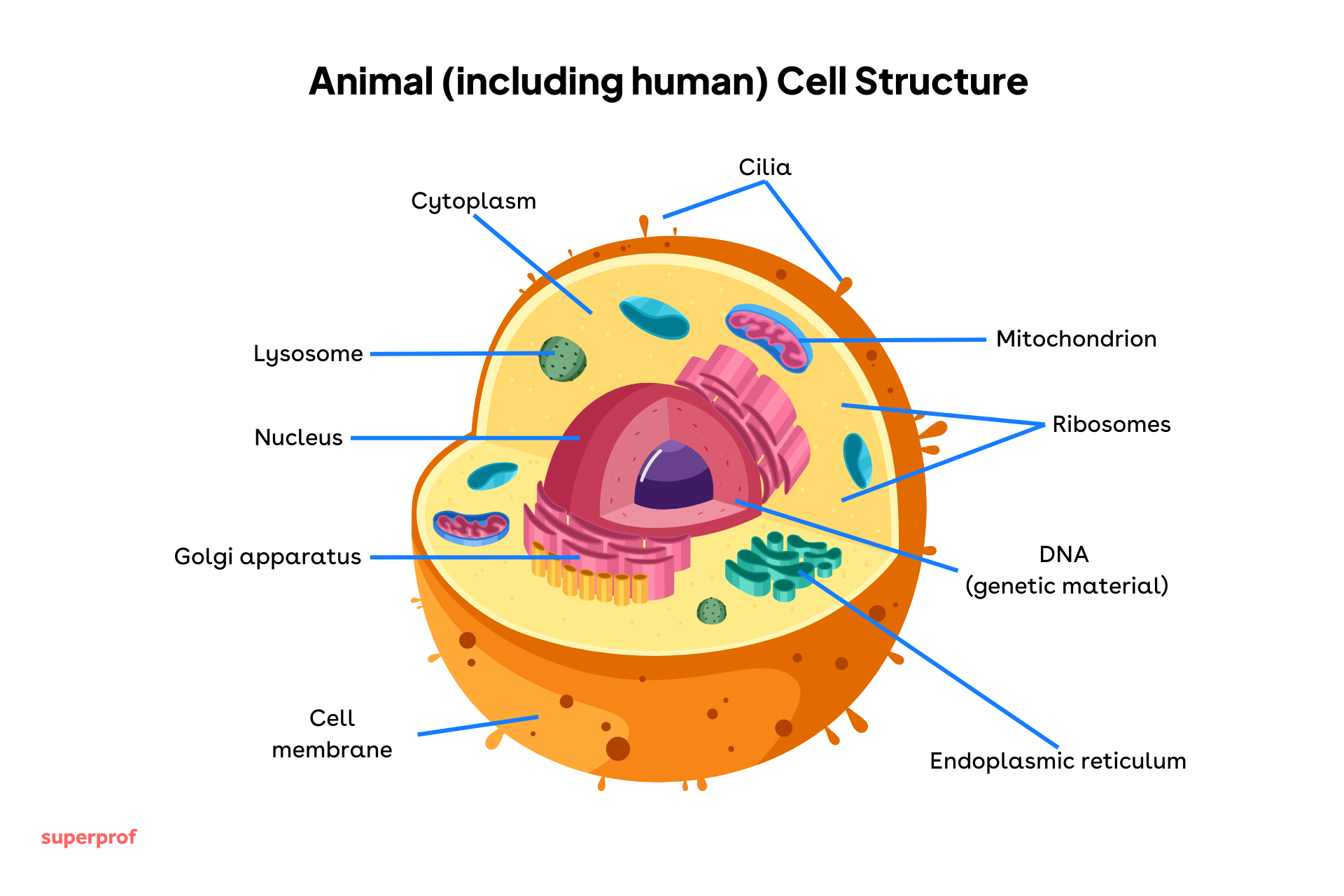
Besides a nucleus and cytoplasm, animal cells contain ribosomes; the cells' 'manufacturing department'. They set up the sequence of amino acids in the polypeptide chains according to instructions delivered by the cell's messenger RNA (mRNA).
Ribosomes may be anywhere within the cytoplasm but they are often melded to the endoplasmic reticulum (ER).
The ER assemble and transports the long chains of amino acids that the ribosomes produce. Each cell has two types of ER: smooth and rough.
The rough type aids ribosome functions.
The smooth type removes toxins from the cells.
Finally, the Golgi body folds the proteins sent by the ER. It sorts them and packages them into vesicles. As the ribosomes are the production department, the Golgi is responsible for shipping the 'product' out.
Mitochondria organelles produce energy for all these processes.
They are the cells' power station, where cellular respiration takes place.
This is where fats and sugars are broken down to release ATP.
Lysosomes contain digestive enzymes that break down large molecules within the cell so that their component parts may be reused.
Centrioles and Centrosomes
These two cell features don't get a lot of coverage but they're equally important2.
Centrioles
- cylindrical structures
- made of tubulin protein
- needed to form cilia, flagella, and mitotic spindles
- one centriole = 9 sets of microtubule triplets
- centrosome's core component
Centrosomes
- a microtubule organising organelle
- contains 2 centrioles
- aids in maintaining cell shape
- helps with cell division and intracellular transport
- duplicate before mitosis
With the function of animal cell structures explained, let's turn our focus to plant cell structures.
Plant Cell Diagram: Unique Structures
Three major features make the distinction between animal cells and plant cells:
- a cell wall
- a vacuole
- chloroplasts
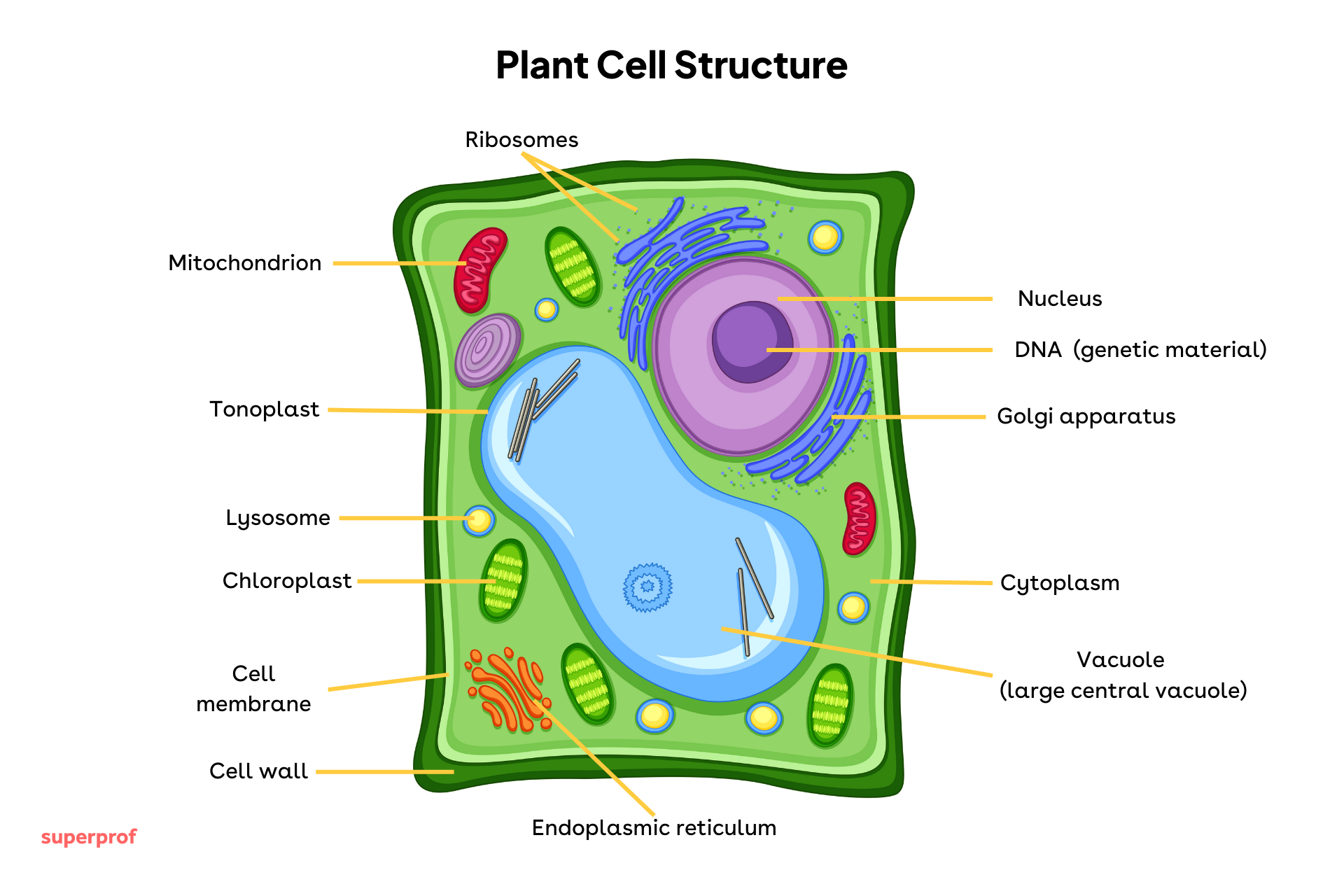
Plant cells do not have the structural protection and security that animals cells have. However, they have different mechanisms3 to protect their nuclei and maintain their shapes. Their centrally-positioned vacuole, and the cell wall, make the cell structure more rigid and durable.
The Central Vacuole
The vacuole works like a bladder, retaining water so that it balloons towards the cells' sides. This causes turgor pressure - the effect of water-laden cells pressing together.
Turgor pressure fulfils the same function as skeletons in animals, providing the plant with the rigidity it needs to grow upwards, towards more sunlight.
The Cell Wall
To withstand turgor as well as the inner pressure the vacuoles create, plant cells have tough walls. These tough cell walls, in turn, lend the plant strength. Cell walls are made up mostly of cellulose, with a few other molecules thrown in, pectin and lignin among them.
Cellulose presents digestive challenges to organisms that do not produce the enzyme cellulase.
Many herbivores (deer, rabbits, and so on) produce this enzyme but other animals, including humans, often have a deficiency of it. That might explain why your tummy feels so bloated after eating lots of veg.
Chloroplasts
Chloroplasts, the plants' most important organelles, are enclosed in a double membrane. The outer membrane of these disc-shaped organelles forms their outer surface.
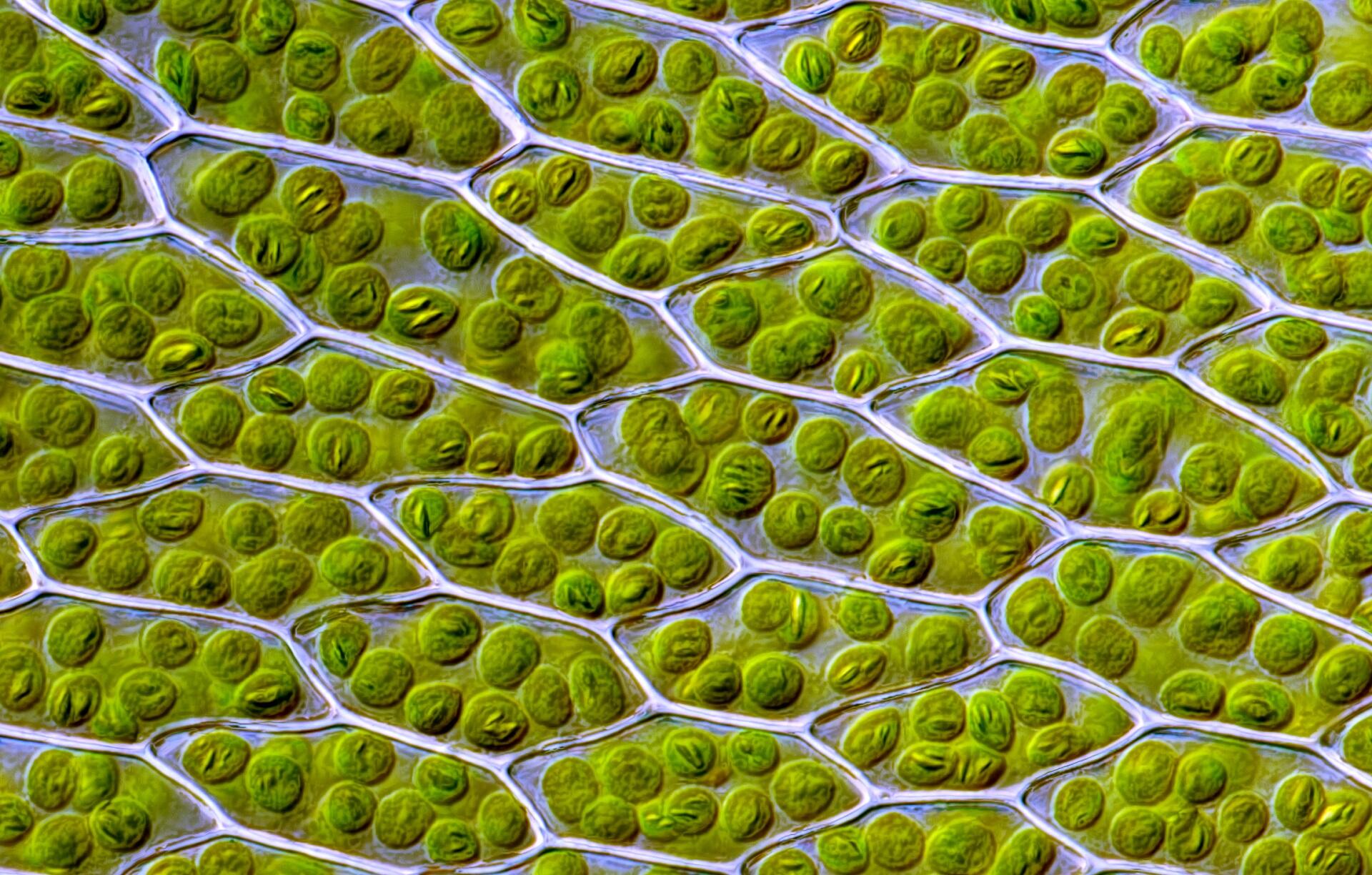
It is fairly permeable compared to the inner membrane, which doesn't allow as many molecules through.
Chloroplasts are filled with a fluid called stroma - somewhat akin to cytoplasm. Within the stroma are stacks of thylakoids.
Each of these coin-shaped compartments contains high levels of carotenoid and chlorophyll, two pigments especially adept at capturing light.
Thylakoid stacks are called grana (singular: granum). They are connected by intergranal thylakoids; essentially a single disc whose sides are embedded in two neighbouring grana.
Like other eukaryotic cells, plant cells contain a nucleus, wherein the cell's genetic material (DNA) is stored. They also have mitochondria, but they function a bit differently in plants than they do in animals. Finally, while animals cells form many different types of tissues, plant cells only form five.
Having taken a close look at animal cell vs plant cell particulars of eukaryotic cells, it's easy to see how fascinating cell biology can be.
Animal Cells Vs Plant Cells: A Comparative Analysis
Despite their shared classification as eukaryotes and their similarities, animal and plant cells are fundamentally different4.
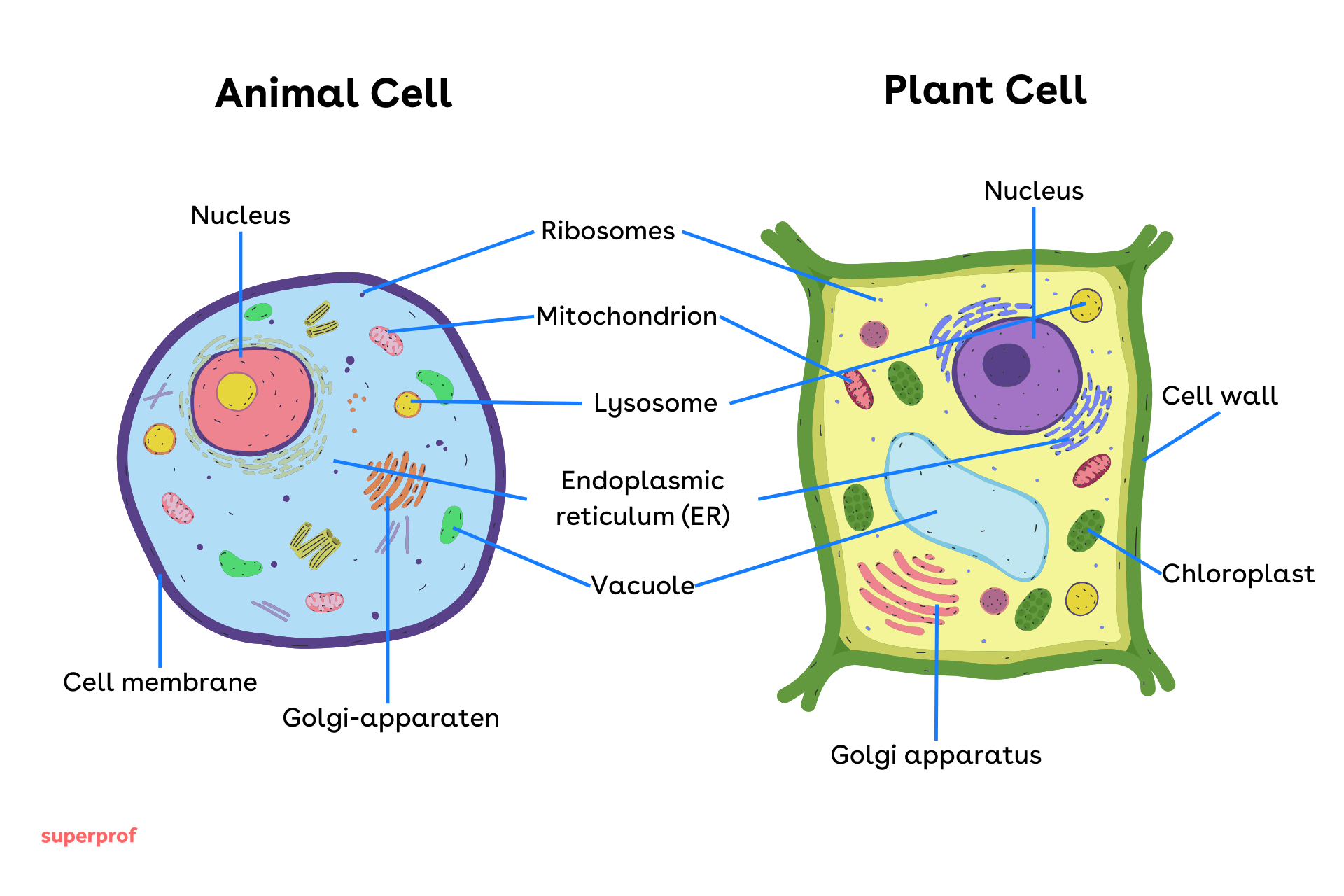
For one, very few animals have any chloroplasts. Bacteria and amoebas do, and only one vertebrate does: the spotted salamander. They all absorb chloroplasts from the plants they eat. Otherwise, here's how animal and plant cells compare.
Plant cells
- generally larger (10-100 µm)
- have a central vacuole
- no centrioles or centrosomes
- store energy as starch
- rely on the vacuole to dispose of waste
- have plasmodesmata (channels) for intercellular communication
- have walls to protect their nuclei
- are photoautotrophic: they use light energy to make the sugars that sustain them.
Animal cells
- generally smaller (10-30 µm)
- have many, smaller vacuoles
- many centrioles/centrosomes
- store energy as glycogen
- have lysosomes to break down waste
- neurone cells manage intercellular communication
- rely on the organism's support structures
- are heterotrophic: they eat plants and other animals
To this side-by-side comparison, we have to add a few side notes.
- some animals' cells have small vacuoles that store molecular particles larger than water. This storage is only temporary, unlike for plants, , where vacuoles play a central role.
- Plant and animal cells engage in cellular respiration and ATP production. However, the mitochondria in animals break down ingested nutrients and extract what it needs. Plant mitochondria get their sugars from within, synthesised by the plant itself.
Because they have a defined nucleus and membrane-bound organelles, both plant and animal cells are eukaryotic. Conversely, bacteria and archaea have no nucleus; their DNA is housed in a body called the nucleoid, so they are classified as prokaryotic. Now, we only need to know how cell theory developed to learn how biologists established these facts.
References
- Foster, Bree. “Eukaryotic Cells: Eukaryote Definition, Structure and Characteristics.” Cell Science from Technology Networks, Technology Networks, 28 Mar. 2025, www.technologynetworks.com/cell-science/articles/eukaryotic-cells-eukaryote-definition-structure-and-characteristics-397841. Accessed 26 Jan. 2026.
- LibreTexts. “3.7: Centrosomes and Centrioles.” Biology LibreTexts, June 2016, bio.libretexts.org/Bookshelves/Introductory_and_General_Biology/Biology_(Kimball)/03:_The_Cellular_Basis_of_Life/3.07:_Centrosomes_and_Centrioles. Accessed 26 Jan. 2026.
- Petruzzello, Melissa. “Plant Cell | Biology | Britannica.” Encyclopædia Britannica, 30 June 2020, www.britannica.com/science/plant-cell. Accessed 26 Jan. 2026.
- ---. “4.10: Eukaryotic Cells - Comparing Plant and Animal Cells.” Biology LibreTexts, 5 July 2018, bio.libretexts.org/Bookshelves/Introductory_and_General_Biology/General_Biology_(Boundless)/04:_Cell_Structure/4.10:_Eukaryotic_Cells_-_Comparing_Plant_and_Animal_Cells. Accessed 26 Jan. 2026.
Summarise with AI:
Did you like this article? Leave a rating!


 Loading...
