
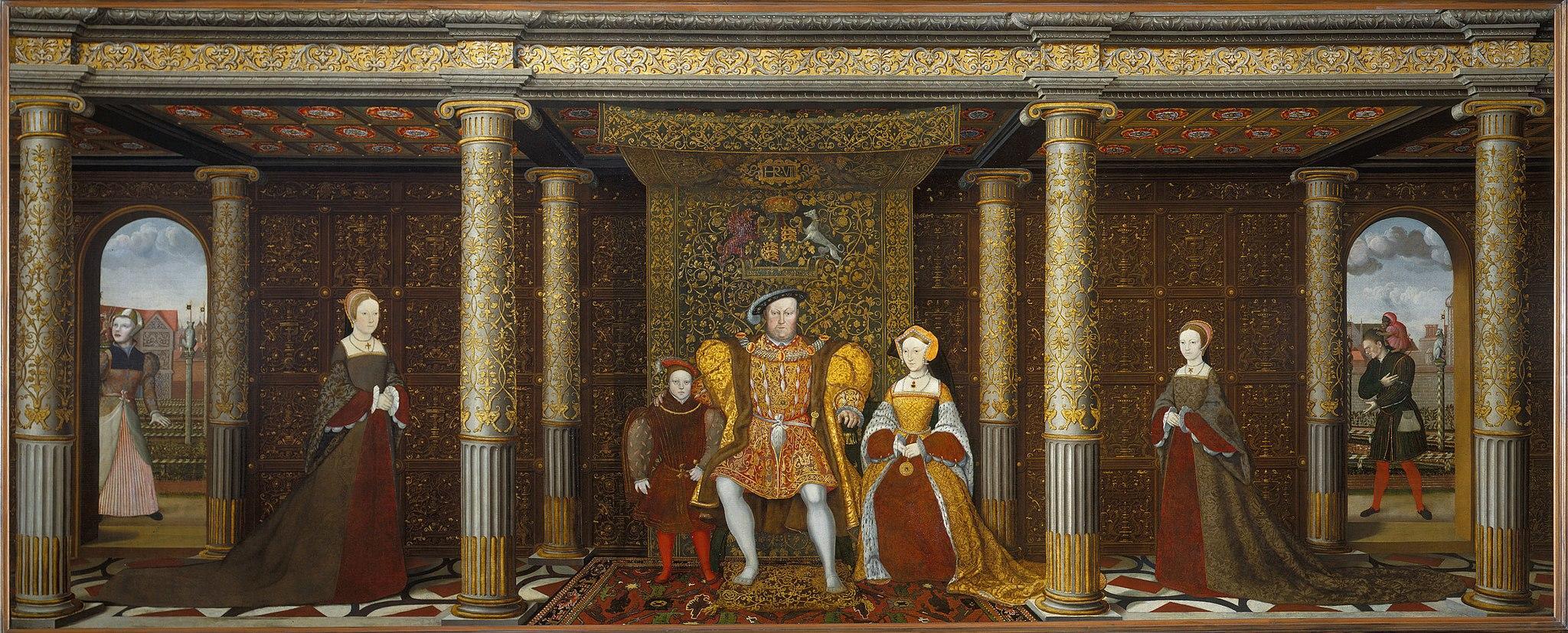

The Tudor monarchs ruled England between 1485 and 1603.¹ They remain some of the most influential English rulers of all time. From Henry VII's rise to power following the Wars of the Roses to the achievements of Elizabeth I, the Tudor kings reshaped England. From religious reform to the literary culture of Elizabethan England, here's our guide to one of the country's most famous royal houses.
1485
Henry VII becomes king
Victory at the Battle of Bosworth Field ends the Wars of the Roses and establishes the Tudor dynasty.
1509
1509 – Henry VIII ascends the throne
Begins one of the most influential reigns in English history and later creates the Church of England.
1547
Edward VI crowned king
Young Protestant monarch whose reign accelerates religious reform.
1553
Mary I becomes queen
Attempts to restore Catholicism and reverses Protestant reforms.
1558
Elizabeth I begins her reign
Oversees the Elizabethan Golden Age and strengthens England's global influence.
1603
Death of Elizabeth I
Marks the end of Tudor rule and beginning of the Stuart dynasty.


Origins of the Tudor Dynasty
The Tudor dynasty shaped early modern England.⁴ It transitioned the country from medieval rule to a centralised and politically stable monarchy. Tudor monarchs influenced religion, governance, and international relations. Did you know they were closely linked to Welsh noble families, though? Just one of many interesting facts about the Tudors.
Welsh Roots and the Rise to Power
The Tudor royal family traced its ancestry to Welsh noble families, the Tudors of Penmynydd, in particular.¹ Their lineage is often connected to the medieval Welsh nobleman Ednyfed Fychan. This dynasty's rise began with Owen Tudor, a Welsh noble who married Catherine of Valois, the widow of King Henry V.¹ This linked the Tudor family directly to English royalty. Owen Tudor's grandson, Henry Tudor, inherited this connection through his father, Edmund Tudor and mother, Margaret Beaufort.
The Tudor period marked one of the most transformative eras in English history. Tudor monarchs strengthened royal authority after the instability of the Wars of the Roses. They helped move England away from medieval feudal power structures. During this time, England experienced major religious change through the English Reformation, significant cultural growth during the Elizabethan era, and the early expansion of England's global influence through exploration and naval development.
The Wars of the Roses and Henry VII's Ascendancy
The Wars of the Roses were a series of civil wars between the House of Lancaster and the House of York.⁴ These two dynasties fought over the English throne. The conflicts ended with Henry Tudor emerging victorious after defeating the Yorkist King Richard III at the Battle of Bosworth Field in 1485.² Ultimately, the two houses would be immediately united through marriage, almost trivialising the conflict before it all, even if this was a strategic move to consolidate power and legitimise the new monarch.
Key Battles of the Wars of the Roses
The Tudor Monarchs in Order
The Tudor monarchs ruled England for over a century. They played a key role in shaping the country's politics, religion, and culture. Each ruler contributed in some way to turning England into an emerging early modern power.
| Monarch | Reign | Religion | Notable Achievement |
|---|---|---|---|
| Henry VII | 1485-1509 | Roman Catholic | Founded Tudor dynasty and ended the Wars of the Roses |
| Henry VIII | 1509-1547 | Anglican (formerly Catholic) | Created the Church of England and expanded royal authority |
| Edward VI | 1547-1553 | Protestant | Advanced Protestant reforms including the Book of Common Prayer |
| Mary I | 1553-1558 | Roman Catholic | Attempted to restore Catholicism and reversed Protestant reforms |
| Elizabeth I | 1558-1603 | Anglican Protestant Settlement | Defeated the Spanish Armada and led the Elizabethan Golden Age |
Henry VII (1485–1509)
Henry VII established Tudor authority by defeating Richard III.² His reign focused on restoring political stability after the Wars of the Roses. He improved royal finances, reduced the power of rebellious nobles, and expanded the role of royal officials across England.
Henry VIII (1509–1547)
Henry VIII was one of England's most famous rulers. He reshaped the relationship between religion and government, breaking away from the Roman Catholic Church.⁷ He established the Church of England and permanently changed the structure of religion in England.⁷ Foreign wars, major political reforms, and a succession crisis were all highlights of his reign.
Edward VI (1547–1553)
A king at a young age, Edward VI ruled under the guidance of influential regents. Protestant reforms were accelerated during his reign with new religious laws and changes to church practices.⁴ His reign was brief, but his policies strengthened Protestant influence, which would create later political tensions.
Mary I (1553–1558)
Mary I attempted to reverse the religious changes of previous Tudor monarchs by restoring Roman Catholic authority in England.⁴ She tried to rebuild ties with Catholic Europe, married Philip II of Spain, and persecuted Protestants, creating strong political and social divisions. She earned the nickname "Bloody Mary" for her treatment of Protestants, with religious persecution often being a part of everyday life for those living under the Tudor monarchs.
Elizabeth I (1558–1603)
Elizabeth I stabilised England following years of religious conflict. She introduced a religious settlement that balanced Protestant and Catholic traditions, strengthened royal control over the Church of England, and oversaw the defeat of the Spanish Armada.⁵ She expanded the country's international influence and was around for the major artistic and literary achievements of the country.⁶
The End of the Tudor Era
Though the sex to which I belong is considered weak you will nevertheless find me a rock that bends to no wind.
Elizabeth I
The end of the Tudor dynasty was a significant turning point in English history.¹ This was the beginning of a new royal house. Under Tudor rule, England had seen religious reform, political centralisation, and cultural development. Ultimately, the Tudor line ended with Elizabeth I and the transfer of power to the Stuart monarchy.³
Succession Challenges
Tudor rulers regularly faced uncertainty around royal succession. This made it challenging to maintain political stability. There were often questions about legitimacy, with religion and marriage usually influencing who could inherit the throne. These challenges would ultimately lead to the end of the Tudor line with Elizabeth I.
Tudor succession was often unstable due to religious conflict, political rivalry, and questions surrounding legitimacy. Henry VIII’s marriages and changing succession laws created uncertainty over rightful heirs.⁴ The brief reign of Lady Jane Grey, followed by disputes between Mary I and Elizabeth I, demonstrated how fragile Tudor succession could be.⁴ Elizabeth’s decision not to marry or produce an heir ultimately ended the Tudor dynasty.
References
- “House of Tudor.” Encyclopaedia Britannica, Encyclopaedia Britannica, Inc., https://www.britannica.com/topic/House-of-Tudor.
- “Henry VII.” Encyclopaedia Britannica, Encyclopaedia Britannica, Inc., https://www.britannica.com/biography/Henry-VII-king-of-England.
- “The Tudors.” The Royal Family Official Website, https://www.royal.uk/tudors.
- “Tudor Period.” EBSCO Research Starters, EBSCO Information Services,https://www.ebsco.com/research-starters/history/tudor-period.
- “Tudors.” English Heritage – Story of England, English Heritage, https://www.english-heritage.org.uk/learn/story-of-england/tudors/.
- “Tudors.” BBC HistoryExtra, Immediate Media Company Ltd., https://www.historyextra.com/period/tudor/.
- “United Kingdom – Henry VIII, 1509–47.” Encyclopaedia Britannica, Encyclopaedia Britannica, Inc., https://www.britannica.com/place/United-Kingdom/Henry-VIII-1509-47.
- “Tudor Style.” Encyclopaedia Britannica, Encyclopaedia Britannica, Inc., https://www.britannica.com/art/Tudor-style.
Summarise with AI:
Did you like this article? Leave a rating!

 Loading...
