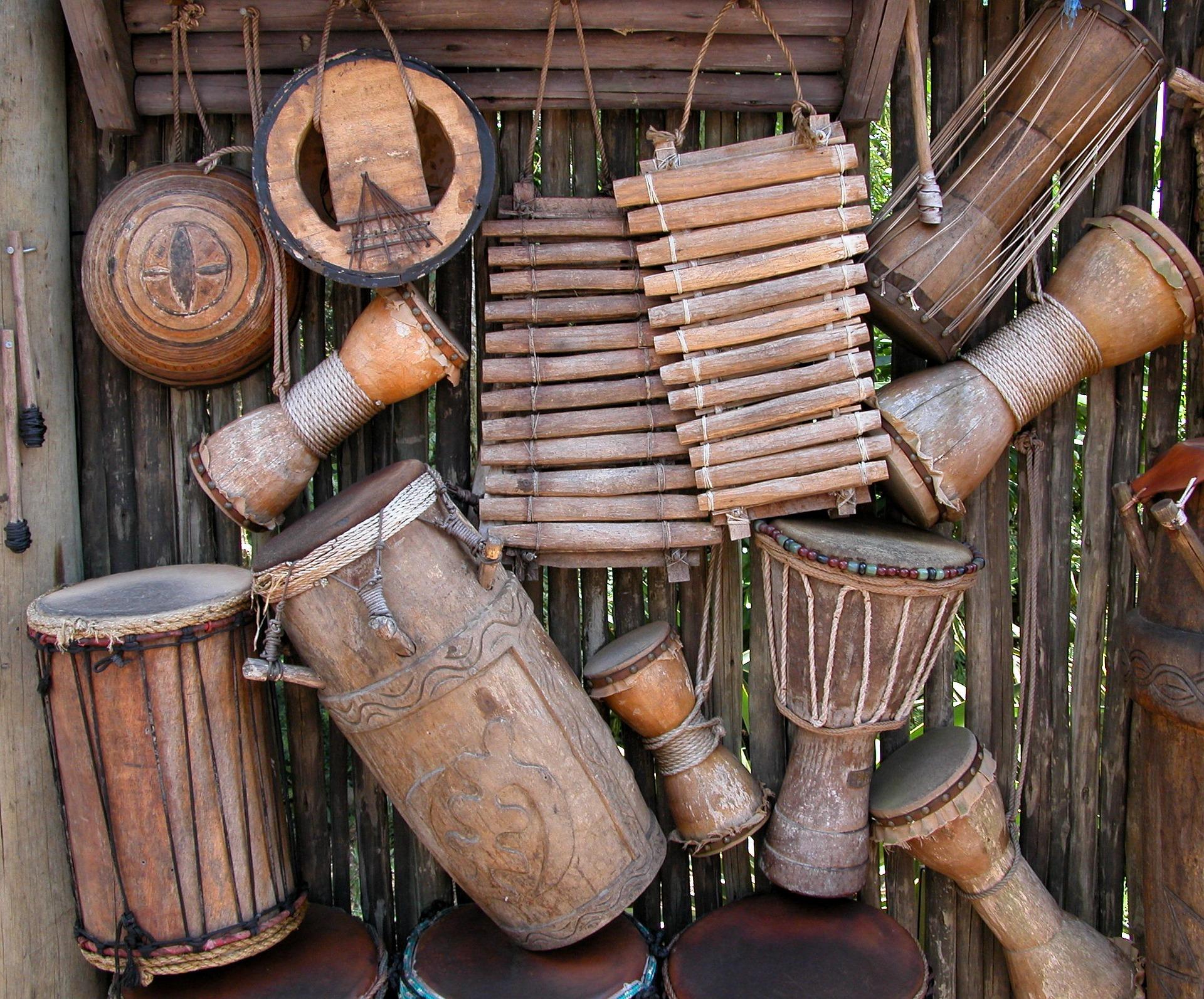

Some of the oldest musical instruments in the world, drums form the backbone of rhythm for almost every style of music. From the complete drum kits used in rock music to hand percussion in traditional musical genres, you'll find that drums are so much more versatile than just making a banging sound. Let's explore the different types of drums available.
| Drum type | Typical playing method | Common sound/role | Best for beginners who want… |
|---|---|---|---|
| Acoustic drum kit | Sticks + pedals | Loud, natural resonance | Rock, pop, band practice |
| Electronic drum kit | Sticks + pedals | Volume-controlled, many sounds | Quiet practice, multiple styles |
| Traditional hand drums | Hands (sometimes sticks) | Expressive, groove-focused rhythms | World music, timing and feel |
| Marching drums | Sticks, harnessed | Bright, projecting, outdoors | Parades, marching bands |
| Frame drums | Hands or light stick | Warm, earthy pulse | Folk styles, simple rhythms |
| Unique and rare drums | Varies by instrument | Distinctive timbres and textures | Experimentation and new sounds |


Acoustic Drum Kits
Acoustic drum kits are what most people think of when they think of drums. These kits produce sounds naturally when the drum heads and cymbals are struck. Thanks to their expressive range and physical response, when properly maintained, they're widely used in live performances and recording studios.
Acoustic drum kits are loud because their shells act as resonating chambers. When the drum head is struck, vibrations travel through the shell, naturally amplifying the sound. This is why acoustic drums can easily overpower other instruments, and why drummers often need sound-dampening or hearing protection during long sessions.
| Component | What it does | What it sounds like |
|---|---|---|
| Snare drum | Main backbeat and accents | Sharp, crisp snap |
| Bass drum | Pulse and low-end foundation | Deep boom/thump |
| Tom-toms | Fills and movement around the kit | Mid to low tone |
| Hi-hat | Timekeeping and groove control | Tight chick/sizzle |
| Cymbals (crash/ride/splash) | Accents and sustained texture | Bright attack/wash |
Components of an Acoustic Drum Kit
An acoustic drum kit consists of several components. The drummer can choose their drum kit according to personal preference or the music they need to play. Here are the different parts explained.
Snare Drum
The snare drum provides sharp, accented sounds. The metal wires beneath the bottom produce their snappy sound. Snare drums are often used in rock, jazz, marching, and orchestral music since they're so versatile.
Bass Drum
The bass drum provides the rhythmic foundation for most music with its low sound. It's often played with a foot pedal. It creates a deep, powerful pulse and is frequently paired with bass instruments in various musical styles.
Tom-Toms
Tom-toms are drums without snares that come in various sizes and pitches. They're often used for fills, transitions, and melodic movement. Acoustic kits usually include multiple toms to expand the tonal range.
Hi-Hat
The hi-hat is actually two cymbals mounted on a stand with a foot pedal to control them. It often keeps time with steady rhythmic patterns. The sound can be controlled by opening and closing the cymbals.
Cymbals
Cymbals are great for texture and brightness. When struck with drumsticks, they produce sustained sounds. Crash and ride cymbals are commonly found on acoustic drum kits, though there are many different types of cymbals.
Electronic Drum Kits
An electronic drum kit is a digital version of a drum kit. Drummers strike digital pads, and electronic equipment produces a sound according to which pad was hit and, depending on the kit, how hard. They're great for practising at home since the sound of hitting the pads themselves is actually relatively quiet and you can now get decent drum kits at a good price.
Electronic drum kits do not produce sound acoustically. The pads trigger digital samples stored in a sound module, which are then played through headphones or speakers. This means the same electronic kit can sound like dozens of different drum sets, from rock kits to orchestral percussion.
Features and Advantages
Electronic drum kits are popular since they can produce different sounds without changing the pads. They also often include practice tools like rhythm tracks and recording features. For new drummers or those who want to practise in a space where they can't make much noise, they're a great option.
Traditional Hand Drums
Hand drums, as you may have guessed, are drums played with your hands. Many of these are deeply connected to cultural traditions. You'll see that most hand drums focus on rhythm, touch, and expressive sound.
Many traditional hand drums use natural animal skin for their drumheads. Changes in temperature and humidity can tighten or loosen the skin, which directly affects pitch and tone. This is why drummers often heat a djembe or conga slightly before playing to bring it back into tune.
Djembe
The djembe is a goblet-shaped drum from West Africa. Depending on where and how you strike it, you can make various tones. Djembes are very popular in group drumming and ceremonies.
Conga
The conga is a tall hand drum. Its warm, resonant sound is famously used in percussion ensembles, jazz, and popular music. You'll usually find congas in a pair.
Tabla
The tabla is also a pair of hand drums. These drums from India produce a precise and melodic sound. The heads are tuned to bass and treble so that players can produce complex rhythms and tonal variations.
Marching Drums
Marching drums are often portable versions of the other drums we've seen already in our guide. They're worn with harnesses and often played in coordinated groups. You'll likely see them in marching bands and drumlines.
Marching drums are designed to project sound over long distances. Their drum heads are tensioned much tighter than standard drum kits, producing a sharper, more cutting sound. This allows rhythms to stay clear and audible even in large outdoor parades or stadiums.
Snare Drums
The marching snare drums have high-tension heads. They create sharp, cutting sounds when played with sticks. Complex rhythmic patterns are often played on them in marching performances.
Bass Drums
The marching bass drum is intense and often felt as much as it is heard. Each player usually plays a single rhythmic part within a larger bass section. They make a powerful rhythmic movement.
Tenor Drums
Tenor drums are multiple toms played by a single player. Drummers can play melodic rhythms across different pitches. Marching drumlines use these.
Frame Drums
Frame drums are basically a shallow frame and a drum head stretched across one side. They're pretty old, too. You'll surely recognise a few of these.
Frame drums are some of the oldest known percussion instruments, with evidence dating back thousands of years. Simple in design, they appear in cultures across Europe, the Middle East, and North Africa. Their lightweight frame makes them easy to hold while playing complex rhythms by hand.
Tambourine
The tambourine is a drum with a drum head and metal jingles. The latter creates a bright sound when shaken or struck. You can play it by tapping it with your hand or tapping the entire drum against your body.
Bodhrán
The bodhrán is a traditional Irish drum. It's popular in folk music. You'll see it played with a small stick or by hand. The player controls the pitch from the back of the head. It's known for its deep, earthy rhythms.
Unique and Rare Drums
Certain drums have distinctive melodic qualities or unusual construction. Some of these drums blur the lines between rhythm and melody and may be worth considering when buying your first drums. Many of these are for experimental music or expressive solo playing.
Instruments like the steelpan and the hang drum are tuned to specific musical notes, allowing players to perform melodies and rhythms. Unlike most drums, which focus on pulse and timing, these instruments blur the line between percussion and melody.
Steelpan
The steelpan is a tuned percussion instrument. It's made from steel and played with mallets. Each section plays a specific note, allowing musicians to play melodies.
Hang Drum
The hang drum is a hand-played percussion instrument. It produces soft, resonant sounds that combine rhythm and melody. The hang drum is popular in solo performances and ambient musical styles.
Summarise with AI:
Did you like this article? Leave a rating!


 Loading...