
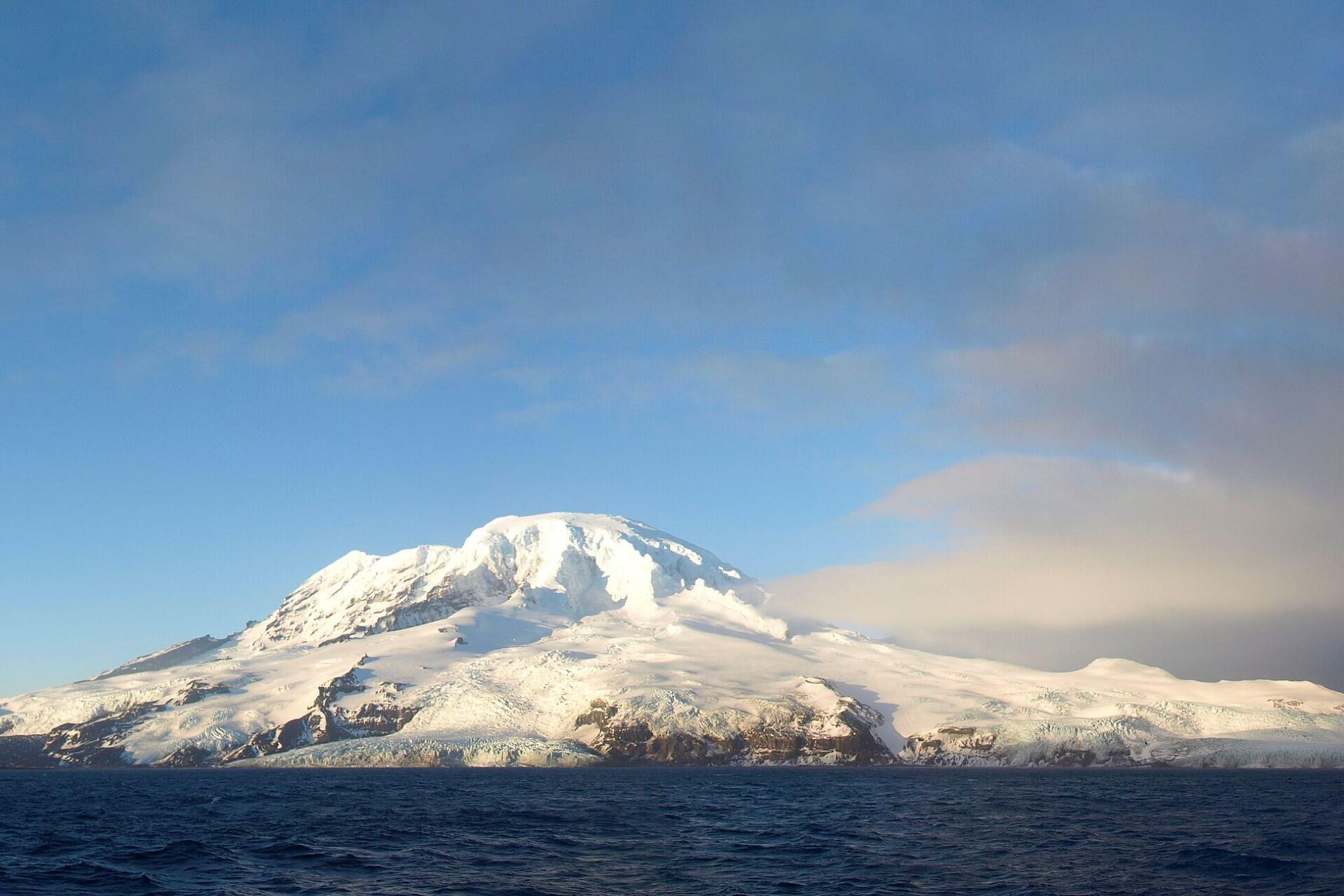

Australia isn't a country known for its active volcanoes, but did you know it actually has two? Sure, they aren't on the mainland, nor are they in inhabited areas, but they're there. Australia has a long history of volcanic activity, so let's explore it!
| Volcano Name | Location | Type | Status | Last Known Eruption |
|---|---|---|---|---|
| Big Ben (Mawson Peak) | Heard Island, sub-Antarctic | Stratovolcano | Active | 2013–2021 |
| McDonald Islands Volcano | Sub-Antarctic (SW of Heard Island) | Shield / Submarine | Active | 1996–2005 |
| Mount Gambier | South Australia | Maar / Tuff cone | Dormant | ~5,000 years ago |
| Mount Schank | South Australia | Scoria cone | Dormant | ~5,000 years ago |
| Mount Napier | Victoria | Scoria cone | Dormant | ~30,000 years ago |
| Mount Noorat | Victoria | Maar | Dormant | ~20,000 years ago |
| Tower Hill | Victoria | Maar / Shield hybrid | Extinct | ~30,000 years ago |
| Mount Warning (Wollumbin) | NSW | Shield volcano remnant | Extinct | ~23 million years ago |
| Glass House Mountains | Queensland | Volcanic plugs | Extinct | ~25 million years ago |
| Undara Lava Tubes | Queensland | Basaltic lava field | Extinct | ~190,000 years ago |


Are There Volcanoes in Australia?
Though most are long extinct, there are active volcanoes in Australia. Geologically speaking, the continent is relatively calm, but it did have a turbulent past, complete with intense volcanic activity. Australia sits in the middle of the Indo-Australian tectonic plate, which places it a reasonable distance from the boundaries that cause frequent eruptions elsewhere. You can see evidence of its volcanic past with plains, crater lakes, and mountain chains, which tell a story of how lava shaped the landscape.
Australia's volcanic activity is explained by hotspot volcanism. This is where plumes of molten rock rise from deep within the Earth's mantle. These burn through the crust as the plate slowly moves above them. Over time, this creates thousands of kilometres of extinct volcano trails. The Cosgrove hotspot track, for example, runs from northern Queensland down to Victoria and is one of the world's longest chains of ancient volcanoes³.
Though there aren't any active volcanoes on the Australian mainland, scientists can still study the continent's geological history to understand how and when eruptions took place. There's evidence of eruptions as recently as 5,000 years ago (basically yesterday in geological terms) at sites like Mount Gambier and Mount Schank in South Australia, proving that Australia's volcanic story isn't ancient history². Most of Australia's volcanic activity today is offshore. Volcanoes on Heard Island and the McDonald Islands are the country's two remaining active volcanoes.
Australia has two officially active volcanoes, Big Ben on Heard Island and the McDonald Islands Volcano, both located in the sub-Antarctic. These remote sites are under continuous satellite observation, while all mainland volcanoes are classed as dormant or extinct. The most recent eruptions occurred offshore, with Big Ben active as recently as 2021⁵.
Where Are the Active Volcanoes in Australia?
When discussing volcanoes, people would generally be drawn to the active ones in Australia. After all, they're just more interesting aspects of the country's climate and geography to the average person. The aforementioned active volcanoes in Australia aren't found on the mainland, but instead in its remote sub-Antarctic territories. These territories are uninhabited, but scientists are particularly interested in studying them for their active volcanoes.
The two known active volcanoes: one on Heard Island and another on the McDonald Islands, are about 4,000 kilometres southwest of Perth between Madagascar and Antarctica. Even though they're remote, these volcanoes are some of the most active in the world, frequently producing eruptions, steam plumes, and lava flows. These are closely monitored by satellite imagery¹.
Heard Island – Big Ben Volcano
Big Ben is the central volcano on Heard Island. Its peak reaches 2,745 metres, which makes it one of Australia's highest mountains. While it's often covered in snow, beneath the ice, there's a restless geological engine. Big Ben is a stratovolcano and has erupted several times in the last century. The most recent confirmed eruptions have been observed with satellite imagery between 2013 and 2021⁵.
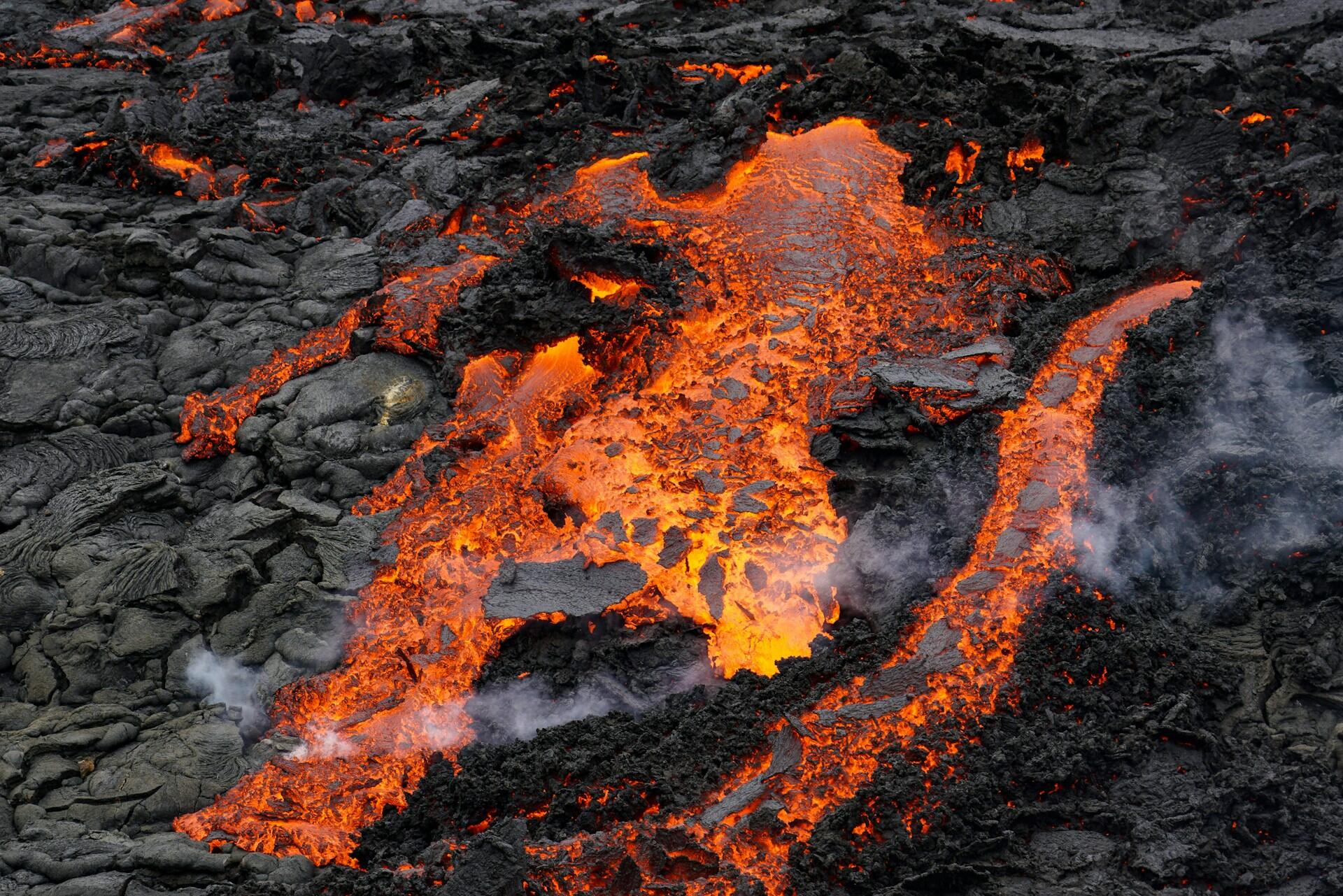
The Mawson Peak crater near the summer regularly emits steam and lava, which can sometimes be seen from space. The island is a protected World Heritage Site, so on-ground observation is rare. Still, technology enables it to be observed remotely and from space. Researchers are studying Big Ben's activity to see how oceanic islands form through mantle upwelling and crustal spreading⁶.
McDonald Islands Volcano
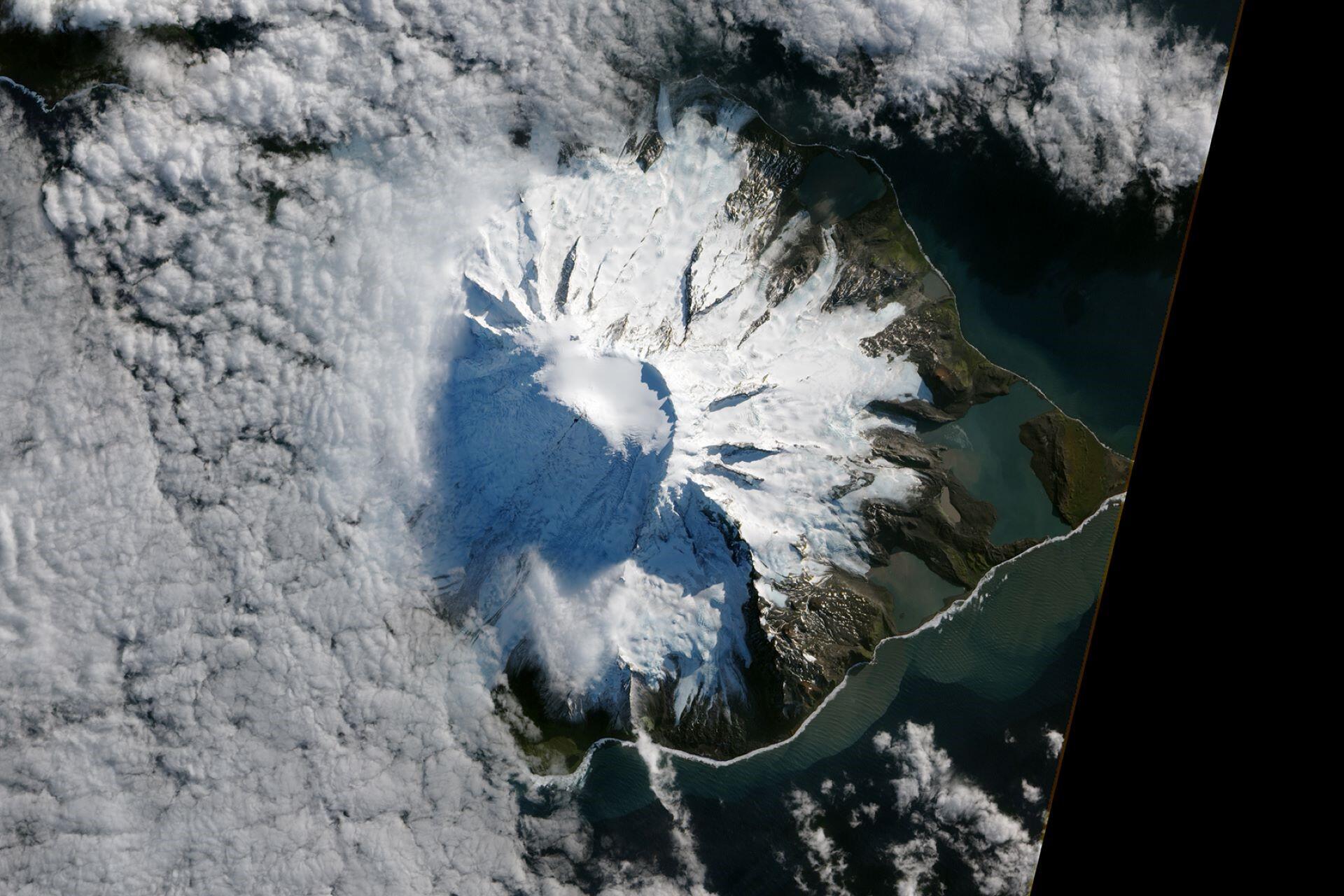
Around 40 kilometres west of Heard Island, the McDonald Islands are slightly smaller but also home to volcanic activity. Though initially believed to be extinct, they detected volcanic activity here in 1992 before a major eruption in 1996 completely reshaped the islands⁷! Since these eruptions, the McDonald Islands have doubled in size thanks to new lava domes and cliffs.
The last eruption on the Australian mainland occurred around 5,000 years ago at Mount Gambier and Mount Schank in South Australia². Offshore, however, activity continues, Big Ben on Heard Island has erupted multiple times in the 21st century⁵, and the McDonald Islands dramatically reshaped themselves during a major eruption in 1996⁷.
Ongoing eruptions and lava flows have made the McDonald Islands one of the rare examples of a modern island-building volcano. The eruptions are largely underwater and remote, so they're of no danger to people. Still, they're handy for the people studying them.
Dormant and Extinct Volcanoes on the Australian Mainland
While Australia's only active volcanoes are on remote sub-Antarctic islands, there are plenty of dormant and extinct volcanoes on the mainland. They don't erupt anymore, but, just like Australia's rivers, you can see how much they impacted the continent's surface. From Victoria's lush volcanic plains to New South Wales' and Queensland's eroded peaks, Australia has tens of millions of years of volcanic history.
Newer Volcanics Province (Victoria and South Australia)
The Newer Volcanics Province (NVP) stretches across western Victoria and southeastern South Australia. This covers around 15,000 square kilometres and includes over 400 volcanic vents, cones, and crater lakes¹.
The NVP is Australia's most recent continental volcanism. Activity here dates from around 4.5 million years ago to 5,000 years ago. These volcanoes formed as the Australian plate moved northward over a slow-burning mantle hotspot deep beneath the Earth's crust³. The NVP is a pathwork of fertile farmland, forests, and national parks. However, there's evidence of repeated eruptions that produced extensive lava plains and basalt flows. It's actually one of the youngest intraplate volcanic fields on Earth².
Mount Gambier and Mount Schank
Mount Gambier and Mount Schank are two of the best-known volcanoes in the NVP. They're located in southeastern South Australia near the border with Victoria. Mount Gambier last erupted around 5,000 years ago and is the youngest known volcano on the Australian mainland. It includes dramatic lakes like the famous Blue Lake, which were created by explosive phreatomagmatic eruptions when magma met groundwater².
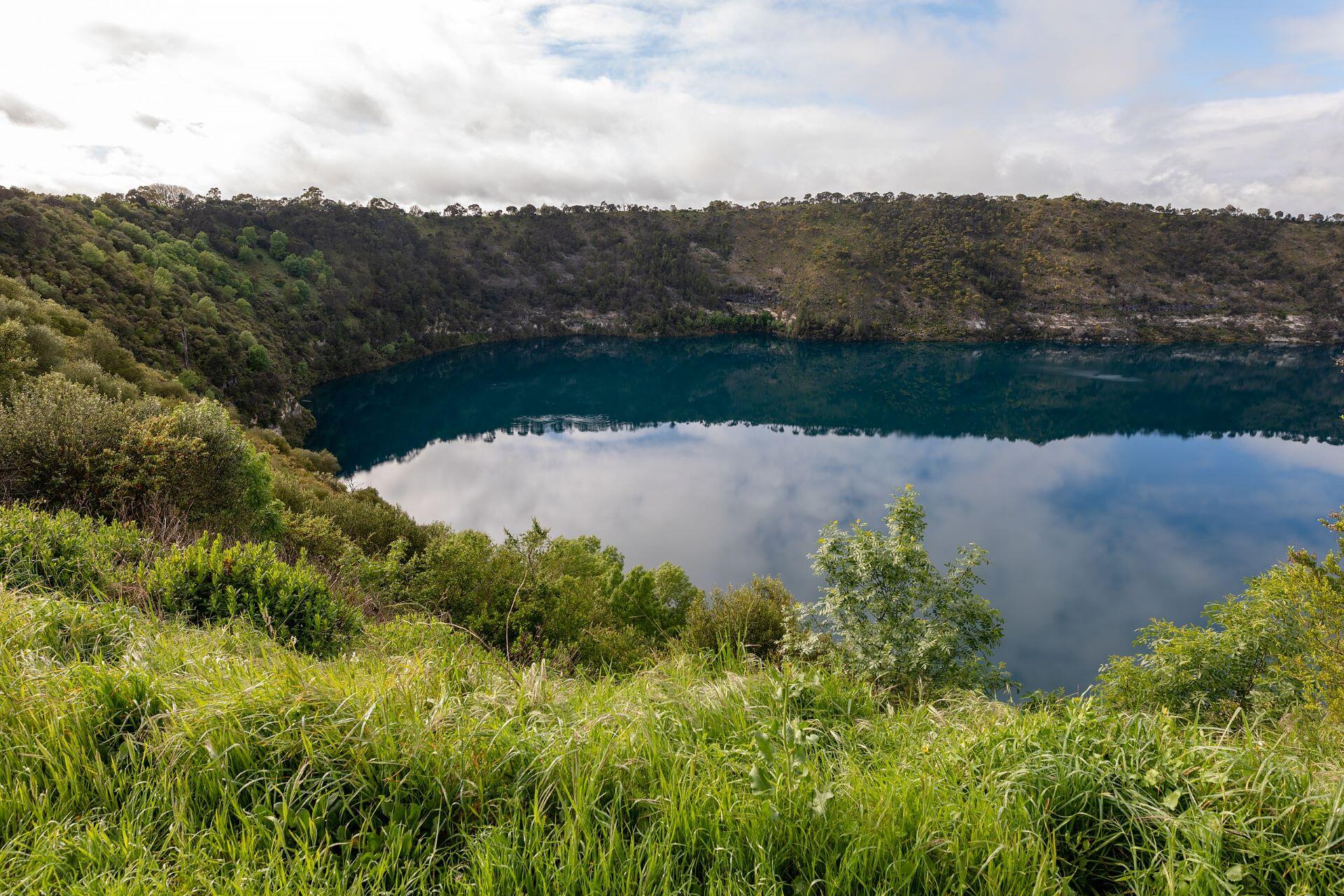
The slightly older Mount Schank is of similar origin. It features a well-preserved volcanic cone and lava fields. Both volcanoes are classed as dormant, not extinct. This means that while future eruptions aren't likely, they remain geologically possible.
Mount Warning (Wollumbin) and Tweed Volcano, NSW
The Tweed Volcano, also known as Mount Warning (Wollumbin), is an ancient shield volcano that erupted about 23 million years ago, creating one of the world's largest erosion calderas⁸. Today, there's a dramatic ring of mountains encircling fertile farmland and subtropical rainforest. It's part of the Gondwana Rainforests World Heritage Area.
Other Volcanic Features Across Queensland and Central Australia
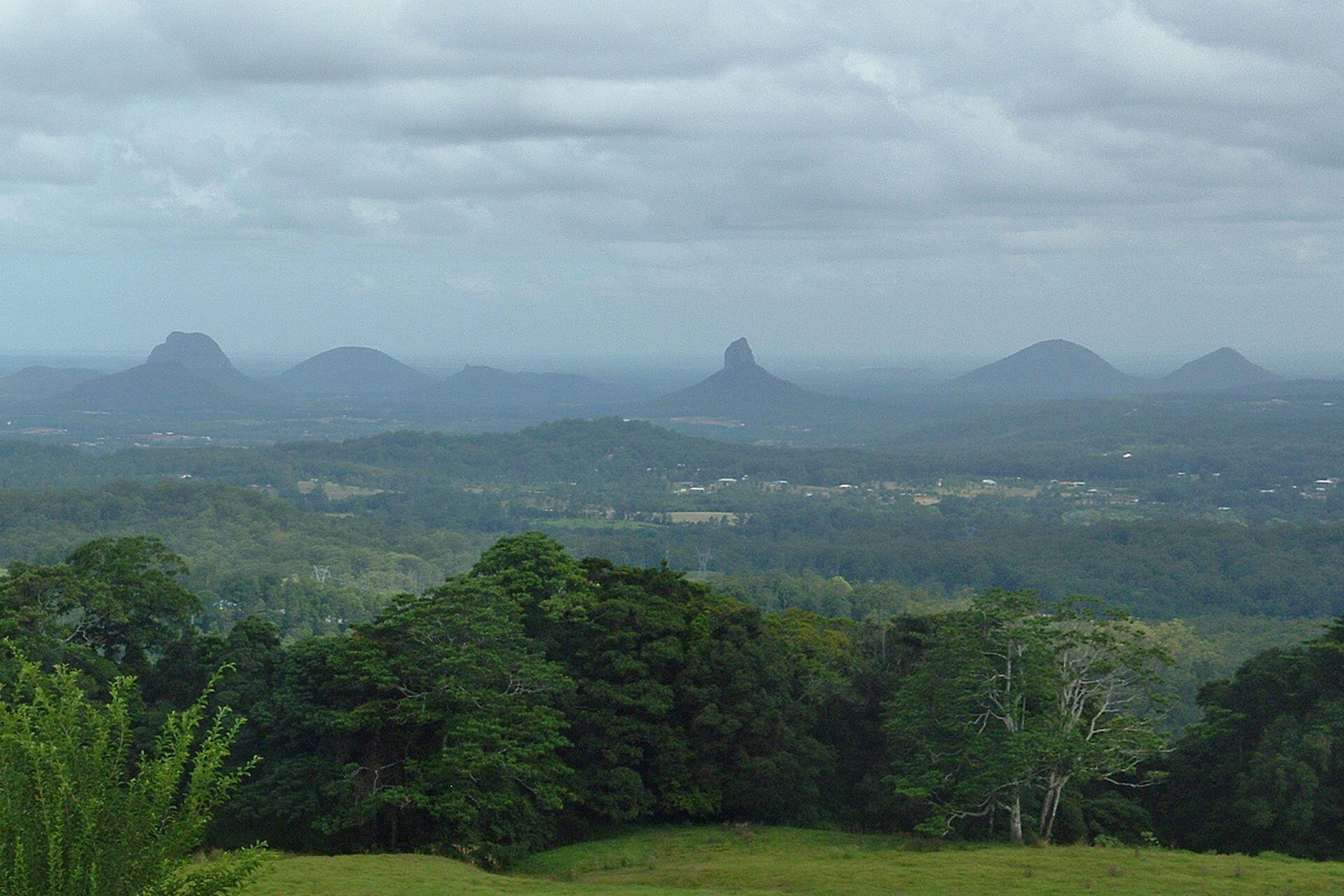
There are volcanic remnants scattered across Queensland, New South Wales, and even central Australia. In Queensland, extinct volcanoes such as the Glass House Mountains near Brisbane and the Undara Lava Tubes in the Gulf Savannah are fine examples of how volcanic forces shaped the landscape. The Undara system, for example, features some of the longest lava tubes on the planet, which were formed about 190,000 years ago when low-viscosity lava drained through the countryside⁹.
Volcanic Hazards, Monitoring, and Research
Volcanic monitoring still remains an essential part of national geoscience research¹. Geoscience Australia and the Bureau of Meteorology continuously track seismic activity, satellite imagery, and gas emissions from Heard Island and the McDonald Islands⁷. The aim is to understand how hotspots like those that formed the Newer Volcanics Province evolve over time and whether dormant systems still contain residual magma³. The risk to people might be low, but modern tools ensure that any sign of renewed volcanic activity would be detected early¹.
Tourism, Education, and Volcanic Landscapes
From the Tweed Caldera to Queensland's Undara Lava Tubes, you can visit many of Australia's volcanic terrains. Undara Volcanic National Park, for example, offers guided walks through some of the world's longest known lava tubes⁹. The Gondwana Rainforests of Australia protect the vast erosion caldera around Wollumbin with boardwalks and lookouts where you can see it for yourself⁸. In the Newer Volcanics Province, there are often school excursions and field courses in geomorphology and hazards². Understandably, the sub-Antarctic Heard and McDonald Islands are strictly protected World Heritage sites with no general tourist access⁶.
References
- Volcanoes. (n.d.). Geoscience Australia. Retrieved October 9, 2025, from https://www.ga.gov.au/education/natural-hazards/volcano
- Volcanoes of the Newer Volcanics Province. (n.d.). Smithsonian Institution – Global Volcanism Program. Retrieved October 9, 2025, from https://volcano.si.edu/volcano.cfm?vn=259010
- Secret of Australia’s volcanoes revealed. (December 17, 2020). University of Sydney / Australian Geographic. Retrieved October 9, 2025, from https://www.sydney.edu.au/news-opinion/news/2020/12/17/secret-of-australias-volcanoes-revealed-geosciences.html
- Could Queensland’s volcanoes erupt again? (February 11, 2023). ABC News Australia. Retrieved October 9, 2025, from https://www.abc.net.au/news/2023-02-11/volcanoes-on-tablelands-queensland-when-could-they-erupt/101952536
- Big Ben (Heard Island). (n.d.). Smithsonian Institution – Global Volcanism Program. Retrieved October 9, 2025, from https://volcano.si.edu/volcano.cfm?vn=234010
- Heard and McDonald Islands. (n.d.). UNESCO World Heritage Centre. Retrieved October 9, 2025, from https://whc.unesco.org/en/list/577/
- Volcanic activity at McDonald Islands. (n.d.). Australian Antarctic Division – Department of Climate Change, Energy, the Environment and Water. Retrieved October 9, 2025, from https://www.antarctica.gov.au/about-antarctica/geography/heard-island-and-mcdonald-islands/volcanic-activity/
- Gondwana Rainforests of Australia. (n.d.). UNESCO World Heritage Centre. Retrieved October 9, 2025, from https://whc.unesco.org/en/list/368/
- Undara Volcanic National Park. (n.d.). Queensland Parks and Wildlife Service. Retrieved October 9, 2025, from https://parks.des.qld.gov.au/parks/undara
Summarise with AI:
Did you like this article? Leave a rating!

 Loading...
