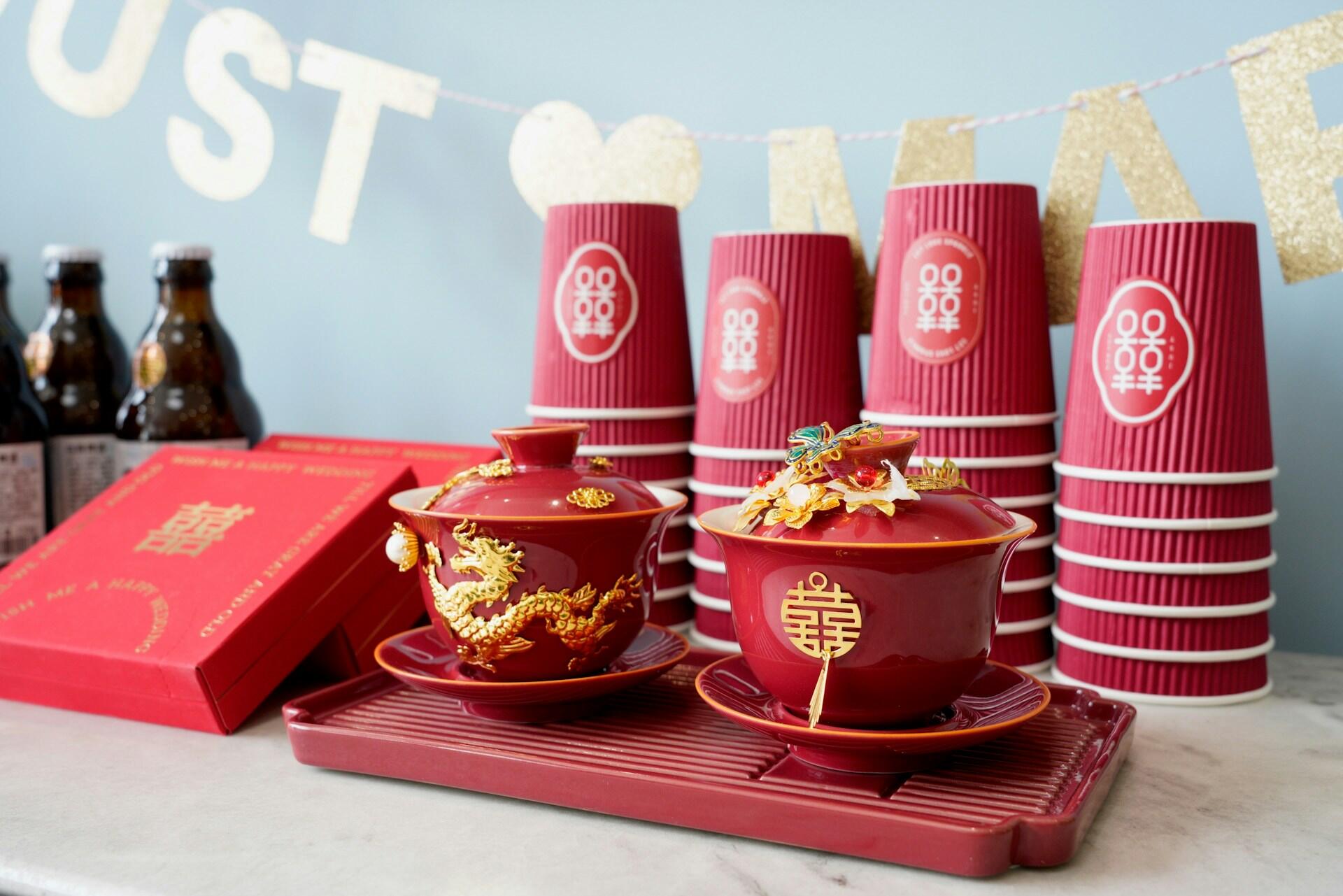

Weddings, with all their formality, rituals, and pomp, often disguise the months (years!) of planning that make these occasions so memorable. That puts quite a bit of stress on everyone involved, from the couple to their friends and family. Fortunately, Chinese wedding planning is a straightforward affair, especially if you follow these steps of a traditional wedding ceremony.
Chinese Wedding Traditions Guide
- How to get engaged and set your wedding date: both families are involved!
- What to do before the Chinese wedding ceremony: crafting wedding vows, choosing what to wear, and the all-important tea ceremony.
- Planning the wedding banquet menu: beware of serving inauspicious foods!
- Post-wedding rituals: drinking to health, giving red envelopes, and the bride's send-off.


Chinese Wedding Planning: Pre-Wedding Preparations
There's an old joke that the only way to have a stress-free wedding is to elope. Running away from friends and family might work in some parts of the world, but even elopement isn't a stress-free proposition.
Not that eloping is a common occurrence in China. In this collectivist culture that reveres its ancestors, leaving family and friends out of momentous life occasions is simply not done. It takes the hopeful couple up to 18 months to arrange everything and plan their Chinese wedding ceremony.
12 to 18 months out
Begin the engagement process.
Consult with parents, visit the temple, choose an auspicious date.
12 months out
Book a venue and a host.
Also book your car service and photographer.
9 months out
Plan your wardrobe.
Bride and groom should have at least two outfits apiece; don't forget the parents' outfits!
6 months out
Finalise the banquet menu.
Also select wedding hall decorations and those for the cars, too.
3 months out
Set the date for your photoshoot.
Also, schedule your tea ceremony.
2 months out
Decide on entertainment.
Also, review/select photos, do final wardrobe fittings, wrap up loose ends.
1 month out
The betrothal ritual.
The groom presents the bride's family with gifts and promises to care for their daughter.
Choosing the Right Date
In China, selecting a wedding date first entails a visit to the temple, where the families consult with a monk or fortune teller. Based on the couple's birthdates and other factors, the worthy then selects the most auspicious date(s) for that couple's union.
In 2014, the Chinese government saw a spike in marriage licence applications.
Couples wanted to marry well ahead of the (2015) Year of the Sheep, lest that unfortunate zodiac animal ruin the marriage and curse its children.
This might sound like superstitious nonsense to Western ears, but in China, people take this cultural aspect very seriously. For some, a trip to the temple isn't necessary if they have a wise elder who relies on the Chinese calendar for selecting auspicious dates. But under no circumstances would any tradition-revering Chinese choose a date based on the couple's personal history, as we often do.
Invitations
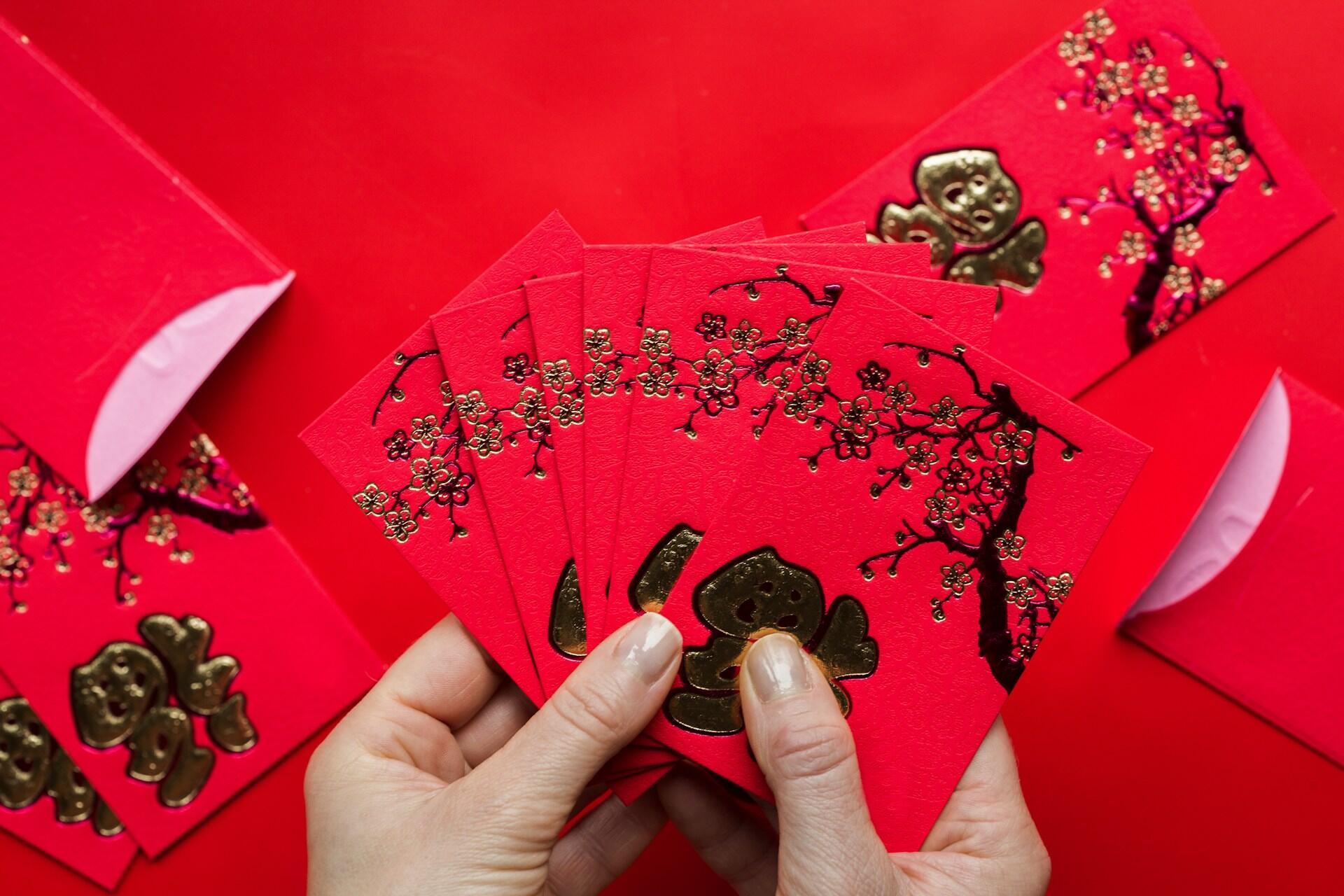
Wedding invitations aren't a foreign concept to us. However, Chinese wedding invitations are very different from what we're used to receiving. See for yourself:
Standard wedding invite
- any type of paper/envelope
- selection of fonts
- includes the couple's names
- may feature parents' names
- venue name and wedding time
- may contain gift recommendations
Chinese wedding invite
- typically red paper/envelope
- vertical writing, in gold
- includes the couple's names and birthdates
- always features parents' names
- venue name and wedding time
- typically features 'double happiness' (喜喜 shuāngxǐ)
Betrothal and Gift-Giving
With all the preparations in place and the wedding imminent, it's time for the formal engagement ritual. That's when the groom's family presents gifts and, perhaps, a 'bride price' to the bride's clan.
This process, called guò dà lǐ (过大礼), expresses the groom's family's sincerity as well as their appreciation for raising a fine daughter. It's also a promise that they will care for the bride as though she were their own daughter.
Gifts are typically offered in even numbers to symbolise harmony.
However, you must avoid anything that comes four to a set because that number is a homophone for death (four: 四-sì; death: 死-sǐ).
Chinese Wedding Ceremony Preparations
Once a Chinese couple has a rough timeline sketched out for their wedding, it's time to plan their event's finer details. Some might be similar to our standard preparations, while others are uniquely Chinese. Before exploring three of the most iconic happenings, this chart details them all.
| 🎉Event | ⏰When? | 🤩What happens | 🥇Significance |
|---|---|---|---|
| Choosing outfits | Around nine months before the wedding | The couple selects at least 2 outfits apiece, typically Western attire for the wedding and Chinese traditional style for the banquet. | to honour traditional Chinese culture. |
| The tea ceremony | Around three months before the wedding | The bride's father places her hand in the groom's. The couple kneel before the parents, serving tea to each pair. | to honour the parents. |
| The wedding photoshoot | Around three months before the wedding | The couple poses for photographs in their wedding outfits. | Typically shown as a montage during the wedding banquet. Takes the place of a procession in city weddings. |
| Hair-combing ceremony | The night before the wedding. | A wise older woman combs the bride's hair | Symbolises the bride's transition from girlhood to adulthood. |
| Making the wedding bed | Up to a week before the wedding. | Mother/mother-in-law makes the bed with new red sheets, decorating it with various fruits and seeds. Children jump on the newly made bed. | Invites fertility |
| Wedding procession | The day of the wedding | the groom leads the procession to the bride's home, lighting firecrackers and banging gongs all the way. In city weddings, firecrackers go out outside the wedding venue. | To ward off evil spirits. |
| Door games | The day of the wedding | The bridesmaids refuse to allow the groom's party in until they pass various challenges. | to ensure the groom has the fortitude to fight for his bride. |
The Chinese Wedding Tea Ceremony
You might think that, after the betrothal process, acknowledging the parents would be done. Not so fast! The couple must now serve both sets of parents tea in a highly ritualised manner.
Traditionally, the tea ceremony 'sealed the deal', so to speak. This ritual promises that the couple will live in service to their parents, while honouring them for the sacrifices they made to raise them.
Selecting Wedding Outfits
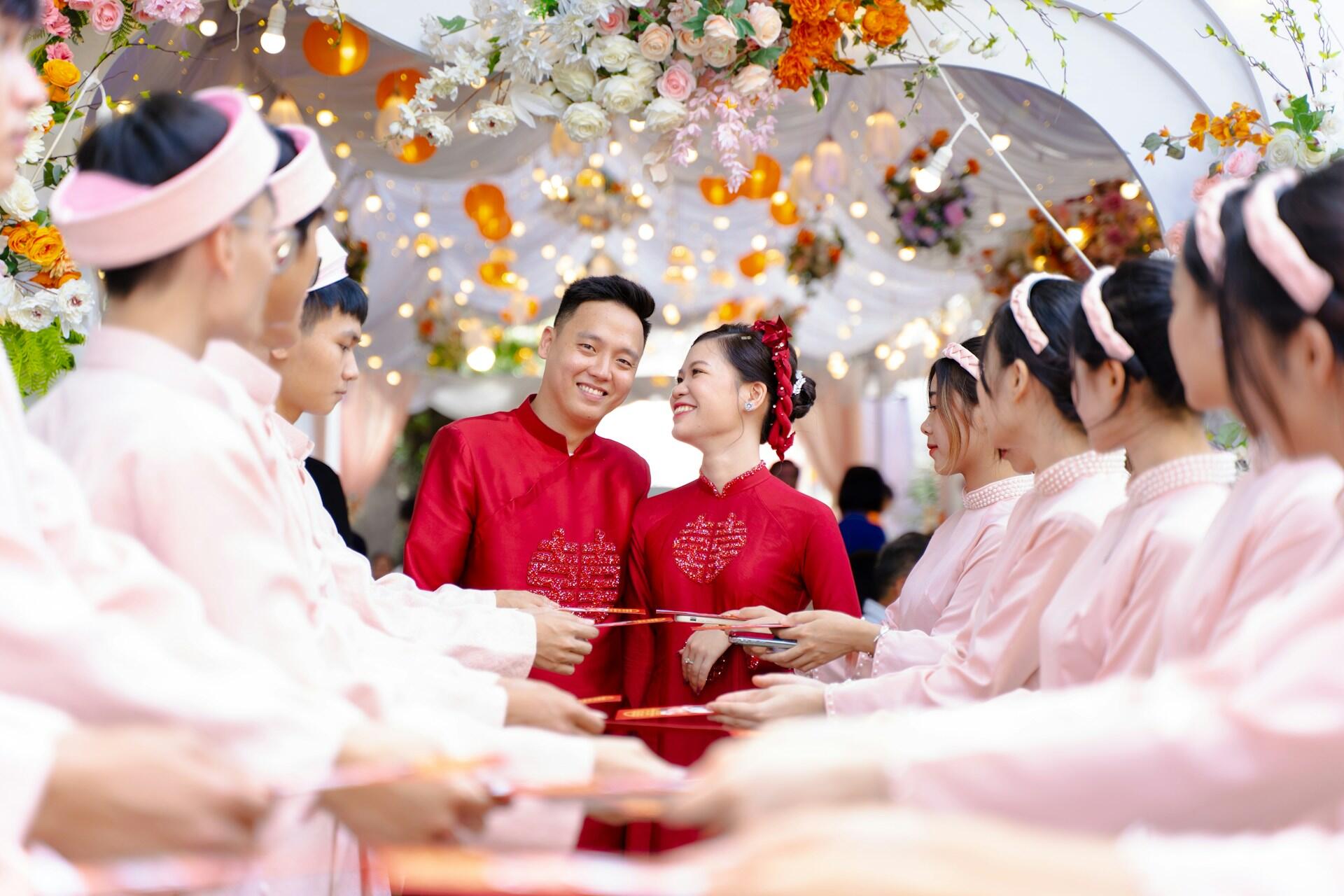
Historically, Chinese brides were literally draped in red, including a red veil covering their head. Today's brides have far more options (but they still favour red dresses). In fact, modern brides enjoy wearing white wedding dresses.
Traditional Chinese culture associates 'white' with death.
Modern China accepts white wedding dresses, especially in big cities.
However, the brides and their grooms only wear Western attire for a small part of their wedding event. As soon as the feasting begins, they're off to change their clothing into something more traditionally Chinese.
It's not uncommon to see the bride re-emerge wearing a red and gold qí páo (旗袍). Her groom will advance in a chángshān (长衫). Together, they will circle the banquet hall, pouring drinks for their guests and thanking them for attending.
As friends start to leave, they may bid them adieu wearing those outfits. As with everything, parents have a lot of input in picking their children's wedding dress styles.
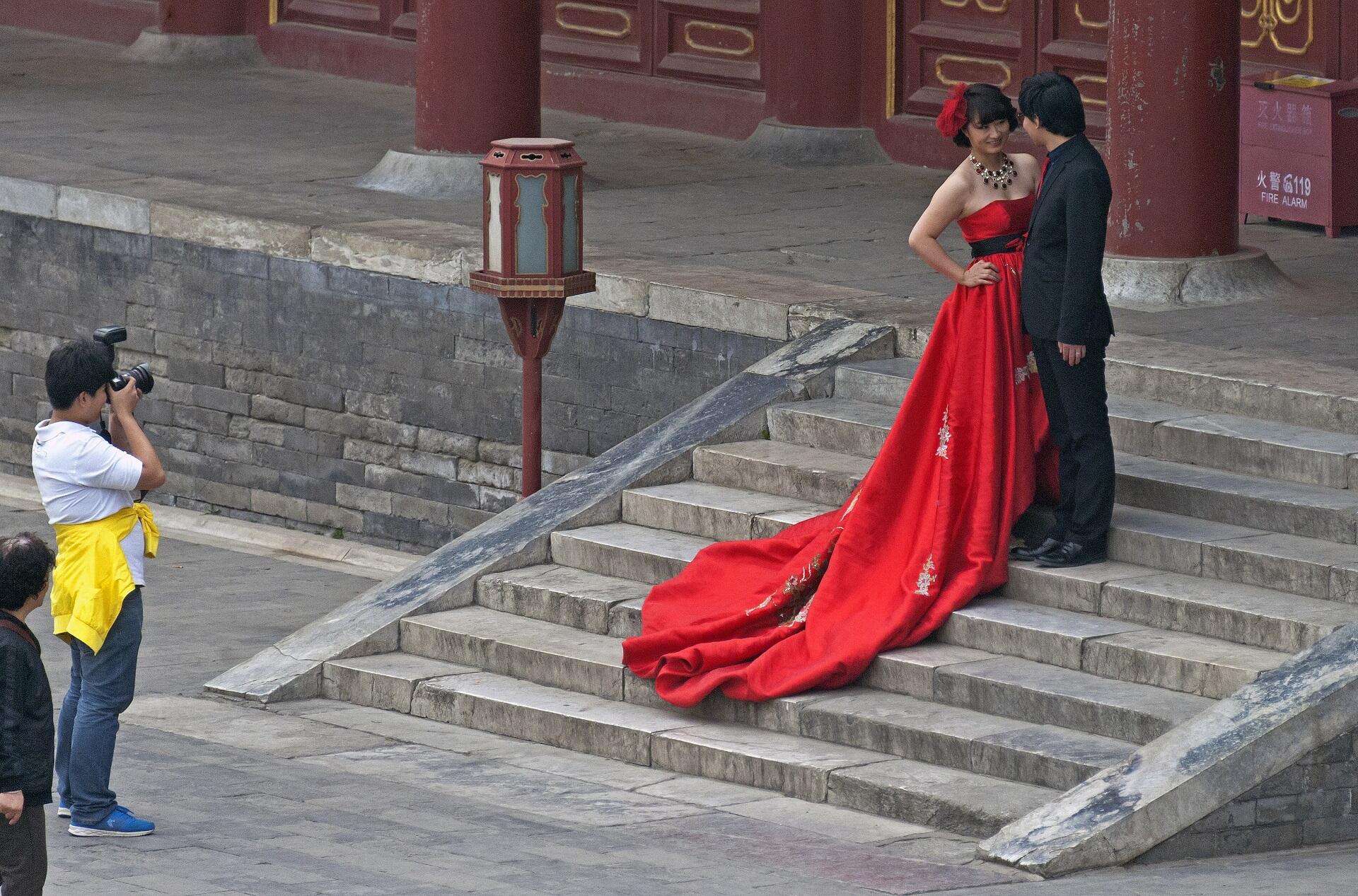
The Wedding Photoshoot
The Chinese couples I know insist that this is one of the most stressful, time-consuming, and tiring events of all their pre-wedding preparations. Their photoshoot is like any other, involving makeup and hairstyling, multiple locations, and numerous outfit changes over several days.
The photographer snaps hundreds of shots as assistants hold various shields to better capture the light. The final effect is stunning, especially when viewed as a montage in the banquet hall, before the wedding gets underway.
Chinese Wedding Banquet Dos and Don'ts
Chinese weddings are not religious, though some couples choose to feature religious elements. So, don't be shocked to note that a master of ceremonies (emcee) leads the event.
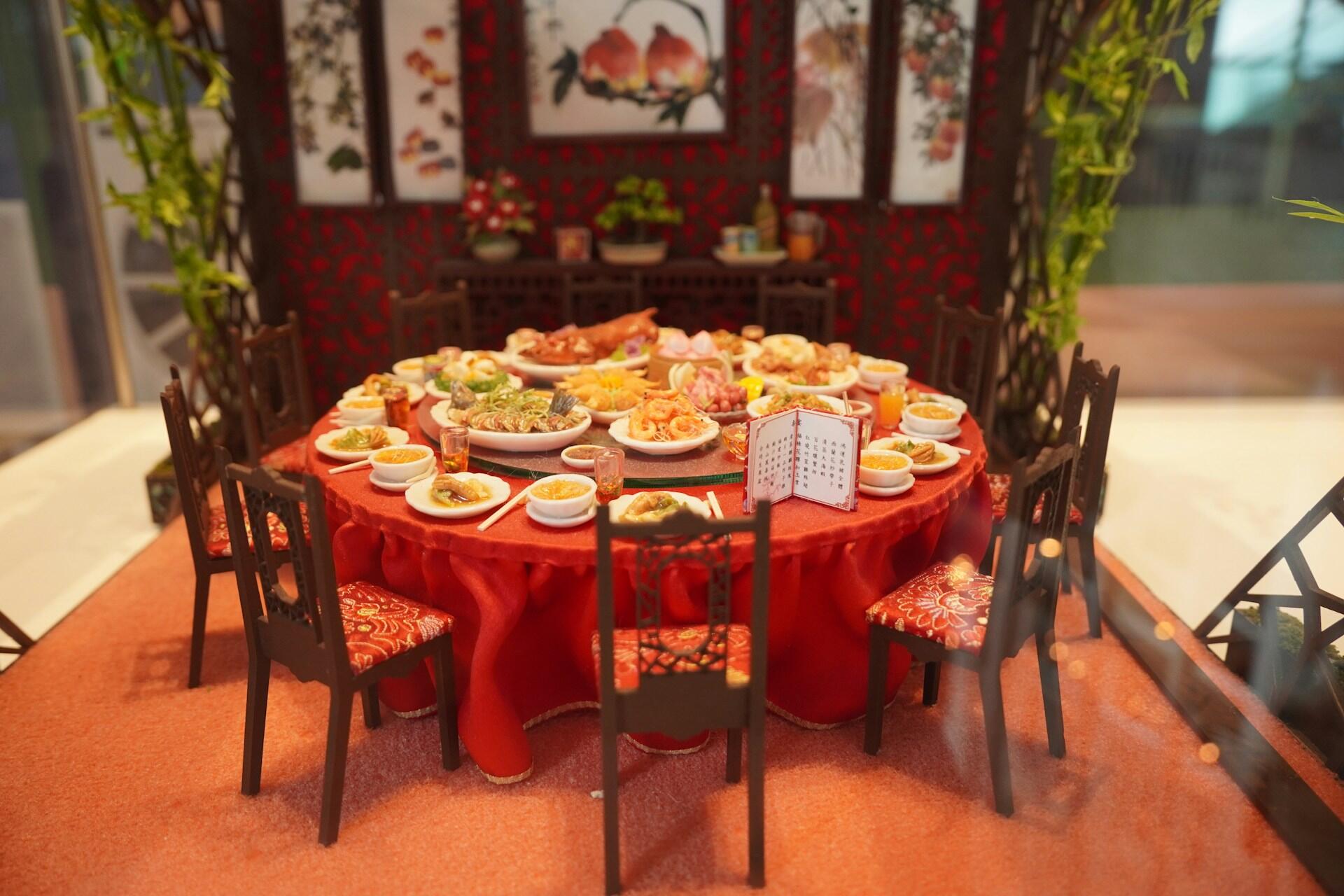
The closer your ties to the wedding families, the closer to the stage you'll sit. The nearest tables are for the couples' parents, grandparents and other immediate relatives. Friends of the family sit towards the back.
You'll note, as you enter the banquet hall, that each table features drinks, plates of fruit, and sunflower seeds.
It's fine to nosh on them until the event begins. Whatever you do, don't snack as the bride makes her entrance! And don't snack so that much you spoil your appetite.
Foods to Serve
In China, everything has significance, including food. Families typically populate the wedding menu with eight or nine of these dishes because they carry symbolic meaning.
| 🍤Dish | 🧧Significance | 📝Notes |
|---|---|---|
| Shark fin soup | A wealth display | This trend is falling out of favour for ethical reasons. |
| Roast suckling pig | A symbol of virginity | The groom presents the bride's family with a roasted pig during the engagement ceremony. |
| Peking Duck and Lobster | 'Red' foods for luck | Serving them whole, (with head and legs) symbolises completeness. |
| Chicken or other fowl | Symbolises peace. | Quail and pigeon are adequate substitutes. |
| Sea cucumber with vegetables | Signifies selflessness | “Sea cucumber” sounds like “good heart”. |
| Fish (whole) | Hopes/wishes for abundance. | “Fish”” sounds like “plentiful” |
| Noodles | Symbolise longevity | Noodles' long strands equal long life. |
| Red bean soup and sweet buns | For a sweet life | These foods' ingredients further suggest happiness and long life. |
| Drinks Tea, alcohol, and 7-Up | tea: respect alcohol: celebration 7-Up: happiness | The words “up” and “happiness” are homophones. |
Why eight or nine dishes? Because the Chinese 'eight' (八 - bā) is a homophone for 'good luck' and nine (九 - jiǔ) sounds like 'long'. As in 'long life' and 'long love'.
Decorating the Banquet Hall
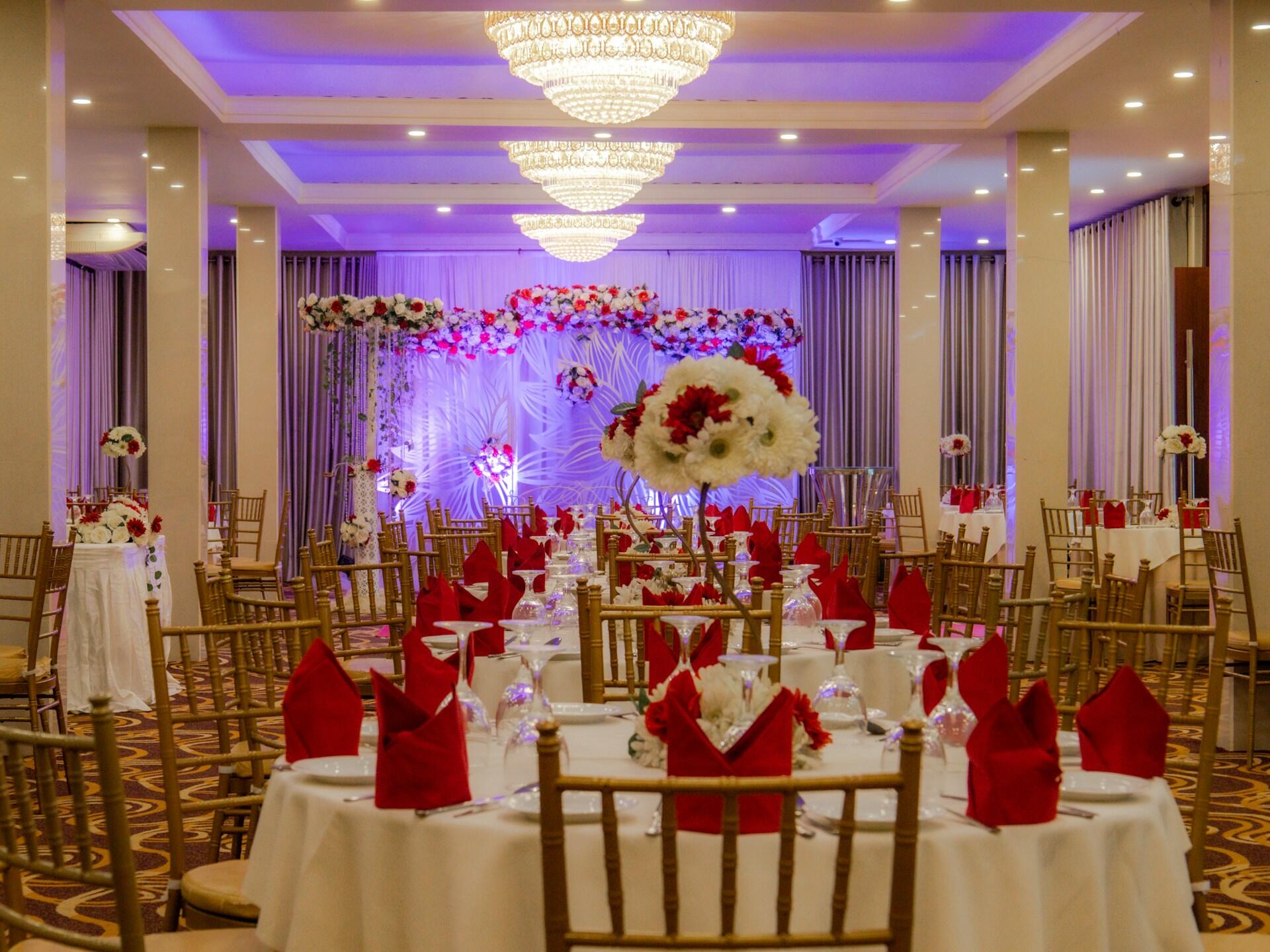
Chinese wedding banquets may look a lot like the wedding celebrations we're familiar with: white tablecloths, balloons, and lots of flowers. However, you'll see one glaring difference: the giant 喜喜 at the front of the room.
You'll also see lots of red and gold lucky knots (吉祥结 - jí xiáng jié) and maybe even blessings (福 - fú) decorate the walls. Various regions and ethnicities have their own traditional wedding symbols. They hang alongside these standard Chinese wedding symbols.
Chinese Traditions Wedding Guide for Post-Wedding Activity
As the dining winds down and the wedding nears its end, it's time to offer the newlyweds three toasts.
For a blissful marriage
百年好合 - bǎi nián hǎo hé
For everlasting love
永浴爱河 - yǒng yù ài hé
For fertility
早生贵子 - zǎo shēng guì zǐ
Latecomers may press their red envelopes containing gift money (红包 - hóng bāo) into the couple's hands, but it's more likely that the most important guests have already repaired to the bride's family home.
'Sending off the bride' (送亲 - sòng qīn) is the last formal wedding act. It entails the bride leaving her family home for the last time, at the head of a parade that will see her all the way to her husband's family home.
Depending on where in China this takes place, this procession may include firecrackers and a 'ten-li honour guard' (十里红妆 - shí lǐ hóng zhuāng). In the city, this last milestone is often more muted.
These Chinese wedding traditions have endured for centuries, if not millennia. They've been updated, of course. For instance, brides hardly ever arrive at the banquet hall in a palanquin, even in the deep countryside.
Summarise with AI:
Did you like this article? Leave a rating!

 Loading...