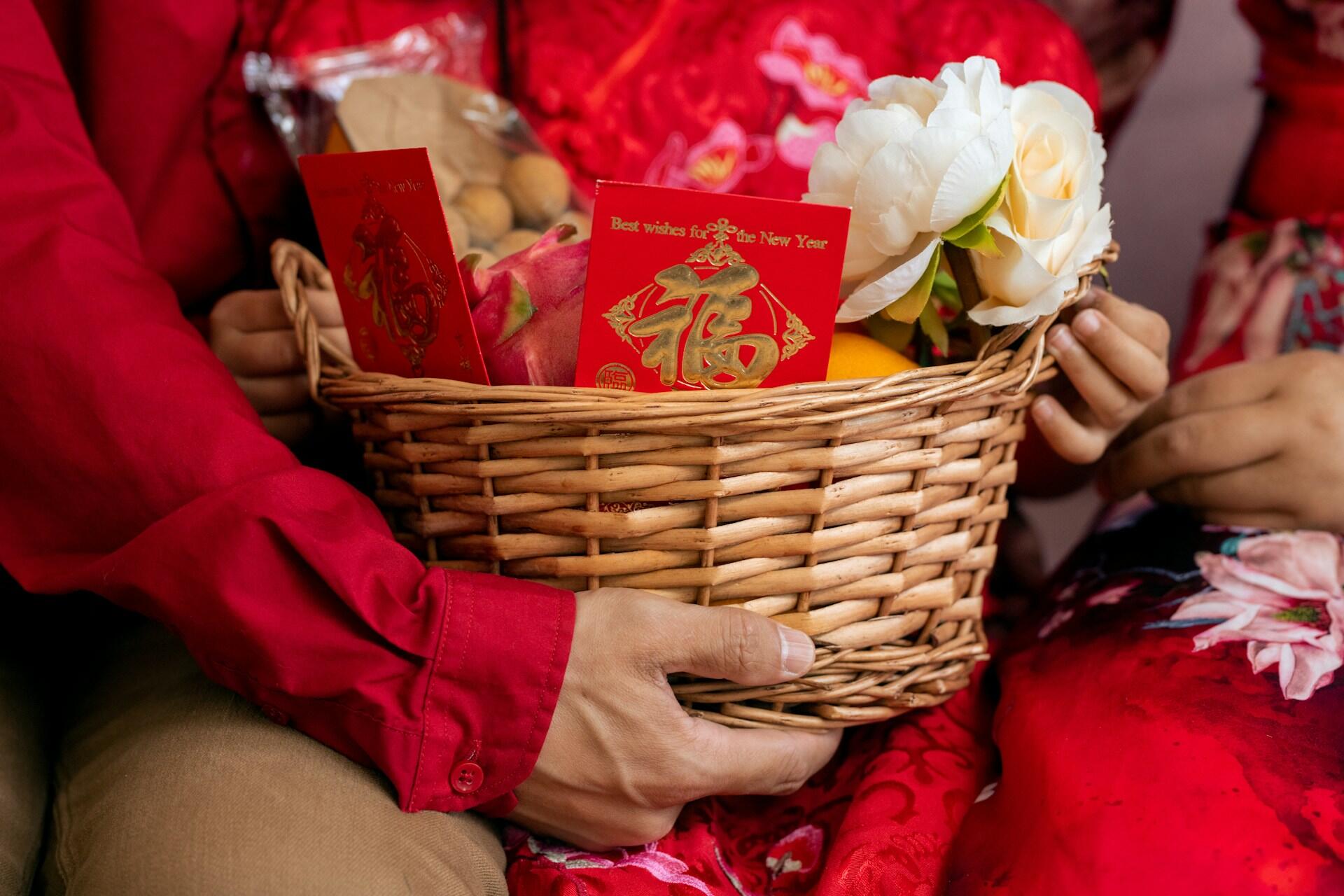

Every culture enjoys its rituals and traditions; none are so profound as those celebrating marriage. Our culture allows a host of wedding icons and practices; we may even choose themed weddings, destination weddings, and/or religious ceremonies. By contrast, things in China are straightforward. The Chinese symbol for happiness dominates decorations and traditional icons have deep meaning, too.
| Decoration | What it's called | What it represents |
|---|---|---|
| Double Happiness | 双喜 - shuāngxǐ; Typically written 囍 | The bride and groom's individual happiness, as well as their happiness together. |
| Dragon Phoenix | 龙 - lóng 凤凰 - fèng huáng | Groom's wealth and strength Bride's grace and life-giving power |
| Flowers | 华 - huá | Different types of flowers have different meanings. |
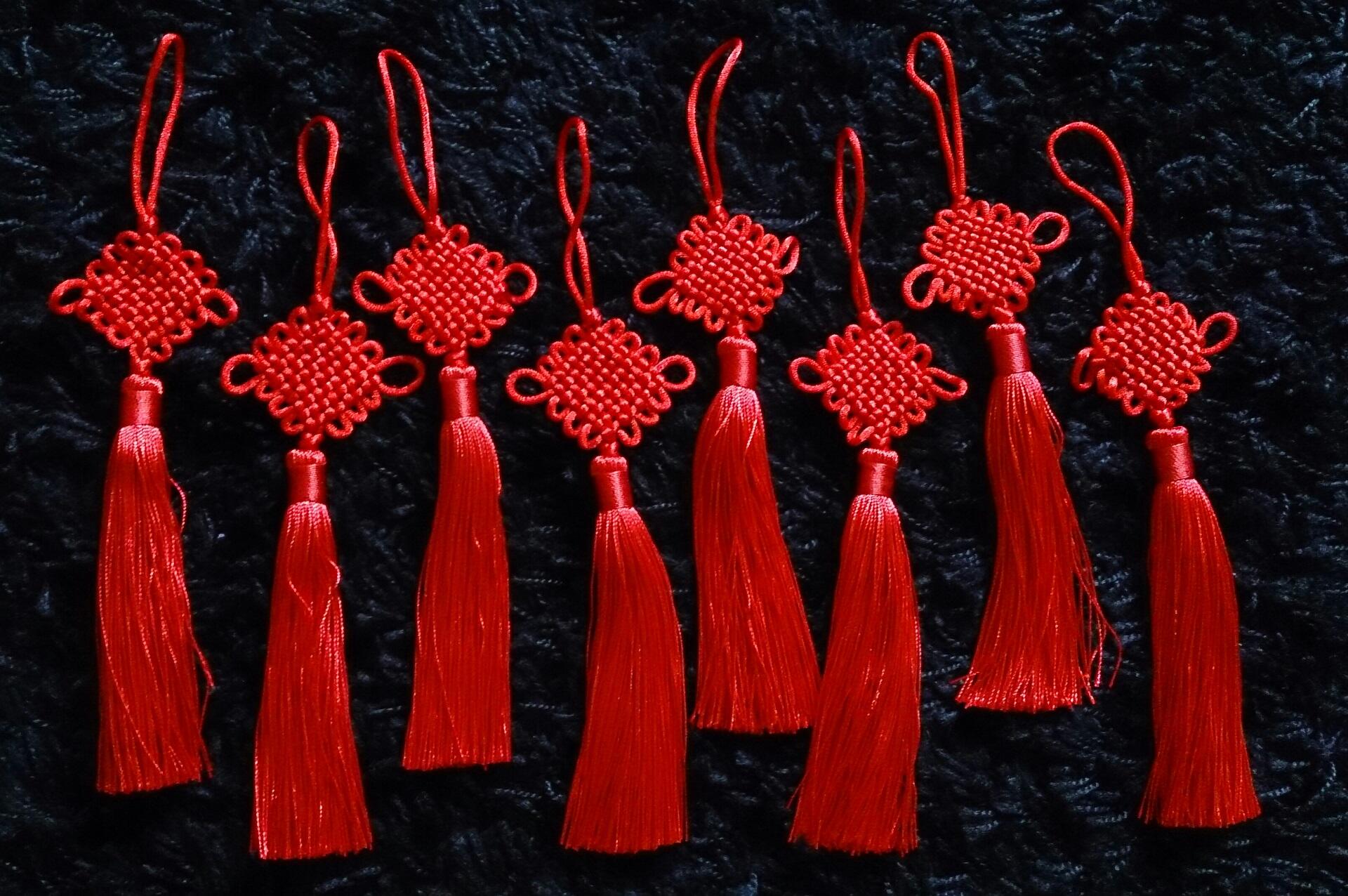
| Knots | 中國結 - zhōngguó jié | Double Happiness knots Longevity knots Good luck knots Mystic knots |
| Numbers | 数字 - shù zì | Various number combinations are homophones for love declarations. |
| Fruits and seeds | 水果 - shuǐ guǒ 种子 - zhǒng zi | Fruit = women's fertility Seeds = men's virility |
| The colour red | 红 - hóng | happiness fertility good luck success good fortune |
| The colour gold | 黄金 - huáng jīn | wealth prosperity |


The Double Happiness Symbol
One can always tell a bride's or groom's home thanks to all the Double Happiness decorations on the windows and doors.
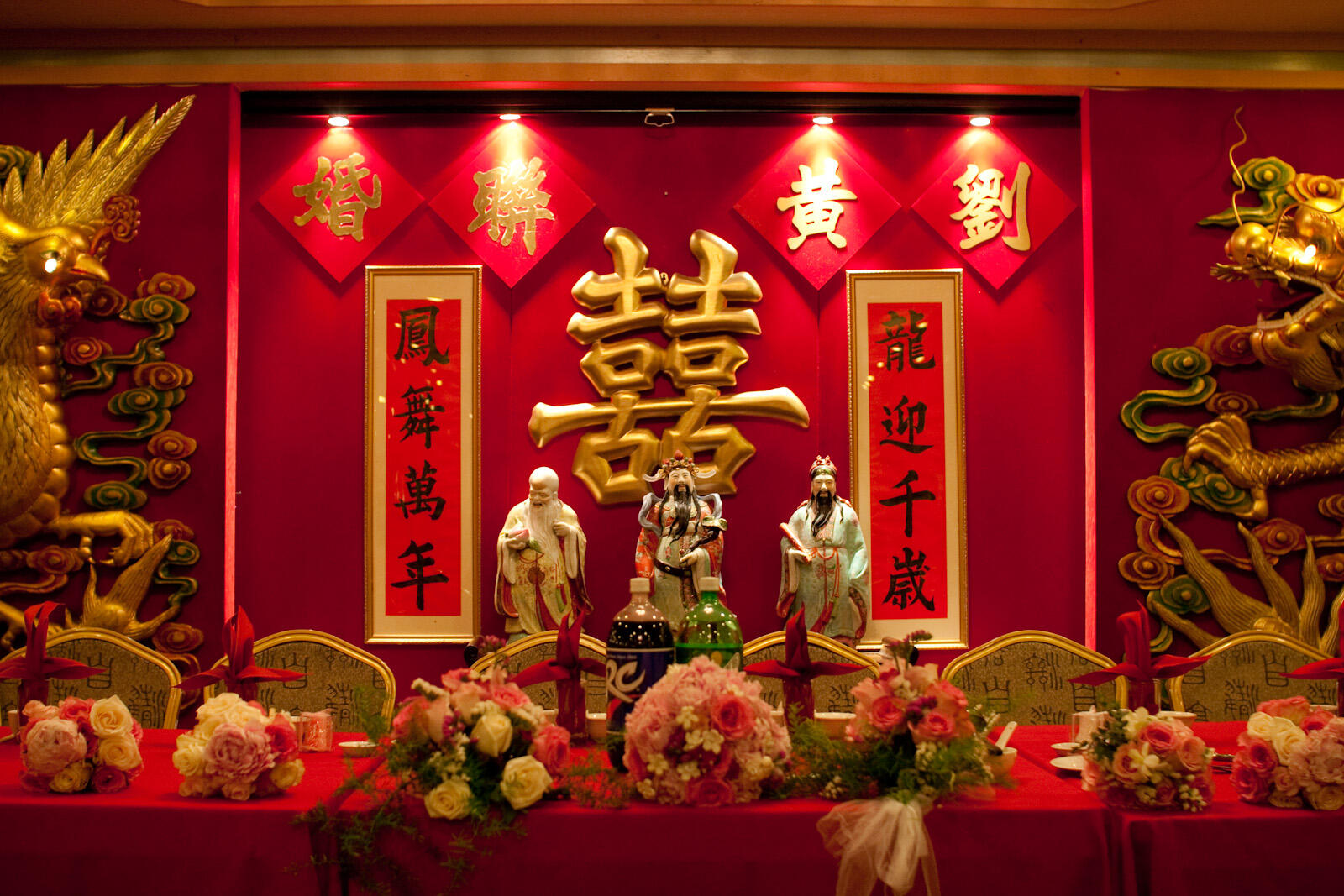
This Chinese wedding character adorns everything wedding-related, from the invitations and red envelopes (红包 - hóng bāo) to the banquet hall's stage. It's not uncommon for the marrying couple's parents to wear clothes emblazoned with Double Happiness. This symbol may even feature on the linens that make up the marriage bed.
As the story goes, sometime during the Tang Dynasty, a young scholar was racing to the capital to take the civil service exam. He got sick on the way there and a healer took him in. While there, he fell in love with the healer's daughter, so he promised to return and marry her once he sat his exam. As a promise to him, she composed a couplet.
Wouldn't you know it? As a part of the exam, he had to recite a couplet. He repeated the one his beloved composed, and won his civil servant's post. True to his promise, he returned for his bride, who immediately etched the Chinese symbol for happiness on the door. He copied her gesture, and so the double-happiness character became synonymous with true love.
This legend may change a few details, perhaps to fold in various ethnicities' cultural ideas into the tale — which, itself, may be apocryphal. We do know that double happiness first appeared during the early 19th century.
Regardless of where the story came from, this is the most important of all the Chinese wedding symbols.
Dragon and Phoenix
Chinese culture is both poetic and pragmatic in assigning symbols (and in everything else!). Historically, the dragon stood for the Emperor, while the delicate phoenix symbolised the Chinese Empress. That was the pragmatic part. Now, for the poetry.
The powerful dragon and graceful phoenix are celestial beings engaged in an eternal dance. The union of their energies brings luck, prosperity, and harmony. Their respective strengths reinforce balance in the world and in the relationship.
It's easy to see why these creatures are iconic wedding symbols. You'd be hard-pressed to find a bride who doesn't wear a red qí páo (旗袍) with a golden phoenix embroidered on it. Likewise, no culture-loving groom would tour his wedding banquet without a dragon emblazoned on his cháng shān (长衫).

Other Animals as Chinese Wedding Symbols
Still, those are not the only animal symbols you'll see as Chinese wedding decorations. Others include:
A pair of cranes: long-lasting relationship.
A crane among pines: determination and wealth.
You might think, "Bats, really?" It's hard to say if Chinese newlyweds think of bats the same way we do (disgusting things!). However, in Chinese, 'bat' sounds just like 'luck', and who wouldn't want luck on their wedding day?
Long life, riches, health, a love of virtue, and a natural death.
Flowers as Chinese Wedding Decorations
Fun historical fact: in Western cultures, weddings were typically in June, after the crops' first planting.
And also long past people's springtime baths. Brides would carry flowers to mask their (pungent) natural odour. Wedding halls were filled with flowers to cover the crowd's scents.
Of course, the history of wedding flowers goes much further back. In ancient times, those bouquets contained various herbs to ward off evil spirits (and also to dispel bad odours). More importantly, each type of flower held significance
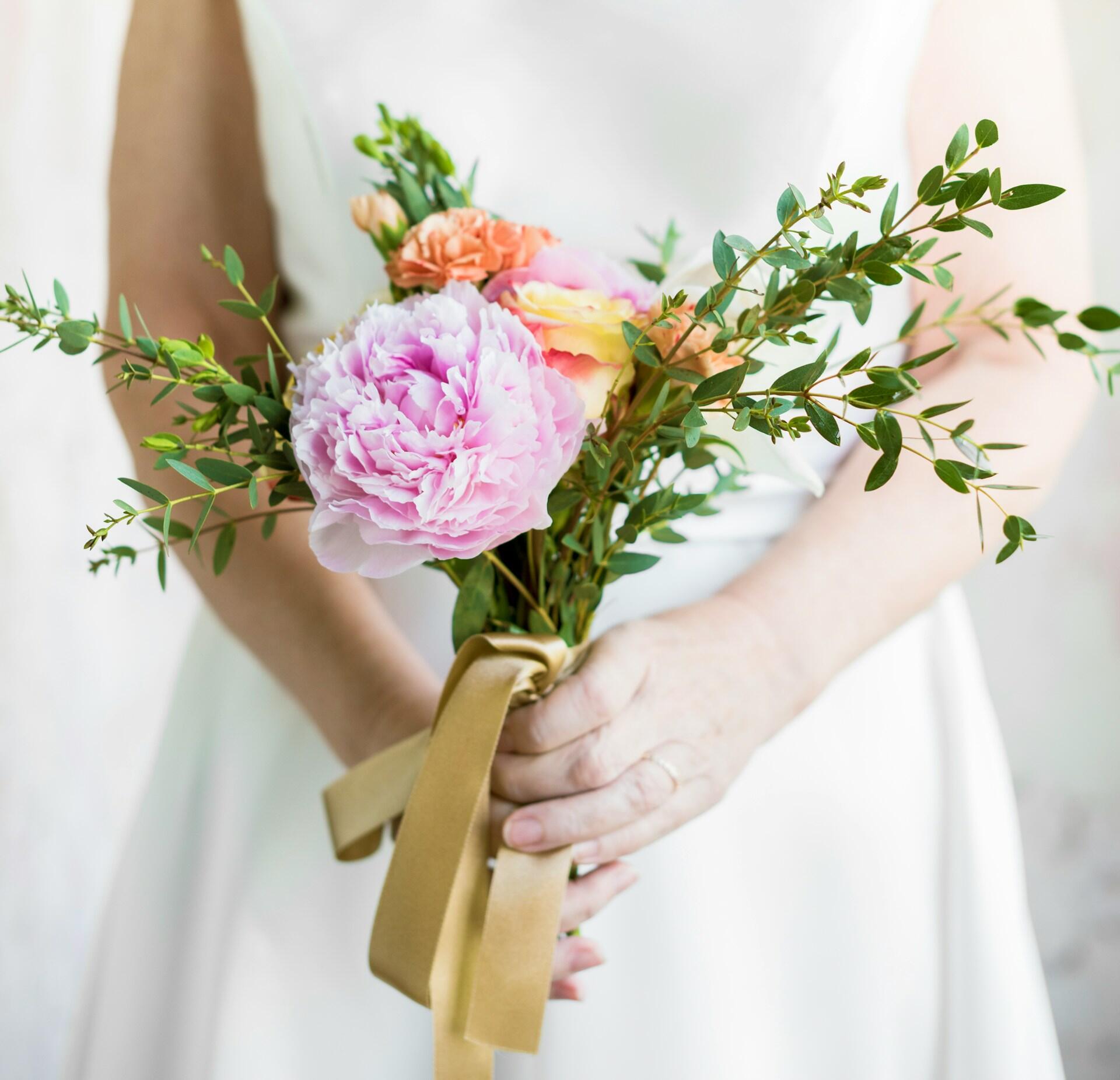
That last point is relevant to Chinese wedding decorations. In this culture, the lotus reigns supreme. It stands for purity, honour, and longevity. Lotus blossoms represent Chinese culture and, thanks to what they represent, they're a lovely way to express wedding sentiments.
The peony is another culturally significant flower. Peonies represent peace, beauty, and wealth; brides and grooms wear peonies as they exchange their vows.
In the west as the east, orchids stand for fertility. Practically every Chinese wedding I've been to features orchids, either as table centrepieces or as images shown during the wedding video.
Lilies signal long, happy unions. More than one Chinese bride has carried a colourful lily bouquet. The variety of colours offers wedding planners lots of choice when arranging the wedding hall decor.
Double Happiness Knots and Other Knots
Knots are not reserved for Chinese weddings. After all, 'tying the knot' means 'getting married' in many cultures.
However, unlike the Celtic usage, where the couple literally bound their wrists together, Chinese knots serve as decorations. In fact, it's not just one knot; Chinese culture offers several of them.
These knots are typically tied using red cord. Red is a significant colour in Chinese wedding traditions, as you'll see below.
Numbers as Chinese Wedding Symbols
Numerology is important in Chinese culture; nowhere is that more obvious than during the marriage process. Among numerical Chinese wedding symbols, selecting an auspicious wedding date is paramount.
May 20 is one of the busiest days in the registrar's office.
It's also one of the busiest days for weddings.
That date, written 5-20 in Chinese (5月20号 - fifth month/20th day) is phonetically similar to 'I love you' in Chinese (我爱你 - wǒ ài nǐ). Listen to Yunze first say 520 (五二零 - wǔ èr líng) followed by love's stock phrase.
Poor Chinese couples! They all want the most auspicious dates for their big day so they have to plan their wedding a year or more in advance. Otherwise, every banquet hall, emcee, and car service will be fully booked.
Still, you're not likely to see 520 at a Chinese wedding, unless some clever person folds 50, 20, and 10 yuan bills in the shape of a heart, with only the 5, 2, and 0 showing. Those make great table decorations!
The Meaning Behind 1314
You're more likely to see 1314, typically in balloons, in the banquet hall or above the marriage bed (if you participate in the pre-wedding games). This declaration is a near-homophone for a different love phrase. It's roughly equivalent to our "One life unto death", but not quite so melodramatic. Once again, Yunze narrates for us:
The number 1314 (一三一四 - yī sān yī sì) sounds so much like "One life one world" (一生一世 - yī shēng yī shì)! It's a natural Chinese wedding symbol.
Where Else to Find Numbers
Foods To Give Your Chinese Wedding Character
Standard weddings offer planners a huge variety of menu choices for their banquets. They might coordinate foods to fit the wedding's theme, or the couple's dietary preferences.
By contrast, Chinese wedding traditions dictate the menu. As mentioned above, the standard wedding banquet features eight or nine dishes, along with specific drinks. Each of the foods, in turn, has its own meaning. This chart outlines what wedding guests in China can expect to dine on.
| 🍤Dish | 🧧Significance | 📝Notes |
|---|---|---|
| Shark fin soup | A wealth display | This trend is falling out of favour for ethical reasons. |
| Roast suckling pig | A symbol of virginity | The groom presents the bride's family with a roasted pig during the engagement ceremony. |
| Peking Duck and Lobster | 'Red' foods for luck | Serving them whole, (with head and legs) symbolises completeness. |
| Chicken or other fowl | Symbolises peace. | Quail and pigeon are adequate substitutes. |
| Sea cucumber with vegetables | Signifies selflessness | “Sea cucumber” sounds like “good heart”. |
| Fish (whole) | Hopes/wishes for abundance. | “Fish”” sounds like “plentiful” |
| Noodles | Symbolise longevity | Noodles' long strands equal long life. |
| Red bean soup and sweet buns | For a sweet life | These foods' ingredients further suggest happiness and long life. |
| Drinks Tea, alcohol, and 7-Up | tea: respect alcohol: celebration 7-Up: happiness | The words “up” and “happiness” are homophones. |
Note that wedding banquets serve other foods, too. Lately, hip, young couples have added Western dishes, particularly Western-style wedding cakes, to their menus.
Colours as Chinese Wedding Symbols
Red is often stigmatised in Western cultures (The Scarlet Letter, the Devil's colour, etc,). In China, it's a benevolent, protective hue whose legend traces back millennia.
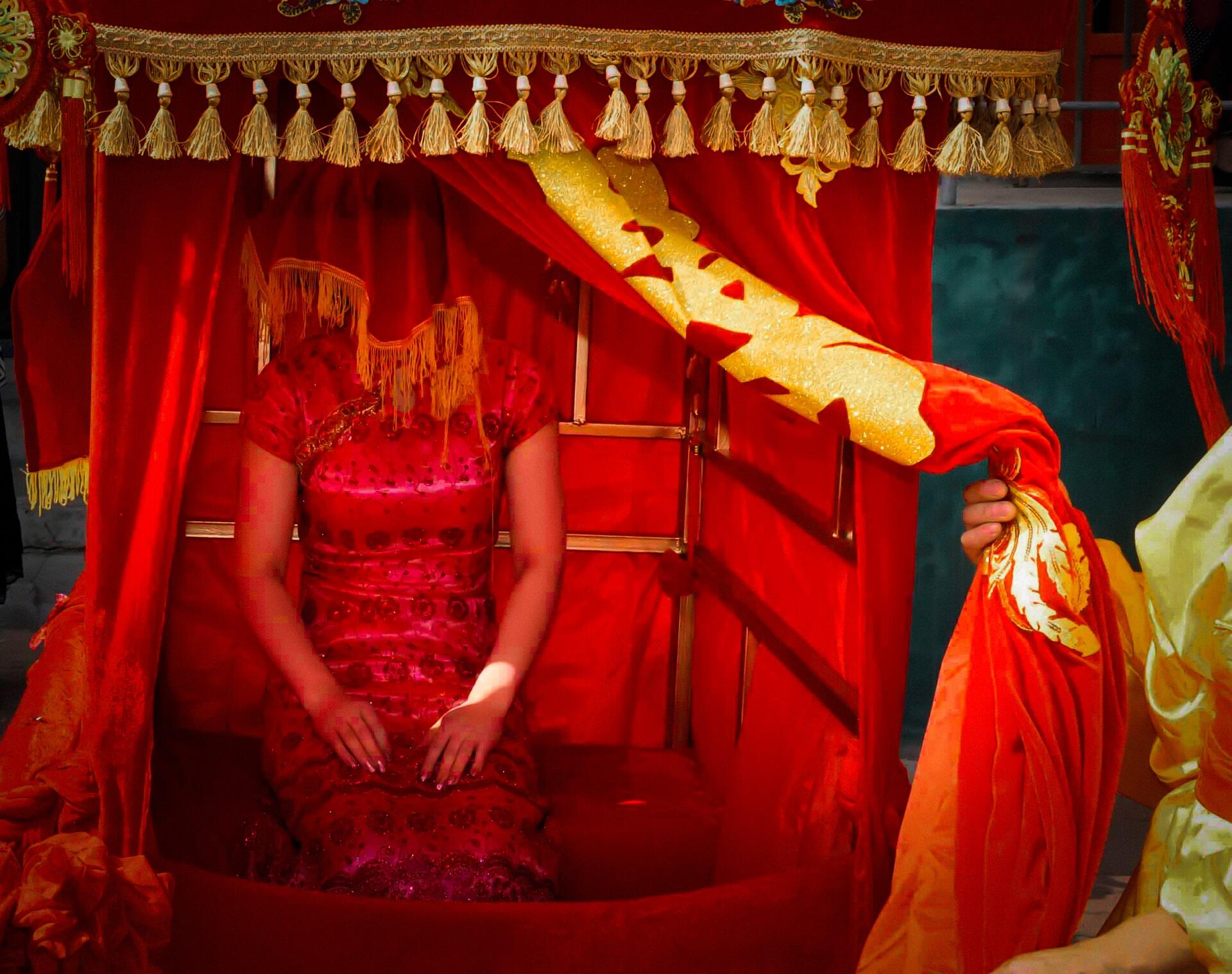
Chinese brides have been wearing red since time immemorial. Not just their dress, but also their hóng gài tóu (红盖头), the red veil covering their head and face.
Today's brides usually don't go to that extreme; many wear a Western-style white wedding dress to exchange vows with their new husband. However, soon after, the bride will slip into her red qipao adorned with its golden phoenix.
Gold is the second most significant colour in Chinese culture, and especially for Chinese wedding decorations.
These two colours distinguish the happy couple's dress styles, as well as the wedding hall decorations. The double happiness decorations are all red, and so are the wedding invitations — which also feature gold writing. Lanterns, firecrackers, and the ubiquitous hóng bāo are also red and gold.
Summarise with AI:
Did you like this article? Leave a rating!

 Loading...