
The life cycle of a star is one of the most studied topics in astronomy. The existence of stars is how we can live at all, due to our sun’s radiating heat, light, and other energy. The life cycle of stars generally begins the same way, from massive clouds of gas and debris. But there are different ways stars can die, which depend on their mass. Here, we’ll learn about the life cycles of different types of stars, including that of our sun.


Formation of a Star
Before a star can shine, it needs to first be formed. This process can take millions or billions of years and requires unfathomable amounts of gas and dust to coalesce together in space. The process by which the matter comes together and ignites seems like magic (but with physics, we know it’s just science!).
Nebulae: The Stellar Nurseries
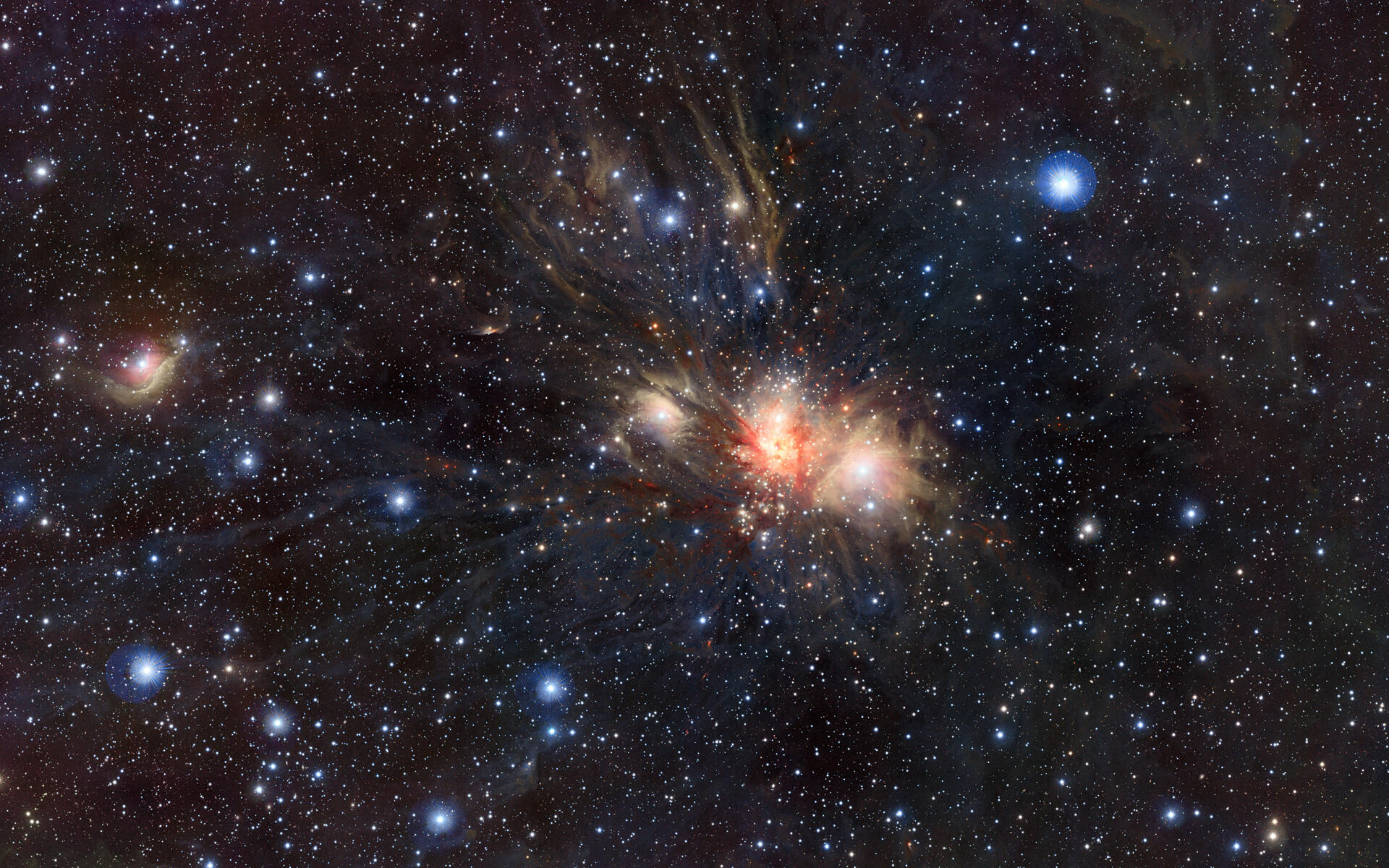
Nebulae, or molecular clouds, are vast clouds of gas, dust, and plasma floating undisturbed through space. These clouds are made mostly of hydrogen, but also contain carbon and oxygen (as carbon monoxide), methanol, ethanol, and benzene, among other compounds.
Molecular clouds can stretch hundreds of light-years in every direction, containing enough material to form thousands of stars. It’s thought that molecular clouds may contain up to six million times the amount of material found in our Sun.
Nebulae tend to remain stable for long periods of time. Given the right conditions, they can be pushed into creating stars. Otherwise, they either remain stable as a cloud or begin to disperse. Clouds form and disperse over and over throughout the galaxy, with only a very small amount beginning the process of star creation each year.
There are two main theories about disruptions that can cause a nebula to develop the conditions needed for star-making:
Clouds can float into one another, causing them to begin rotating faster, which in turn causes clumps of matter to begin forming.
Whether caused by a collision or other influence, like disruption from nearby supernovae, stellar wind, or other proto-stars, denser regions of the cloud may begin drawing inward with a domino effect around it.
In either situation, once there is a dense enough area within the cloud, it will begin to compress under its own gravitational pull. Once one dense spot begins pulling matter towards it, it triggers other dense spots in the cloud to do the same.
For star formation to continue, the cloud must be cold and therefore dark. Too much pre-existing heat increases outward pressure, making the collapse of the matter slow or unattainable.
If there is too much light or heat, not enough matter gathered together, and not enough rotation, stars cannot form.
Learn more about space with a professional physics teacher on Superprof.
Protostar Development
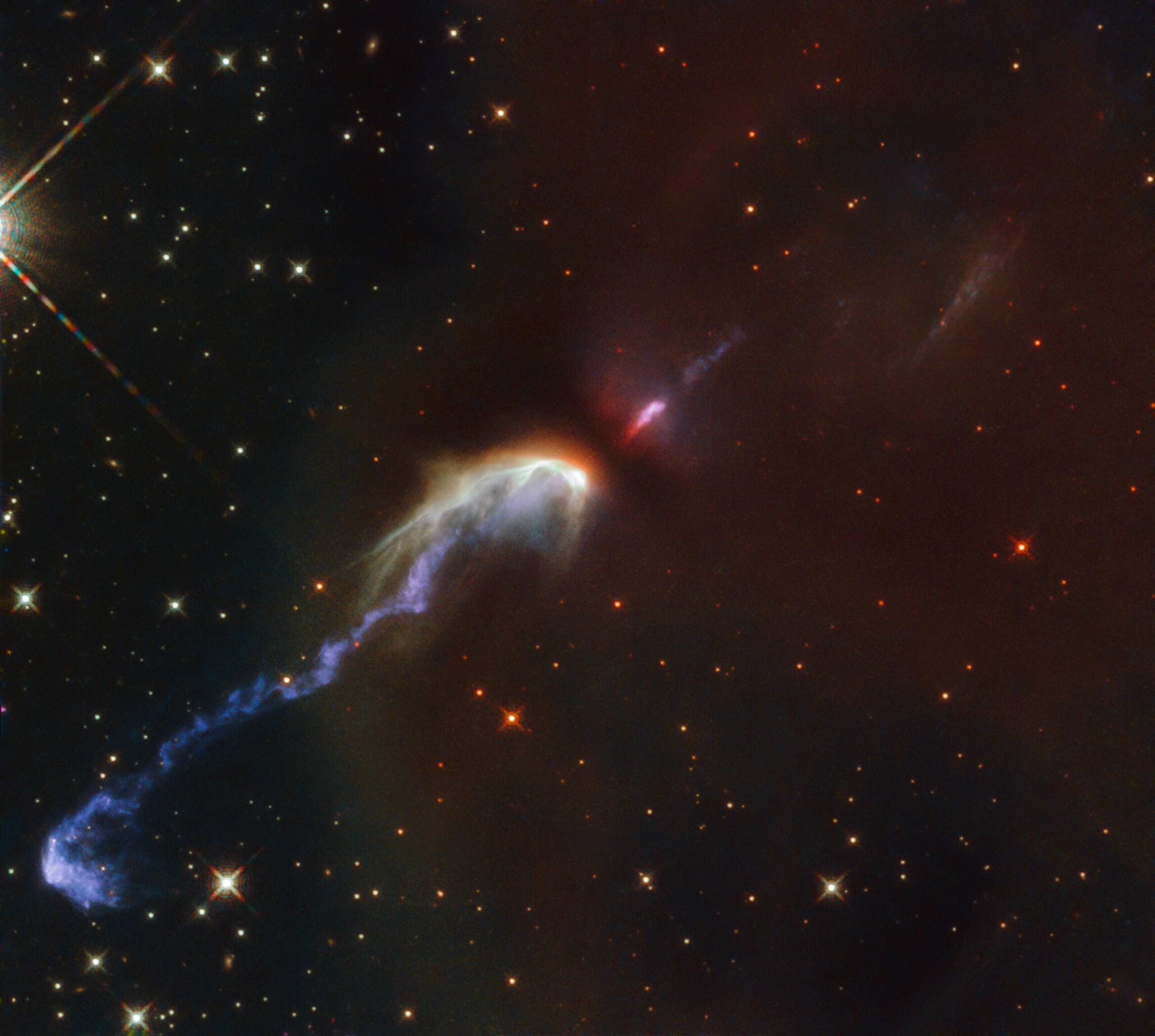
Over time (millions of years), hundreds of dense regions in the molecular cloud collapse. These collapsed areas form protostars. At this stage, they aren’t true stars because they are not yet using nuclear fusion to create energy in their cores. Instead, its heat and light come from gravitational compression.
As time passes, more and more matter is drawn toward the protostar. The core becomes hotter and denser as the mass increases. The gas becomes more compressed under its own gravity. Once the core temperature reaches about 10 million ℃, nuclear fusion naturally begins. Suddenly, hydrogen atoms fuse into helium, creating a strong outward explosive energy to oppose the strong inward gravitational energy. This marks the birth of the star.
Find a Physics tutor Sydney on Superprof.
Main Sequence Phase
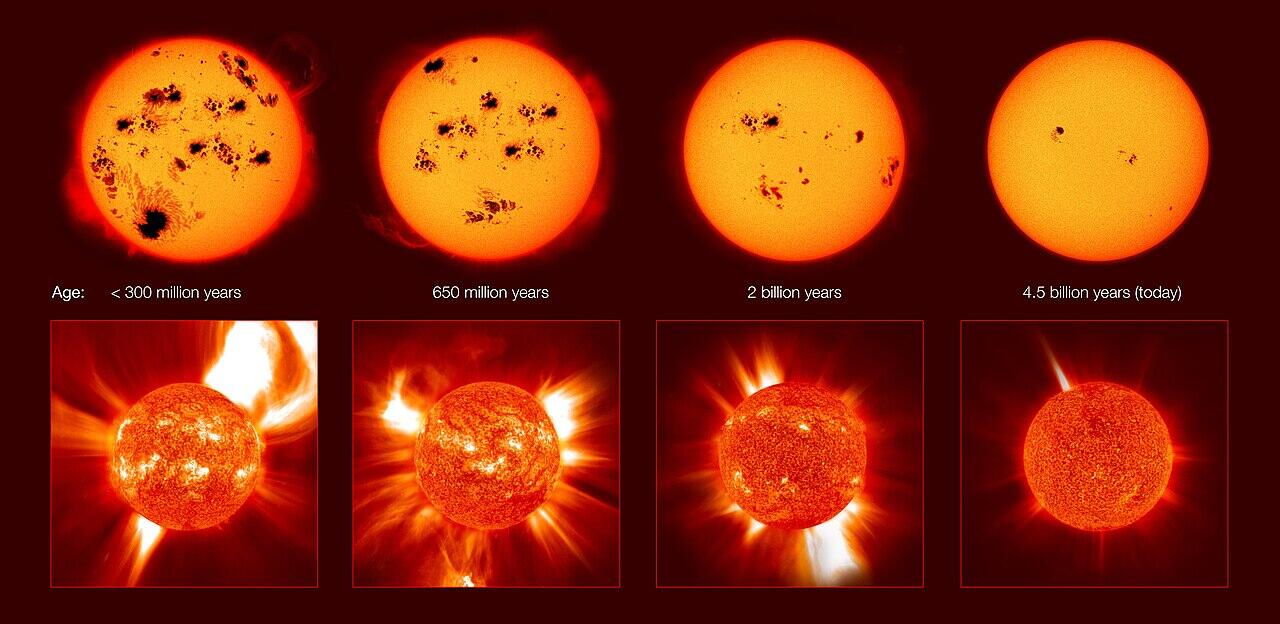
The next big step in the life cycle of stars is the stable phase, known as the main sequence phase. This is the phase our sun is currently in, which allows life to exist on Earth. The star puts out a consistent stream of light and heat energy for millions of years.
Could other stars across the universe also support life?
Nuclear Fusion and Energy Production
During this phase, the star fuses hydrogen into helium at a steady rate within its core.
This process releases energy in the form of light and heat.
Again, these outward energetic forces are pressing against the inward gravitational force.
The opposing forces create the environment required for these repetitive chemical reactions, known as hydrostatic equilibrium.
Fusion occurs under extreme pressures and temperatures combined. It allows hydrogen nuclei to move fast enough to combine even though they naturally repel.
Duration and Stability
The length of a star’s main sequence phase depends almost entirely on mass.
Low-mass stars burn their fuel more slowly, since they have less density pulling the mass inward, and also fewer nuclear fusion reactions happening per minute in the core. They can remain stable for tens or hundreds of billions of years. They are much more stable and less prone to violent changes.
High-mass stars burn much faster and may only last a few million years in a stable state. They may experience dramatic changes throughout their main sequence phase.
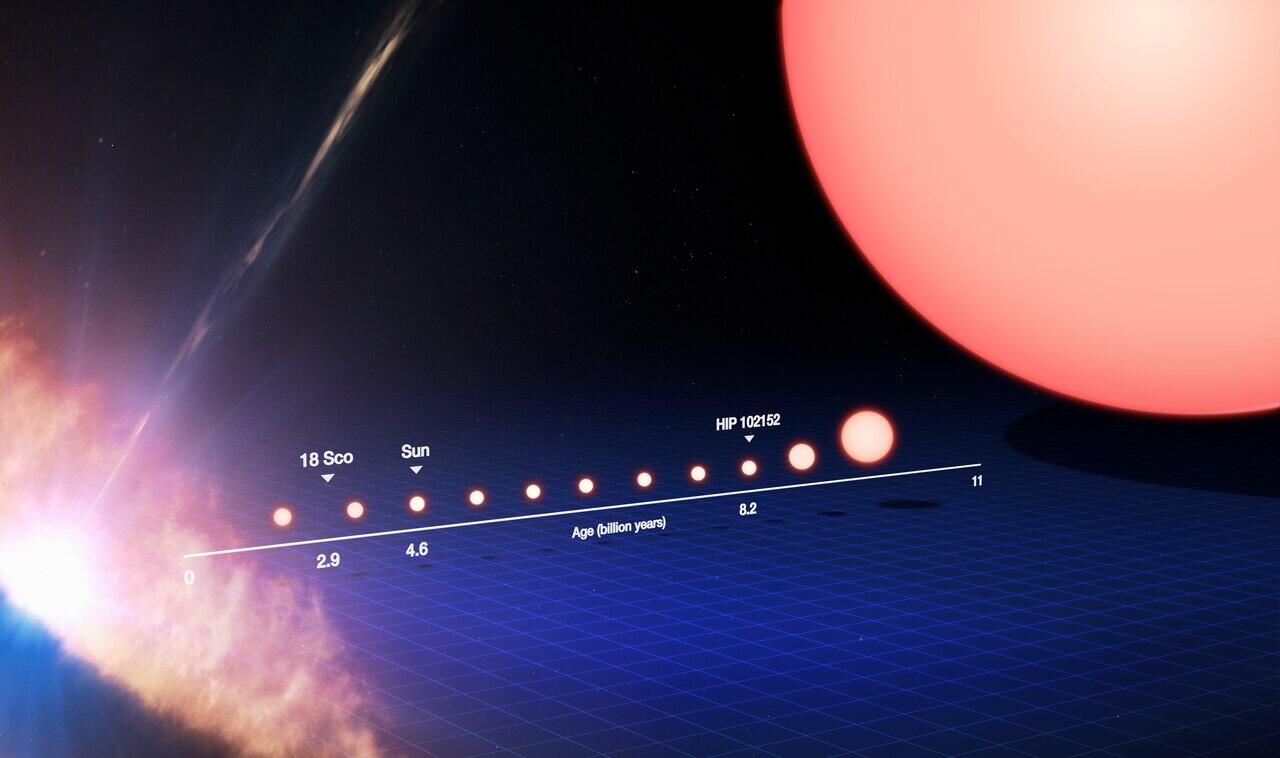
Our sun is a medium-mass star, so it will burn for a very long time. It has already been “burning” for about 4.6 billion years in the main sequence phase and will remain doing so for another 5 billion years or so.
Want to learn more? Find physics tutors Melbourne here on Superprof.
Post-Main Sequence Evolution
Towards the end of a star’s life, it exits the main sequence phase and becomes a mature star. This is because it runs out of hydrogen to use for nuclear fusion in its core. Gravity starts to take over, compressing the core, which no longer has a strong outward force. The contraction causes the temperature to rise, which may cause fusion to begin in the layers of the star surrounding the core, prolonging its life for a short time.
Red Giant and Supergiant Stages
When fusion is no longer possible in the core, the outer layers of the star expand and cool.
At this stage, a star’s mass determines what happens:
Low to Medium-Mass Stars
- Turn into red dwarfs or red giants
- Expand gradually and shed material more slowly over time
- Eventually create a planetary nebula and white dwarf, and possibly a black dwarf
Large Stars
- Turn into supergiants
- Expand and shed material more rapidly, developing complex internal layers
- Eventually implodes and becomes a supernova and possibly a neutron star or black hole
Although stars in the red giant/supergiant phase are much cooler than usual, they are still extremely hot, and their brightness remains because of their increased size.
Cover all the important information about space with a physics course online on Superprof.
Helium Fusion and Heavy Element Formation
The process of a star’s collapse is not straightforward. While the star initially cools due to the lack of hydrogen and nuclear fusion, the subsequent collapse again raises temperatures to be hot enough for fusion. This time, helium atoms fuse to form carbon and oxygen. This process temporarily stabilises the star, since it’s again releasing massive amounts of energy from nuclear fusion.
This process of creating new atomic nuclei from existing nucleons is called nucleosynthesis.
In low-mass stars, this process is relatively smooth.
In massive stars, the process, known as nucleosynthesis, can happen faster and more violently, leading to more types of fusion. Carbon, neon, oxygen, and silicon may begin to undergo nuclear fusion, which results in the formation of heavier elements, including iron.
Find an HSC Physics tutor on Superprof.
End Stages of Stellar Evolution
After the star has exhausted its reserves of helium and other elements, it again begins to cool down. Again, it begins to cool and expand. Depending on the remaining mass, the star will behave differently.
Low to Intermediate-Mass Stars
Smaller stars, including our Sun, do not (or will not) become supernovae. Instead, they lose their outer layers gradually, sending them off in waves. These layers drift into space and form planetary nebulae, allowing the matter and elements to drift into other places in the surrounding galaxy.
The remaining matter at the core becomes a white dwarf, a small, dense, hot mass. It no longer produces energy through fusion, but has a lot of heat and light remaining from residual energy. At this stage, it’s much smaller than it once was before turning into a red dwarf or red giant, perhaps about the size of Earth. It is extremely dense, but not as dense as the remains of a large star.
Over time, the white dwarf cools and fades. Scientists hypothesise they eventually become black dwarf stars, but the universe is not yet old enough to contain any stars at this stage.
Find out what astronomers, astrophysicists, and cosmologists study.
Massive Stars
The stars that are coming out of the supergiant phase have a much more dramatic end. Once iron builds up in the core due to nucleosynthesis, the collapse can happen in seconds rather than millions of years, like smaller stars.
Again, what happens next depends on the star’s mass.
Moderate-Sized Cores
This implosion results in the outer layers being quickly sucked in and then forced out in a massive explosion called a supernova.
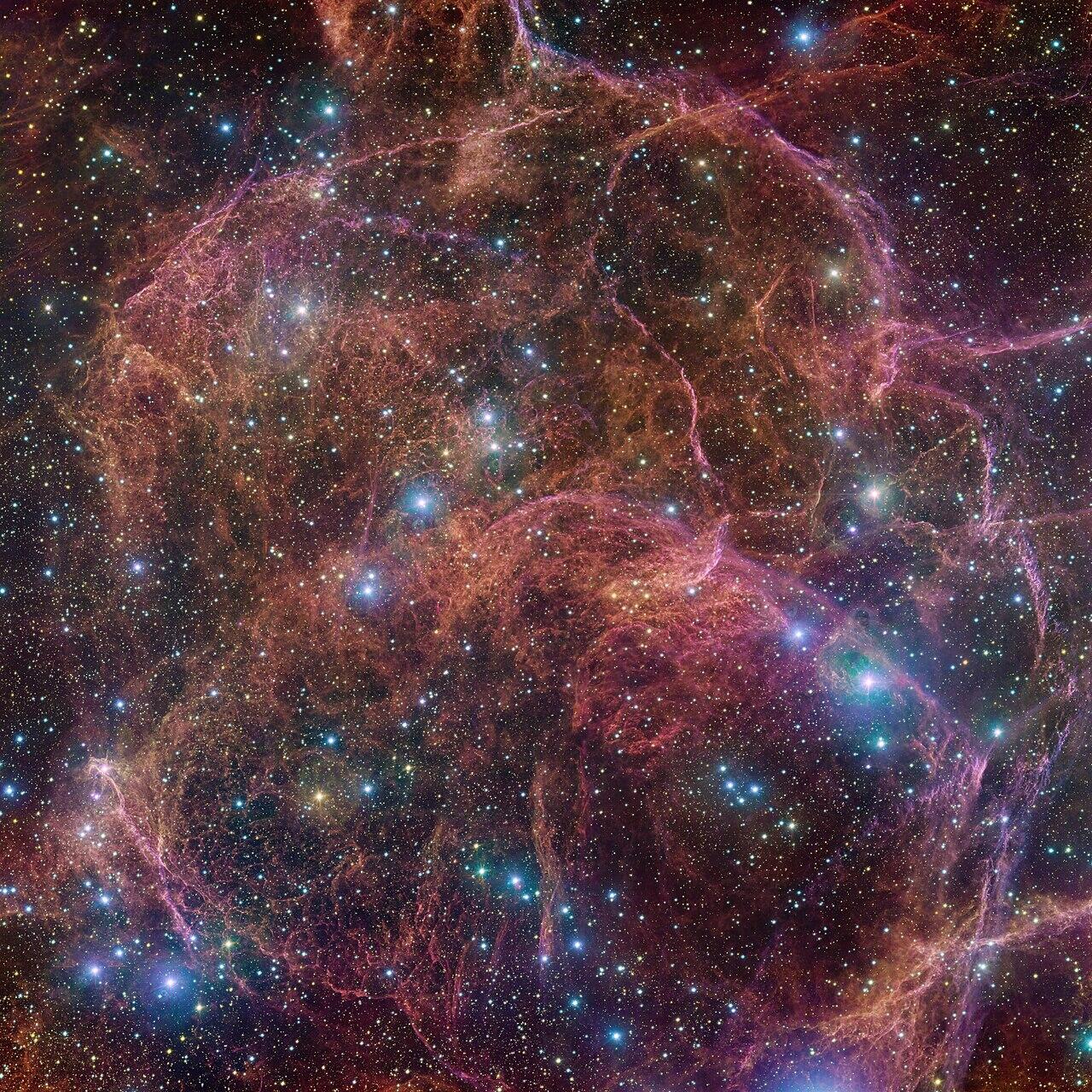
A supernova can release more energy than an entire galaxy for a short time. It scatters elements into space at great speeds, including elements needed for planet formation and life.
After the supernova, what remains depends on the star’s original mass.
A moderately-sized core can become a neutron star, which is extremely dense, with matter packed tighter than an atomic nucleus.
Large Cores
Large-cored stars may skip the supernova phase and collapse straight into a black hole. How this happens is not entirely known, but astrophysicists think it’s due to the sudden compaction of the remaining elements into a super-dense object large enough to differ from a neutron star. Its gravity is so strong that not even light can escape.
Only a small number of stars are large enough to possibly become black holes, and not all of them will have the amount of mass required at the end of their life cycle to successfully undergo the process.
Timeline of Star Life Cycle
To get a better understanding of the life cycle of a star, it helps to see it on a timeline. Here, we’ll look at the two most common timelines for stars’ lives: the small and mid-sized stars, and the large stars.
Learn more about our solar system!
Stellar Evolution: Beginning of All Stars
Billions of years
Molecular Clouds
Giant molecular cloud gradually forms denser areas within.
Gravitational Collapse
Collision and/or gravitational instability cause the cloud to swirl. The denser areas begin to separate; massive amounts of heat are released.
Protostars, T-Tauri Stars
Increased heat and pressure causes molecule to condense and ionise; nuclear fusion begins.
Main Sequence Begins
Star conducts nuclear fusion in the core at a steady rate.
Stellar Evolution: Small and Medium Stars
Tens to hundreds of billions of years
Main Sequence Phase
Smaller stars burn their hydrogen supply more slowly and steadily.
Millions of years
Post-Main Sequence
Stars run out of hydrogen and become either red dwarfs or red giants, depending on mass.
They expand gradually and shed layers that become planetary nebulae.
Burn helium in final stages of nuclear fusion.
A few hours
End Stage
They collapse into a white dwarf star.
Theoretically, they’ll eventually cool and turn into a black dwarf.
Stellar Evolution: Massive Stars
Tens of billions of years
Main Sequence Phase
Bigger stars burn faster and with occasional violent changes.
Millions of years (but faster than smaller stars)
Runs out of hydrogen, becomes a red supergiant
Runs out of hydrogen, becomes a red supergiant
Expands and sheds layers violently. Inner cores form layers that each perform different types of fusion with different elements.
A few hours
End Stage
Implosion: stars become supernovae
Smaller stars will become neutron stars
Larger stars become black holes
The Sun's Life Cycle
Our most important star, the Sun, is undergoing the same life cycle as all other stars of its size. The biggest unique feature the sun had during its birth was a protoplanetary disk, which contained all the materials needed for the planets, asteroids, and moons in the solar system to form after the sun ignited. Many stars, but not all, have protoplanetary disks, which means there are many planetary systems with central suns in the universe.
Find a VCE Physics tutor on Superprof.
Current Stage and Future Evolution
As a medium-sized star, the sun entered the maintenance cycle around 4.6 billion years ago and has about 5 billion years of fuel remaining.
By then, life on Earth will be unrecognisable to us today, just as life today would be unrecognisable by any organisms that existed a billion years ago. Humans (or the descendants of humans) may have even figured out how to colonise other planets by that point as an effort to escape the Sun’s red giant phase.
At the end of the maintenance stage in 5 billion years, it’s anticipated that the sun will expand into a red giant, engulfing Mercury and Venus, and burning the Earth.
The sun will shed the outer layers, creating a planetary nebula. The remaining core will become a white dwarf, and eventually, theoretically, a black dwarf.
Understanding the life cycle of a star is complicated. There are a lot of branching paths a star can take in its life, depending on its mass. Everything can be explained through chemistry and physics, which is why astrophysics is such an exciting field. Stars are the catalyst for all other structures in the universe. Their formation and destruction disperse matter across their galaxies, forming planets and other celestial objects. The force of their births and deaths creates movement and momentum, which is necessary for certain chemical processes to take place, as well as the formation of planetary systems.
Without stars, our solar system wouldn’t exist, and without one particular star at the centre of our solar system, life on Earth wouldn’t exist either.
Summarise with AI:
Did you like this article? Leave a rating!

 Loading...