
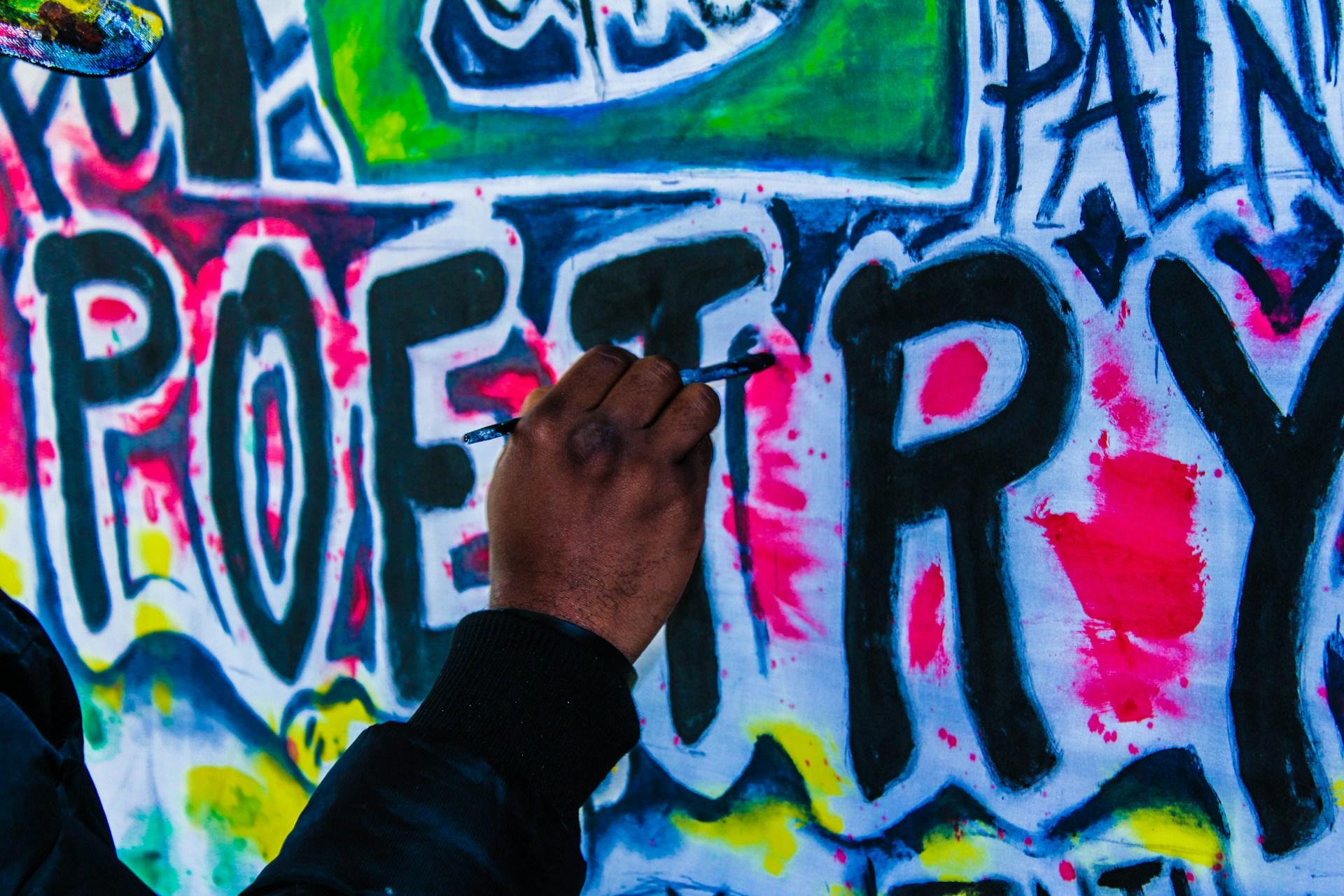

Slam poetry is a type of competitive performance poetry where the poets and performers are then judged. Typically, the slam poets who perform well will progress to the next round and have to perform another piece. It's standard for slam poetry competitions to have a cash prize.
What sets slam poetry apart? Our guide to slam poetry will unravel its unique features, why it's a distinct form of artistic expression and how it's different from other types of poetry.


The History of Slam Poetry
Like many other types of poetry, slam poetry is influenced by free verse. More specifically, it's a direct descendant of Beat Generation poets Jack Kerouac and Allen Ginsberg and has a somewhat musical style.
Slam poetry is worlds apart from a Limerick with its clear and set structure. It's roots go back to the open mic sessions of cafés in big American cities like New York City and San Francisco.
In America's second city, Chicago, there was also the poet "Slampapi" (Marc Kelly Smith), credited with creating the slam poetry movement. Slampapi was concerned that academic poetry was too high-brow and wanted to make poetry more accessible. He founded the National Poetry Slam in Chicago in 1990, and the competition still runs today.

In the 2000s, the TV show Russell Simmons Presents Def Poetry also helped bring slam poetry to a bigger audience. This TV show ran from 2002 to 2007 and featured famous slam poets like Nikki Giovanni, The Last Poets, and Sony Sanchez.
How Is Slam Poetry Different from Traditional Poetry?
The main difference between slam poetry and traditional poetry is that slam poetry is always meant to be performed.
While traditional poetry can also be performed, and many poets write with this intention, traditional poetry also exists on the page as a work of writing.
Slam poetry is specifically crafted for performance in front of an audience, while traditional poetry is primarily intended for reading on the page.
Slam poetry can have a hip-hop feel, with poets playing around with the pacing of the piece, pausing to emphasise points, or even altering their volume for dramatic effect.
Many types of traditional poetry are governed by rules and conventions. In contrast, slam poetry has no rules: you must perform the poems.
More often than not, slam poetry tends to be political and covers themes and topics like race, gender, class, and sexuality. A poem doesn't necessarily have to be about these topics. Still, you'll find that these topics are often covered at slam poetry events, which are known as poetry slams or just slams.
In many ways, slam poetry is supposed to be controversial or at least thought-provoking. As each poem is always performed in front of a live audience, emotional responses are expected, especially given that the audience or judges will choose the winner.
A slam poet often tries to make the audience laugh, gasp, cry, or react in some way, making the poetry more accessible as they attempt to engage the audience with their poem.
The Rules of Slam Poetry
While slam poetry is often associated with a spirit of freedom and self-expression, the competitive format of poetry slams does involve specific rules and guidelines.
These rules and conventions include, but are not limited to:
- Audience Interaction: Poetry slams regularly involve and encourage audience interaction. The audience is expected to applaud, snap, and even react vocally during the event. This creates a beautiful and energetic atmosphere.
- No Props: Poetry slams are just about the poetry. Slam poets shouldn't have props, costumes, or musical accompaniment, unlike ballad poems, performed to music. The line between clothing and costume is often blurry, but most slam poets dress in quite understated ways.
- Original Content: All poetry performed in poetry slams must be original. Not only that, but the poems need to be the poet's own content. Slam poets cannot perform poetry written by another person, even if it is original.
- Rounds: It's common for slam poetry competitions to include multiple rounds. The highest-scoring poets from the rounds progress to the following rounds, with the highest-scoring poet in the final being declared the overall winner.
- Slam Poetry is Judged: While all poetry is judged in a sense, slam poetry is judged by actual judges or an audience. This often works the same way as in sports, with judging between 0.0 and 10.0, but scores are given to one decimal place. Judges usually judge the content, delivery, and impact of the poems performed.
- Time Limit: It's very common for slam poetry to be limited to 3 minutes. Of course, in the heat of the performance, poets can get carried away, which is why there's often a grace period of ten seconds. Nobody wants to hear slam poetry being cut off, especially if it's about to reach a climactic ending. Still, it isn't a lengthy poem like epic poetry.
The Structure of Slam Poetry
Slam poetry is famous for having fewer rules and conventions than other types of poetry. However, there are still structures that most successful slam poets follow.
Slam Poem Structure
Regarding the poems' structure, it's common for slam poetry to have a logical flow from beginning to end that guides the audience through the performance.
Poems typically start with a compelling theme, question, or dilemma designed to engage and provoke thought.
Throughout the body of the poem, the poet will use storytelling, imagery, rhetoric, and many other poetic devices to develop the ideas and themes of the poem.
A key feature of slam poetry is its climax, where the poet delivers a powerful and impactful segment that heightens emotional and intellectual engagement.
Finally, the slam poet will end their poem in a way that hopefully leaves a lasting impression on the audience. This may also be the climax or after it. The conclusions to slam poetry often include calls to action, powerful statements, or reflective closing thoughts to ensure the poem resonates with the audience long after it is finished.
Slam Poetry Performances
The performance element of slam poetry is as important as the poem. Many slam poets put as much effort into their performances as they do their poetry, with a few common techniques used.
Slam poets often modulate their voices during the performance, changing the pitch, tone, and volume throughout to help highlight various parts of the poem, key ideas, and emotions.
Here's the slam poet Brandon Leake modulates his voice to convey his age.
Slam poetry is a performance art that also includes gestures, facial expressions, and movement. While costumes and props aren't allowed, the poets can use their body language to enhance the performance.
The rhythm and pacing of the poetry can also be used with the speed of delivery being changed for emphasis. While many traditional types of poetry, like sonnets, follow stricter rhythms and metres, slam poetry allows poets to play around with pacing.
The poet can also interact with the audience during a slam poetry performance. This could include making eye contact, directly addressing the audience, and integrating the audience into the performance. They won't get audience members up to participate, but slam poetry feels like there's less of a wall between the audience and the performer.

Slam Poetry Topics
So, what topics does slam poetry cover?
Like other poetry, slam poetry can be about almost anything. However, due to the performative nature of slam poetry and its background, it's less likely to cover some mundane topics intentionally found in other types of poetry.
It doesn't necessarily look at beauty in nature like a haiku poem, but it can be specific to the poet.
Slam poets often draw upon personal experiences, detailing their struggles, highlighting their achievements or victories, and covering personal themes that are often also universal or at least applicable to their audience.
It's also very common for slam poetry to deal with social and political issues, such as social justice, identity, inequality, and current political events.
Slam poetry can also cover raw emotional expression, with many vivid emotions portrayed and expressed during a performance.

Learn More About Slam Poetry with a Private Tutor
Slam poetry is an exciting type of poetry that you should consider learning about, especially if you've often found other types of traditional poetry could be more enjoyable.
However, slam poetry is much more complicated than it looks, and it's hardly surprising that you might need help finding a place to start.
Consider looking for a private tutor to help you learn more about poetry, especially slam poetry.
Search for what you'd like to learn on the Superprof website, and start browsing the profiles of potential tutors today!
Summarise with AI:
Did you like this article? Leave a rating!

 Loading...
