
Diffusion plays an important role in many chemical and biological processes. For instance, as you read this, oxygen is diffusing out of your vascular system's capillaries and infusing your muscles. It's a perfect example of diffusion, but not the only one we highlight. This article explains and explores diffusion in biology: its mechanisms, mathematical models, and where else diffusion applies.
How Does Diffusion Work?
- Diffusion is the net movement of molecules from a high-concentration area to one of low concentration.
- Diffused material can be solid, liquid or gas.
- Materials may diffuse into a solid, liquid or gaseous environment.
- Diffusion denotes molecule movement along a concentration gradient.
- Diffusion rates depend on the interaction of the medium and the material it diffuses into.


What Is Diffusion?
Diffusion describes a fairly broad scope of activity across all states of matter - gas, solid and liquid. For the variety of matter that may take part in diffusion, it always boils down to a simple process.

Do you put milk in your tea or coffee? If so, you may have noticed that the milk doesn't instantly turn the entire drink a lighter colour. As you pour the milk, only the point where the milk was poured turns white. It takes some stirring to balance the mix properly.
Not all diffusions are instantaneous; that's why we have to consider the rate of diffusion.
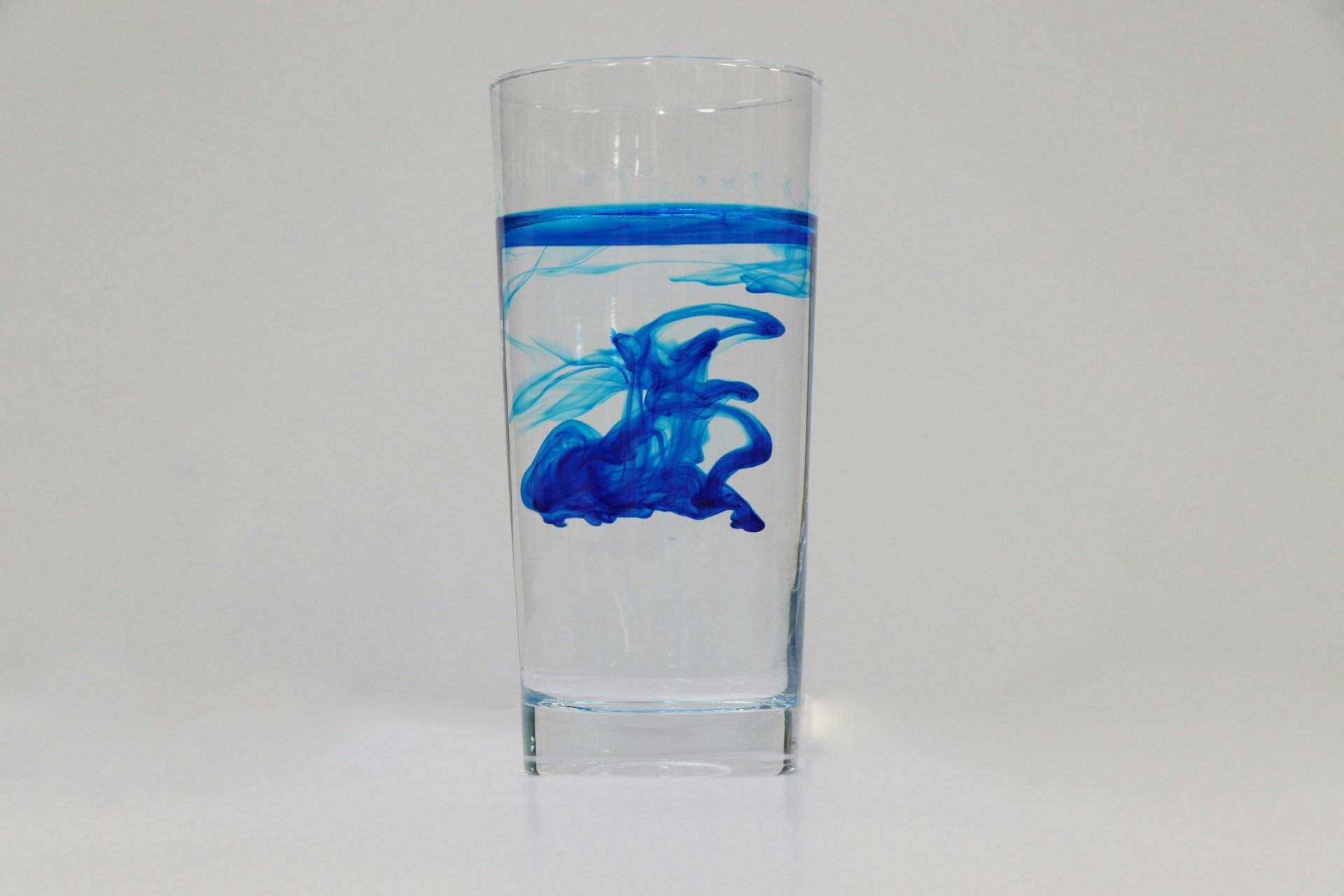
Two simple liquids, such as food colouring and water, would diffuse into each other fairly quickly. Conversely, with liquids that don't mix, such as oil and water, only the smallest contact layer of the two liquids diffuses. Furthermore, they do so very slowly.
These relatable, real-world examples of diffusion help to explain the concept and some of the complexity surrounding the diffusion definition.
In all cases, diffusion boils down to the random motion of particles.
That randomness happens when like particles collide into one another, as well as other surrounding molecules. The phenomenon is called Brownian motion1.
How Diffusion Became Important
Robert Brown, a Scottish botanist, happened to notice continuous, quick, random motion of microscopic pollen particles in a sample of water he was studying. This was in 1827, a time when microscopes were far cruder than they are today.
At the time, he noted the curious activity, but it was unimportant to his study of plant reproduction. However, he was curious enough about it that he repeated the particles-in-water experiment with inorganic particles. Observing the same effect, he concluded that the random activity was not because of living matter. He took the subject no further.
Brown’s dead-end discovery so intrigued French mathematician Louis Bachelier that he devised mathematical solutions for analysing the random motion. He included them his thesis, The Theory of Speculation, in 1900. It was about stock and option markets, but his formulae applied just as well to randomly moving particles.
In 1905, Albert Einstein explained Brownian motion using (hypothetical) atoms and molecules.
At the time, the science community was still debating the existence of atoms and molecules. Still, Einstein’s paper proved the relation between a Brownian particle and the diffusion equation. That paper became one of Einstein’s earliest and most valuable scientific contributions.
As always happens in science, others built on Einstein’s work. For instance, French atomic physicist Jean Baptiste Perrin proved those equations by applying them to his experimental work. This effort earned him the Nobel Prize. Others have used them to support and expand research into facilitated diffusion and many other science fields.
Diffusion in Biology
Diffusion is universal. It's a process that every type of matter takes in every state; it's crucial for maintaining organisms. So, it should come as no surprise that there would be two methods of diffusion.
Facilitated Diffusion
- no semipermeable membranes needed
- happens in all states of matter
- depends on having other particles present
- the process cannot be stopped
- all the particles move across barriers
- assists cells' mineral and nutrient uptake
- particle flow in all directions
- no water required
Osmosis
- needs a semipermeable membrane
- only happens in liquids
- depends on the number of solute particles
- the process can be stopped
- only solvent molecules move across barriers
- not associated with mineral or nutrient uptake
- particle flow in one direction
- water required
This side-by-side comparison is the clearest way to see the differences between these two diffusion systems. You only need to remember the one critical factor that distinguishes diffusion from osmosis. In fact, osmosis is defined as the diffusion of molecules through a semipermeable membrane.
Cellular Processes
Just as our bodies must eat, expel waste, and create energy, so too must our cells. In fact, our bodies rely on our cells taking up nutrients, giving up energy, exchanging gases, and expelling waste. Diffusion makes all this possible.
Diffusion in Biology: Main Takeaways
- Simple diffusion represents molecules moving along a concentration gradient without input, influence or interference from other molecules or forces.
- Facilitated diffusion requires another molecule's energy to move larger molecules across barriers.
- Osmosis is a type of simple diffusion, distinguished by a semipermeable barrier. Water molecules are small enough to cross barriers with no facilitation needed.
- Cell processes, such as nutrient uptake and gas exchange, rely on diffusion to perform these essential functions.
Find biology classes here on Superprof.
Factors that Impact Diffusion
Regardless of the solutes and solvents involved, diffusion is continuous. However, four factors can change the rate and degree of diffusion.
Particle Size
Regardless of conditions, smaller particles will diffuse faster than larger ones. Additionally, smaller particles may not need 'helper' proteins to keep them moving.
Larger molecules, particularly those with more complex shapes/surfaces and greater masses, bend to the laws of physics. They move more slowly along their concentration gradients than smaller, more streamlined particles.
An oxygen molecule, relatively simply constructed and light, will move faster than, say, a molecule of iodine gas.
Interaction Area
Do you recall our cup of coffee, to which we just added milk, at the start of this article?. The spot we poured the milk in is lighter and, depending on the quantity, waves of milk have diffused throughout the drink. If we do nothing else, the milk will eventually pool at the bottom of the cup because it is slightly denser than coffee.
The area of interaction between particles is very small. We must stir our drink to increase the interaction area.
Stirring drives the milk particles towards areas where there are fewer milk particles. After a couple of seconds of stirring, the milk particles have diffused throughout the darker beverage.
Temperature
Higher temperatures cause the release of more kinetic energy. The greater the temperature, the more lively lower-temperature molecules become. They start zinging off of each other, launching themselves into the hotter environment. To verify this fact, let's conduct an experiment.
This is the same principle that causes ice to melt faster on a hot day than on a cooler one.
Gradient Steepness
Diffusion means particles moving from a high-concentration area to an area of lower concentration of particles. Thus, the lower the concentration of particles, the faster they will move to occupy that area. Conversely, the more saturated an area becomes, the slower those particles will move.
Diffusion is a multidirectional, constant process. If an area becomes saturated, particles will continue to travel until they find an area where equilibrium has yet to be reached.
Mathematical Models of Diffusion
Earlier, you read that mathematician Louis Bachelier expressed diffusion in mathematical terms and that other scientists picked up on those equations. Of them, German physician Adolf Fick established two laws, each of them with its representative equation.
Fick’s first law states that the diffusion flux (J) is proportional to the negative concentration gradient (dφ/dx):
Fick’s second law predicts how diffusion causes concentration changes over time. In a one-dimensional setting, this partial differential equation is:
This equation is a bit more challenging to explain. Furthermore, variations exist for two- or more dimensional calculations, and several other conditions. These slightly tweaked equations accommodate broader applications to other science fields, including physics and chemistry.
Fick’s first law explains the diffusion coefficient3. This numerical expression represents the quantitative measure of how quickly molecules move through membranes, tissue, or cytoplasm.

How Does Diffusion Work Across Different Applications?
You might have guessed that diffusion isn’t only a biological process, nor is it restricted to animals. This process finds applications across many fields, either as passive or active diffusion, and sometimes both apply. This chart summarises the various ways diffusion works.
| 🎯Area | 📍Application | 🔎Example |
|---|---|---|
| Respiratory system | Your lungs | The lung's alveoli diffuse oxygen into the bloodstream, and carbon dioxide out. |
| Plant physiology | Gas exchange | Carbon dioxide from the atmosphere diffuses into plant leaves due to lower concentrations of CO2 within the leaf. Oxygen is diffused out. |
| Pharmaceutical action | Drug absorption and distribution in the body. | Nicotine patches diffuse nicotine into the bloodstream. Oral medications diffuse throughout the gastrointestinal tract. |
| Physics | Particles (ions, atoms, molecules) move from high concentration areas to low ones. | Carbon dioxide diffuses into the atmosphere. |
| Chemistry | Concentration grades and reaction rates of chemical processes. | When mixing two substances, concentration grades are higher at the point of entry. Reaction rate refers to how long it takes for the concentration to balance throughout the substance. |
| Sociology | How ideas filter through society. | Posting on social media. Some ideas gain immediate traction (go viral), while others need more exposure to gain widespread adoption and still others never find acceptance. |
References
- Liu, De-ling. “Brownian Diffusion - an Overview | ScienceDirect Topics.” Www.sciencedirect.com, 2024, www.sciencedirect.com/topics/engineering/brownian-diffusion. Accessed 20 Jan. 2026.
- By Ju's. “Difference between Osmosis and Diffusion - Osmosis vs Diffusion.” BYJUS, 2021, byjus.com/biology/difference-between-diffusion-and-osmosis/. Accessed 20 Jan. 2026.
- Biology Insights. “How to Calculate the Diffusion Coefficient.” Biology Insights, 15 Aug. 2025, biologyinsights.com/how-to-calculate-the-diffusion-coefficient/. Accessed 20 Jan. 2026.
Summarise with AI:
Did you like this article? Leave a rating!

 Loading...