

The Australian Legal System consists of commonwealth, state and territory laws operating alongside one another, guided by the federal structure. Understanding how laws are applied across the country is important and useful. Building a foundation of knowledge makes it easier to approach more advanced legal questions.
Australian legal system at a glance
- Commonwealth level: national legislation & federal courts
- State and territory levels: laws & court systems in each local jurisdiction
- Parliament: makes legislation, also called statue law
- Courts: decide cases, interpret legislation in cases, develop common law
- Sources of law: the Constitution, legislation, delegated legislation, judicial decisions, common law





What is the Australian legal system?
A law is a rule that comes from a legitimate authority and applies to everyone. Laws are created to make sure that everyone understands what is expected of them as a member of society (their obligations) and what they can expect of others, including government (their rights).
State Library NSW
Law consists of rules created by and enforced by legal institutions. They create a foundation for social expectations, rights and responsibilities, as well as provide ways to resolve disputes and react to prohibited behaviours.
Talking about law requires knowing many specific concepts; here’s a refresher on some of the most basic terms to remember:
Based on the legal convention in Britain, it means legal principles are developed through judicial systems; there may not be a specific law regarding a situation, so judges may use outcomes from previous, similar cases to inform their decisions.
Using earlier judicial systems to decide later cases. Common law uses precedent to determine outcomes.
Defined, written laws passed by Acts of Parliament.
A court’s legal authority to hear and decide a matter. Different courts have jurisdiction based on type of matter, location and other determining factors.
Australia has a federal, common-law legal system.
“Federal” refers to the government powers being shared between the Commonwealth and the states. Federal laws dictate many procedures and court decisions throughout the entire country, but the specific way they are applied and incorporated into local legislation differs per state or territory.
“Common-law” means that judicial decisions help develop the law, rather than court decisions being solely based on existing laws strictly as written (in common law courts). This means specific circumstances can be treated on an individual basis, rather than strictly following pre-written laws that don’t account for each factor.

Each state has its own parliament and laws, but falls under the Commonwealth Parliament, which sets national laws within its constitutional powers. The Australian Capital Territory, Norfolk Island and the Northern Territory also have self-governing legislatures that operate within the federal framework, but in a different way than the other states and territories. The states and territories have the power and freedom to create local legislation that suits their specific population, provided they fit within the Constitutional framework.
Where does Australian law come from?
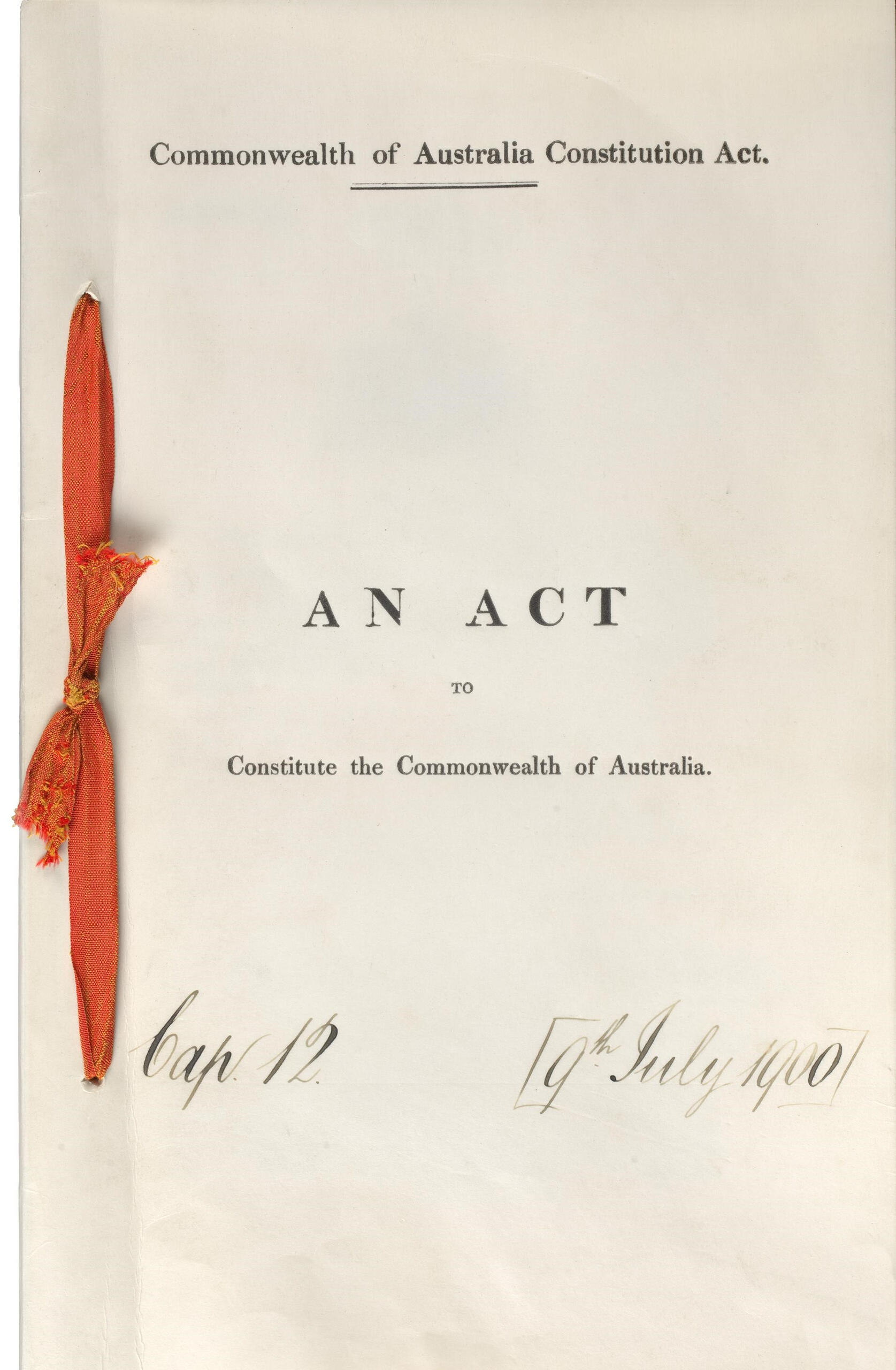
The overarching national framework comes from the Australian Constitution. It outlines the different federal institutions involved in lawmaking and the extent of their powers.
Australian law is made of several bodies working together. The most important basic distinction to know is that legislation can be made through parliament as well as through court decisions.
- Acts of Parliament: Legislation and statute laws enacted when members of Parliament agree on a bill. This refers to all state and territory parliaments as well as the Commonwealth Parliament.
- Common law: Decisions and conventions shaped by cases; judges can apply precedents to cases that have similar elements.
- Delegated legislation: Laws made by non-Parliament that still have the same legitimacy as statutes, provided they are approved by Parliament.
| Source | What it does | Short example |
|---|---|---|
| Constitution | Establishes the federal framework and limits government powers. | Section 109 addresses inconsistency between Commonwealth and state laws. |
| Legislation | Sets out rules passed by parliament in an Act. | Federal / Commonwealth laws. |
| Delegated legislation | Creates rules made by an authority figure with specific aurtorisation from Parliament. | The Copyright Act 1968 (Cth) Part XII Regulations |
| Common law | Develops legal principles through judicial decisions. | 1992 Mabo Case determined that Eddie Mabo and other Meriam people had rights to land on Mer (Murray Island). |
How laws are made in Australia
New laws are made when a bill (a proposal for a law) goes through a rigorous approval process. This is how a bill becomes an Act of Parliament:
Step 1
A bill is introduced
It is submitted to the House of Representatives or the Senate
Step 2
The first debate and vote
The first house considers, debates and votes on the bill. If it passes, it gets passed to the other house.
Step 3
The second debate and vote
The other house considers the bill. They may propose changes before voting. If changes have been proposed, the modified bill then gets passed back to the other house for another round of consideration and voting.
Step 4
Both houses agree
When both houses agree to the exact same text, the bill goes to the next step.
Step 5
Consideration by the Governor-General
The Governor-General gives Royal Assent (signs to bill) and it becomes and Act (law).
Keep in mind that the process for Delegated Legislation and common law decisions differ. Additionally, the procedure for lawmaking at the state level is very similar, though the outcome is an Act that only applies to the jurisdiction of that court, not the country as a whole.

Commonwealth, state and territory laws
Since Australia has both Commonwealth laws and state and territory laws working together in a federation, people are subject to more than one legislative body. Commonwealth laws apply to the entire country and territories, except self-governing territories in certain capacities. State and territory laws then apply to the respective area within the framework of the federal laws.
The Constitution gives Commonwealth Parliament power to legislate on specific matters. Some matters are exclusive, meaning only Commonwealth Parliament can make laws about them, while other matters are concurrent, meaning both the federal and state courts can make laws about them. Residual matters are dictated at the state level only.
In the event that a state law conflicts with a federal law, the federal law takes precedence.
The state law may only apply to specific details not outlined by the Commonwealth law.
An example of concurrent matters is tax law; both Commonwealth and state parliaments can make tax laws.
An exclusive matter includes foreign trade; only the Commonwealth can make laws about foreign trade.
In all levels and specialties, there are different types of lawyers who focus on various areas of law. They have unique training and education in particular instances necessary for the specific procedures required in different circumstances.
How Australia's court system works
Each element of the Australian court system (federal and state/territory) covers specific jurisdictions. The appropriate court for a matter or case depends on the dispute. The Attorney-General’s Department identifies three main federal courts:
- The High Court of Australia: highest court; no appeals; often presides over complex, unprecedented cases; may preside over cases with inconsistent rulings at the lower levels.
- The Federal Court of Australia: civil disputes and crimes that involve federal law (e.g. tax crimes).
- The Federal Circuit and Family Court of Australia: divorce; custody; property; family law matters that are too complex for state courts.
These Federal Courts hear matters across areas including corporations, taxation, industrial regulations and native title.
State and territory courts operate within their own systems. There are six state and two territorial parliaments that oversee laws for their respective states or territories.
At the local level, over 500 local councils create by-laws that determine matters such as city planning and pet control. Law firms and lawyers may represent clients, defendants and prosecution at any level of the court system.
Court system hierarchy simplified
🏛️High Court of Australia
The highest court, with constitutional and final appellate responsibilities.
🏛️ Federal Courts
Federal Court and Federal Circuit and Family Court with appeal arrangements dependent on the matter.
🏛️ State and territories
These courts have their own appeal arrangements. Exact procedures can differ between states and territories.
Making an appeal asks that a higher court review a decision under applicable appeal rules. If the appeal is granted, it means that the next-highest court will review the case. It does not mean that the previous decision will be reversed. The High Court may get involved if the case is exceptionally important to the public or if the decision is needed to resolve a disagreement about law itself.

Statute law, common law and precedent
Statute law is legislation made by parliament, either through Acts of Parliament or delegated legislation. Common law develops organically through judicial decisions and can be applied by judges as they see fit. New, valid legislation prevails over existing common-law rules. This means a judge cannot disregard a statute in favour of a common law, even if they had previously done so in a similar case from before the relevant Act was in effect.
Common law Australia relies on precedent. This means using judicial decisions from previous cases to help decide later cases. It promotes consistency, since people facing similar legal situations should receive similar considerations. As long as the precedent isn’t in conflict with statutes or other by-laws, it can be used as a modifiable template for other legal cases.
Common law is separate from statute law and does not rely on there being any Act of Parliament underpinning it.
State Library NSW
Criminal law, civil law and other areas of law
Criminal and civil law describe different classifications of law. They are different kinds of legal proceedings, not different sources of law.
Criminal law proceedings concern alleged offences in the criminal category, such as burglary, embezzlement, drug-related charges, and assault and murder. The prosecution bears the burden of proving the accused’s guilt beyond a reasonable doubt. Less severe cases can be seen at the local level, while more severe cases may be seen at the state level or higher.
Civil law concerns legal rights and obligations outside of criminal prosecution. A dispute about agreed-upon payment, defamation, certain types of family law, employment law, and financial law (in the realm of bankruptcy and banking disputes) are examples of civil matters.
Other types of law include constitutional law, family law, and taxation and corporate law. These different areas involve their specific topics. Court responsibilities reflect these subject areas. They may require a specific forum depending on the jurisdiction involved.
Learning how to understand Australian law
When studying Australian law, it helps to have a targeted approach while reading legislation. A useful learning method is to ask specific questions that fill in the blanks in your knowledge. Some questions you might ask regularly include:
- Which parliament made the law?
- What issue does the relevant provision address?
- Does the Act define any important words?
- Do regulations or other sources supply further detail?
- Has the provision been considered or applied in court?
When reviewing a case study, note the relevant facts, the legal question being considered and the court’s reasoning. Draw comparisons between the case study and the problem you are studying, and determine how they’re similar and different. Seeking law tutoring can help strengthen your understanding of legal terms, procedures and reasoning.
References
- “Australia.” Judiciaries Worldwide, judiciariesworldwide.fjc.gov/country-profile/australia. Accessed 8 Oct. 2026.
- “Delegated law.” Parliamentary Education Office, peo.gov.au/understand-our-parliament/how-parliament-works/bills-and-laws/delegated-law. Accessed 8 Oct. 2026.
- “Infosheet 23 - Basic Legal Expressions.” Parliament of Australia, 17 Aug. 2018, www.aph.gov.au/About_Parliament/House_of_Representatives/Powers_practice_and_procedure/00_-_Infosheets/Infosheet_23_-_Basic_legal_expressions. Accessed 8 Oct. 2026.
- Public Interest Advocacy Centre (PIAC). “Hot Topics: Australian legal system.” State Library NSW, edited by Andrew Haesler, Aug. 2026, www.sl.nsw.gov.au/find-legal-answers/books-online/hot-topics-australian-legal-system/overview. Accessed 8 Oct. 2026.
- “Three Levels of Government: Governing Australia.” Parliamentary Education Office, peo.gov.au/understand-our-parliament/how-parliament-works/three-levels-of-government/three-levels-of-government-governing-australia. Accessed 8 Oct. 2026.
Summarise with AI:
Did you like this article? Leave a rating!

 Loading...