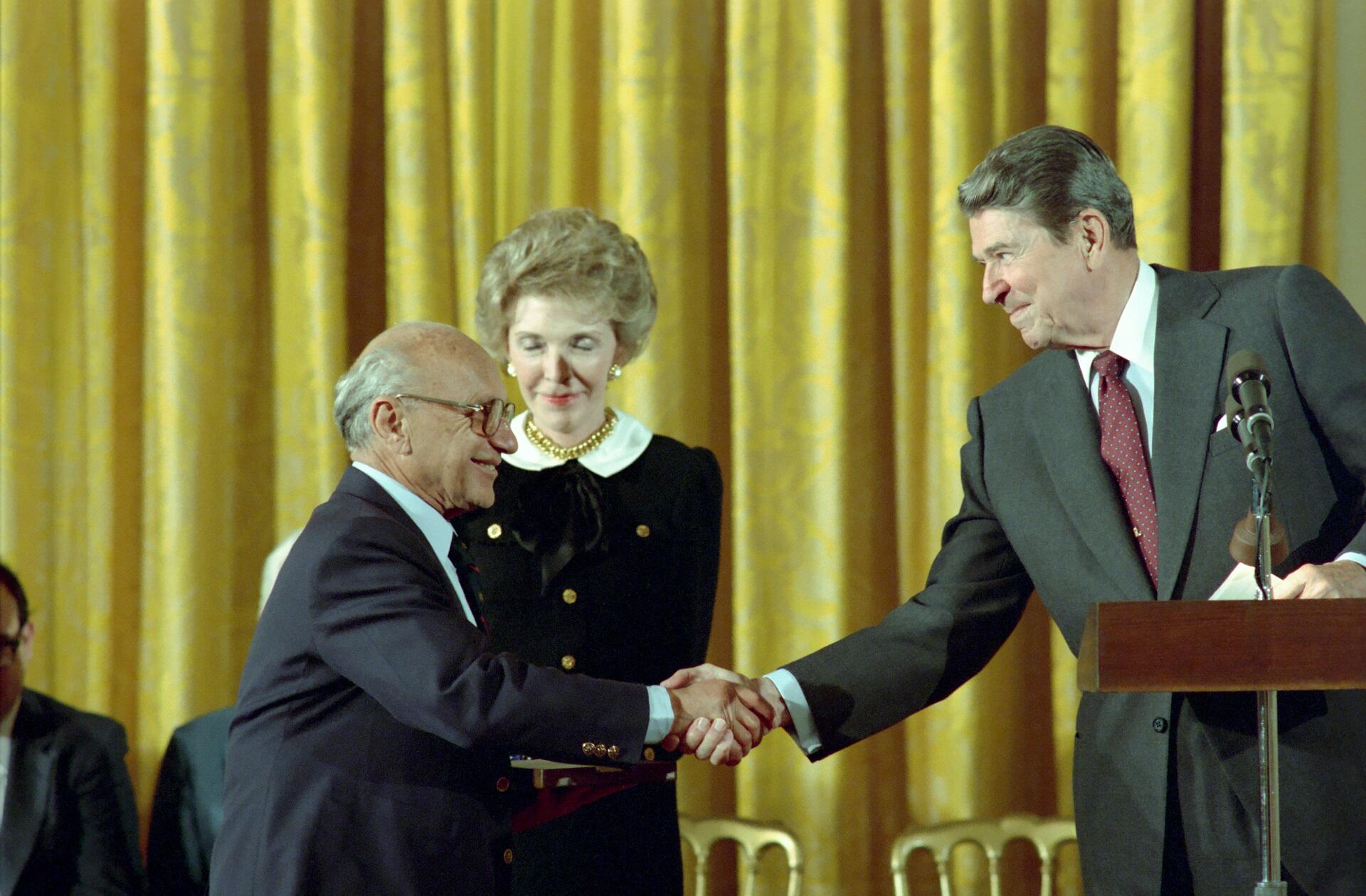

When we think about the great minds of our age, our thoughts turn to philosophers, academics and even politicians, on occasion. Maybe we should look at great economists, instead. In ancient times and still today, human life revolves around this science, from the economics of behaviour down to what we can afford to eat. Since the time economics became a discipline, these are the minds that shaped, and continue to define, this science.
| 📛 Name | 🔎 Area of work/study | 👍 Top theses | 🎉 Celebrated for |
|---|---|---|---|
| Adam Smith | Economic philosophy | Invisible hand Free markets | Being the father of modern economics. |
| David Ricardo | Economic philosophy | Economic rents The labour theory of value The law of diminishing returns | Being one of the most influential classical economists. |
| John Maynard Keynes | Free markets do not ensure full employment. Fiscal policy necessary to reduce unemployment and mitigate recessions. | The General Theory of Employment, Interest and Money | His ideas being the basis of Keynesian economics. Being the 'father of macroeconomics' |
| Maurice Allais | market equilibrium and social efficiency | No matter its state, a market in equilibrium is maximally efficient. | Being the first French economist to receive the Nobel Prize. |
| Milton Friedman | Neoliberal economics | Businesses have no other duty than to provide value for their shareholders. | Perhaps the most influential economist of the 20th century. |
| Gary Becker | Building the bridge between social behaviours and economic value. | Behaviours traditionally thought as 'uneconomic' are incentive-driven. | Being the greatest social scientist that ever lived, according to Milton Friedman. |
| Joseph Stiglitz | Information economics | Information inequality leads to inefficiency and inequality. | Asymmetrical information theory |
| Claudia Goldin | Wage gap Women's workforce participation. | Motherhood creates the wage gap, not discrimination against women. | Being the third woman to ever receive the Nobel Prize in Economics, and the first to win it in her name only. |
| Daron Acemoglu | New Institutional Economics | Inclusive societies with well-distributed political power thrive. | His seminal work, Why Nations Fail: The Origins of Power, Prosperity, and Poverty |
| Esther Duflo | Poverty | Effective poverty interventions are smaller and more targeted than previously reported. | Being the second woman to ever receive the Nobel Prize in Economics. |


Adam Smith (1723 – 1790)
Adam Smith was, first and foremost, a philosopher. That should come as no surprise because the science of economics has its roots in philosophy1. Plato and Socrates are famous for discussing economic questions, as many other philosophers did. In fact, economics didn't become a discipline independent of philosophy until the 18th century.
1723 to 1790, in Scotland
He's considered one of the fathers of modern economics.
Establishing economic concepts such as the invisible hand, free markets, division of labour, laissez-faire capitalism, and rational self-interest.
The Theory of Moral Sentiments, published in 1759; The Wealth of Nations, published in 1776.
Adam Smith believed that free markets tend to be self-regulating, alluding to this concept as the “invisible hand.” He based his theory in the philosophical idea that people would always act in their rational self-interest. This self-interest, in turn, would eliminate the need for market interference.
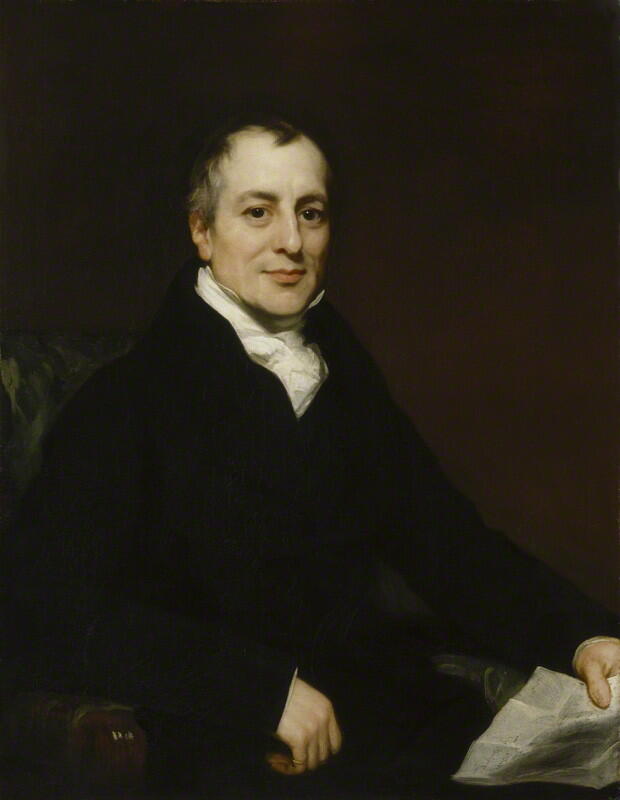
David Ricardo (1772 – 1823)
David Ricardo was a prominent British economist, businessman and politician. He played an important role in the development of classical economic thought and is considered one of its most influential contributors, together with economists such as Adam Smith, Thomas Malthus, and James Mill.
David Ricardo was born in London on 18 April 1772 into a merchant family and began working in finance at a young age. He became a successful stockbroker and later developed an interest in economics, influenced in part by the work of Adam Smith.
In 1817, he published On the Principles of Political Economy and Taxation, which established him as a major classical economist.
Some of Ricardo’s most important contributions to economics include the following ideas:
Ricardo also became involved in politics. In 1819, he entered the British Parliament, where he participated in debates on economic and financial matters. He remained a member of Parliament until his death on 11 September 1823, at the age of 51.
The Ricardian Equivalence states that government spending financed by debt will not alter economic outcomes because taxpayers expect to pay future taxes to pay off that debt.
John Maynard Keynes (1883 – 1946)
John Maynard Keynes argued against laissez-faire capitalism. He believed that governments should intervene in markets to stabilise the booms and busts of economic activity.
He also saw it as the government's duty to decrease unemployment and prevent economic recession by any means. Keynes posited that demand - not supply - was the most important force driving the economy; a revolutionary concept in his day.
Keynes famously clashed with the economic minds in the U.S. at the Bretton Woods conference in 19442. He advocated for a currency called the bancor, backed by a basket of currencies, to become the global reserve. The Americans weren't having it; it would be their dollar or no agreement at all.
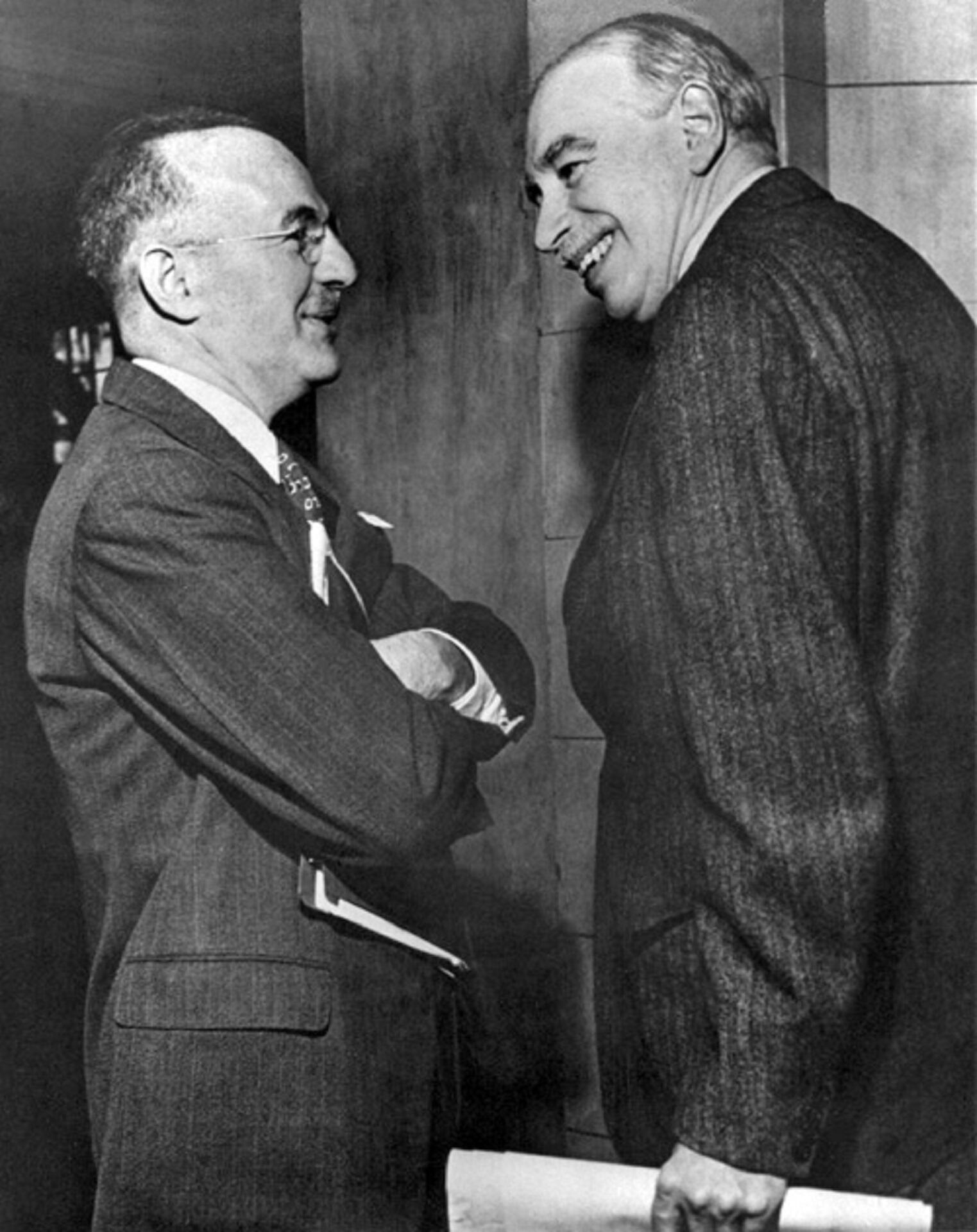
As the post-war world (save the US) was economically devastated, countries had no choice but to agree with the American proposition. However, today, we're once again hearing talk of Keynes' bancor, albeit updated for our times.
Maurice Allais (1911-2010)
It’s rather limiting that most advances in economic study happen to be in English. Maurice Allais, a French economist and physicist, developed mathematical formulations of market equilibrium and social efficiency. In effect, he demonstrated that any market in equilibrium, no matter its state, is in a state of maximum efficiency5.
Had Allais’ earliest writings been in English, a generation of economic theory would have taken a different course.
Paul Samuelson, the first American to win the Nobel Prize in Economics.
Maurice Allais earned the Nobel Memorial Prize in Economic Sciences in 1988 for his work on the theory of markets and efficient resource utilisation. He was the first French economist to do so. Besides his work in equilibrium theory, he advanced the Allais Paradox. It showed the inconsistency of observed choices when measured against utility theory predictions.
His work in market efficiency proved that market economies that are decentralised tend to maximise efficiency. His work informed later established state-owned monopolies such as transportation and utility systems in post WWII Europe.
Milton Friedman (1912 – 2006)
Milton Friedman is arguably the most controversial economist on this list3. He embraced Adam Smith's free market philosophy but completely misinterpreted the concept. He contended that the markets should be free of any government control. He also believed that businesses practising social responsibility ran contrary to their self-interest.
The social responsibility of business is to increase its profits.
The title of Milton Friedman's career-defining 1970 essay
With that essay, Friedman rocketed into the sphere of corporate leadership. They, in turn, promoted Friedman's ideas to two pivotal politicians, Margaret Thatcher and Ronald Reagan. Those two went all-in on his concept of monetarism, the theory that inflation ties directly to the money supply. Despite his less-than-winning ideas, Friedman received the Nobel Prize in Economics in 1976.
Gary Becker (1930 - 2014)
Gary Becker was one of the first economists to cross boundaries between sciences. He applied microeconomic analysis to traditionally sociological fields of study: family dynamics, crime, and discrimination.
His main thesis demonstrated that behaviours previously thought of as ‘uneconomic’ are incentive-driven, giving them a decidedly economic twist. His most revolutionary takes on social aspects included the following.
Becker was a Chicago School of Economics alumnus and a Friedman acolyte, though their theories diverged significantly. Still, Milton Friedman believed that Gary was “The greatest social scientist that ever lived.”
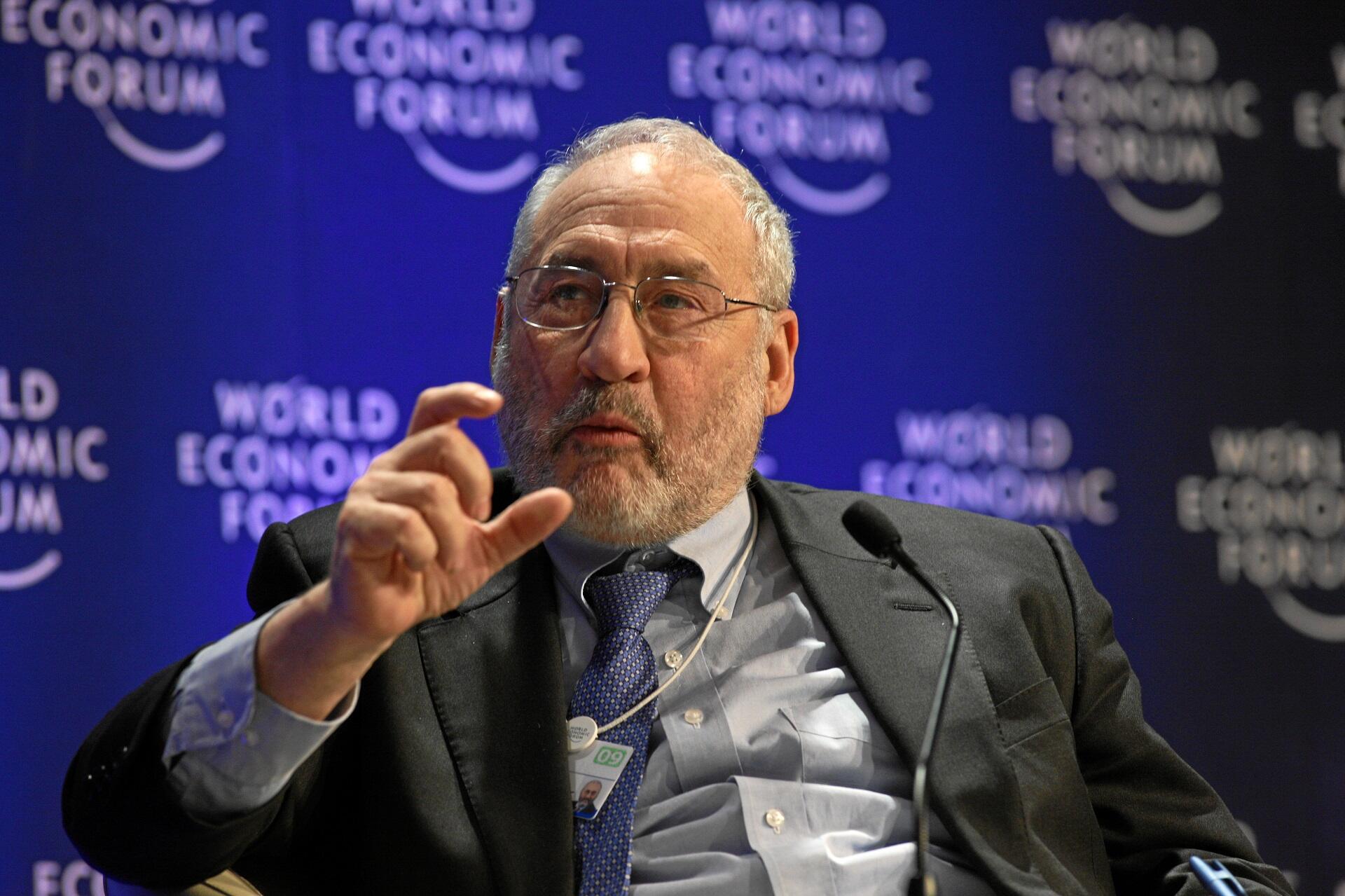
Joseph Stiglitz (1943-)
A professor at Columbia University, Joseph Stiglitz (pictured above) is part of the new Keynesian economic school. He is renowned for his criticism of laissez-faire economics, as well as institutions such as the International Monetary Fund.
One of the few economists to predict the 2008 financial crisis, Stiglitz devoted his career to demonstrating how inequality arises and deepens. His asymmetrical information theory is a famous example of such.
It proves that, when one of a transaction’s parties has more or better information than the other party, the transaction leads to moral hazard and adverse selection. Let’s say that all parties in a market, the buyers and the sellers, are informationally efficient. Then, no party would need to spend extra to gather information that would make their prices efficient.
His theoretical framework reveals that data harvesting allows entities to misprice assets, hide risks, and engage in rent-seeking behaviour, which could lead to greater inequality.
His work falls under the header of information economics, a relatively new and growing field. His speciality, asymmetrical information, challenges neoclassical assumptions of ‘perfect’ markets. He shares the 2001 Nobel Prize in Economics with George Akerlof and Michael Spence for their analyses of markets with asymmetric information.
Claudia Goldin (1946-)
Economic historians are few and far between; Claudia Goldin helps fill that underworked niche. Her research reshaped how we understand the wage gap and women’s participation in the workforce, taking a 200-year long view on those aspects.
Among her most important findings, the impact of motherhood on women’s earning potential was the most revealing. She conclusively proved that childcare, not discrimination, drove women’s lifetime earnings lower. Claudia frames her research in context with the arrival of the birth control pill, which gave women more flexibility in their career decisions.
The three topics of this book - technological change, education, and inequality - are intricately related in a kind of 'race.'
Claudia Goldin, on her book, The Race Between Education and Technology
In 2023, Claudia received the Nobel Prize for her work in advancing the understanding of women’s labour market outcomes. She is the third woman to be so honoured, and the first to received the prize solo.
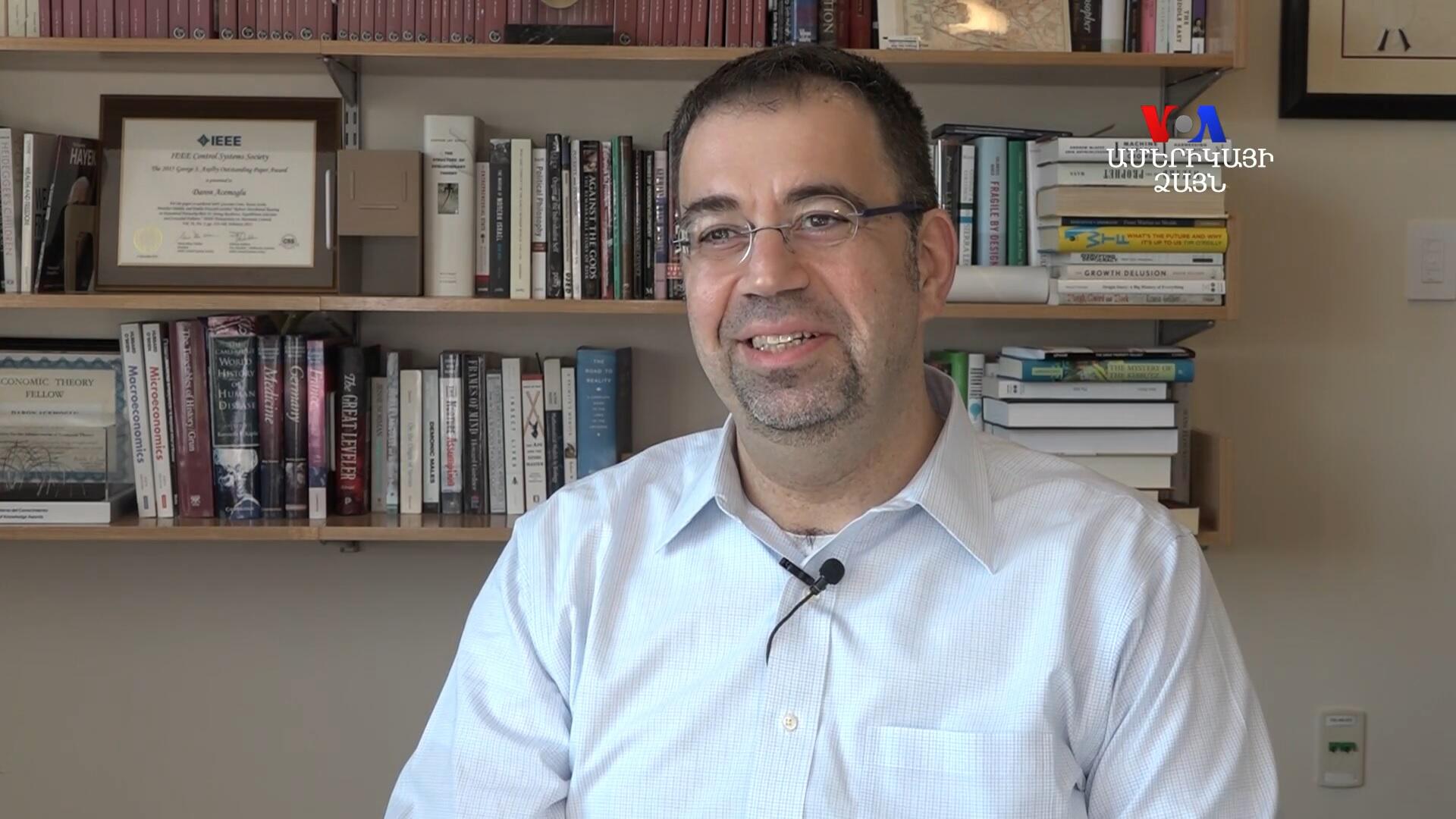
Daron Acemoglu (1967-)
New Institutional Economics is a aspect of theoretical economics that studies how legal and social norms - institutions - underpin economic activity and impact efficiency. If you’ve never heard of it, it’s because it’s also a relatively new field, and Daron Acemoglu is one of its star researchers.
As we will show, poor countries are poor because those who have power make choices that create poverty.
Daron Acemoglu, from Why Nations Fail: The Origins of Power, Prosperity, and Poverty.
Through his work, he has demonstrated4 that inclusive societies that enforce property protection rights and evenly distribute political power tend to thrive. By contrast, extractive institutions, whose wealth and power become concentrated, stifle innovation and growth.
Esther Duflo (1972-)
Poverty is one of today’s most pressing social and economic problems. That’s this economist’s area of speciality. Esther Duflo is a pioneer in the use of randomised controlled trials to alleviate global poverty and evaluate development policies.
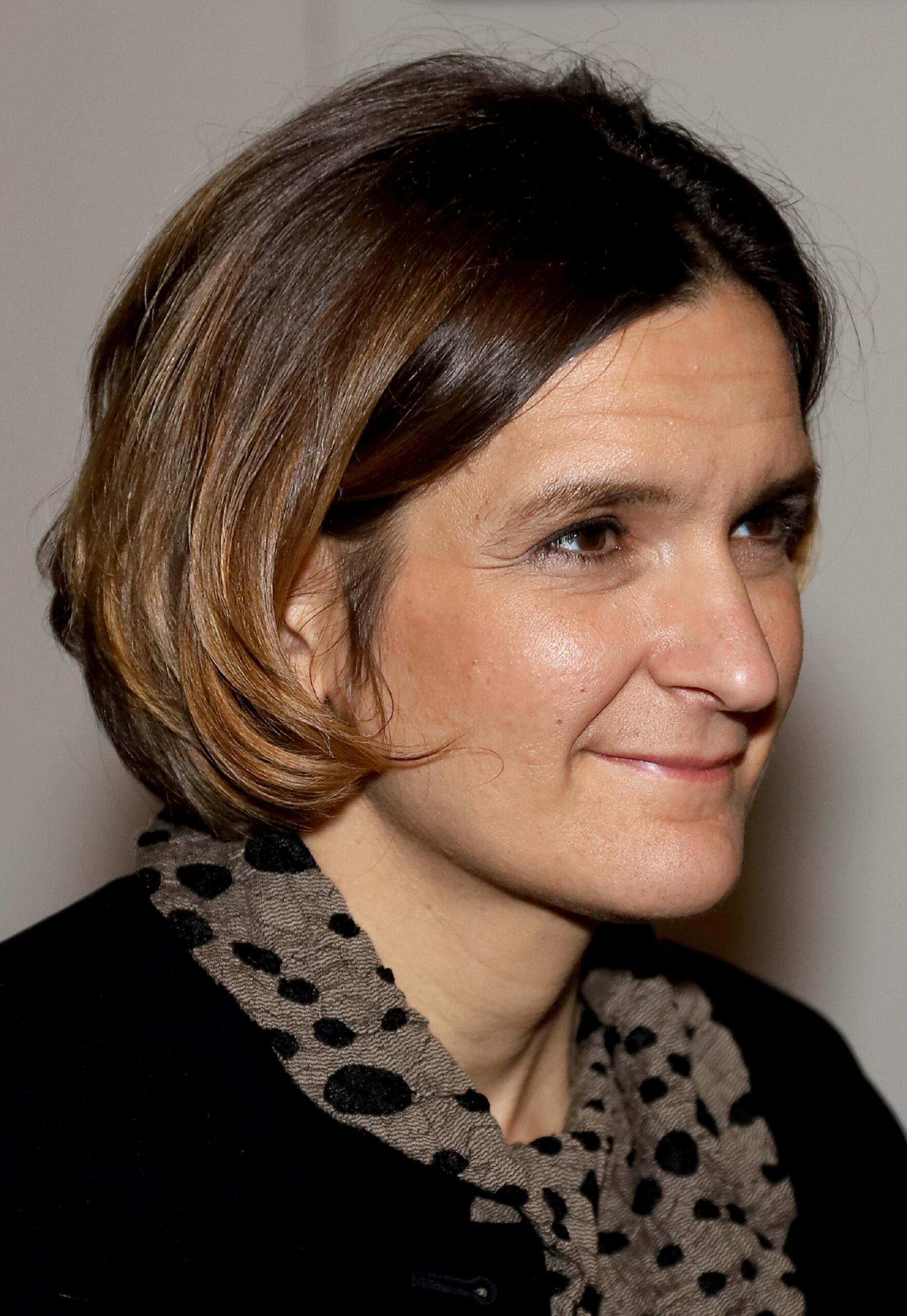
Educated at the Paris School of Economics, she soon found her niche in the microeconomics of development. Specifically, she focuses on education, health, gender, and financial inclusion, all of which impact the economic strength of a society. Predictably, her work has proven that effective poverty interventions are smaller and more targeted than earlier economic theories suggested.
She and her research partner/husband, Abhijit Banerjee, have published several impactful books, including Good Economics for Hard Times and Poor Economics.
In 2019, they received the Nobel Prize in Economics for their experimental approach to poverty alleviation. To date, Esther is the youngest person, and only the second woman, to be so-honoured.
Five Economists to Follow Today
To say that today’s economic climate is uncertain would be a massive understatement. Under these conditions, it would be easy to frighten oneself into bad financial/economic decisions. So, it’s vital to get up-to-the-minute appraisals of what's going on right now. These are economists you can follow today.
| 📛 Name | 🤝 Bio | 🙋♀️ Why follow them? | 📍 Where to find them |
|---|---|---|---|
| Michael Hudson | Balance of payments economist Author of Super Imperialism and Killing the Host. | Michael explains current economic events through the historical lens. | Substack YouTube |
| Steve Keen | Creator of Minsky and Ravel, economic modelling and analysis software. Author of Debunking Economics | A fierce critic of neoclassical economics, Steve catches all the mistakes current decision makers are committing and reports on them. | Substack YouTube |
| Yanis Varoufakis | Coined the term 'technofeudalism' to explain tech's economic takeover. | As the former Greek finance minister, Yanis is familiar with economic policy at the government level. | Substack YouTube |
| Thomas Piketty | Author of Capital in the 21st Century, Capital and Ideology, and A Brief History of Inequality | His 2013 work, Capital in the 21st Century, redrew the parameters for poverty, inequality, and takes a historical look at wealth building. He proposes a global tax on wealth as a possible solution. | X (formerly Twitter) YouTube |
| Ha Joon-chang | Author of the norm-busting Kicking Away the Ladder | He hews closer to the philosophical side of economics. | Podcast platforms (usually in Korean) Occasional interviews on YouTube. |
You can find interviews with all these sharp economic minds on YouTube, across many channels. Admittedly, some, such as Steve Keen, a pioneer of economic modelling, and Michael Hudson, an economic historian, are more prolific content creators. But they all have valuable information for these times, when making the wrong financial/economic decision could cost you everything.
References
- Ou, Yanhua. “The School of Philosophy.” Schoolofphilosophy.Org, 4 Sept. 2010, https://www.schoolofphilosophy.org/blog/the-philosophy-of-economics-1. Accessed 28 Sept. 2026.
- Jomo. “The Dollar-Gold Standard’s Lingering Demise.” Substack.Com, MYDevelopment+, 28 Sept. 2026, https://jomomydevplus.substack.com/p/the-dollar-gold-standards-lingering. Accessed 28 Sept. 2026.
- Adams, Richard. “Milton Friedman: A Study in Failure.” The Guardian, The Guardian, 15 July 2017, https://www.theguardian.com/commentisfree/2006/nov/16/post650. Accessed 28 Sept. 2026.
- Tutor2U. “What Are Some of the Key Ideas of Economist Daron Acemoglu?” Www.Tutor2u.Net, 17 July 2023, https://www.tutor2u.net/economics/reference/what-are-some-of-the-key-ideas-of-economist-daron-acemoglu. Accessed 28 Sept. 2026.
- Nicole, Alessandra. “Maurice Allais: Economic Insights and Influence on Behavioral Economics.” SuperMoney, 23 Mar. 2024, https://www.supermoney.com/encyclopedia/maurice-allias. Accessed 28 Sept. 2026.
Summarise with AI:
Did you like this article? Leave a rating!


 Loading...