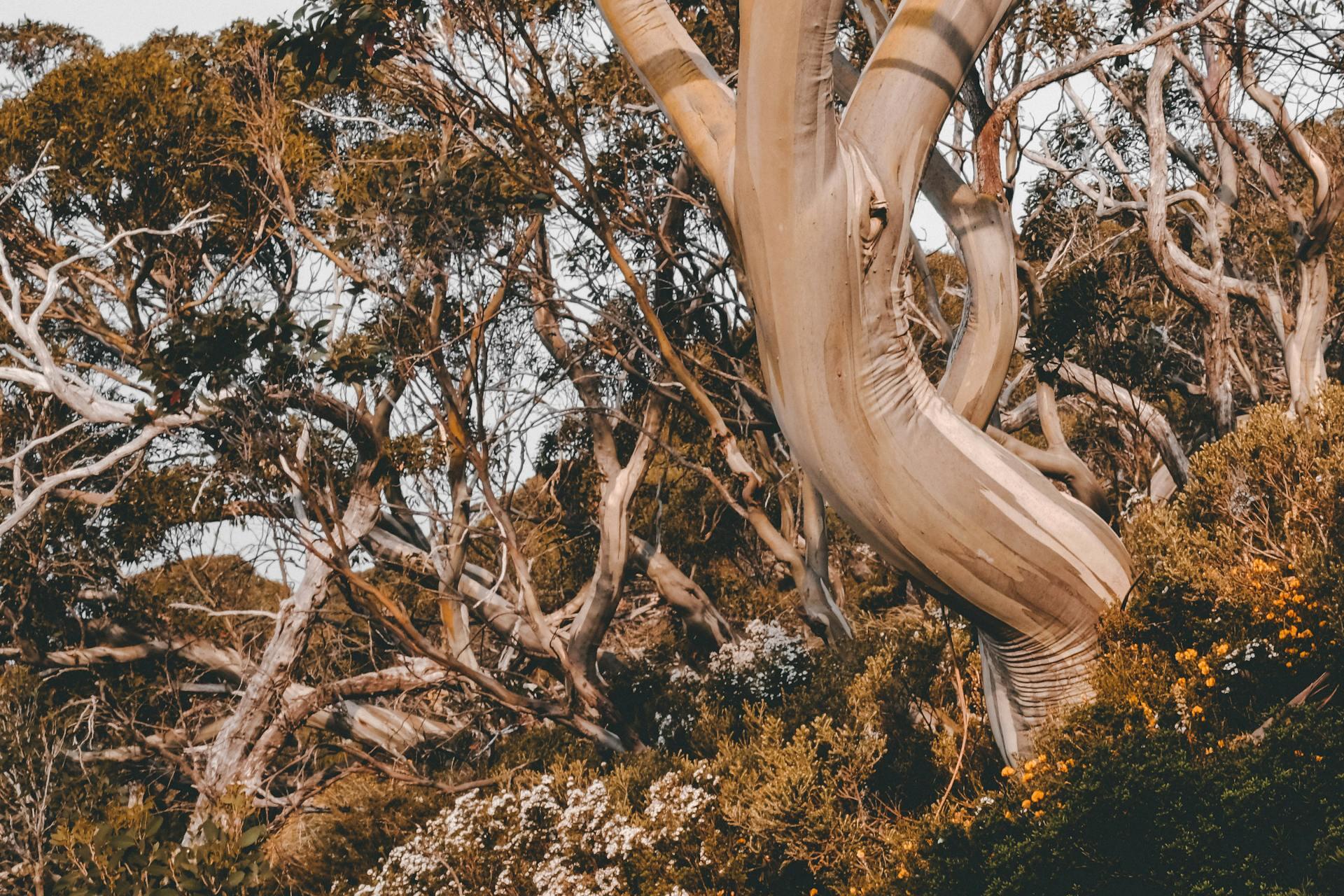

Bush poetry is a hallmark of modern Australian arts and literature, having been a foundational cultural movement in the 19th century. It emerged from the rural country experiences that many European settlers (and early Australian-born generations) had in jobs like sheep shearing, labouring, and working in country pubs or goldfields. Bush poets were and are heavily influenced by the land and the First Nations people, contemplating their relationship to Country on many levels. Learn about some of the best bush poets and their works to better appreciate the literary form and Australian history.


Henry Lawson
Born into poverty, Lawson’s home life was rather difficult as a child. He and his family moved around following the gold rush before settling at Pipeclay. The pressure Lawson felt growing up was made worse by ill health, sudden partial deafness, and a lack of schooling.
Eventually, his mother moved to Sydney, where he later joined her. He still struggled, trying to find work and function in society with his disability. He began to write poetry and light journalism, earning some recognition for his locally-published pieces. After varied success, producing one of his first widely-renowned works, The Drover’s Wife, he took a pivotal trip to Bourke to experience the inland Country. There, he was both inspired and appalled by the rough lifestyle, saying, “men tramp and beg and live like dogs.”
He wrote several of his best poems, short stories, and ballads after the outback experience, bringing awareness of rural life to the national consciousness, albeit in a rather bleak light.
I am back from up the country — very sorry that I went — / Seeking for the Southern poets' land whereon to pitch my tent; / … Barren ridges, gullies, ridges! where the ever-madd'ning flies — / Fiercer than the plagues of Egypt — swarm about your blighted eyes! / Bush! where there is no horizon! where the buried bushman sees / Nothing — Nothing! but the sameness of the ragged, stunted trees!
“Up the Country” by Henry Lawson
His poems highlighted the inequalities between urban life and rural life, which was also a direct reflection of inequality between Aboriginal people and settlers. While many other bush poets romanticised the back country, Lawson approached it with more realistic humanity.
During the Federation period, Lawson’s works were used as rallying points highlighting what it meant to be Australian: stoic, self-reliant, and steadily defiant. He was considered one of the most successful Australian writers and poets during his lifetime, since his work resonated with so many.
Though Lawson didn’t personally enjoy bush life, he respected it as a representation of the harsh brutality of life and was drawn to the people managing to survive in such harsh conditions. The setup poetically reflected his own life experiences, whether he realised it or not.
Discover some more of Australia's famous poets.
Banjo Paterson
Andrew Barton (Banjo) Paterson was and is considered one of the best writers in the Australian colonial period. In early life, Paterson and his family lived in remote areas, farming and labouring. These formative experiences gave Paterson an appreciation for horses and living in the country, rather than the city.
Oh there once was a swagman camped in the billabong, / Under the shade of a Coolibah tree, / And he sang as he looked at the old billy boiling, / Who'll come a'waltzing Matilda with me…
"Waltzing Matilda" by Banjo Paterson
Paterson published his early works in The Bulletin, a popular publication for Australian writers at the time. He wrote politically-charged poetry, criticising the British and Australian governments for participating in the war in Sudan, and later even became a war correspondent. His activism and up-close work with war gave him credibility as a voice in political matters, which is one of the reasons why his works have lived on as celebrated representations of Australian culture.
His bush ballad, Waltzing Matilda, was set to music and has become known as Australia’s unofficial national song. The poem’s theme and rhythm are rooted in folk tradition, and reflect bush poetry’s innate characteristic of often being more powerful when performed spoken or sung aloud. It’s become a staple song that connects people from all over the country, especially at festivals like the Tamworth Country Music Festival.
Paterson’s outlook on the bush was also noteworthy for contrasting with Lawson’s. Both views offer something important, but Paterson wrote of triumph blended with humour, rather than only the harsh parts of bush life. His more optimistic and tenacious bush poems created a foundation for a new wave of Australian identity to form, based on the landscape and country, rather than a holdover from British roots.
Learn more about other famous Australian poems.
Dorothea Mackellar
Dorothea Mackellar was an unusual bush poet because she didn’t come from a hard background, living in the country. In fact, she lived her whole life quite wealthy and comfortable. However, that didn’t make her out-of-touch. Mackellar’s innate understanding of life in Australia resonated with people all across the country and was even published in London.
She showed that, while living in the bush might be the most common way for people to develop a deep appreciation for the land, it’s not the only way. Curiosity and learning about things on purpose can be just as effective as being born into something without a choice.
Her most famous work, My Country, was republished in many different collections during her lifetime, making it a well-known and loved popular bush poem then and now.
I love a sunburnt country, / A land of sweeping plains, / Of ragged mountain ranges, / Of droughts and flooding rains. / I love her far horizons, / I love her jewel-sea, / Her beauty and her terror - / The wide brown land for me!
“My Country” by Dorothea Mackellar
The second stanza is especially beloved for its beautiful exaltation of the Australian land. Her lively and hopeful disposition was apparent in her works, an intriguing and important change from the man-dominated literary sphere at the time.
Find out about other famous Australian female poets.
Murray "Muz" Hartin
Murray Hartin is known for being a modern-day bush poet carrying the art into the present. His poetry is a pastiche of the bush poetry of the early 20th century, including more modern topics and sensibilities alongside the traditional country-based motifs. He got his start as a recognised name in modern poetry since winning the inaugural Tamworth competition in 1987.
His enthralling verses and moving performances are known for having a great impact on audiences. Hartin’s take on Australian bush poetry has been compared to Paterson’s for its powerful writing. Like how the original bush poets brought awareness of country life to the urbanites, Muz uses his poetry to shine a light on modern rural life.
For the most part, Muz’s poems are usually known for their humour and their rhymes. But one of his most famous poems, Rain From Nowhere, addresses rural suicides. The poem has opened space for more conversation about the problem, and let people in such situations know that they are not ignored and unknown.
“Son, I know it’s bloody tough, it’s a cruel and twisted game, / “This life upon the land when you’re screaming out for rain, / “There’s no candle in the darkness, not a single speck of light / “But don’t let the demon get you, you have to do what’s right, / “I don’t know what’s in your head but push the nasty thoughts away / “See, you’ll always have your family at the back end of the day…
“Rain From Nowhere” by Murray Hartin
The poem’s realness and positive ending, which provide hope to anyone who might read it, have made it stand out as one of the most significant Australian literary works in recent years.
Discover the works of Australia's famous First Nations poets.
Les Murray
Known as Australia’s “Bush-bard” for his many acclaimed poems, Les Murray began writing poetry at age 18, inspired by nature. He grew up in Bunyah in the bush, and had a difficult teenagehood due to his mother’s death and his father’s sickness. When he ventured to Sydney to pursue a University degree, he was exposed to other poets and writers and developed an interest in languages. He also hitch-hiked around the country and got married, converting to Roman Catholicism in the process. All these experiences shaped his work.
The birds saw us wandering along. / Rosellas swept up crying out we think we think; they settled farther along; / knapping seeds off the grass, under dead trees where their eggs were, walking around on their fingers, / flying on into the grass. / The heron lifted up his head and elbows; the magpie stepped aside a bit, / angling his chopsticks into pasture, turning things over in his head.
“The Buladelah-Taree Holiday Song Cycle” by Les Murray
In 1971, Murray pursued writing poetry full-time, and eventually, he was able to buy back part of his family’s old land, where he eventually moved permanently, returning to his roots.
Over the course of his life, Murray published nearly 30 volumes of poetry alone, in addition to several verse novels and prose collections. With his unique writing talent, Murray managed to create works that felt both traditional and distinct. Not all of his poems are about the bush, but it’s a recurring theme in his works.
Where some other bush poets took the approach to un-romanticise the bush by speaking about it plainly, Murray managed the opposite; to examine even mundane things so closely as to reveal the deeper philosophical wonderings beneath the surface. Yet, his authenticity ensured the poems felt natural and grounded. Murray aimed to incorporate Aboriginal and Indigenous language and storytelling practises in his work as a form of respect and integration.
Bush poetry is a formative part of Australia’s literary history, and therefore, its modern culture. It was a movement that sought integration of settlers into the land, and most bush poets also aimed to pay homage to the First Nations people and their traditions, though the execution might not always live up to today’s standards. Above all, the poets in Australia all agree on one thing: the Country is magnificent.
References
- “About | Murray Hartin.” Murray Hartin, 2022, www.murrayhartin.com/about.
- Foundation, Poetry. “Les Murray.” Poetry Foundation, 26 Oct. 2021, www.poetryfoundation.org/poets/les-murray.
- Kingston, Beverley. “Mackellar, Isobel Marion Dorothea (1885–1968).” Australian Dictionary of Biography, National Centre of Biography, Australian National University, 2006, adb.anu.edu.au/biography/mackellar-isobel-marion-dorothea-7383.
- Matthews, Brian. “Henry Lawson.” Australian Dictionary of Biography, National Centre of Biography, Australian National University, 1986, adb.anu.edu.au/biography/lawson-henry-7118.
- Semmler, Clement. “Andrew Barton (Banjo) Paterson (1864–1941).” Australian Dictionary of Biography, National Centre of Biography, Australian National University, 2006, adb.anu.edu.au/biography/paterson-andrew-barton-banjo-7972.
- Wilkinson Publishing. “Murray Hartin - Wilkinson Publishing.” Wilkinson Publishing, 23 Sept. 2021, www.wilkinsonpublishing.com.au/book-author/murray-hartin/.
Summarise with AI:
Did you like this article? Leave a rating!

 Loading...