

When you’re learning creative writing, you can reach a point where you know you need to improve but maybe you’re not sure how.
Without knowing which techniques to practice, you might not be able to get your writing to be as creative as you want it to be. So how can you fix that?
There are a lot of techniques that writers use to improve their creativity and their writing. Here, we have 5 creative techniques on how to improve writing skills and send your creative writing to the next level.


1. Practice “Show, Don’t Tell”
“Show, don’t tell” refers to the way in which you describe the experiences your character (or you) go through.
Rather than explain everything to the reader like a fact sheet, you want to be able to convey the scene and the emotions of the characters more realistically. Doing so creates empathy from the reader, as they can understand what’s going on beneath the surface without needing it spelt out for them.
It shows that you trust the reader to be smart enough to notice things while they read. It increases investment in the characters as they seem more realistic and nuanced.
“Don't tell me the moon is shining; show me the glint of light on broken glass.”
Anton Chekhov
The main ideas of “Show, don’t tell” are
- Remove the “telling” words, like “I felt,” “I heard,” and “I smelled.” Instead, write how you experienced those things. Instead of “I heard footsteps,” write “The soft shuffling of footsteps alerted you to…”
- Remove the boring emotion words like happy, sad, excited, angry, etc. Instead, show how the character felt by giving insight into the reactions. Instead of “He felt happy,” write “His eyes lit up at the sight and a smile broke across his gleaming face.”
- Instead of flat-out saying that a person is feeling a thing or has an opinion, show how that character behaves around that person or subject. Instead of “She had a crush on the cook,” say “Every time the cook set out the bread to cool, she would make sure to be close by to see him even if just for a moment.”
- Use language that sets the scene. Instead of saying “They were sad to see their friends leave,” say “The group held hands tightly, uniting the remainders of the gang, while the others moved on to whatever comes next.”
- Describe the senses in an observant way. Whereas saying “I smelled…” is boring and blunt, saying “The acrid stench of hot tar on a summer’s day met my nose.” The reader can guess how it smelled from the description.
The purpose of “Show, Don’t Tell” is to avoid giving a report on the characters, and telling a story in an uninteresting way. By telling, not showing, you immerse the readers and allow them to feel like they are there, seeing the story unfold right in front of them.
Get feedback on your techniques and more inspiration with English tutors on Superprof.
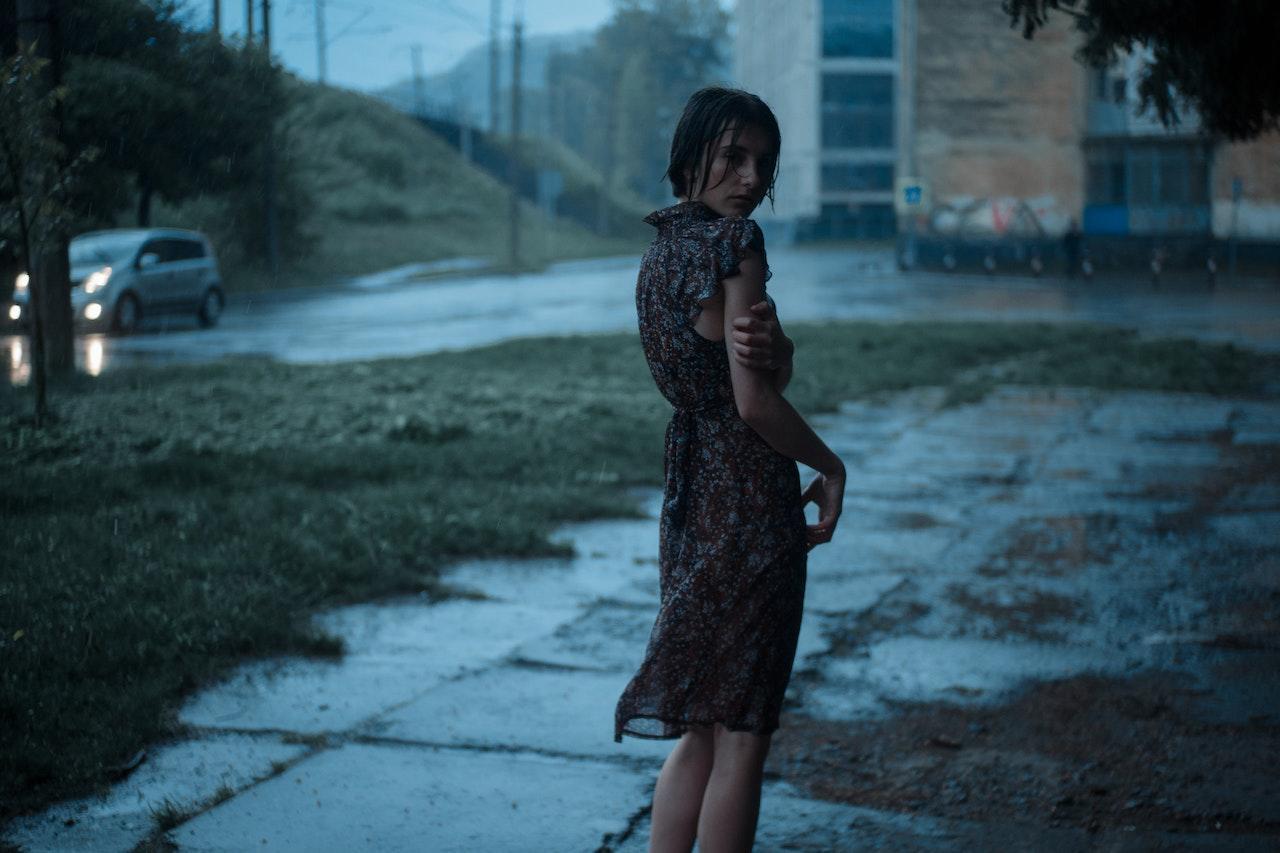
2. Write at Odd Hours of the Day
For many tasks in our lives, we need to be sure to do them at certain times that make sense. We might have a specific routine that helps us get things done. For a lot of types of work, there are set hours for a reason. We need to be at our best and not distracted, able to set aside an 8-hour block to do that one specific thing.
Writing is creative, however. You can unlock different ideas just by writing at different times than you normally would!
Author Joyce Carol Oates recommends writing spontaneously and at different times to unlock different facets of your creativity. A fun exercise could be writing at a different hour of the day every day for 24 days. Start at noon, then 1 PM, then 2 PM, and so on.
Yes, that means you’ll need to stay up or wake up at odd hours of the night for 10-20 minutes to get a little writing going, but doesn’t that sound like just the thing to shake up your mind a little bit and get some new inspiration?
3. Take a Surveillance Field Trip
Every once in a while, go out and do some innocent surveillance research. Some people might find this exercise a little creepy, but you’re an artist and you observe things with a keen, artistic eye.
This trip consists of a few different intelligence-gathering activities.
People-watching
Observe how people behave with each other, react to their environments, and show emotions through body language. Take notes on your phone or in a notebook and write what words come to mind to describe what you see.
What do these people look like? Talk like? Smell like? Walk like? Are there any cultural phenomena, like everyone daying “hello” to each other, or spitting on the sidewalk?
Eavesdropping
Normally, it’s very inadvisable to eavesdrop on anyone. It’s nosy and rude. However. If you approach the situation with completely pure intentions in the name of art, you can feel a little better about it. You may want to stop if you come across a really personal dialogue, however.
The reason to eavesdrop is so that you can take notes on how people naturally converse with each other when they think nobody else is paying attention. It can be hard to write natural, intimate dialogue because it might come off too stiff. Learn how to describe the tone of voice, the language, the body language, and other aspects that go into a conversation meant to be between two people.
Especially take note of how one side of a phone conversation sounds, because it’s all too easy to write poor one-sided dialogue in any medium!
Remember to not gossip about what you learn: it’s for art!

General Observation
Describe the environments you come across in your day. The outdoors, the indoors, a coffee shop, an auto shop, the beach, the forest, the city, anything at all! Describe how you perceive it with the 5 senses. Use texture words, colour, vibes/atmosphere… anything that helps you gain a better understanding of the world.
Use these observations to make your writing more realistic, since you can model all of these aspects of your characters after real people.
4. Write a Scene From All Angles
This exercise will help you consider how everything interacts, and learn how to tell the same information from different sources.
You might take a scene from one of your favourite books, TV, movies, or other media, and write the scene in a new way.
Let’s say you took a scene from a book where two characters meet up and have an argument in public, and the original text is written from one character’s point of view.
Now, write the scene from the other character’s point of view. Then write it from the point of view of a bystander, or some people in the restaurant across the street who can see the whole thing but not hear it.
You could write from the perspective of a bird in a nest in a nearby tree. You can even write from the perspective of an inanimate object, like the wristwatch of one of the characters, or the streetlight they are standing under (I wonder how many fights this streetlight has seen in its lifetime!).
Furthermore, you can twist the writing to convey the senses or the environment rather than the actions of the people involved. What was the weather like? Did a slow drizzle of rainfall flat on the asphalt in every space except where the two quarrelling lovers stood, oblivious to the fact that their shoes were getting soggy? How did it smell? What were the sounds in the background at that time?
Switching up the typical can help you improve your writing, explore new writing ideas, and have a more flexible mind for further creativity later on.
With English tutoring online, you can learn everything you need to develop your writing skills.
5. “Wonder Out Loud”
Question everything. Stay curious. Leave no stone unturned. However is best for you to think about it, try to develop a habit of always wondering how things work.
The person who coined the phrase, Brad Herzog, shares how important it is as a writer to find new, exciting things to write about. He says “Everything in my mundane, daily existence can be fodder for a clever and creative idea.”
He goes on to tell about creating a story simply by opening his refrigerator and thinking about the light that turns on when the door opens. He made it into a story called “Freddie in the Fridge,” a story about the little man who lives in the refrigerator and his only job is to turn the light on and off.
By looking at normal, boring, regular, everyday things and thinking about them in a new way, you can find creativity in anything. If you can, try talking about these ideas at the moment with friends and see how you can bounce the idea back and forth and make it even more imaginative!
Looking to improve your studies? Find VCE English tutors on Superprof!

Practice Writing
The best way to improve any skill is: to do it. So, make sure you practice writing consistently to improve in a practical sense (rather than just theoretical). You can practice your writing skills by starting a blog and writing practice articles which will allow you to see how much you improve your writing skills, creative techniques and grammar over time.
Imagine writing a story over time, and then being able to see in real-time how much you've improved by the end compared to the beginning! And, it doesn't have to be a story for anyone else but yourself.
One Last Word About Creative Writing
Practising exercises like these on your own is a great tool to develop your creative writing prowess. But, you can also find classes, workshops, and courses to help you become a better creative writer as well!
Whether it’s a university degree, a weekend workshop, a 30-day boot camp, or a private tutor, there are many avenues for you to explore.
Using your creativity to express your ideas to the world and giving people art to enjoy is a great way to spend your time. With practice, you can improve the way you write even more to make better and better works of art!
Summarise with AI:
Did you like this article? Leave a rating!

 Loading...