

People have many reasons to be interested in Japanese history and culture: food, manga/anime, games and martial arts. The Samurai are one of the most enticing aspects of Japanese lore, particularly their culture and weaponry. Samurai weapons include much more than the long-bladed sword - the katana we normally associate them with. This list previews our exploration into Japanese weapons.
| Weapon | What it looks like | How it was used |
|---|---|---|
| Katana | A long, slightly curved blade. | For slashing, stabbing, and cutting. The katana was a status symbol. |
| Tachi | A very long, curved-blade sword | Typically on horseback |
| Wakizashi | A short curved-blade sword. | Typically paired with a katana. Used for seppuku. |
| Tanto | A short, relatively straight-edged blade. | To pierce armour. A common weapon for female samurai. To commit ritual suicide. |
| Tessen | A standard hand fan, but with steel blades. | Used to block attacks or to strike the enemy. |
| Naginata | a long pole topped with a blade. Total weapon length was between 2 and 2.6 metres long. | For fighting enemies a few metres away. |
| Yari | A long, light pole with interchangeable blades. | Used for cutting, stabbing and repelling enemies. |
| Yumi | A very long (2+ metres) asymmetrical bow. | To shoot arrows (ya) at distant enemies. |
| Kunai | A short, spade-like metal tool. | Most efffective in close-quarters fighting. Could also be slung around by its attached string. |
| Shuriken | so-called ninja stars Often small and disc shaped with honed edges or tips. | Thrown at enemies, sometimes the edges carried poison. |
| Nunchaku | Two 30-cm handles joined by a short chain ro rope. | Used as a flail, a weapon capable of striking beyond an opponent's shield. |
| Sai | A three-pronged weapon with a relatively short handle. | Used to stab in close quarters |
| Tonfa | A wooden baton with a perpendicular handle positioned at 1/3 of its length. | Usually used in pairs for blocking and striking. |
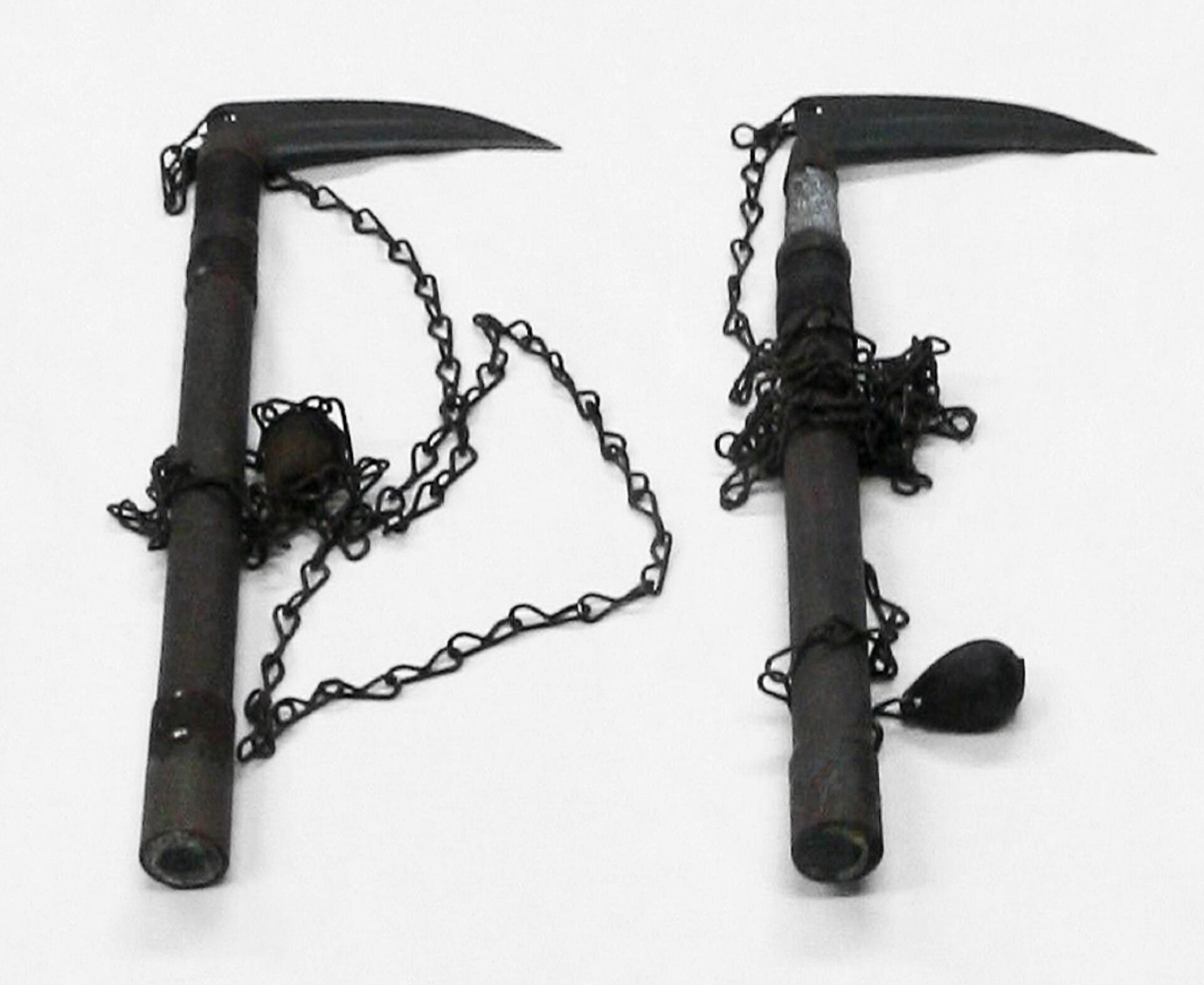
| Kusarigama | A short blade mounted on a short handle, with a weighted chain attached. | The warrior swings the chain in a circle above their head, then launches it to capture opponents' weapons. |
| Kobudo | An assortment of training and fighting weapons | Various weapons used to train warriors. They eventually made their way into the battlefield. |





The Katana
Of all Japanese swords and blades, the katana is the most famous. It was standard equipment for samurai.
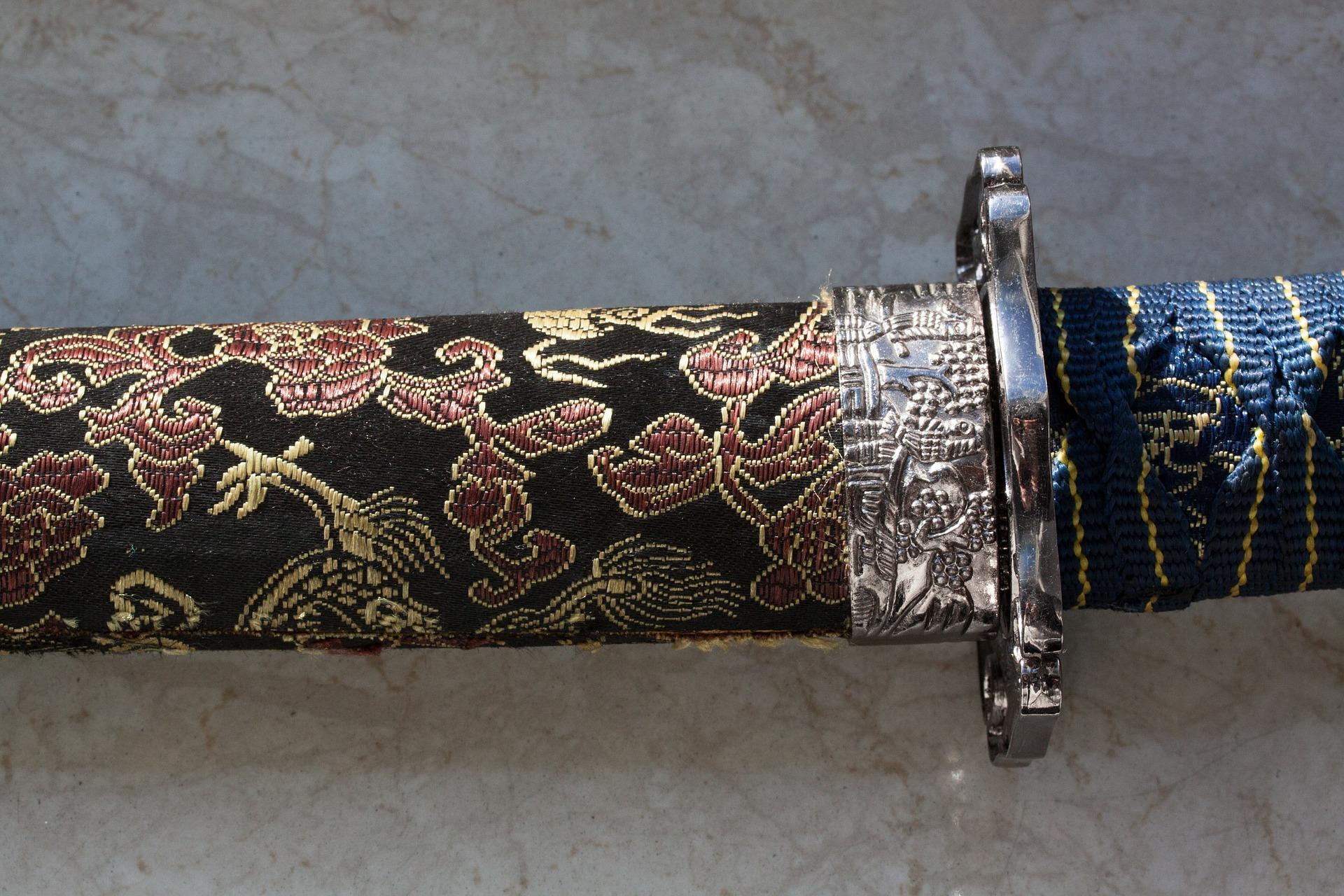
The katana is a sword with a long, thin, and curved blade with just one cutting edge. It’s worn on the belt with the blade carried upwards. Samurai used the katana for cutting, stabbing, slashing, and symbolism. During the Muromachi Period, top bladesmiths were famous for their katanas.
Among the most popular blacksmiths, you might hear the names Masamune, Kotetsu, Kunimitsu, and Muramasa. They crafted these weapons' parts with exquisite skill:
- Tsuba: the sword guard.
- Tsuka: the katana’s handle.
- Saya: the sheath, typically made from lacquered magnolia wood.
- Mono-Uchi: the end of the blade with which cuts are made.
Other Japanese words relate to the samurai and samurai culture.
Bokken: a wooden version of the sword used in the martial art of kendo.
Shinai: a bamboo version of the sword used for training.
Shinken: a modern version of the katana.
The katana is a weapon present in many contemporary works inspired by Japanese folklore. You might have seen the Kill Bill film series, or Ruroni Kenshin, or played the video game Musashi: Samurai Legend.
The katana is arguably Japan's most famous Japanese weapon, but it wasn't revolutionary or even a game changer. The clip above describes all the ancient Japanese weapons in detail.
Tachi, Among the Finest Ancient Japanese Weapons
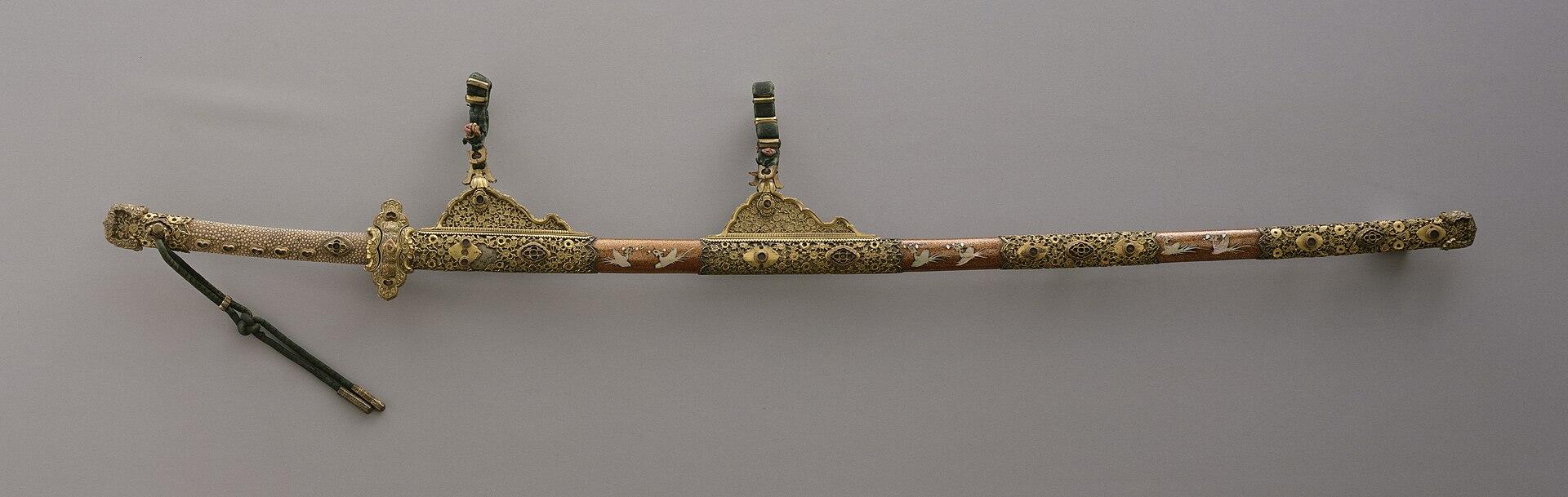
The tachi, pictured above, is a Japanese sword that was used until the 13th century (Koto Period). Horse-mounted samurai favoured it as it measured around 70cm in length. As they rode, it hung from a cord to the side, with the blade downwards. In fact, the catalogue of Medieval Japanese weapons counts two tachi.
The decorative tachi for ceremonies
The service weapon used for battle.
The tachi is an ancestor to the katana. It fell out of favour as the newer blades gained popularity. However, it's likely the kazaritachi continued its ceremonial usage for a while longer.
Wakizashi
The waizashi measures between 30 and 60cm; it's much shorter than the katana. It wasn't used for stabbing, but rather for close combat in which a katana would be too long.
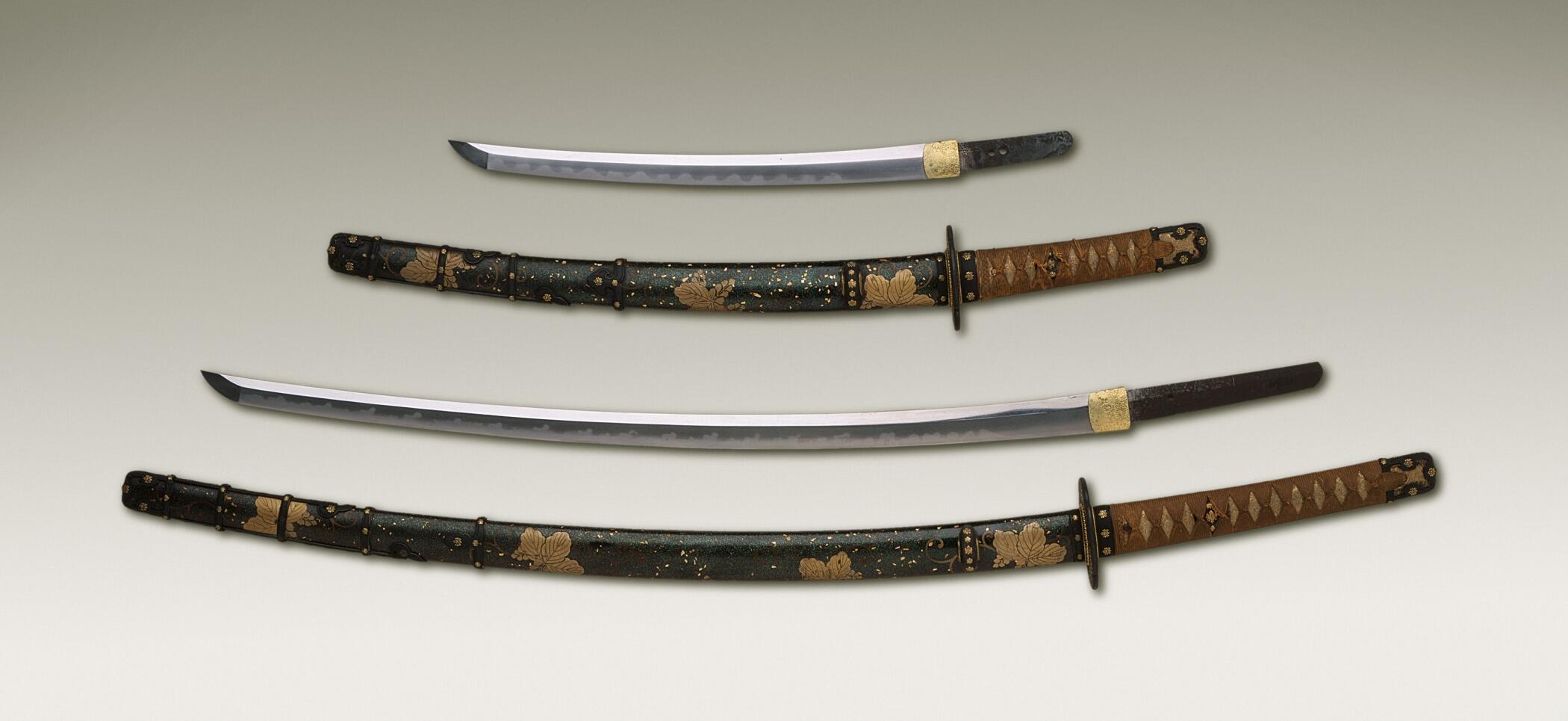
The samurai were authorised to carry a wakizashi alongside a katana, with the pair being referred to as daisho. Those who didn’t have the right to carry a katana would carry a wakizashi instead. Wakizashi were used for seppuku as their size allowed them to easily cut open the stomach.
Seppuku: ritual suicide for male samurai, which involves cutting open their abdomen.
Jigai: ritual suicide for female samurai, which entails cutting the jugular vein.
Tanto
The tanto is a Japanese blade measuring less than 30cm.
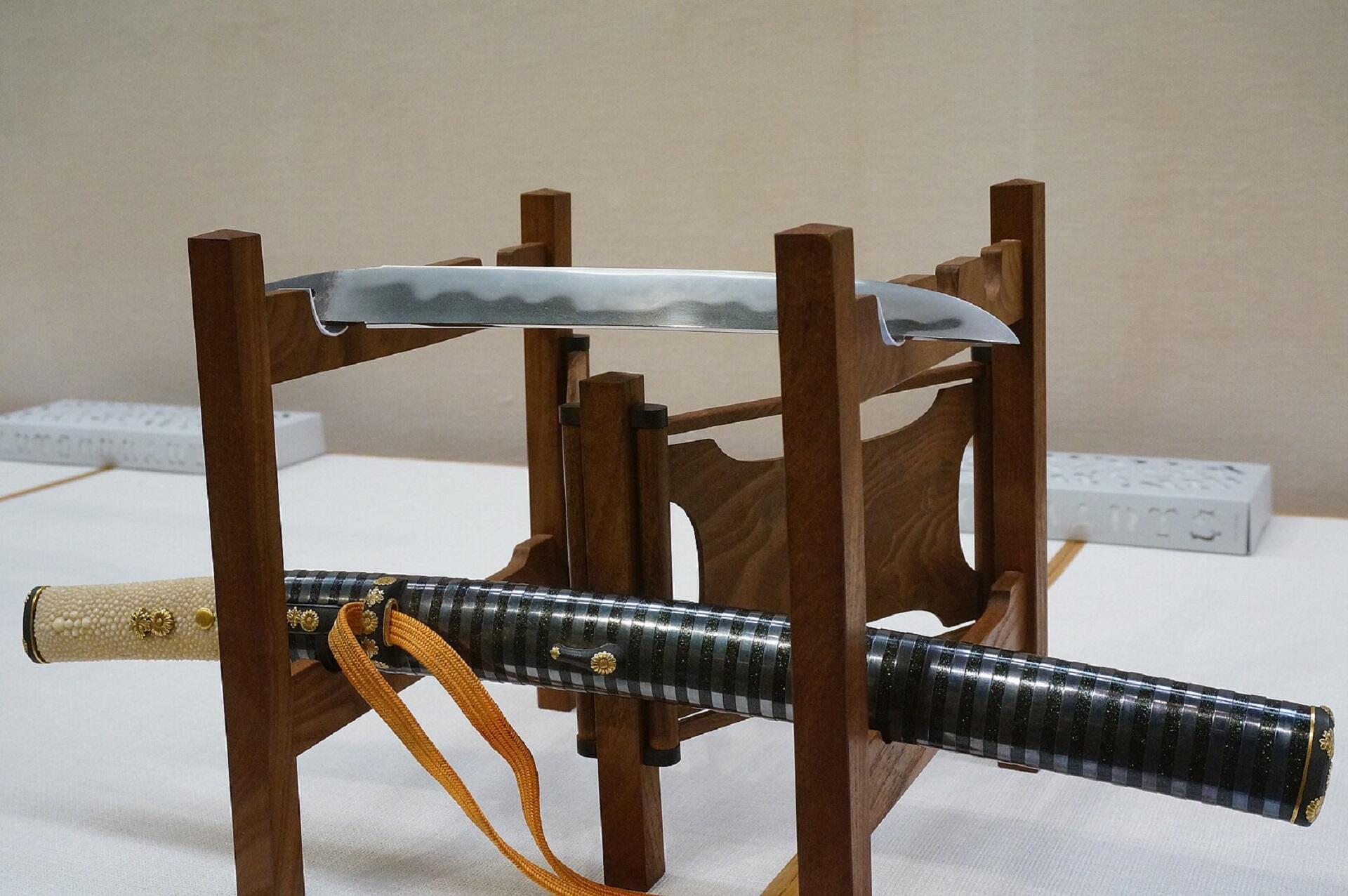
It was used by the samurai as an armour-piercing blade or by women in combat. There are two main types: the hamidachi (with a small guard) and the aikuchi (without a guard and a handle made from fish skin). The type pictured is aikuchi. These blades were sometimes used to perform jigai.
Tessen
The tessen is a weapon like no other.
These hand fans came in many styles and types. Some were used to signal while others were weapons in their own right. Their iron ribs and plates could be used as a shield in self-defence or as an offensive weapon when other types of weapon were forbidden.

Unfortunately, we have no stories of geishas using a tessen during undercover operations. What a tale that would be!
Traditional Japanese Weapons: Lances
Naginata and Yari are types of lances. These weapons were effective to fight foes from a few metres away.
Naginata
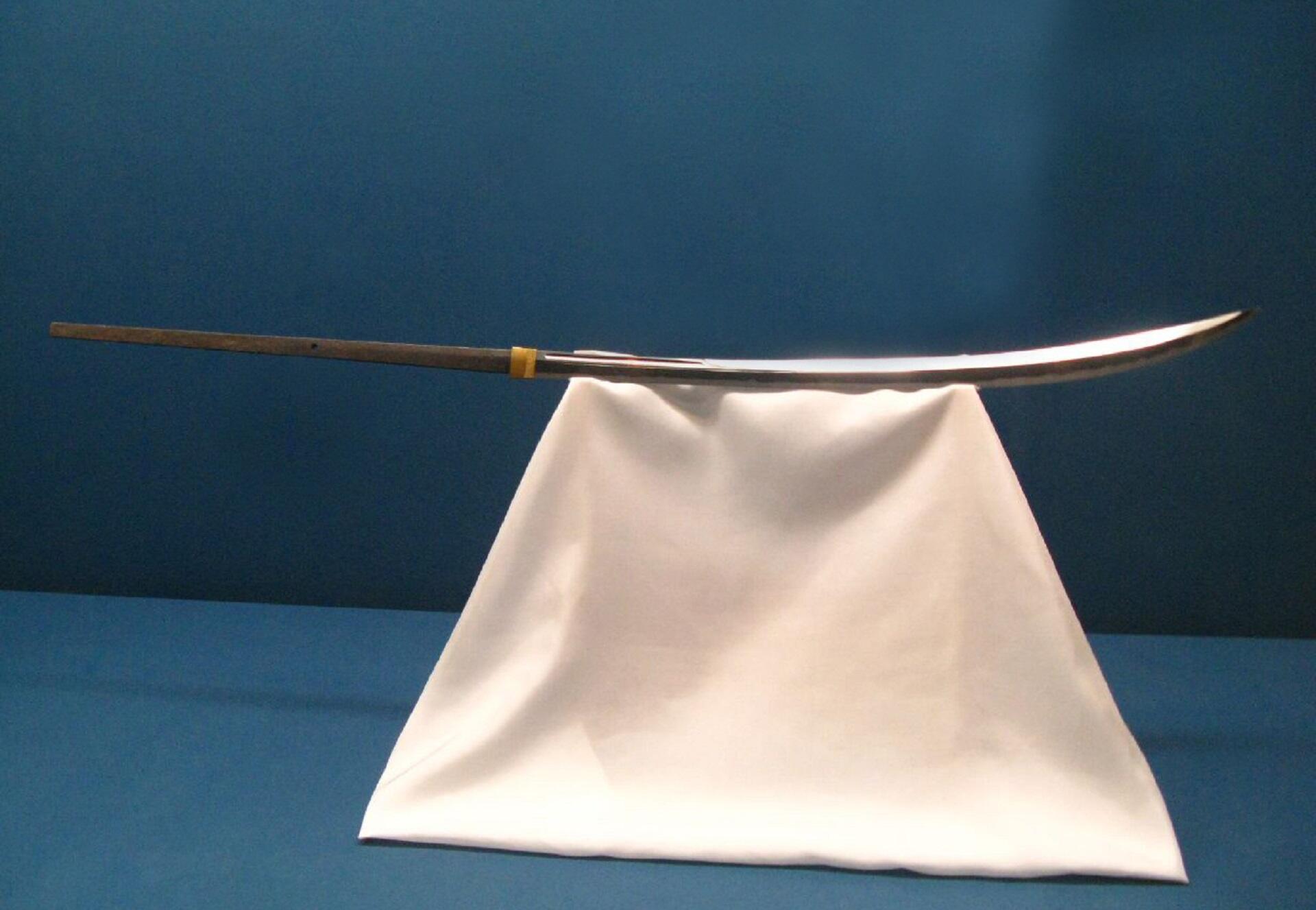
- likely originated in China
- first appeared in Japan in the 10th century
- between 205 and 260 cm long
- light and manageable
- male and female warriors used them
Yari
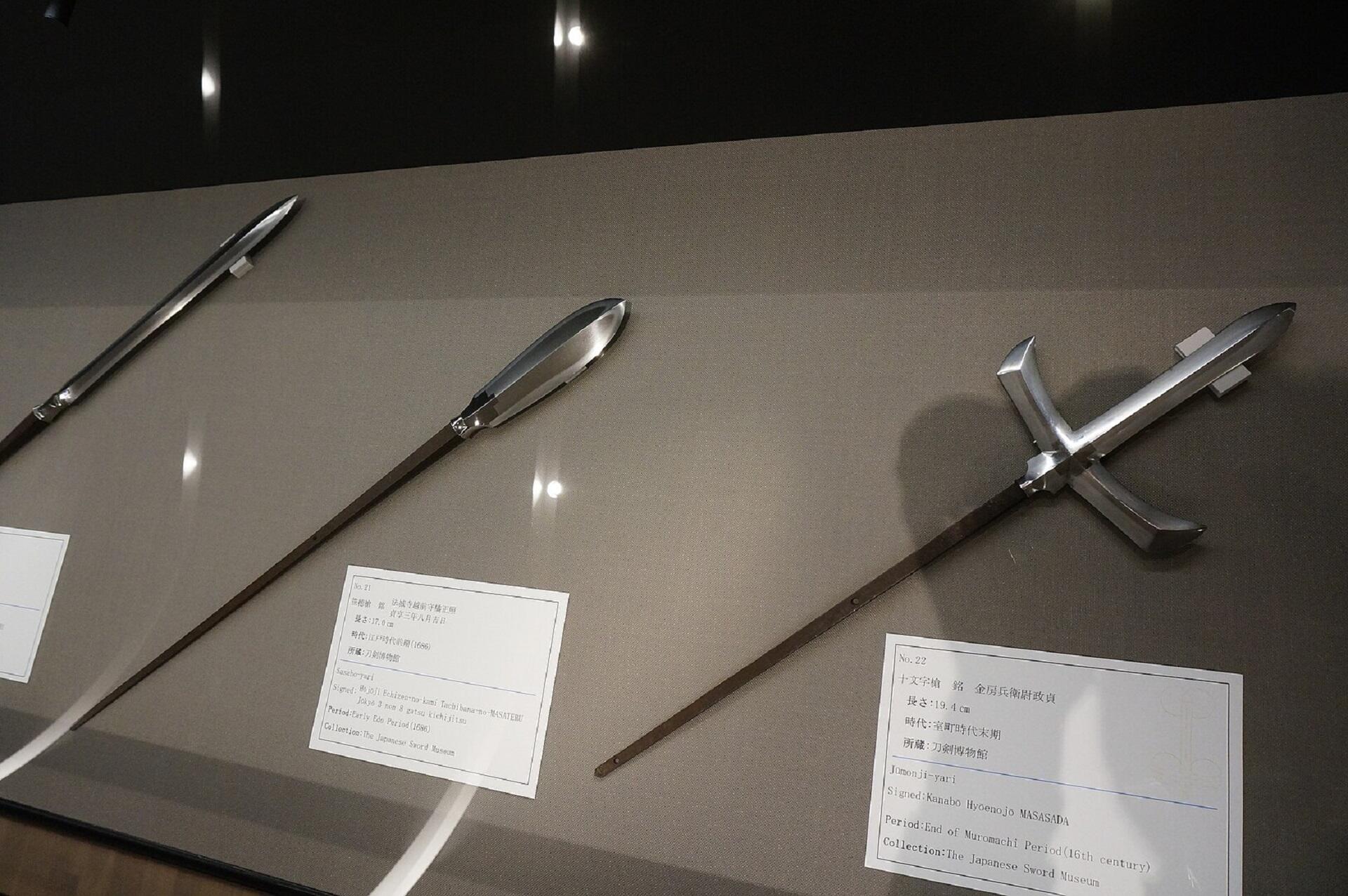
- likely originated in China
- first appeared in Japan in the 8th century
- between 250 and 400 cm long
- used for both cutting and stabbing
- the butt of the yari was used to strike or push back foes
Today, naginata is a martial art predominantly practised by women. We see the yari in many aikido kata, particularly striking with the butt of the weapon's long shaft.
Yumi

The yumi is an asymmetrical Japanese bow. All types of male warriors used it, which gave them a distance advantage when striking their enemies farther away. Ninja warriors were said to be particularly skilled with these bows but they don't feature in other martial arts, such as sumo wrestling in Japan.
Kunai
Ninjas were shadow warriors who, today, are famous for their ninjutsu combat style.
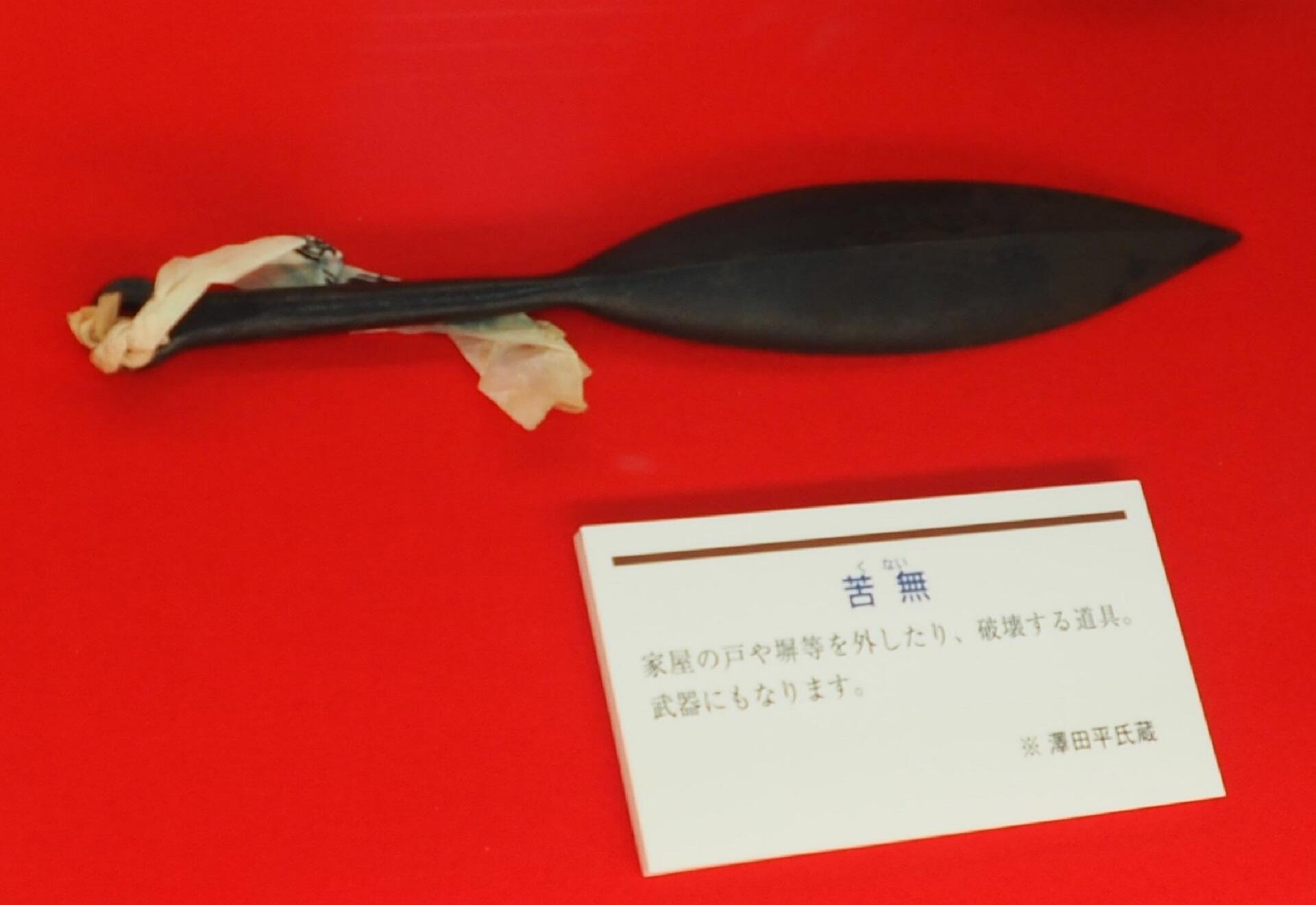
They used a sword that was shorter and easier to handle than a katana but their weapon of choice was the kunai. This small dagger worked as a tool and a weapon. Historians believe it was originally used as a mason's trowel or gardener's spade.
Though blunt for tool usage, the edges could be sharpened to make an effective dagger. Ninjas have a history of adapting farming tools to their combat needs. This 'tool' was particularly lethal in close-quarters fighting.
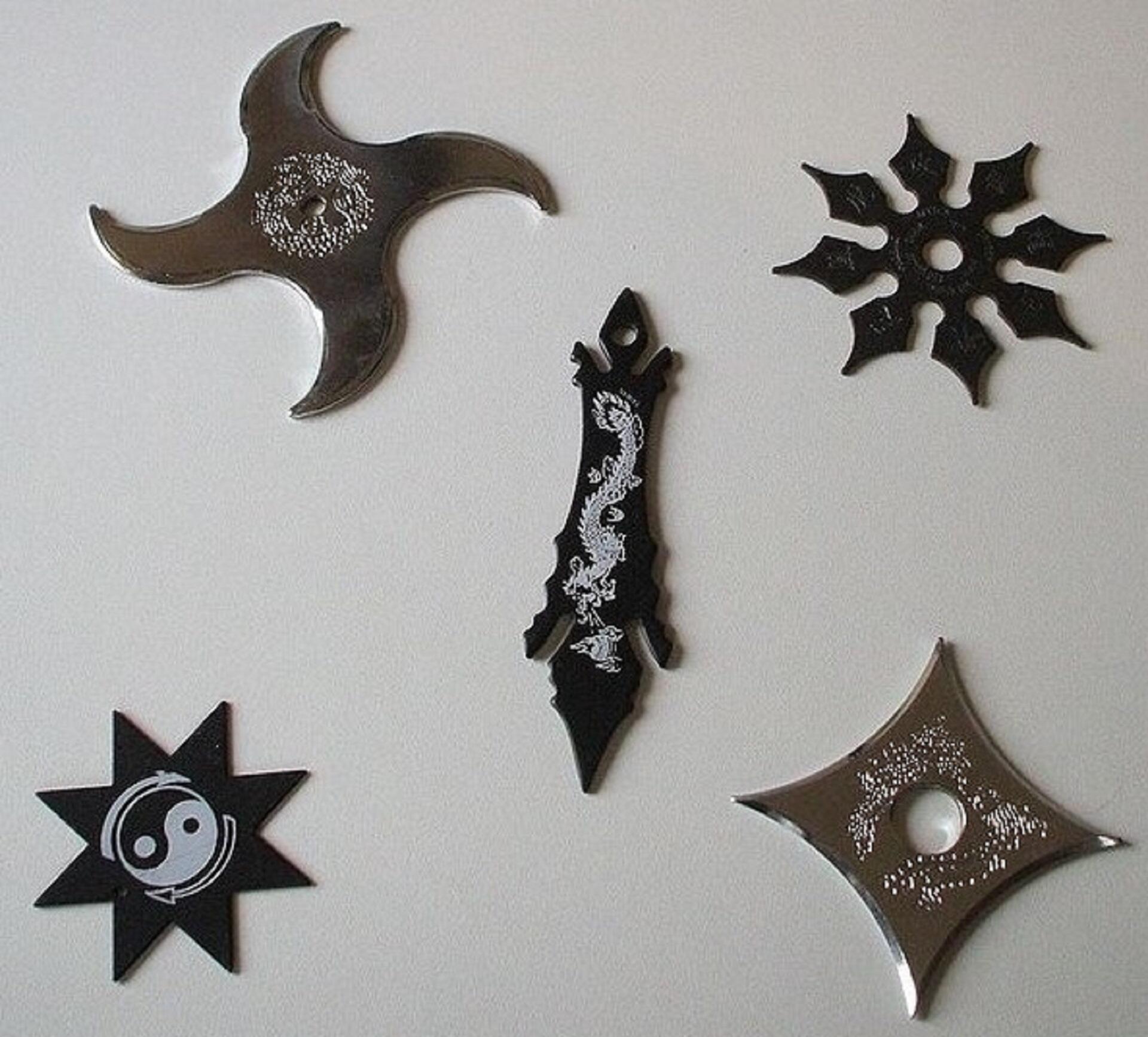
Shuriken
Of all the ninja weapons, the shuriken (ninja stars), were the most famous. They are metal 'stars' that could be thrown at foes. Often, they were tipped with poison, making them more lethal. Ninjas had several such stars at their disposal:
- bo-shuriken (centre in the photo)
- hira-shuriken (right in the photo)
- shuriken designed in various regions/schools
Nunchaku
When Japan annexed Okinawa in 1879, the archipelago's inhabitants resisted the invasion. As they were mainly rural folk with little access to modern technologies, they developed a range of weapons based on traditional agricultural tools.
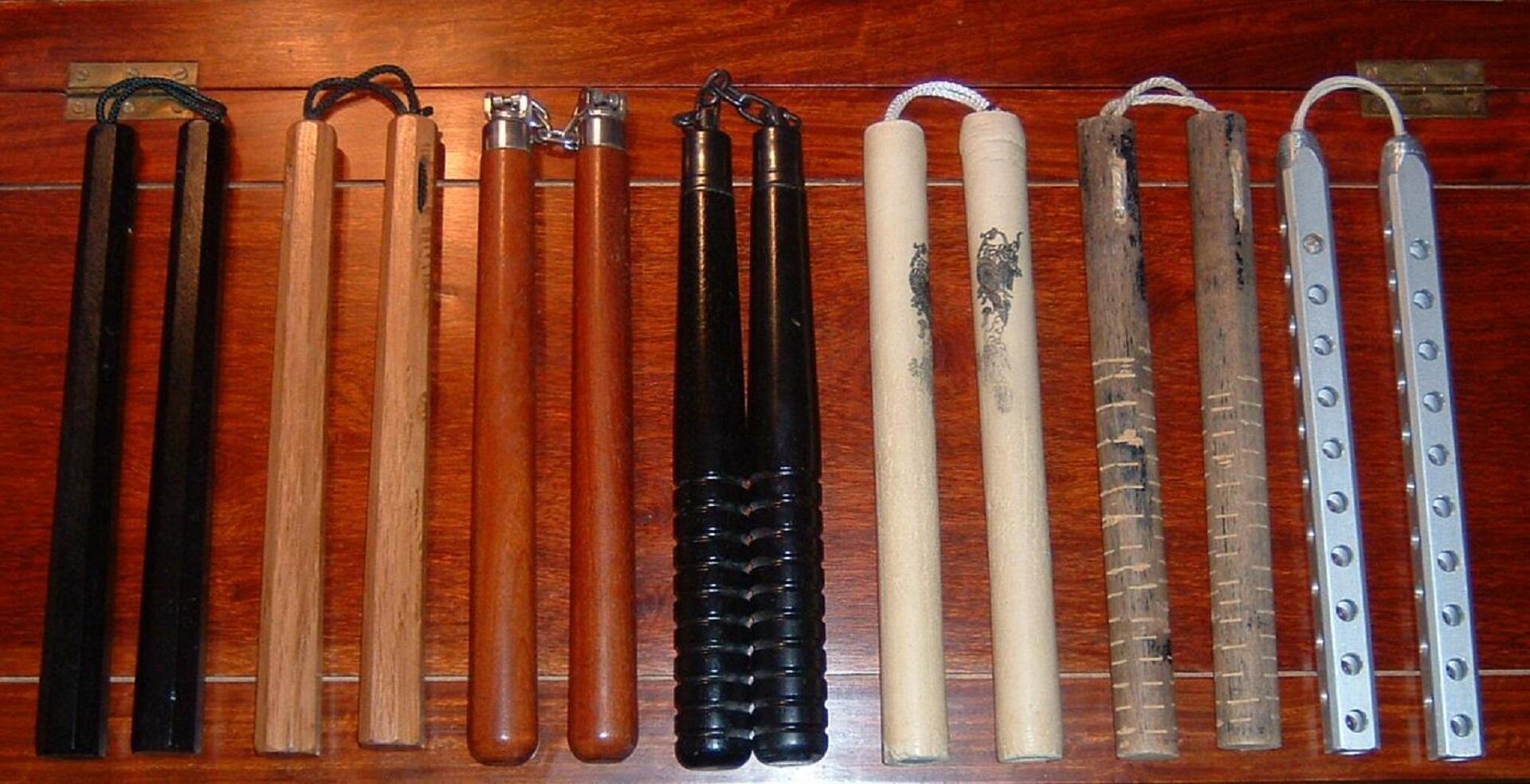
The most famous of these weapons is the nunchaku. Nunchaku are two batons joined by a cord or chain, a design remarkably similar to a rice threshing tool. While the nunchaku is now used as a training device to build speed, it once served as a tool for self-defence against the invading Japanese armies.
Sai
The sai is a type of dagger with three points that can be used to stab but not cut.
It originated from an agricultural tool used to plant rice or pierce fruits. The larger shaft created the planting hole while the two shorter ones aerated the soil around it.
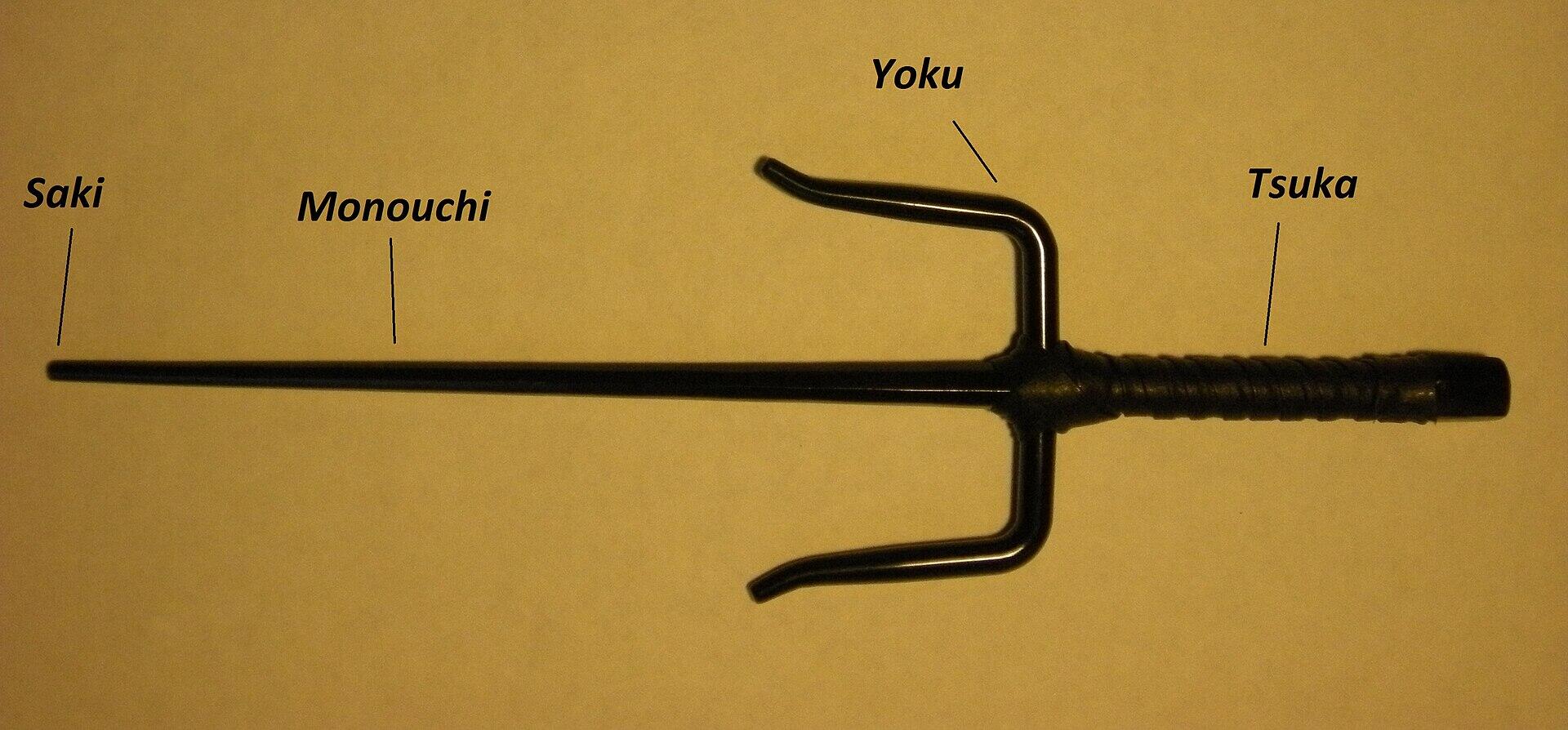
As a weapon, the sai is generally used in pairs but a third can be used as a thrown weapon.
Tonfa
Okinawans used a tunkunwa in combat, a type of tonfa with a perpendicular handle.
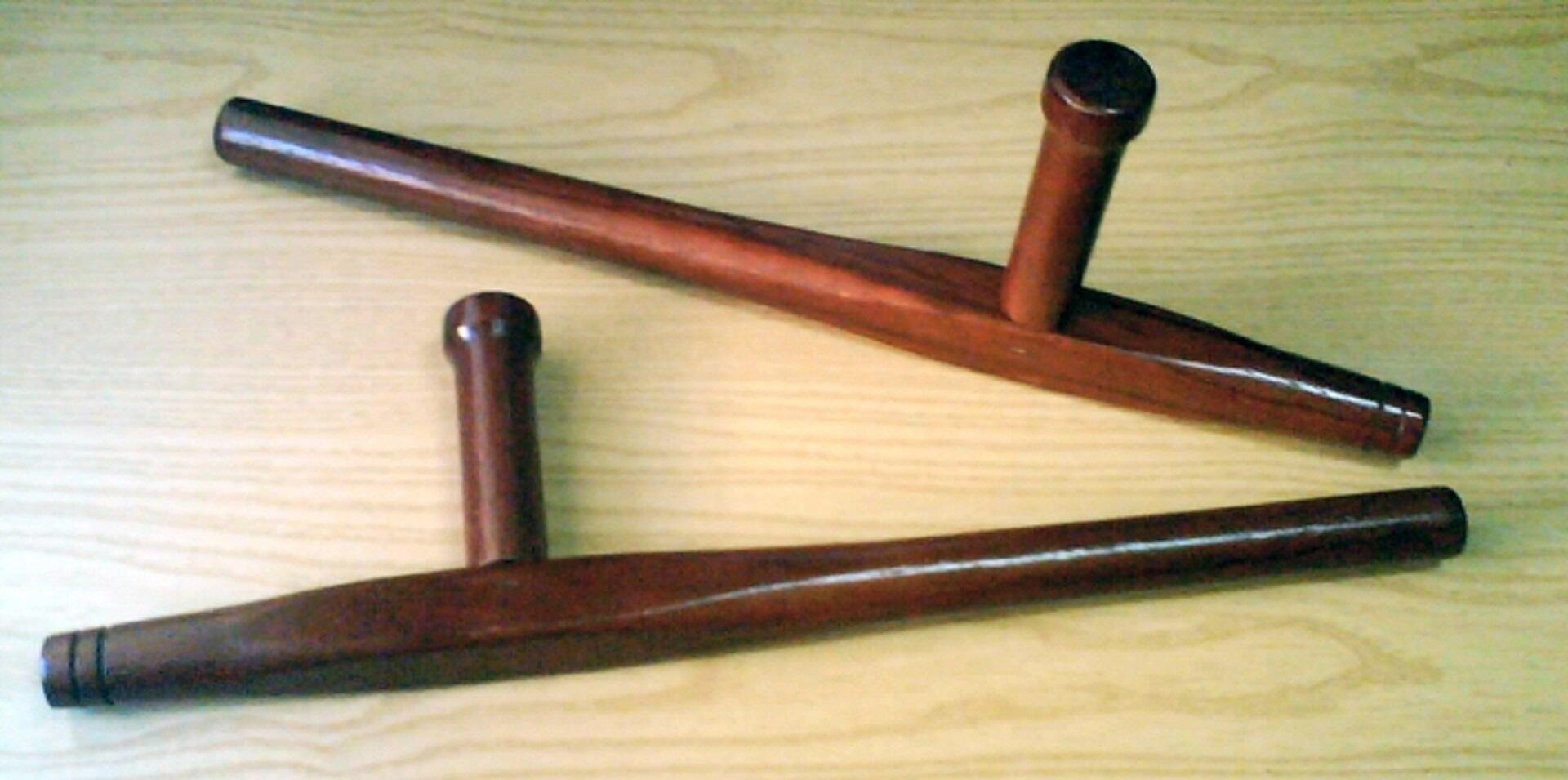
Throughout Asian history, countries had their own versions of the tonfa. These instruments were used to strike opponents by pivoting the grip, or to block an opponent's trike.
They could also be used to thrust the weapon's blunt end into the opponent's abdomen or other parts, to temporarily disable them. This type of weapon came to be used by law enforcement all over the world but is also used in Japanese martial arts.
Kusarigama
A lot of Okinawan weapons, such as the kama and the kue, were based on sickles, hoes, or hooks. Another popular weapon, especially in ninja folklore, is the kusarigama. It is a sickle blade mounted on a short handle, with a metal chain attached, which had weight at the end.
Kobudo
Whether shogun, ninja or ronin, a warrior had to have training. Across Japan and particularly in Okinawa, several schools taught disciples the ways of war using various mock weapons. Those non-lethal training weapons eventually became deadly and found their way into battle.
This name literally means:
古- old, ancient
武 - fighting, martial
道 - way
Kobudo weaponry, as described in the video above, includes:
Eku
- a fishing oar
- a long pole with a flat end
- used to flick sand or dirt into opponents' faces
Bo
- a staff
- measures around 1.8m
- used to strike and block
Shakujo
- a staff with rings on its end
- measures around 1.8m
- used to block or parry attacks
Tambo
- a very short staff
- measures around 45cm
- used to strike or jab
Rochin
- a short spear with a metal tip
- usually used with a timbe (a shield)
- used for close-quarters fighting
Now you know a bit more about ancient Japanese weapons: swords, batons, mêlée weapons, and ranged weapons. If you want to learn more, consider reading our other articles on Japan or getting Japanese language lessons from a private tutor on Superprof!
Summarise with AI:
Enjoyed this article? Leave a rating!


 Loading...
super cool
Hi Dan! Brilliant that you enjoyed it! Japanese weaponry really is fascinating – such incredible craftsmanship and history behind each piece. Any particular weapon that caught your interest?