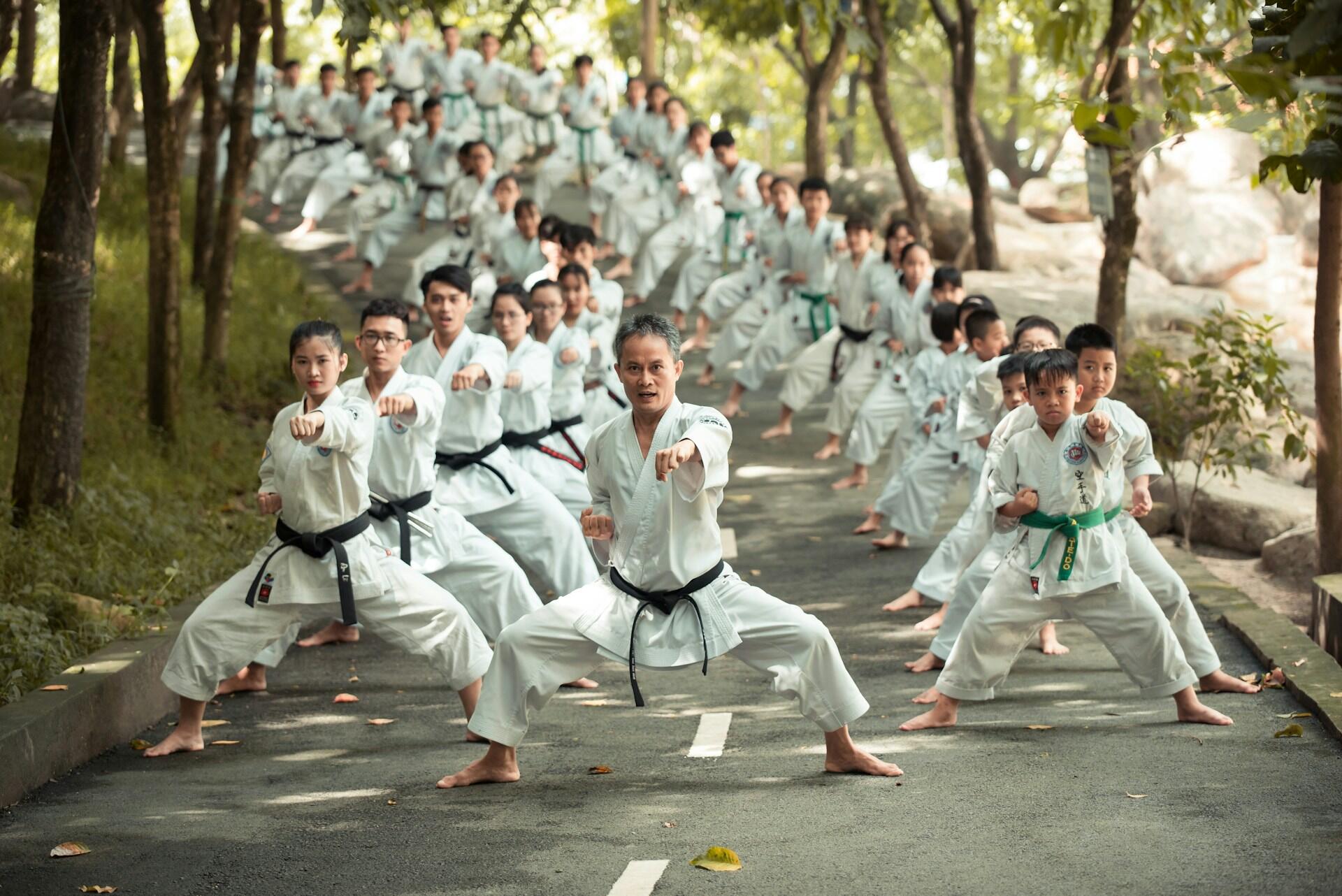

Martial arts have a long and important presence throughout Japanese history. Even in recent years, new techniques have developed, and older techniques have been adapted for modern times. Japanese martial arts are not only fighting techniques; they encompass philosophy, ethics and social order, reflecting social norms in each era.


Aikido
Aikido is a martial art founded by Morihei Ueshiba in the 20th century. It focuses on turning your enemy’s strength against them, removing their chances to attack as a form of self-defence.
It draws on older jujutsu systems, reducing focus on force and striking and emphasising redirection, evasion, and grappling. Aikido evasion techniques incorporate spiralling, circling, and pivoting to give the defender control over the situation without directly taking or blocking any hits.
There exists in Aikido an ethical concern for the well-being of the attacker beyond a preoccupation with self-defense.
Josh Gold, Executive Editor of Aikido Journal
Key techniques include joint locks, throws, and circular movements. Common forms in aikido involve:
- Ikkyo (arm control)
- Nikyo (wrist lock)
- Iriminage (entering throw)
- Kotegaeshi (wrist turn throw)
Unlike many other martial arts from Japan and elsewhere in the world, aikido has no competitive form. Instead, it’s practised for the sake of physical and mental discipline along with non-violent self-defence techniques.
Some styles of aikido incorporate using weapons, mostly Jo (short staff), Bokken (sword) and Tanto (knife).
Judo
Judo is one of the most popular martial arts forms in the world today. Founded in 1882 by Jigoro Kano, it was developed from traditional jujutsu and introduced a structured and educational system. Kano largely eliminated the most dangerous techniques so the practise could be used as a functional sport for physical education.
Like aikido, judo’s goal is to use an enemy’s attacks against them and aims to do so compassionately; the name judo means “the gentle way”. Unlike aikido, judo is more hands-on and focuses on redirecting an opponent’s weight directly through leverage.
One of Kano’s motivations for developing judo was to preserve the heart of jiu-jitsu, which was losing popularity in the midst of the rise of Western and modern sports and the fallout of the Meiji Restoration. By taking jiu-jitsu and making it more approachable and suitable for children as a safe and fun sport that could also be honed and expanded upon for older and more practised students, the ancient principles of jiu-jitsu remained relevant even if modified.
Core judo techniques fall into three main categories:
- Nage-waza (throwing techniques)
- Katame-waza (grappling techniques, including pins, chokes, and joint locks)
- Atemi-waza (striking techniques)
Kano believed learning Judo would make students realise they could not progress at the expense of others and that mutual prosperity is the key to real, lasting progress.
Evolve-MMA.com
In judo, students are ranked by their mastery. Different ranks are awarded different coloured belts:
- White Belt: Rokkyu
- Yellow Belt: Gokyu
- Orange Belt: Yonkyu
- Green Belt: Sankyu
- Blue Belt: Nikyu
- Brown Belt: Ikkyu
- Black Belt: Shodan
- Red Belt: Jūdan
Not mentioned are the in-between stages used in some international judo systems. Most judo practitioners will only ever reach black belt status, since to achieve a red belt, they must make a notable lifetime achievement in the art. It’s not a test of skill, but of embodying the foundations of judo and spending the most valuable resource, time, on preserving and promoting the art form.
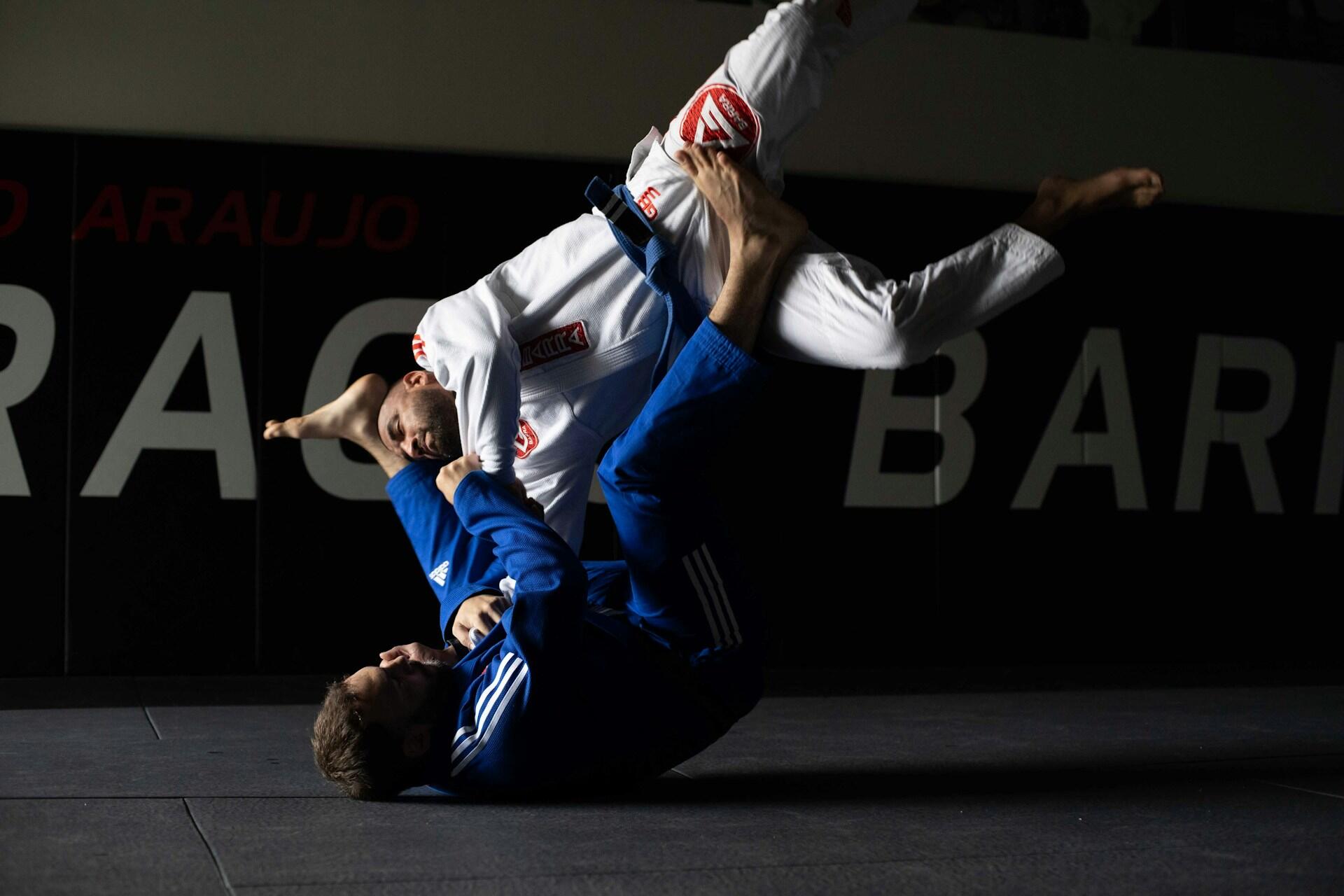
Jūjutsu (also spelled jiu-jitsu, ju-jutsu)
Jujutsu is one of the oldest Japanese martial arts. Records indicate the first official school, or ryu, that taught jujutsu opened in 1532, during the feudal era in Japanese history when emperors ruled the land. It originated as a practical school of martial arts methods designed to allow samurai to fight in full armour, whether armed or unarmed, on the battlefield.
Historically, jujutsu included a wide range of techniques designed for use in real combat situations. Here are some of the specific disciplines historically included in jujutsu.
| Martial Art Technique | Description |
|---|---|
| Bajutsu | Horsemanship |
| Bōjutsu | Staff skills |
| Hojōjutsu/Torinawajutsu | Restraining rope skills |
| Hōjutsu | Firearms skills |
| Iaijutsu | Sword drawing |
| Jitte/Jittejutsu | Truncheon/baton skills, especially against swords |
| Judo/Jiu-jitsu | Close combat, self defense, some hand weapons |
| Kendo/Kenjutsu | Fencing/swordsmanship |
| Kenpō | Variety of striking-based fighting, especially with Chinese roots |
| Kusarigamajutsu | Chained sickle throwing |
| Kyudo/Kyujutsu | Archery |
| Naginatajutsu | Polearm skills |
| Ninjutsu | Spying, irregular warfare, covert operations |
| Shorinji Kempo | Self defense, self improvement |
| Shurikenjutsu | Dagger throwing |
| Sojutsu | Spearmanship |
| Suijutsu/Suieijutsu | Swimming |
| Tantojutsu | Short sword and dagger skills |
| Yabusame | Equestrian archery |
In the Edo Period and later during the Meiji Restoration, weapons and armour were not common or practical in many situations, so the focus turned to unarmed combat against armed or unarmed opponents. Slowly, jujutsu evolved into a technique more focused on self-defence, sport, and discipline, rather than a real-world war tactic.
Jujutsu students today can study the sub-techniques that use weapons, as long as they can find a teacher! (But implementing those techniques in a civilian setting is obviously not allowed.)
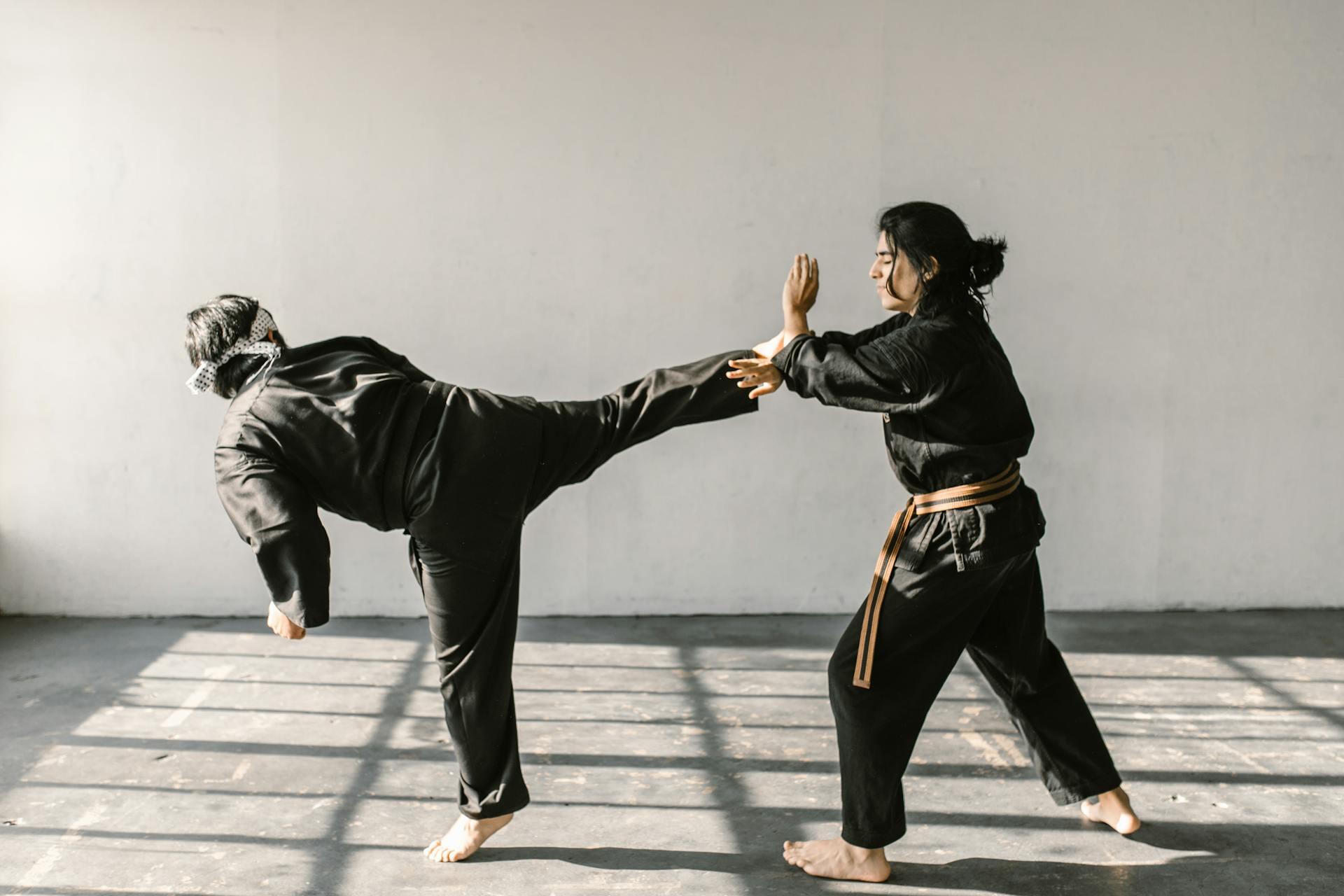
Karate
Karate originated in Okinawa before 1429, during the Ryukyu Dynasty. Like many different Japanese martial arts, it was influenced by Chinese fighting systems and local techniques. It was likely developed by people who were forbidden from carrying weapons in the 15th through 17th centuries.
In 1922, karate was introduced to the rest of Japan in a formal exhibition by Gichin Funakoshi, and it quickly became a staple in Japanese martial arts culture. Karate, which means "empty hand", focuses on striking using the hands, feet, elbows, and knees. It trains both physical strength and mental control, challenging students to embody the principle of continuous improvement.
Core elements of karate include:
- Dachi Kata (stances)
- Uchi Waza (strikes)
- Keri Waza (kicks)
- Tsuki Waza (punches)
- Uke Waza (blocks)
These elements each contain many techniques, which students learn as kata form before applying them to free-form kumite sparring. Different styles of karate, such as Shotokan, Goju-ryu, and Wado-ryu, offer variations in movement and emphasis.
Karate is not about victory or defeat, but about the perfection of character.
Gichin Funakoshi
Like judo, karate also incorporates a certain level of evasive maneuvers to avoid blocking or taking a strike, like throws, leg-sweeps, and takedowns. However, karate’s style contains more striking and blocking than styles like judo or aikido.
Since karate is highly structured and a great way to introduce self-discipline along with philosophical concepts, it’s a popular martial art for children across the globe. The belt system, like judo’s, offers a tangible ranking for students to understand and strive for.
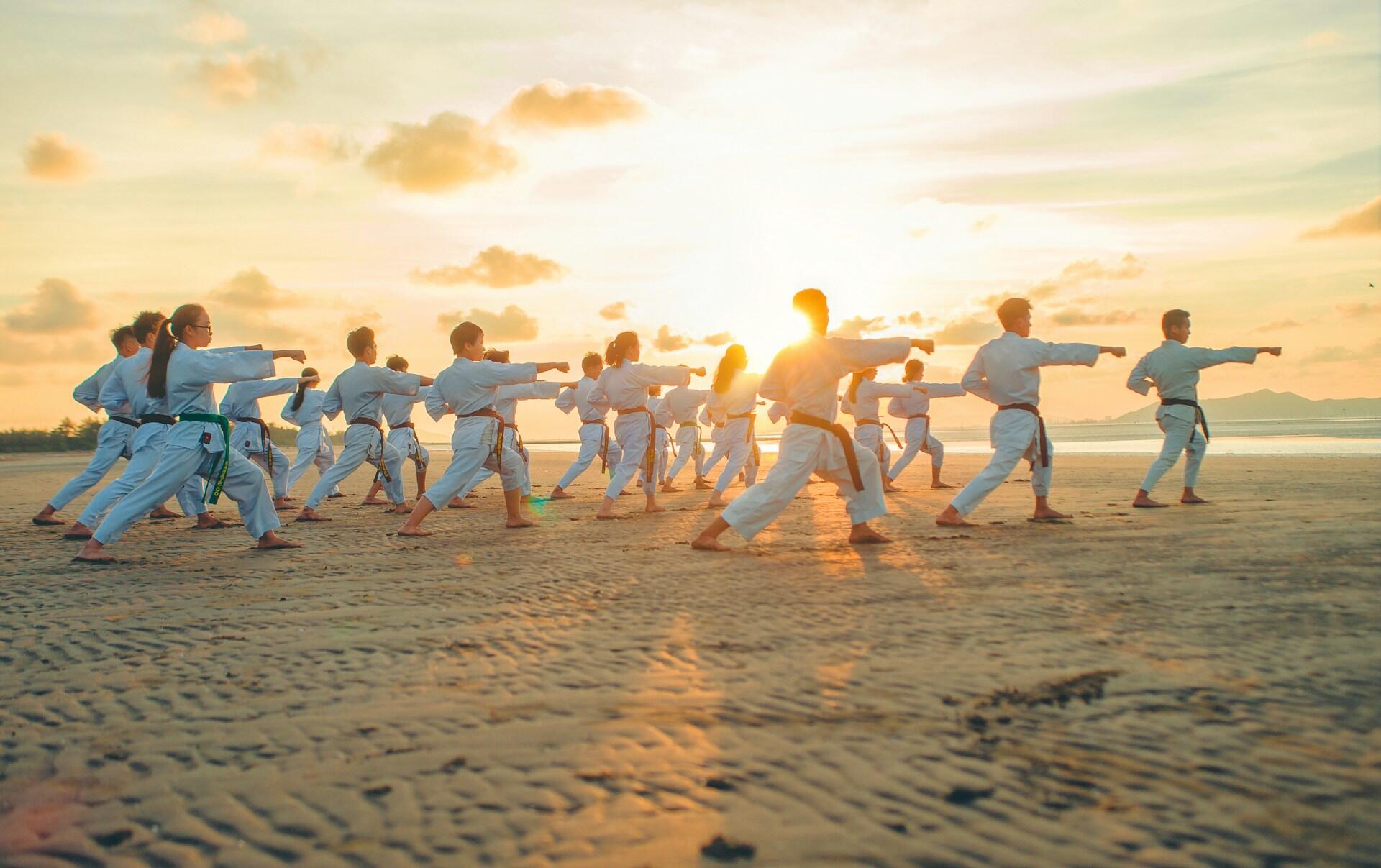
Kenjutsu
In the 15th through 17th centuries, Japan experienced the Warring States period, which saw repeated civil war. It was a violent time to live, and naturally saw the rise of samurai and the use of weapons as people sought to fight on the offensive and defensive. Kenjutsu focuses on mastering one of the most iconic Japanese weapons: the katana.
Students generally practice in pairs with wooden swords called bokuto or bamboo swords called shinai. They wear padded protective gear for safety, so each student can strike harder rather than hold back.
Advanced students may even use blunted steel swords while sparring, called habiki.
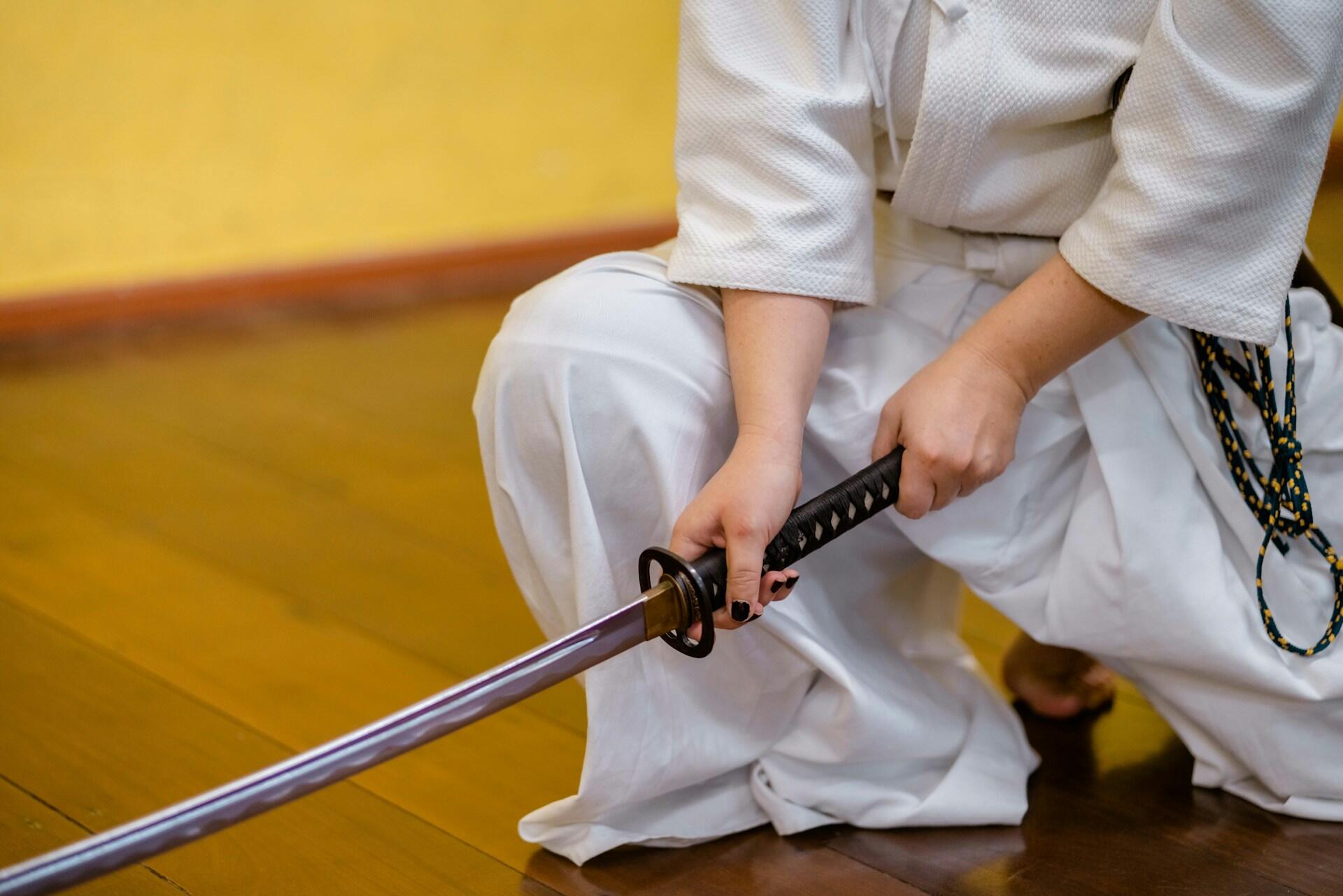
Key techniques in kenjutsu include:
- Battōjutsu (drawing and cutting in one motion)
- Iaido (controlled drawing and cutting practice)
- Iaijutsu (quick-drawing and counter-attacks)
- Kiri (cutting techniques)
- Kamae (stances)
Kenjutsu schools, or ryu, preserved specific techniques passed down over generations. Each school maintains its own curriculum and philosophy.
Kenjutsu is not practised in earnest these days, since swordfighting to grievous injury and death is generally not allowed. However, enthusiasts can still learn the techniques and kata with specialised teachers.
Kendo
Kendo is an adapted form of kenjutsu suited for modern practice. Instead of teaching techniques for the battlefield, its focus is on swordfighting as a sport. It uses shinai and protective armour called bogu.
Kendo fights are scored by how accurately and intentionally a fighter strikes another. Focus lies heavily on form and precision; wildly swinging and hitting the opponent does not grant points.
Main target points include:
- Men (head)
- Kote (wrist)
- Do (torso)
- Tsuki (throat thrust)
Beyond simply fighting, kendo emphasises harmony between the body, sword, and mind. Discipline and posture are just as important as mental clarity and understanding the philosophy behind the art.
A kata is a pre-determined form or set of movements (such as a specific block or series of punches, kicks, and evasive movements). The freeform or freestyle application of techniques in a sparring scenario is called randori or kumite, depending on the art.
Kyūdō
Like kendo, kyudo is an adapted form of a battle-ready technique called kyujutsu. Kyudo is the Japanese art of archery. In ancient Japanese culture, archery probably evolved in the Stone Age, similarly to many other areas in the world. For this reason, the relationship between the bow and bowman is highly revered as a significant and dignified one.
After the introduction of guns, archery became less practical in battle. Archers then began exploring the deeper philosophical and spiritual qualities associated with mastering the bow and arrow. Today, kyudo emphasises form, breathing, and mental focus.
Like the art of geisha, kyudo is a performance and a meditation.
The practice of kyudo requires only that you align your body with the target, stand straight, fill yourself with spirit, and shoot with a pure heart and meaningful purpose.
Onuma Hideharu
Whether in a competitive setting or not, the goal of kyudo is not only to hit the target; each movement must be practiced with control and awareness.
The shooting process follows a sequence known as hassetsu (eight stages):
- Ashibumi (footing)
- Dozukuri (body posture)
- Yugamae (preparing the bow)
- Uchiokoshi (raising the bow)
- Hikiwake (drawing the bowstrinig)
- Kai (completing the draw)
- Hanare (release)
- Zanshin (holding position until the arrow lands) and Yudaoshi (lowering the bow)
The bow, yumi, used in kyudo is unique. It is very long, often taller than the bearer at 2.2-2.3 metres (7-7.5 feet). Arrows, called ya, are also quite long, at about 85-110 cm (33-43 inches).
The deliberate and slow-paced nature of this martial art is often described as a type of moving meditation, attracting those interested in discipline and precision over fighting.
Naginatajutsu and Naginatado
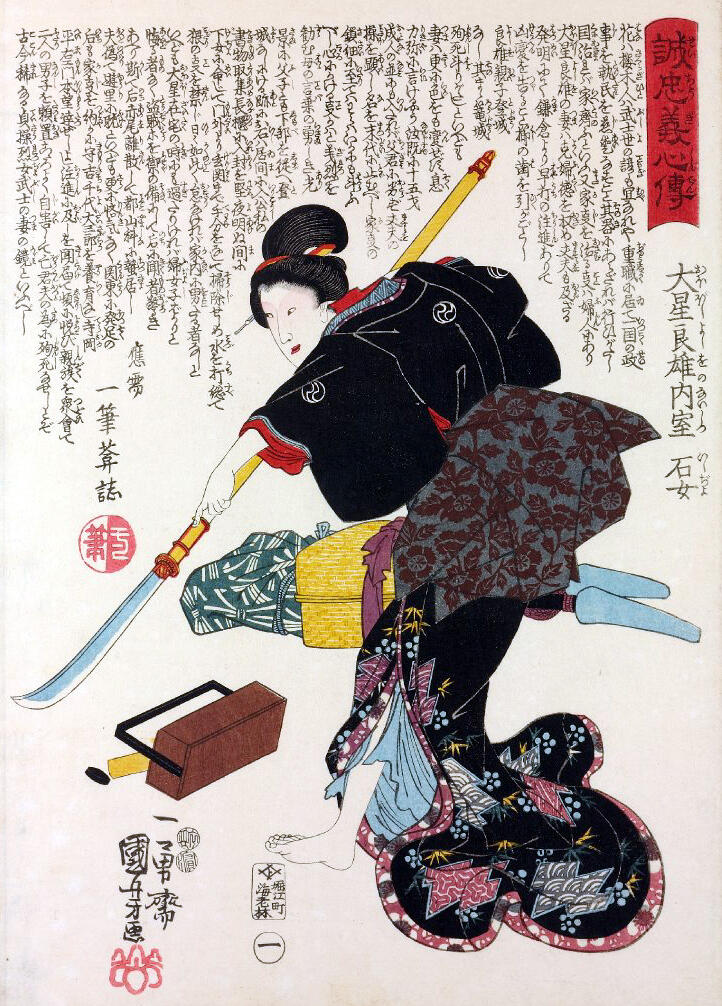
Traditional naginatajutsu was a practical form of fighting with a polearm, a technique used by samurai, especially samurai women. The naginata consists of a steel blade attached to a long wooden shaft, granting the wielder leverage and reach, which was especially useful on horseback and against armed opponents. The first recorded use of a naginata in combat was in 1086, in “Oushu Gosannenki” (“A Diary of Three Years in Oushu).
Confused about what a specific martial art is all about? Take a look at the suffix! In Japanese, “-jutsu” is the suffix for techniques used in real battles (meaning “technique” or “method”). “-do” indicates the form is more about the artistry, technique and philosophy, rather than the effectiveness in a life-and-death situation (meaning “path” or “the way”).
Today, naginatado is generally the taught form, for the same reasons as with kyudo and kendo. Students often practice against naginata as well as other weapons, such as shinai, in mixed-weapons sparring.
Naginatado uniquely involves training both sides of the body ambidextrously. Physical techniques involve sweeping cuts, thrusts, parries, and defensive maneuvers.
Students wear protective gear including wooden shinguards (suneate) to protect against powerful hits to the legs, even in shiai (competitive fighting).
Naginatado training emphasises traditional Japanese values like manners, commitment to practice, and integrity. As a traditional martial art based on developing strong values, it’s sometimes taught in schools in Japan.
Ninjutsu
Originating from Sun Tzu’s “The Art of War” in the 6th and 7th centuries, the art of espionage evolved from its Chinese roots into the distinct Japanese art form we know of today. Throughout the 15th to 17th centuries, serious practitioners honed the technique.
The practice as a whole evolved through the 8th to 17th centuries as a form of guerrilla warfare and covert operations during times of conflict. Ninjutsu was influenced by traditional Japanese Shinto culture and Buddhist philosophies from China.
What started as simple scouting and information gathering evolved into intense spying, deadly combat, storied self-control, esoteric practices, and tales of mystical (even occult) powers.
During the height of ninjutsu as a real military tactic, ninjas benefited from developing a reputation as terrifying opponents that might even have supernatural or superhuman powers. Samurai and other warriors who faced them for the first time might have been too scared by the stories to fight properly, giving the ninja the upper hand.
Ninjutsu was not a martial art concerned with honour and fair fights. Instead, it focused on ending encounters quickly and decisively, often as a means of survival. Ninjas typically attempted to exit encounters peacefully, only using violence as a last resort as self-defence, rather than offence.
The main tenets of ninjutsu training include:
- Fighting (taijutsu)
- Body movements (taihen jutsu)
- Striking techniques (dakentaijutsu)
- Gripping techniques (jutaijutsu)
- Body training and conditioning (junantaiso)
- Mental powers honing
- Weapons, tools and tactics training
- Medicine, poison and self-healing knowledge
By experiencing the confrontation with danger, the superiority of fear, injury, or death, and the workings of one’s powers and limitations, the practitioner can attain the strength and invincibility that allow him to enjoy flowers that sway in the wind, of appreciation the love of others and contentment with the peace in society.
Hatsumi Masaaki, Essence of Ninjutsu
Unlike many martial arts, ninjutsu includes a wide range of skills beyond combat, including stealth and infiltration, disguise and deception, escape techniques, mental self-mastery, psychological manipulation, and spiritual enlightenment.
Modern ninjutsu teachings focus more on the control and fluid movements, as well as some of the mental aspects of the practice.
Sumō
Sumo is Japan’s oldest organised sport, but its history is not quite clear. Many sources claim sumo began as a ritual dance at Shinto religious celebrations, while others may cite the first reference of sumo as a fight between two servant women in the palace in the 5th century. Others still refer to the Kojiki text, which attributes the creation of sumo to two fighting gods.
Regardless of the origins, sumo became a common practice in Japanese culture as a form of sport entertainment and perhaps even a way to claim ownership over an opponent’s land. The heart of sumo encompasses ancient traditions surrounding harvests. However, the effective wrestling techniques were also used by samurai; sumo may even be the parent of all other empty-handed Japanese fighting styles.
Today, sumo is strictly a professional sport. Wrestlers aim to force their opponent either out of the ring or get them to touch the ground with anything other than the soles of their feet. Competitors are allowed to headbutt, slap, tackle, grapple and flip one another, but no closed-handed attacks are allowed.
Fighters train for years, even decades, to prepare their minds and bodies for the ring through rigorous exercise, strict diets and a disciplined lifestyle.
Martial arts are one of the strongest, most prevalent pillars of Japanese culture. The discipline, structure and honour surrounding these arts are reflected in society, and vice versa, in a cyclical pattern.
References
- “Aikido in Principles.” Aikido Community, Available at: aikidocommunity.org.au/aikido-unleashed/aikido-principles. Accessed 17 May 2026.
- “Basic Karate Techniques.” The Martial Way, 15 Mar. 2015, Available at: www.themartialway.com.au/?p=2279. Accessed 17 May 2026.
- “The Comprehensive History of Karate: From Okinawan Roots to Global Martial Art.” Modern Combat Martial Arts (MCMA), 28 Aug. 2025, Available at: mcmasystem.com/the-comprehensive-history-of-karate-from-okinawan-roots-to-global-martial-art. Accessed 17 May 2026.
- DeProspero, Dan, and Jackie DeProspero. “Kyudo: Japanese Archery.” Kyudo, 2 Apr. 2012, Available at: www.kyudo.com/hassetsu.html. Accessed 17 May 2026.
- Evolve MMA. “The History and Origins of Judo.” Evolve Daily, 24 July 2023, Available at: evolve-mma.com/blog/the-history-and-origins-of-judo. Accessed 17 May 2026.
- Griffiths, Andrew. “The History of Judo.” The History of Fighting, 23 June 2023, Available at: www.historyoffighting.com/judo.php. Accessed 17 May 2026.
- Griffiths, Andrew. “The History of Jujitsu.” The History of Fighting, 21 Mar. 2026, Available at: www.historyoffighting.com/jujitsu.php. Accessed 17 May 2026.
- “History of Naginata and Today.” East Coast Naginata Federation, Available at: www.ecnf.net/page0/index.html. Accessed 17 May 2026.
- Imhoff, Stefan. “Origins of Ninjutsu.” 木隠 Kogakure, Available at: www.kogakure.de/en/origins-of-ninjutsu. Accessed 17 May 2026.
- “Japanese Culture - Japanese Martial Arts.” Avantour, Available at: www.advantour.com/japan/culture/martial-arts.htm. Accessed 17 May 2026.
- Smathers, Michael. “Kenjutsu: Discover Centuries of Japanese Fencing Tradition.” TheCollector, 6 Nov. 2023, Available at: www.thecollector.com/kenjutsu-japanese-fencing. Accessed 17 May 2026.
- Tengu. “The Surprising Origins of Japanese Martial Arts.” YouTube, 20 June 2022, Available at: www.youtube.com/watch?v=n1ts6gZRiU0.
- “What’s Naginata?” All Japan Naginata Federation, Available at: www.naginata.jp/english.html. Accessed 17 May 2026.
Summarise with AI:
Did you like this article? Leave a rating!


 Loading...