
Things seem to speed up as you get to the end of your compulsory education career. You must prove that you know everything presented in class to earn that all-important High School Certificate (HSC). This award determines your entire future - your earning potential, career options and even your quality of life.
You might envision a life that involves no formal writing or literary critiques. You may not even enjoy reading, but you must still analyse the work presented in the exam and do it well enough to satisfy the examiners' criteria. That means knowing about literary techniques and how and why they're used.
| Technique | Definition |
|---|---|
| Allegory | Story with double meaning; extended metaphor. |
| Allusion | Indirect reference to something or someone. |
| Alliteration | Repetition of a sound across several words. |
| Analogy | Comparison to clarify or explain. |
| Assonance | Similar vowel sounds repeated. |
| Bricolage | Use of pre-existing material in a new text. |
| Contrast | Highlighting differences between two things. |
| Dialogue | Speech that advances the story or reveals character. |
| Ellipsis | Pause or signal uncertainty in dialogue. |
| Enjambment | Poetry technique disrupting narrative flow. |
| Flashbacks | Glimpse into the past for context. |
| Hyperbole | Exaggeration for emphasis or effect. |
| Icons | Object or person representing complex ideas. |
| In medias res | Starting narrative in the middle of the action. |
| Irony | Gap between meaning and expression, often sarcastic. |
| Linear narrative | Story progression from start to finish. |
| Non-linear narrative | Story that shifts backward and forward in time. |
| Metaphor | Comparison making one thing another. |
| Metonymy | Using something to represent a whole. |
| Motif | Recurring symbol or element in a narrative. |
| Onomatopoeia | Word that imitates a sound. |
| Parody | Imitation for mockery or humor. |
| Person (1st, 2nd, 3rd) | Voice used in narrative: 1st, 2nd, or 3rd person. |
| Personification | Giving human traits to non-human things. |
| Repetition | Repetition to emphasize or persuade. |
| Rhyme | Words that have similar end sounds. |
| Satire | Humor used to ridicule, often political. |
| Sibilance | Repeating soft consonant sounds, especially 's'. |
| Simile | Comparison using 'like' or 'as'. |
| Symbolism | Object representing a complex idea. |
| Textual integrity | Unity and universal themes within a text. |
| Tone | The attitude or mood conveyed by the text. |
| Zoomorphism | Assigning animal traits to non-animals. |
Literary Techniques Defined
The New South Wales Education Standards Authority (NESA) uses the terms 'figurative language' and 'literary techniques' interchangeably. You'll likely see both terms on your exam papers; beware that they mean the same thing. When you see either in a question, you're supposed to detail how writers make their texts rich and vivid.
A repair manual doesn't need literary devices to keep readers engaged. People consult manuals because they need information found in those books. There are no alternate meanings in those texts; the instructions are straightforward and easy to follow.
However, poetry and prose, especially those in an English HSC Assessment have layers of meaning. Writers compose those texts using different techniques. Writers use these techniques to heighten meaning and convey information in different ways. Sometimes, they create a vivid picture; often, they form a personal association with an experience or sensation the reader knows.
This leads us to why students must write literature analyses to earn their school-leaving certificate. Doing so demonstrates their ability to think critically.
Critical thinking will serve you well in your personal and professional lives. Along with problem-solving, critical thinking is one of the top transferable skills employers look for when they hire.
This article names and explains writers' techniques to give depth and meaning. You might remember some of them from your English classes; others may have escaped you completely. This list of literary techniques and devices will help refresh your memory.
Prepare for exams when you find the perfect person to tutor English online here on Superprof.


English Techniques A - E
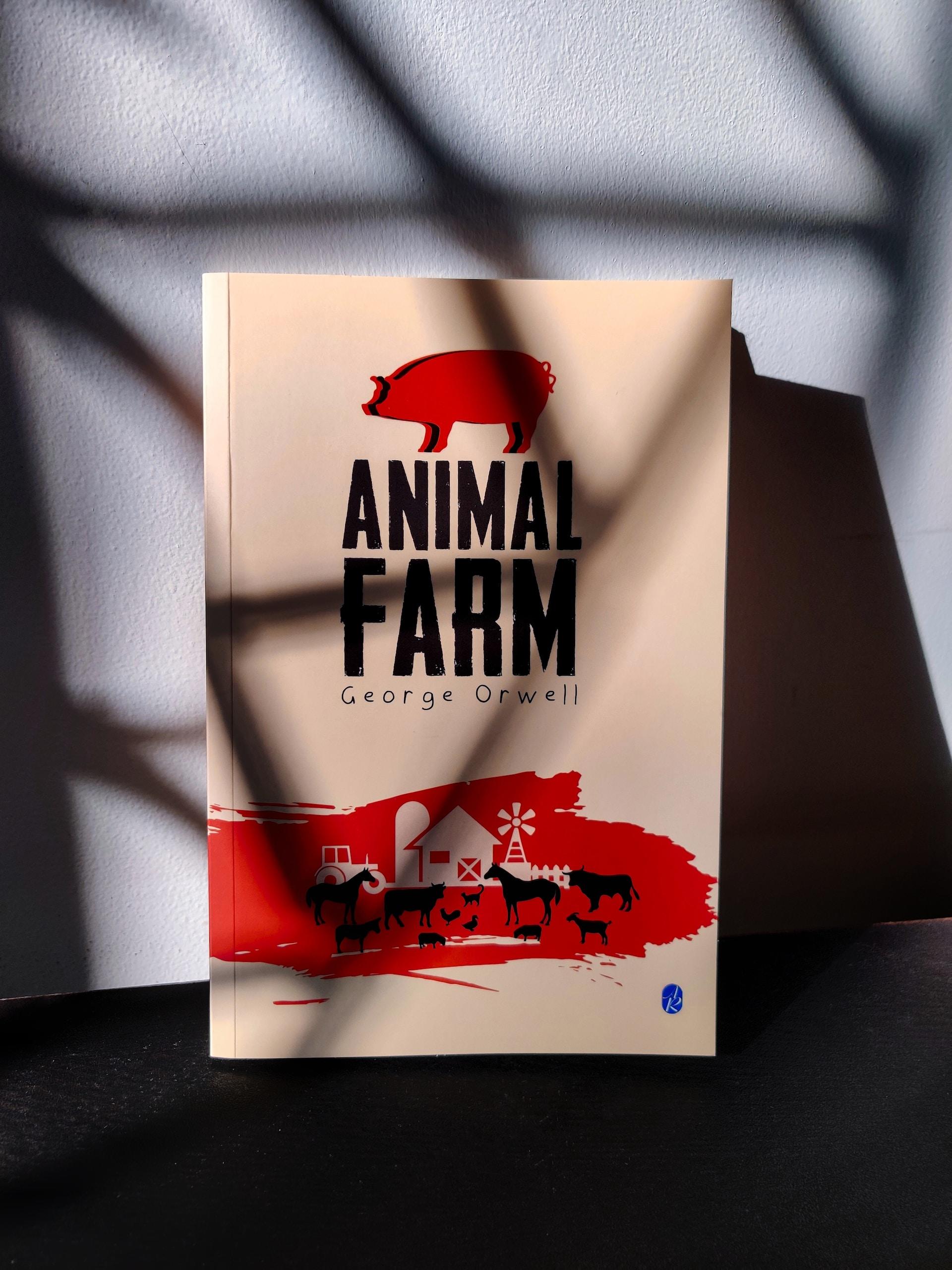
George Orwell's Animal Farm is an allegory in its entirety.
Each animal represents a subset of (human) society as we know it. Their complaints echo many of the concerns we discuss today.
Orwell imbues his characters with human motives, creating a visual tableau of action any human might undertake.
Your analysis should emphasise the animals' desire to escape Napoleon's tyranny and explain how the writer clarifies that.
(Photo by Shraddha Agrawal)
Allegory
An allegory is a story with a double meaning. It may be moral, religious, social, or political. Fairy tales are a good example of an allegory.
In Animal Farm, Napoleon becomes a tyrannical dictator; he's an allegorical equal to Stalin. Allegories are extended metaphors.
Allusions
Allusions are indirect references to something or someone else. Calling a hard job a 'Herculean task' is an allusion because it references strength. T. S. Eliot was a master at packing allusion into his works; The Waste Land and The Hollow Men are laden with allusion.
Alliteration
Alliteration: the repetition of a sound across several words; it's often used in poetry to unify verses. Shakespeare made ample use of this technique; "From forth the fatal loins of these two foes..." is from Romeo and Juliet.
The sounds make the alliteration, not the letter - so you must hear alliterations rather than see them. Compare with sibilance.
Analogy
An analogy compares two things to clarify or explain. Current comparisons of the United States to the Roman Empire are examples of analogies.
Assonance
Assonance aligns similar vowel sounds. Tongue twisters often play on assonance, for example: "Even Evan ate an apple eventually".
Note assonance's similarity with consonance, which aligns similar consonant sounds - "Mike likes his bike", e.g.
Bricolage
Bricolage describes modern texts composed with already-existing material.
The material needn't be from the same era, author, or format so long as the finished product serves the narrative.
Contrast
Contrast poses two dissimilar things to highlight their individual qualities.
Paradoxes and oxymorons use contrast to underscore differences. Note that comparing and contrasting is not the same exercise.
Dialogue
Dialogue serves as a break in the narrative. It helps advance the story and communicates the speakers' intentions.
It also tells you more about the character. For instance, they might speak in a dialect that helps the reader pinpoint the story's location.
Ellipsis
An ellipsis might signal a dramatic pause if it's at the end of a paragraph. If you find it in the middle of a character's line, it might signal uncertainty."If you say so... But I don't really think as should.", e.g.
Enjambment
Enjambment is a technique used in poetry to disrupt the poem's narrative flow or present contrasting ideas.
Reading an enjambed poem aloud gives it a Rejet effect, a disconnect between the verse's appearance and flow.
As you prepare for your English exams, watch for verses with incomplete ideas when you read poetry.
Techniques in English F - J
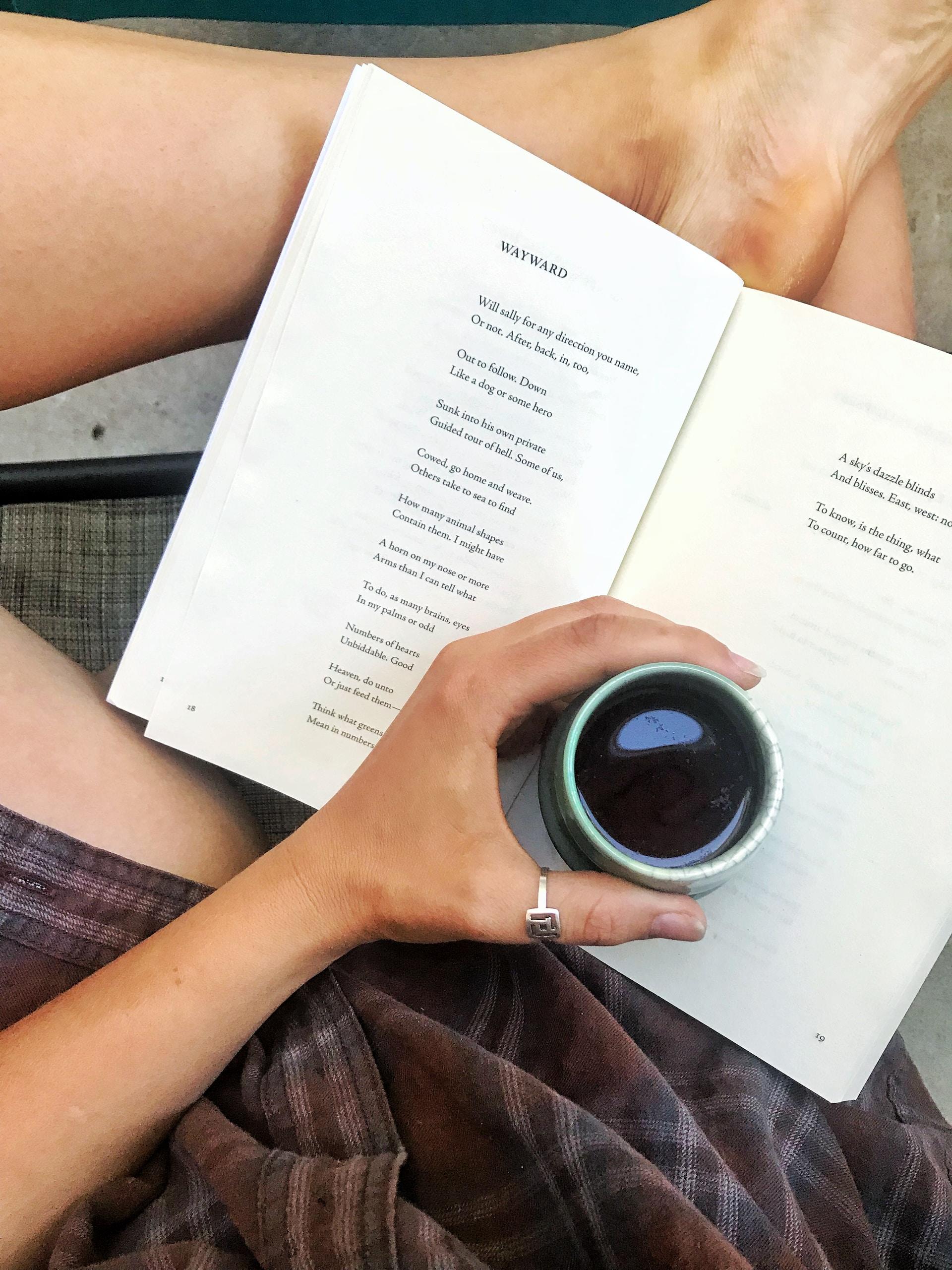
Poetry analysis can be tricky because it contains literary techniques all its own.
You must be careful to distinguish between form for aesthetic purposes and devices that control the narrative flow.
For instance, enjambment slows the reading at a crucial point in the text, while the verse form pleases the audience.
(Photo by katy mueller)
Form
The form of a text gives a clue to its function and features. For instance, senior secondary literacy exams present content in many forms to test students' abilities to distinguish one form from another.
Flashbacks
Flashbacks are glimpses into the narrative past that give extra meaning to the ongoing action and help the reader understand the characters better.
Hyperbole
In literary terms, hyperbole is an exaggeration. In today's vernacular, the overuse of 'literally' is an example of hyperbole that has become a cliché.
Hyperbole is an exaggeration, whereas a cliché is a phrase that is overused.
Icons
Icons are objects, images or people who represent complex ideas and feelings.
An icon may be an archetype, someone or something considered a sterling example of their class.
Archetypes and icons embody the best characteristics. However, one may emulate an icon but only aspire to be an archetype.
In medias res
The phrase 'in medias res' describes a narrative that opens in the middle of the action.
Films often start in medias res to hook the viewers, rather than setting a scene and building up to action.
In medias res is an ancient literary technique; the Iliad begins in medias res.
Irony
Irony forms the gap between what the character says and what they mean, especially when coupled with the judicious use of tone. "I'd love for you to show me" could be ironic or sincere, for instance.
You can deduce irony from context; often, punctuation helps you decide.
In our example, an exclamation point could indicate sincerity; a full stop might reveal irony.
Find a local English tutor easily with Superprof: on the platform enter "english tutors in melbourne," or any city in Australia, and you will have access to a long catalogue of English tutors near you.
Language Techniques L - P
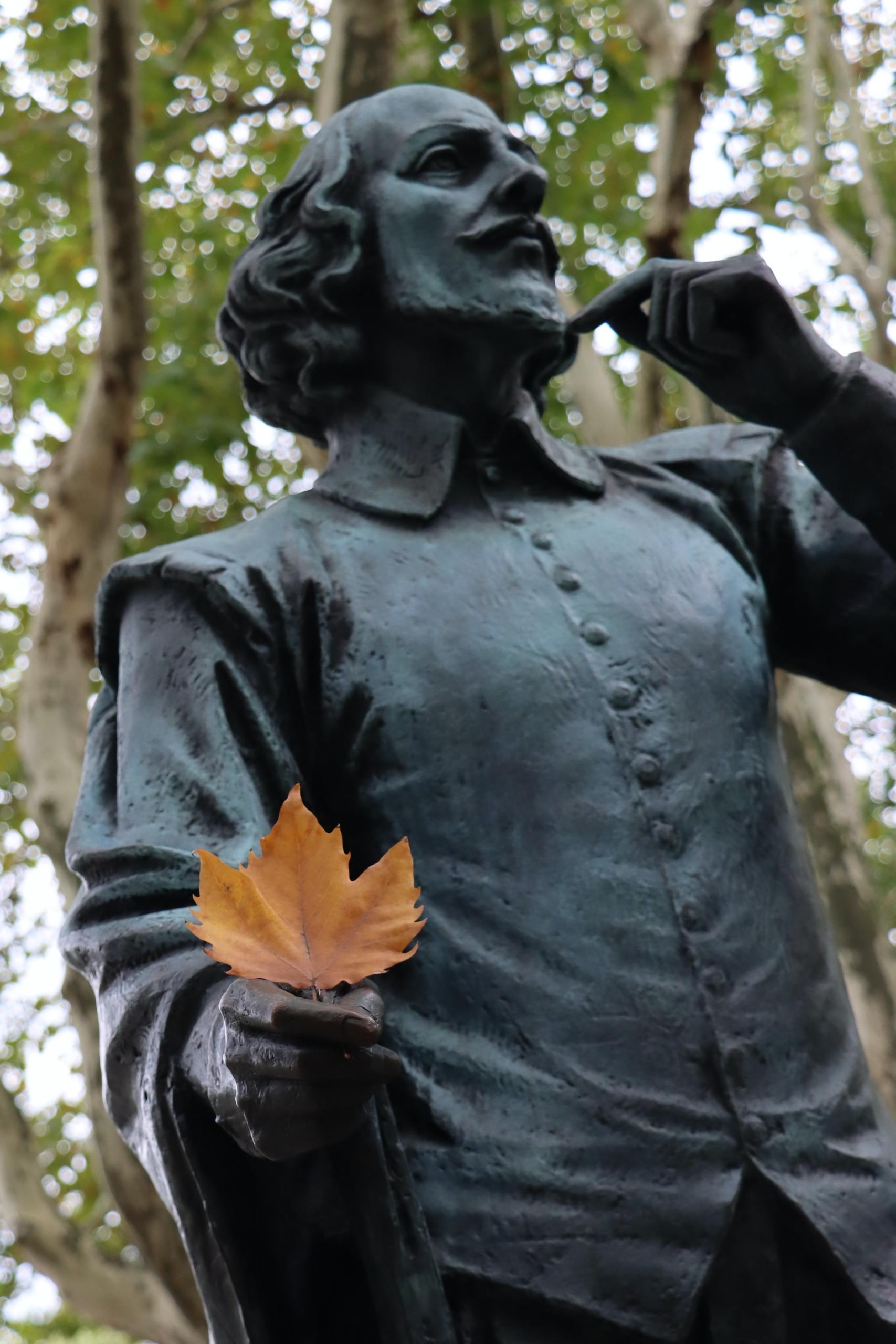
William Shakespeare is renowned for his use of literary techniques.
You'll find masterful examples of irony, simile, metaphors and ambiguity in his works.
Your HSC writing analysis answer should list as many literary techniques as possible that you find in the text.
It would be best to discuss why the author used that technique and how it impacts the narrative.
(Photo by Taha)
Linear and non-linear narratives
Linear and non-linear narratives: a linear narrative tells a story from start to finish.
It may include flashbacks and even start in medias res, but the narrative progression defines its linear form.
By contrast, non-linear narratives begin at some point in the story and move backwards before moving forwards.
Metaphors
Metaphors compare two objects, inducing one to become the other.
Your parents might suggest engaging an English tutor, promising smooth sailing on your exams.
Smooth sailing is a metaphor for 'an easy time of things'.
Metaphors are the most-used language technique. You might take them up on their offer as you review your English exam options.
Metonymy
Metonymy occurs when something becomes an emblem of the whole.
For instance, the White House represents the office of the US president, Washington, DC, and, by extension, the American government as a whole.
Motif
A motif is anything that has a symbolic reference within a narrative. It might be an object or image, a sound, a character archetype or some other figure.
Motifs are easy to spot because they recur. For instance, the author might describe a character repeatedly glancing at a framed picture; even constant references to the weather can be a motif.
Onomatopoeia
Onomatopoeia: a word that describes the sound it represents.
The clacking of shoes on tile and the drip-drip of water into a pan are examples of onomatopoeia.
Writers use this technique so the reader can hear what's happening.
Despite the words directly describing sounds, onomatopoeia isn't the same in every language.
Parody
Parody is imitation, typically as a mockery. In narrating Britney Spears' recently released memoir, Michelle Williams does a noteworthy parody of one of the book's prominent figures.
Parody serves a satirical purpose, but it is not satire.
Person Technique
The 'person' technique refers to which 'voice' the writer takes; it shouldn't be mistaken for perspective. Taking the first person, the writer becomes a part of the story.
Writing in the second person, they address the audience. A third-person narrative is impartial and all-seeing, relating the story from a distance.
Personification
Personification means giving inanimate objects human characteristics. Disney is a master at creating personification, but you'll also find plenty of examples in literature.
For instance, in Death Be Not Proud, the state of being we call death is personified.
Literary Techniques R - Z
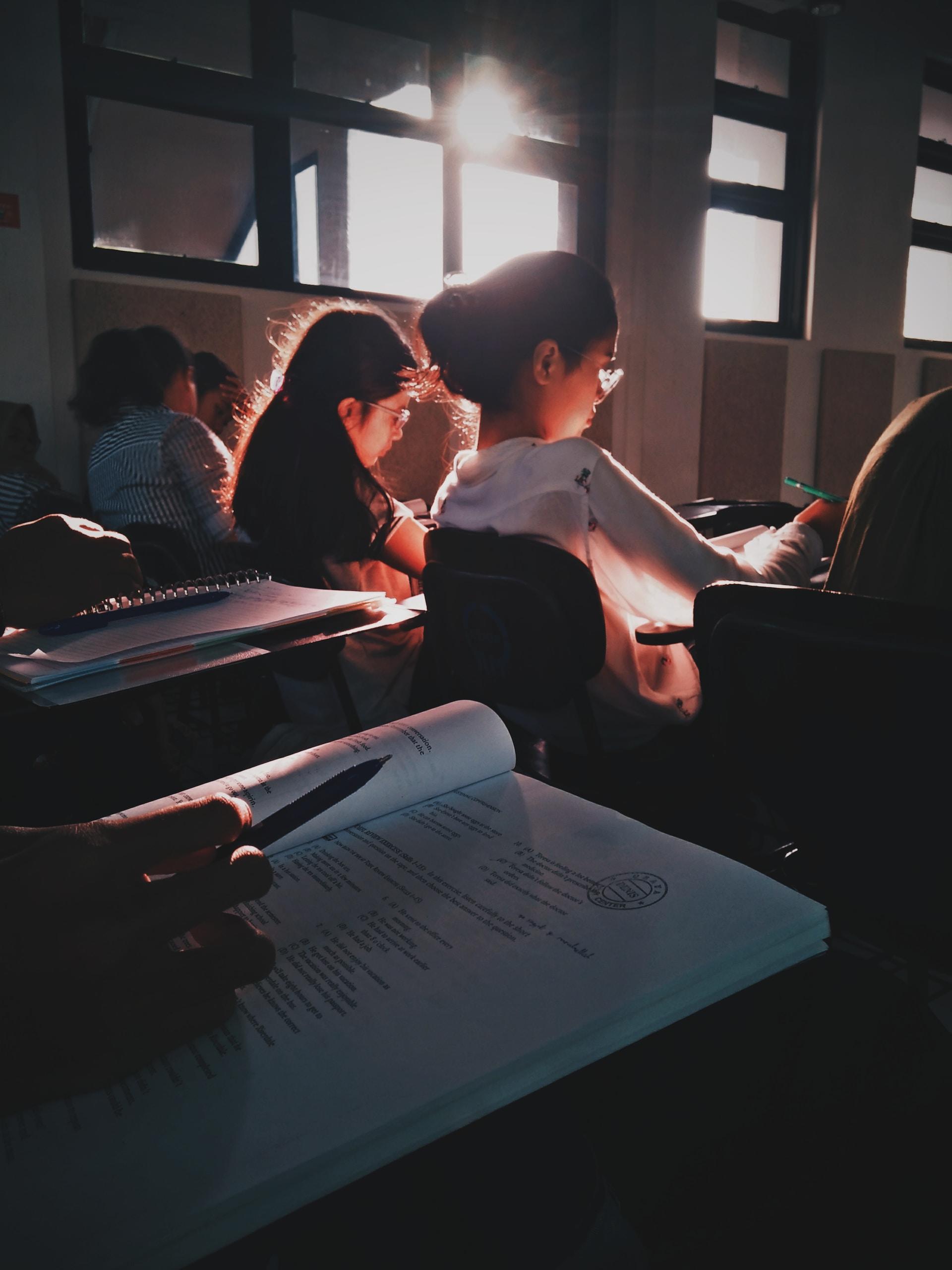
Whether you analyse fiction, poetry or prose, every exam question you answer seeks to define how you think.
Students often wonder which literary devices they should highlight in their analysis and what they should write about each one.
The rule of thumb is to choose the ones that best answer the question.
(Photo by Yustinus Tjiuwanda)
Repetition
Writers use repetition to emphasise or persuade. For example, they might repeat a single word—nevermore—in Poe's The Raven.
Or an entire phrase is repeated: "I have a dream..." in Martin Luther King's iconic speech. The Dream speech qualifies as an example of persuasive writing.
Rhyme
Alongside metaphor, rhyme is one of the most used and recognised literary techniques.
Often, rhymes have no particular significance or meaning. Typically, it's a way of organising a composition.
Satire
Satire is meant to ridicule while being funny. Political cartoons are often satirical, as is every other writing that examines the human experience through a scornful lens.
Satire is a highly evolved type of comedy that Shakespeare loved to incorporate even in his more serious works.
Sibilance
Sibilance: repeating soft consonant sounds, particularly the letter S. Carol Ann Duffy's Medusa uses sibilance to give the impression of the Gorgon's hissing coif.
Authors use sibilance to create a mood from sinister to sensuous.
Similes
Similes work like metaphors, but they are more direct.
You can easily recognise a simile because 'like' or 'as' sets it up. "Her smile beamed like a ray of sun", for example, or "His temper prickled like the quills of a porcupine".
Similes are typically used for emphasis.
Symbolism
Symbolism is one of the most important literary techniques; in many works, it is the most important one.
Symbolism occurs when an object represents an (often complex) idea.
Interpreting symbols' meanings starts with what the symbol typically conveys and then broadens its conventional meaning to what else it might suggest.
Textual Integrity
Textual integrity is an essential part of Year 11 and 12 Module B study. It encompasses a text's unity and use of universal themes.
Tone
The tone of the writing can convey how an author and/or a narrative character feels. This includes the writer's word choices and the text's form.
Ellipsis, enjambment, and judicious use of punctuation and syntax are all techniques writers use to convey tone.
Zoomorphism
Zoomorphism transfers animal qualities onto non-animals. Carl Sandberg's Fog haiku, "The fog comes on cat feet, " is a delightful example of such.
Unlike personification, the object does not take on animal attributes. Rather, zoomorphism allows the writer to project their ideas with vivid, relatable visuals.
Here's a summary of all the techniques. You could always print the terms onto flashcards with the definition on the other side to help you revise.
You can get assistance learning all the information here and more by heart when you search "English tutoring near me" on Superprof.
If you are looking for vce english tutors, visit Superprof and find a long catalogue of English teachers who specialise in Victorian Curriculum English.
Summarise with AI:
Did you like this article? Leave a rating!


 Loading...