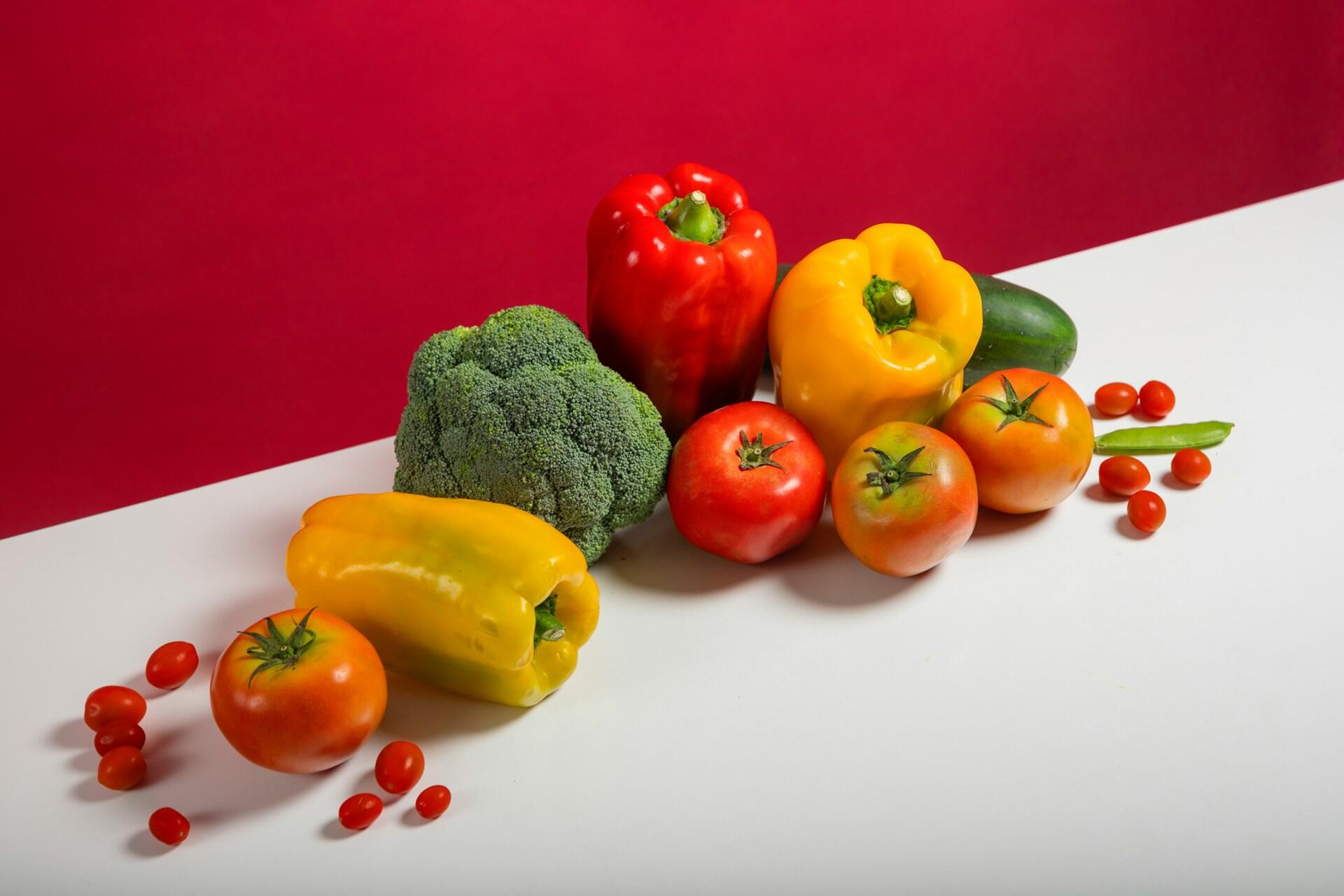

One of the simplest, easiest ways to maintain good long-term health is by eating enough vegetables and fruits each day. It’s common knowledge, and yet, many Australians are unsure about what counts as a serve and how many they actually need daily. Find out why fruits and veggies are healthy, how much to eat in a day and how to incorporate them into your meals.


The “2 Fruit & 5 Vegetables” Rule Explained
Every so often, food and nutrition guidelines are restructured based on new medical and public health research. This can confuse people who learned older recommendations as well as youths who are still learning about nutrition for the first time.
The current dietary advisories on fruits and vegetables, as outlined by the Australian government, are meant to be simple and easy to remember:
Eat 5 kinds of vegetable and 2 kinds of fruit every day for good health.
Victoria State Government & Department of Health
This general recommendation is appropriate for most of the population. However, veggie recommendations for certain age groups differ:
- Children aged 0-8 require fewer vegetable serves
- Men aged 19-50 are advised to consume 6 serves of vegetables per day
- Lactating women are advised to increase their daily veggie serves to 7.5
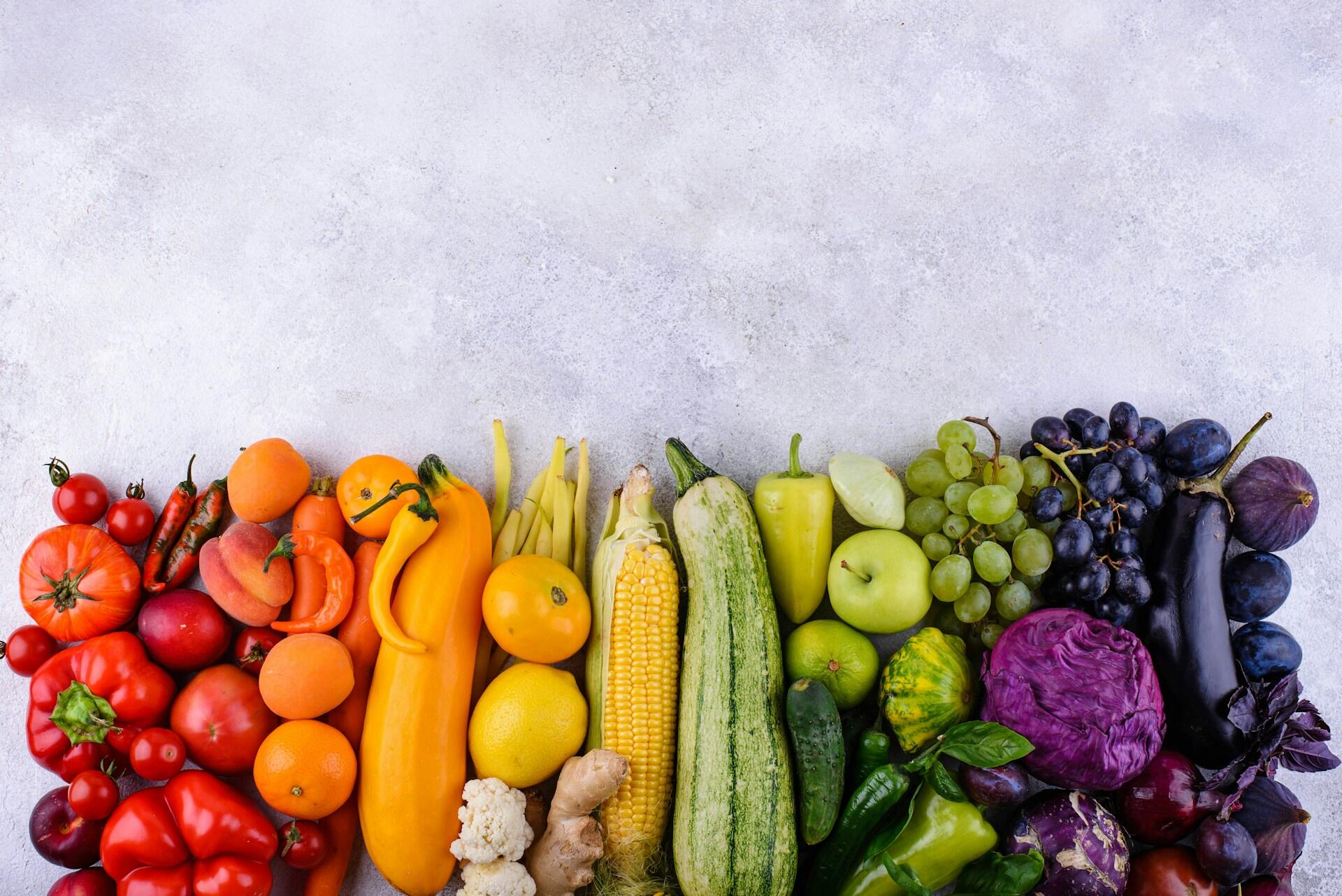
Why Eat More Vegetables than Fruit?
Fruit is a great source of vitamins, minerals, and fibre, but it is also very sweet. The high sugar and carbohydrate content means that eating too much fruit can, for many people, actually be less-than-healthy, especially if done often.
Vegetables also contain many vitamins and minerals, as well as fibre, but with fewer carbs/sugars (or at least have a lower glycaemic index). That’s why more serves of vegetables are preferred, rather than fruit.
What Counts as One Serve of Fruit?
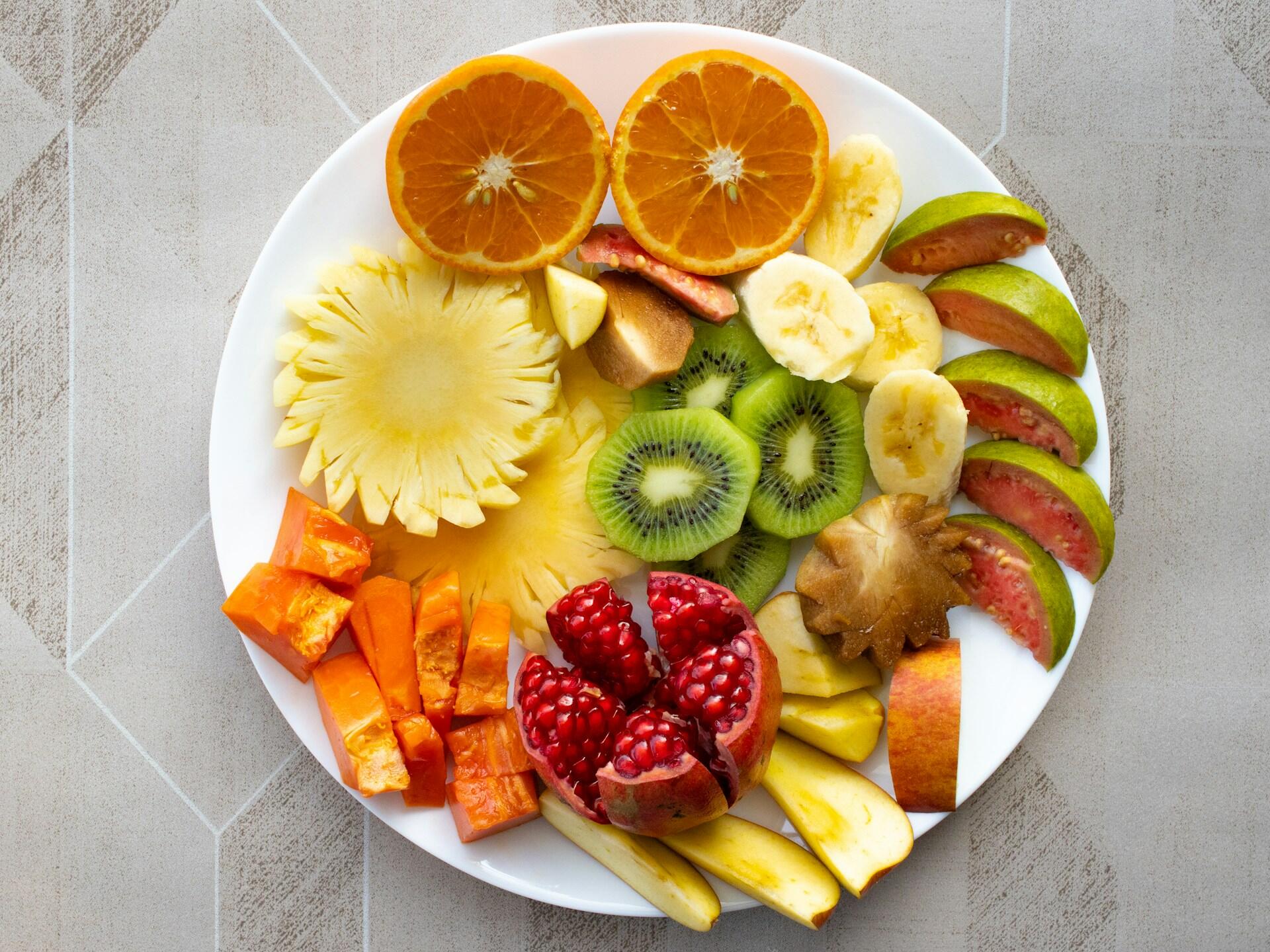
So, how can you start making sure you’re eating enough fruit per day? First, you have to understand how much a serve of fruit is. A standard serve of fruit is roughly 150 grams (aiming for about 350kJ). Since each fruit has a different nutritional profile, it’s impossible to give an exact rule. The guideline also encourages you to choose two or more different fruits in your serves per day to diversify the nutrients.
In everyday terms, a serve of fruit can look like:
- 1 medium apple, banana, orange, or pear
- 2 small fruits such as plums or mandarins
- 1 cup of diced or canned fruit (no added sugar)
Fruit juice is not recommended as a food because it’s often much too sweet and contains no fibre. If you are going to have fruit juice, be sure to get varieties with no added sugar and stick to a small portion, about 125ml.
Dried fruit is also not recommended because it’s high in kilojoules and often contains added sugar. Since it contains no water, it’s less filling, and it’s easy to overeat. Both fruit juice and dried fruits are so sweet that they can even contribute to accelerated tooth decay; consume them mindfully and only on occasion.
What Counts as One Serve of Vegetables?
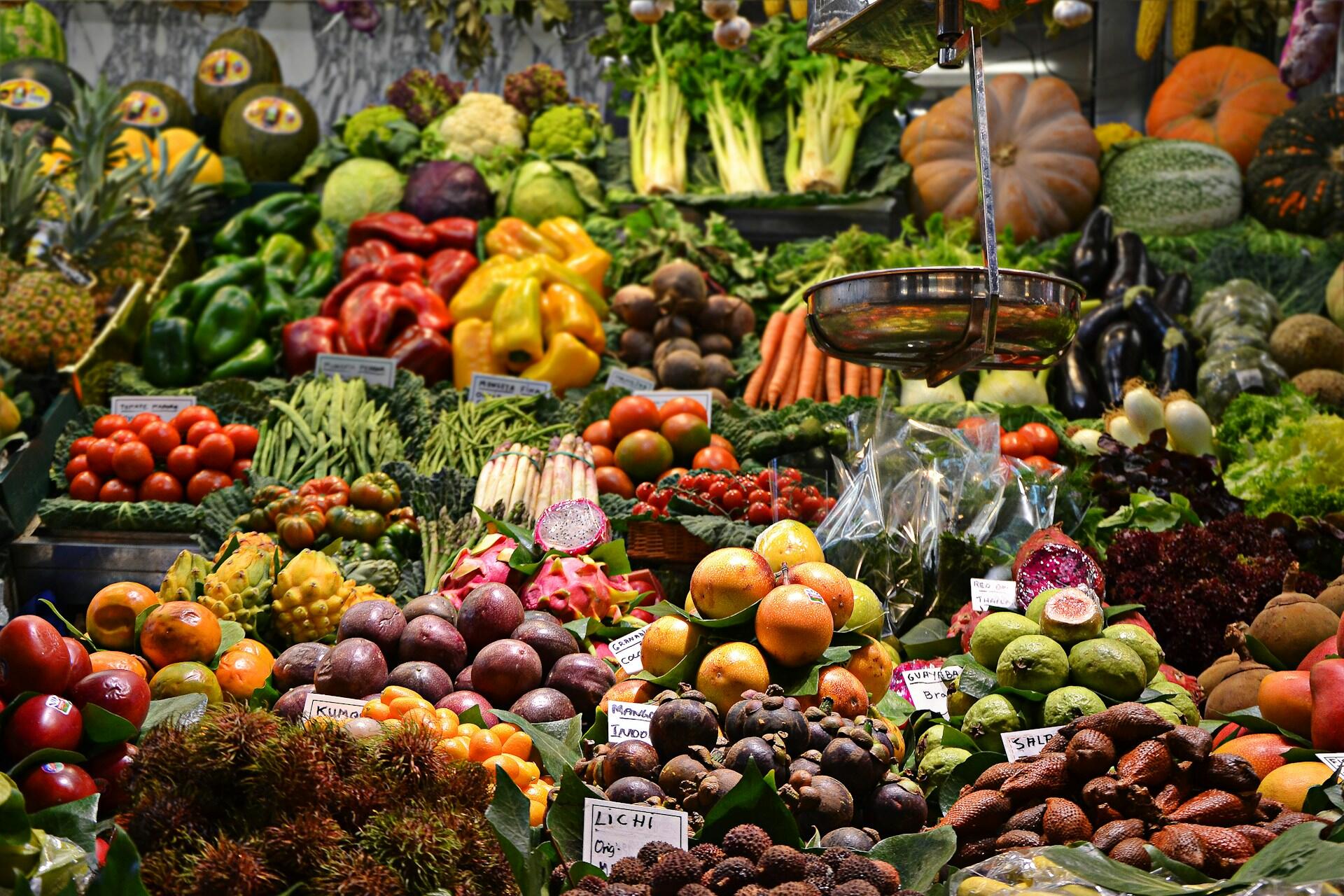
A serve of vegetables is about 75g (aiming for 100-350kJ). As for how many vegetables per day, Australia governments recommend 5 serves. The serve size is smaller for vegetables than for fruit because vegetables are often more kilojoule-dense. It’s also why the number of recommended serves is higher.
In Australian dietary guidelines, the vegetable food group encompasses everything from leafy greens and broccoli to potatoes and bamboo, to tomatoes and mushrooms, as well as legumes and beans like chickpeas, lentils and tofu. Here’s what a serve of vegetables can look like in a typical diet:
- ½ cup of cooked vegetables (e.g. broccoli, carrots, spinach)
- ½ cup of cooked legumes or beans (e.g. lentils, chickpeas)
- 1 cup of raw salad vegetables (e.g. lettuce, cucumber, tomato)
- ½ medium potato or other starchy vegetables
- 1 medium tomato
Raw or minimally-processed vegetables are emphasised. For example, a baked potato is a better choice than hot chips or crisps; the latter are considered discretionary because of their high salt and fat content.
Like with fruits, it’s also encouraged to eat a variety of vegetables per day. Additionally, starchy items like potatoes, sweet potatoes, taro, cassava, and sweet corn should be limited to one serve per day, as they are high in kilojoules.
Five serves a day may sound like a lot, but adding vegetables to your meal is actually pretty easy! Here are some simple snack and meal ideas that incorporate a portion of vegetables:
- 1 cup of raw carrots, broccoli, or celery with hummus
- 1 cup of vegetable soup with potatoes, carrots, kale, celery, peas and onions
- 1 cup of salad with leafy greens and raw vegetables
- 1 medium ear of corn, grilled or boiled
- ½ cup of cooked lentils with herbs and spices
Daily Serves for Kids vs Adults
Dietary needs differ between children, adults, and elders, as well as between males and females. Children should have fruits and vegetables incorporated into their diets as soon as they begin eating baby food, at around 6 months of age. However, they need much fewer serves per day, even up to age 8.
For the average adult, remember the “2 and 5 fruit and veg” rule. For both adults and children, it's important to get all the recommended serves of each food group per day.
Here’s a guide for the daily recommended serves for various age groups.
| Age | Serves of Vegetables/Legumes | Serves of Fruit |
|---|---|---|
| 1-2 | 2 | 0.5 |
| 2-3 (boys & girls) | 2.5 | 1 |
| 4-8 (boys & girls) | 4.5 | 1.5 |
| 9-11 (boys & girls) | 5 | 2 |
| 12-18 (boys) | 5.5 | 2 |
| 12-18 (girls) | 5 | 2 |
| 19-50 (men) | 6 | 2 |
| 19-70+ (women) | 5 | 2 |
| 51-70 (men) | 5.5 | 2 |
| 70+ (men) | 5 | 2 |
| Pregnant girls and women | 5 | 2 |
| Lactating (younger than 19) | 5.5 | 2 |
| Lactating (19+) | 7.5 | 2 |
Easy Ways to Hit Your Daily Serves
While the majority of Australians meet their daily serves of fruit each day, very few eat enough vegetables. Part of the reason is that most people see veggies as a dinnertime food. A simple shift is to incorporate at least one serve of vegetables into each meal; then, you can get your fourth and fifth serves per day either as snacks or an additional serving at lunch or dinner.
Here are some ways to add more serves of vegetables into your daily meal routine:
- Add vegetables to breakfast, such as capsicum and spinach in an omelette, tomatoes on toast, or mushrooms with sauteed potatoes
- Have a cup of salad or vegetable-based soup (bonus points if you include lentils or beans!) with lunch
- Bulk up meals with extra vegetables, like adding zucchini or mushrooms to pasta
- Make legume-based dishes like curries, stews and salads
- Snack on raw veggies like carrots, capsicum, broccoli, and cucumber; add hummus to incorporate a legume as well
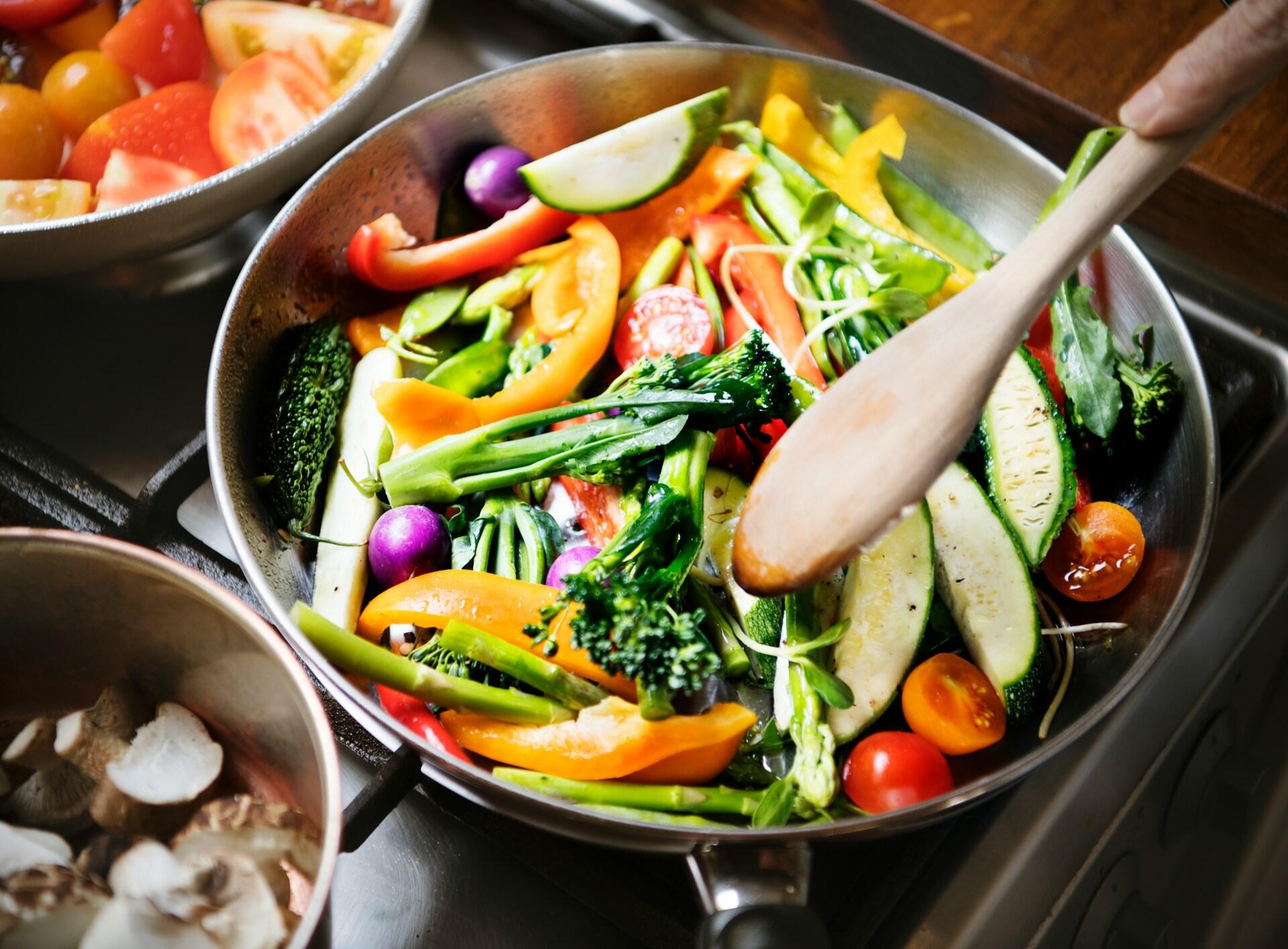
Fruits are also easy to add to your daily meal routine. They are a perfect snack, so you don’t need to wait for a mealtime to have a quick serve. Here are a few suggestions for adding fruit to your day:
- Add berries, banana, and/or apple slices to your cereal or porridge at breakfast, or to your baked goods like pancakes, muffins and scones
- Apples, oranges, and berries are perfect salad-toppers
- Bake an apple with cinnamon and a little sugar for a healthier dessert option
- A handful of blueberries or dates makes a good, quick snack
Small changes make a big difference. For example, adding a small salad with lunch and dinner can easily add two more serves per day. Canned and frozen veggies and fruits are also helpful for many people. They are typically just as nutritious as their fresh counterparts and can be easier to incorporate into meals, without the risk of rotting in the refrigerator. When selecting frozen or canned fruit, look for varieties without added sugar.
Combining fruit with dairy is a popular way to get calcium, fibre, and other vitamins and minerals together.
Vegetables should make up about 1/3 of your entire food intake per day. Fruits are very sweet, and so they need to be consumed in smaller quantities, only about 1/5 of your total energy intake per day.
Health Benefits of Eating Enough Vegetables and Fruits
Vegetables are a core part of a balanced diet. According to the Australian government’s nutritional guidelines, about ⅓ of your daily food intake should be vegetables.
Fruits are also important, but only need to constitute about ⅙ of your food.
Fruits and vegetables offer several health benefits, some of which are instantly noticeable. When you regularly include enough of them in your diet, you’ll notice:
- Improved digestion and bowel movements due to higher fibre and water intake
- Better weight management and feelings of fullness due to fibre and low-energy-density-high-bulk foods
- General feeling of restfulness and energy due to vitamins, minerals, and regulated blood glucose levels
- Better immune function (less sickness) due to vitamins and antioxidants
Invisible benefits that accumulate over time are another reason to eat your veggies. Adequate intake of these foods has been shown to provide positive health outcomes such as:
- Reduced risk of chronic diseases like heart disease and diabetes
- Long-term weight management
- Reduced risk of certain cancers, especially colorectal cancer
- Reduced risk of stroke and hypertension
Adequate intake of fruit and vegetables contributes to better overall health. Fibre is one of the main reasons for this, and most of the developed world woefully underconsumes fibre. Maintaining a diet that emphasises fruit and veg, supported by the other food groups, such as protein and carbohydrates, is a recipe for good health.
References
- Australian Food Composition Database | Food Standards Australia New Zealand. www.foodstandards.gov.au/science-data/food-nutrient-databases/afcd. Accessed 27 July 2026.
- “Australian guide to healthy eating.” eatforhealth.gov.au, www.eatforhealth.gov.au/guidelines/australian-guide-healthy-eating. Accessed 27 July 2026.
- “Fruit.” eatforhealth.gov.au, www.eatforhealth.gov.au/food-essentials/five-food-groups/fruit. Accessed 27 July 2026.
- “Fruit and Vegetables.” betterhealth.vic.gov.au, www.betterhealth.vic.gov.au/health/healthyliving/fruit-and-vegetables. Accessed 27 July 2026.
- “Vegetables and legumes / beans.” eatforhealth.gov.au, www.eatforhealth.gov.au/food-essentials/five-food-groups/vegetables-and-legumes-beans. Accessed 27 July 2026.
Summarise with AI:
Did you like this article? Leave a rating!

 Loading...